Amir Mahmud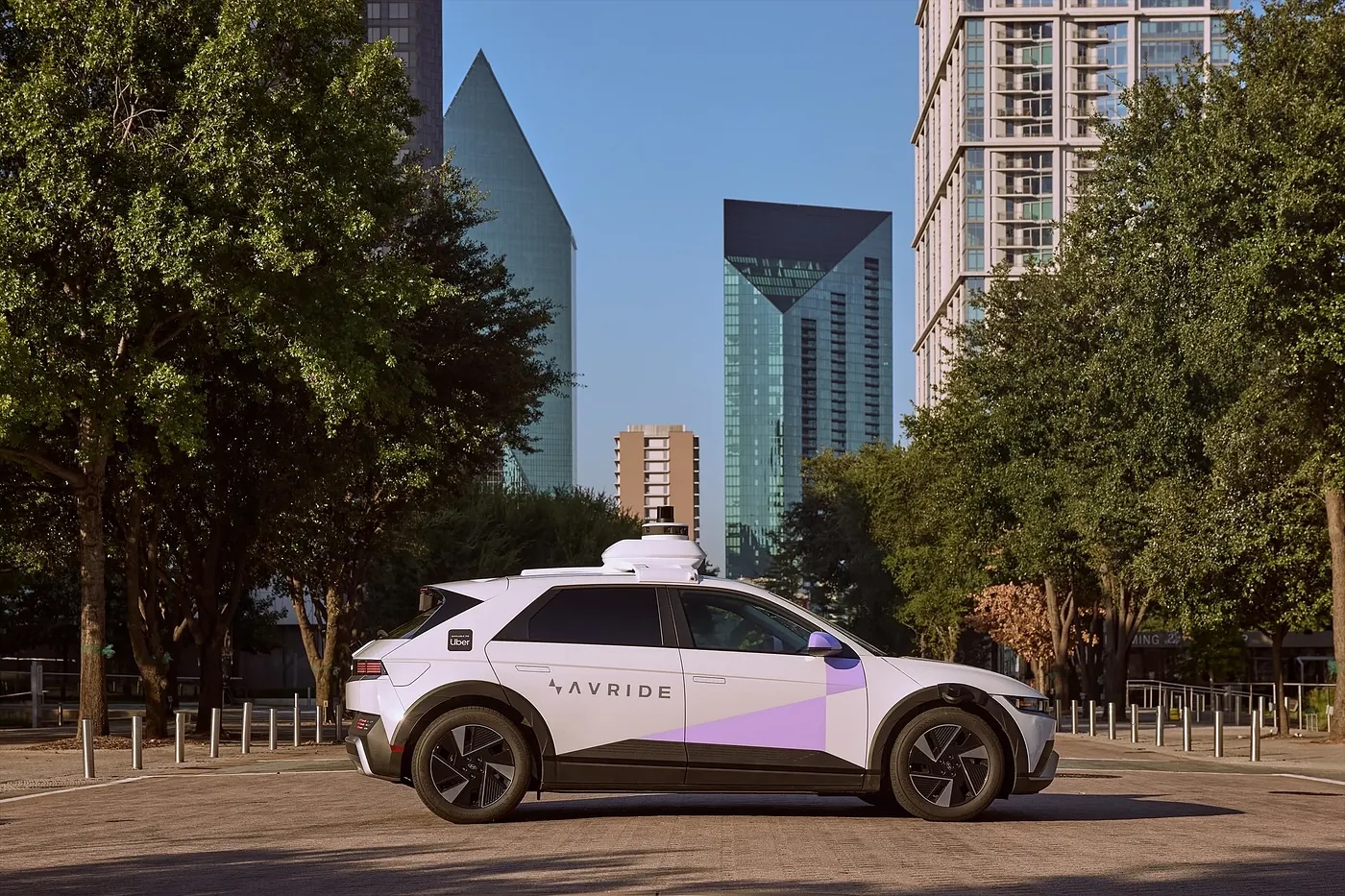
The National Highway Traffic Safety Administration (NHTSA) has launched a formal investigation into Avride, an autonomous vehicle company closely partnered with ride-sharing giant Uber, after identifying more than a dozen crashes and one reported minor injury involving its robotaxis. This probe by the federal safety regulator’s Office of Defects Investigation (ODI) casts a significant spotlight on the safety and reliability of self-driving technology as it increasingly moves from test tracks to public roads.
The Rise of Autonomous Vehicles and Regulatory Challenges
The dream of self-driving cars has captivated innovators and the public for decades, evolving from science fiction to a tangible, albeit still nascent, reality. Early milestones, such as the DARPA Grand Challenge in the mid-2000s, spurred significant research and development, transitioning autonomous technology from academic pursuits to commercial endeavors. Major tech companies and automotive manufacturers poured billions into developing vehicles capable of navigating complex environments without human intervention. This intense period of innovation, however, has been punctuated by cycles of immense optimism followed by periods of cautious recalibration, sometimes dubbed "AI winters" for autonomous driving.
Today, the industry broadly categorizes autonomous vehicles using the SAE International J3016 standard, ranging from Level 0 (no automation) to Level 5 (full automation in all conditions). Companies like Avride operate at Level 4, meaning their vehicles can handle most driving situations independently within defined operational design domains (ODDs), but still typically involve human safety operators for oversight and intervention when necessary. The push to commercialize these Level 4 systems, particularly in the form of robotaxis, represents a critical juncture for the industry, promising enhanced efficiency, reduced traffic congestion, and improved safety by eliminating human error.
However, this rapid deployment has also brought to the forefront the complexities of regulating such advanced, rapidly evolving technology. NHTSA, as the primary federal agency responsible for vehicle safety, plays a crucial role in overseeing this transition. In 2021, the agency issued a landmark Standing General Order (SGO) on automated driving systems, mandating that companies developing or operating Level 2 advanced driver-assistance systems and Level 3-5 automated driving systems report all crashes involving their vehicles to NHTSA. This order was designed to provide the agency with critical data to identify potential safety defects and trends, forming the basis for investigations like the one now facing Avride.
Avride’s Operations and the Uber Partnership
Avride, a subsidiary of Nebius — formerly Yandex NV, a Netherlands-based technology conglomerate — has a diverse background in autonomous systems. While perhaps best known for its sidewalk delivery robots, the company has also dedicated years to the rigorous development and testing of self-driving cars. This dual focus highlights a broader industry trend of leveraging core AI and robotics expertise across various applications, from last-mile logistics to passenger transport.
The partnership with Uber, established in 2024, marked a significant strategic move for both companies. Uber, which previously explored its own in-house autonomous vehicle development through its Advanced Technologies Group (ATG) before selling it to Aurora in 2020, has since pivoted towards a partnership model for its self-driving ambitions. This approach allows Uber to integrate cutting-edge AV technology into its vast ride-sharing network without bearing the full financial and operational burden of developing the systems from scratch. In 2025, Uber and its parent company Nebius further solidified this alliance, agreeing to strategic investments and other commitments to Avride totaling up to $375 million. This substantial financial backing underscores the high stakes and mutual dependency in their collaboration.
The practical rollout of this partnership commenced in December 2025, with Uber offering rides in Avride robotaxis in Dallas, Texas. Dallas, along with Austin, has emerged as a key proving ground for autonomous vehicle companies, often due to perceived favorable regulatory environments, relatively predictable urban layouts, and a growing tech-savvy population. The ODI noted that "many of the reported crashes have occurred" in Dallas, with some also taking place in Austin, indicating these operational hubs are at the epicenter of the current safety concerns. Notably, at least one of the reported incidents involved a robotaxi carrying a passenger, elevating the potential public safety implications of these events.
Details of the Investigation: Systemic Failures Identified
NHTSA’s Office of Defects Investigation revealed that all 16 crashes under review appear to stem from issues related to "the competence of" Avride’s self-driving system. A preliminary review of incident videos conducted by the ODI highlighted several recurring patterns of malfunction. These included instances where Avride’s autonomous vehicles (AVs) were observed:
- Changing lanes directly into the path of or in close proximity to other vehicles traveling in adjacent lanes.
- Failing to adequately slow down or stop for slow-moving or stationary vehicles ahead in their lane.
- Failing to respond appropriately to vehicles entering their lane and path.
- Striking stationary objects that partially obstructed the lane ahead.
These descriptions paint a picture of a system struggling with fundamental aspects of real-world driving: dynamic object recognition, predictive behavior of other road users, and spatial awareness in complex, often unpredictable, urban environments.
A specific incident from December 2025 in Dallas illustrates the nature of these failures. An Avride-equipped Hyundai Ioniq 5 robotaxi reportedly clipped the open driver’s side door of a parked pickup truck. While the injury sustained by one of the truck’s occupants was minor and did not require hospitalization, it underscores the potential for harm even in seemingly low-speed incidents. Another crash in December involved an Avride robotaxi attempting a lane change to avoid a parked pickup truck, only to turn into an adjacent van, causing damage to both vehicles. The ODI’s findings also mention multiple crashes where other vehicles turned into Avride robotaxis, though it remains unclear whether the AVs had an opportunity to avoid these collisions. At least one reported crash involved an Avride vehicle colliding with a dumpster, indicating challenges with static object avoidance.
A particularly puzzling aspect of these incidents, and a central point of inquiry for the investigation, is the role of human safety monitors. All 16 crashes occurred while a human safety operator was present in the driver’s seat, theoretically capable of intervening. Avride declined to elaborate on why these safety monitors did not take control during the incidents. This raises critical questions about the effectiveness of current safety protocols, the training and alertness of operators, and the design of the human-machine interface that dictates when and how an operator should intervene. Only one of the reported crashes explicitly mentioned an attempt by a safety monitor to intervene, further deepening these concerns.
Industry-Wide Scrutiny and Public Perception
The investigation into Avride is not an isolated event but rather part of a broader trend of increased regulatory scrutiny facing the autonomous vehicle industry. This intensified oversight reflects both the growing deployment of AVs and a series of high-profile incidents that have eroded public confidence and prompted calls for more stringent safety measures.
Waymo, another leading autonomous vehicle developer and a subsidiary of Alphabet, is concurrently under investigation by both NHTSA and the National Transportation Safety Board (NTSB). These probes relate to alleged "illegal behavior around school buses" and a January 2026 incident in which one of Waymo’s robotaxis struck a child. These investigations, alongside the Avride inquiry, highlight common areas of concern across the industry: the ability of AVs to safely interact with vulnerable road users, their adherence to traffic laws in specific contexts, and their overall operational safety in real-world scenarios.
Furthermore, the industry has recently grappled with the fallout from other significant safety incidents. General Motors’ Cruise unit, for example, faced a temporary grounding of its entire U.S. fleet in late 2023 after a highly publicized incident in San Francisco where one of its robotaxis dragged a pedestrian who had been struck by another human-driven vehicle. While distinct in its circumstances, the Cruise incident served as a stark reminder of the potential catastrophic consequences of AV failures and significantly amplified regulatory and public pressure on the entire sector.
These cumulative events contribute to a complex and often polarized public perception of autonomous vehicles. While proponents emphasize the long-term safety benefits compared to human drivers, citing potential reductions in accident rates, each incident serves to heighten public skepticism and fuel concerns about the technology’s readiness for widespread adoption. The social impact extends beyond safety, touching upon ethical considerations, job displacement for professional drivers, and the broader societal implications of delegating critical decision-making to AI systems.
Avride’s Response and the Road Ahead
In response to the investigation, Avride issued a statement emphasizing its commitment to safety and continuous improvement. The company stated, "We have implemented targeted technical and operational mitigations to address our findings from each reported incident between December 2025 and March 2026, and have further enhanced overall system capabilities." Avride also noted that its "total operations have continued to grow, while the frequency of incidents relative to our mileage has steadily declined." The company highlighted its compliance with NHTSA’s mandatory reporting requirements, indicating a willingness to cooperate with regulators.
While such statements are standard, a neutral analytical perspective would emphasize that while companies often implement internal improvements, the ultimate validation of these mitigations lies with independent regulatory oversight. The NHTSA investigation will delve deeper than company statements, scrutinizing data, operational procedures, and the root causes of the identified failures.
The potential outcomes of such an investigation vary. NHTSA could issue a recall of the affected vehicles or software, impose operational restrictions on Avride’s robotaxi services, or even levy fines if non-compliance or egregious safety lapses are found. For Uber, the implications could involve a re-evaluation of its partnership strategy or adjustments to its deployment timelines. More broadly, the findings of this and other ongoing investigations will likely shape future regulatory frameworks for autonomous vehicles, potentially leading to more stringent testing requirements, clearer standards for human operator intervention, and enhanced transparency mandates across the industry.
The Avride investigation serves as a critical barometer for the state of autonomous vehicle technology. It underscores the delicate balance between fostering innovation and ensuring public safety, a challenge that will define the future trajectory of self-driving cars for years to come. The industry, regulators, and the public are all watching closely as these advanced systems navigate the complex journey from promising innovation to ubiquitous reality.