Amir Mahmud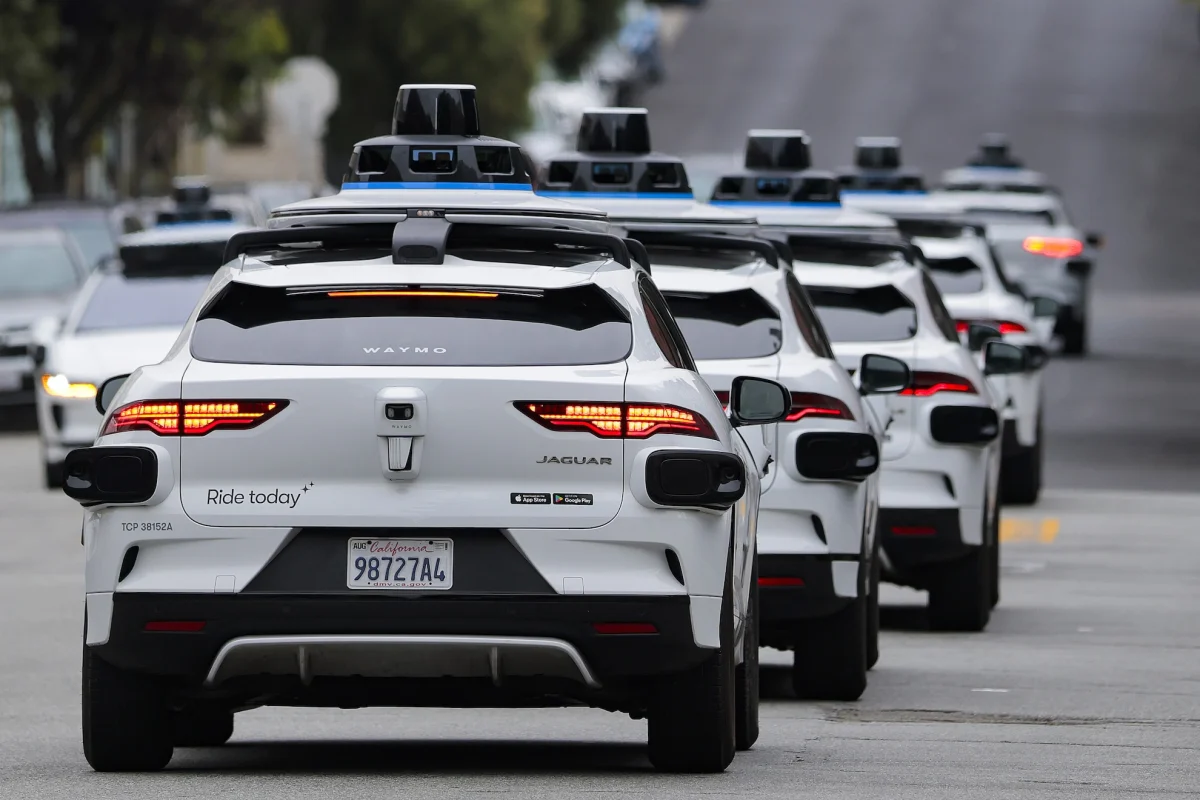
Waymo, the autonomous vehicle subsidiary of Alphabet, announced on July 18, 2026, that its robotaxi service in San Francisco had fully resumed operations following a temporary, hour-long pause. The disruption was initiated by the company as it responded to a significant power outage that affected approximately 7,000 PG&E customers across the city, highlighting the intricate interplay between advanced self-driving technology and the vulnerabilities of conventional urban infrastructure. This incident underscores the ongoing complexities faced by autonomous vehicle operators as they strive to integrate their services into dynamic and often unpredictable metropolitan environments.
A Brief Interruption in Autonomous Service
The temporary cessation of Waymo’s service was a precautionary measure taken amidst the widespread power failure. Customers attempting to hail a Waymo vehicle were met with in-app notifications stating that service was "temporarily paused" and that "freeway routes are unavailable." This immediate communication aimed to manage user expectations and ensure safety during an uncertain period. A Waymo spokesperson initially confirmed that the company was making "temporary adjustments" to its service while actively monitoring local conditions, expressing a commitment to returning to normal operations as swiftly as possible. Subsequent clarification from the company indicated that the pause, lasting approximately one hour, was a deliberate decision to "assess the scale of the power outage affecting a large portion of San Francisco and coordinate with local officials." Such proactive decisions are critical for autonomous service providers, who must balance the promise of seamless mobility with the imperative of public safety, especially when faced with external system failures like widespread power loss.
The Broader Context of Autonomous Operations in San Francisco
San Francisco has emerged as a crucial battleground and testing ground for autonomous vehicle technology, attracting major players like Waymo and Cruise (General Motors’ AV unit). Waymo, originating from Google’s self-driving car project in 2009, began its journey with a vision to revolutionize transportation. Over a decade of rigorous development and testing, Waymo graduated from experimental phases to offering fully autonomous ride-hailing services in select cities. Its commercial launch in San Francisco represented a significant milestone, allowing the public to experience robotaxis on complex urban streets. The city’s challenging topography, dense traffic, diverse weather conditions, and unique regulatory environment make it an ideal, albeit demanding, proving ground for the maturity of self-driving systems.
The expansion of autonomous vehicle services in San Francisco has not been without its controversies. While proponents highlight benefits such as increased safety, reduced congestion, and improved accessibility, critics raise concerns about potential job displacement, cybersecurity risks, and the ability of these vehicles to operate flawlessly in unexpected scenarios. The operational footprint of autonomous vehicles has steadily grown, with both Waymo and Cruise receiving approvals from the California Public Utilities Commission (CPUC) to expand their commercial services to charge for rides and operate across the entire city, day and night. This regulatory green light, granted after extensive public hearings and debate, signaled a new era for urban mobility but also intensified scrutiny on the reliability and safety protocols of these advanced systems.
A History of Incidents and Regulatory Scrutiny
The recent power-related pause is not an isolated incident for Waymo in San Francisco. The autonomous vehicle industry, particularly in its early commercial phases, has faced a series of operational challenges that test public trust and regulatory patience. Previous blackouts and unexpected events have indeed caused disruptions to Waymo’s service. Notably, in December of the preceding year, a number of Waymo vehicles reportedly stalled on city streets during a blackout, creating traffic impediments and raising questions about their fail-safe mechanisms during widespread infrastructure failures. Similarly, an incident during a Fourth of July fireworks display near the Golden Gate Bridge saw autonomous vehicles contributing to traffic paralysis, further fueling public and official concerns.
These incidents, while perhaps individually minor, collectively paint a picture of an emergent technology grappling with the unpredictable nature of real-world urban environments. They underscore the fact that even the most sophisticated AI systems must operate within and react to the limitations and failures of existing human-built infrastructure. The cumulative effect of these events has led to a growing demand for more stringent oversight and clearer operational guidelines, especially concerning how autonomous vehicles respond during emergencies or infrastructure malfunctions.
The Regulatory Landscape and Public Safety Concerns
In response to the recurring operational issues, San Francisco Mayor Daniel Lurie has publicly advocated for tougher state regulations governing autonomous vehicles. His calls for action reflect a broader sentiment among city officials and a segment of the public who believe that existing frameworks do not adequately address the complexities of AV operation during "major incidents, planned or not." The debate often revolves around the balance between fostering innovation in autonomous technology and ensuring paramount public safety and efficient city management.
The regulatory authority over autonomous vehicles in California is primarily vested with the CPUC and the California Department of Motor Vehicles (DMV). While these bodies have established comprehensive permitting processes and safety requirements, the nuances of real-time incident response and coordination with local emergency services remain areas of active discussion and refinement. Critics argue that state-level regulations may not always fully appreciate the unique challenges posed by specific urban environments like San Francisco, leading to calls for more localized control or, at the very least, enhanced collaborative frameworks between state regulators and municipal authorities. The question of who holds ultimate responsibility when an autonomous vehicle encounters an unprecedented scenario, particularly one stemming from a wider infrastructure failure, is a complex legal and ethical puzzle that continues to evolve.
Navigating Urban Infrastructure Challenges
The vulnerability of autonomous vehicle services to power outages highlights a critical dependency on robust urban infrastructure. Modern cities rely on an intricate web of systems: electricity grids, high-speed communication networks, GPS signals, and precise digital mapping. Autonomous vehicles, with their array of sensors, AI-driven decision-making, and constant need for data exchange, are deeply integrated into this ecosystem. A disruption in any one of these foundational elements can significantly impair their operational capabilities.
The power grid, in particular, is a fundamental component. While autonomous vehicles are typically battery-electric and can operate independently of a live grid for a period, widespread outages affect traffic signals, streetlights, and crucially, communication infrastructure. Loss of cellular or satellite connectivity can degrade an AV’s ability to communicate with its central dispatch, receive real-time updates, or even accurately pinpoint its location, especially in dense urban canyons where GPS signals can already be intermittent. Furthermore, human-driven traffic also struggles during outages, often creating chaotic conditions that even advanced AI might find challenging to navigate safely. This incident serves as a stark reminder that as cities embrace smart technologies, the reliability and resilience of their underlying infrastructure become paramount, not just for human activity but for the seamless function of autonomous systems.
Social and Economic Implications
The reliability of autonomous ride-hailing services carries significant social and economic implications. For commuters who increasingly rely on these services for daily transportation, even a short pause can cause inconvenience and frustration, disrupting schedules and potentially impacting productivity. Frequent or prolonged disruptions could erode public trust, making users hesitant to adopt AVs as a primary mode of transport. Building and maintaining this trust is crucial for the long-term viability and widespread adoption of autonomous technology.
Economically, the promise of autonomous vehicles includes enhanced efficiency in logistics, reduced operational costs for transportation companies, and the creation of new service models. However, these benefits are contingent on consistent and reliable service. Any factor that introduces uncertainty, such as infrastructure-related pauses, can impact the economic models and scalability plans of AV operators. Moreover, the broader discussion about the future of urban mobility intersects with job markets, urban planning, and environmental sustainability. As cities consider significant investments in "smart city" infrastructure, the resilience of these systems to external shocks, from cyberattacks to natural disasters or power outages, will be a key determinant of their success and public acceptance.
Looking Ahead: The Future of Autonomous Mobility
The Waymo service pause in San Francisco, while brief, serves as a poignant case study in the ongoing journey of integrating autonomous vehicles into the fabric of urban life. It highlights the complex challenges that extend beyond merely perfecting self-driving software and hardware. The future of autonomous mobility will depend not only on the technological prowess of companies like Waymo but also on the robustness of urban infrastructure, the adaptability of regulatory frameworks, and the willingness of cities to collaborate with technology providers to create truly resilient and intelligent transportation ecosystems.
As autonomous vehicle technology continues to mature, the focus will increasingly shift towards developing more sophisticated fail-safe mechanisms, enhancing real-time coordination protocols with emergency services, and ensuring that these advanced systems can operate effectively even when traditional urban infrastructure falters. The incident in San Francisco reiterates the essential need for continuous learning, adaptation, and dialogue among all stakeholders—technology companies, regulators, city officials, and the public—to navigate the path toward a truly autonomous and integrated future.