Amir Mahmud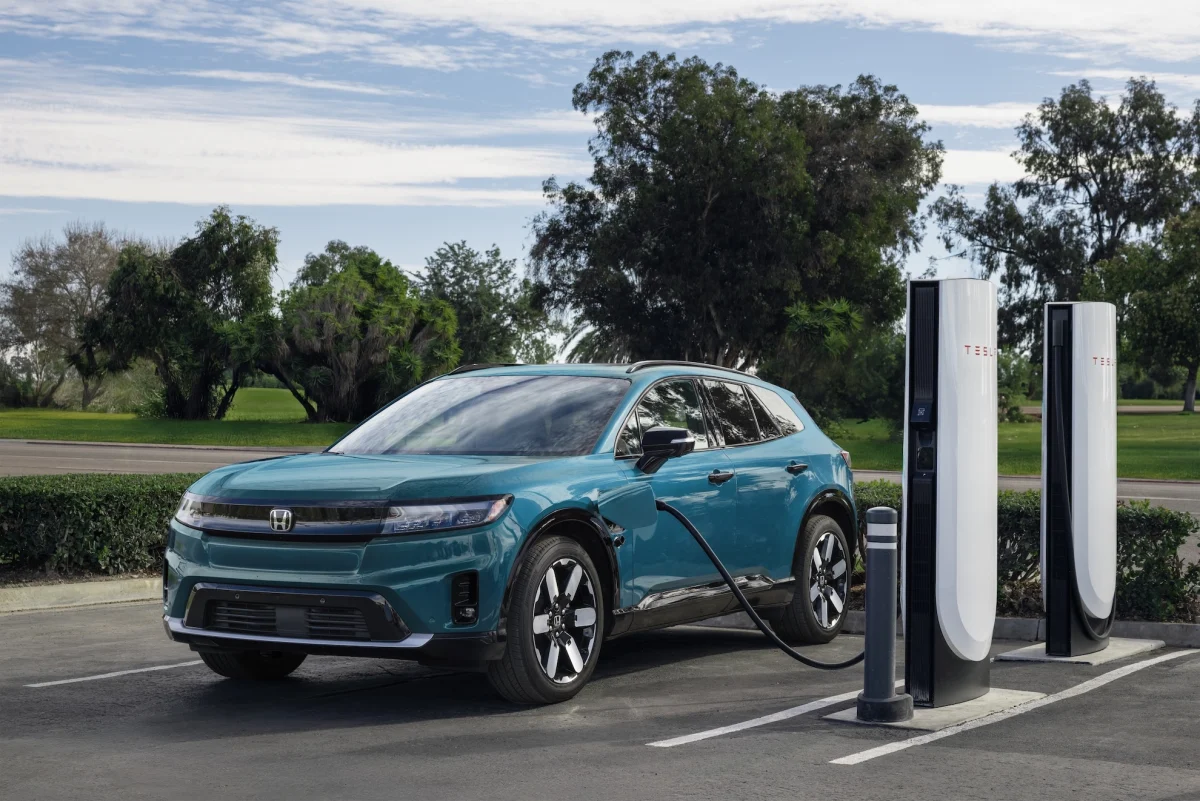
The narrative surrounding electric vehicles (EVs) in the United States is undergoing a profound transformation, moving beyond the initial euphoria of rapid growth to a more nuanced reality of market recalibration. This year, a significant number of all-electric models, including offerings from established giants like Honda and Volkswagen, and innovative ventures such as Sony Honda Mobility’s Afeela, have either been discontinued or withdrawn from the American market. This trend is far more than a collection of isolated business decisions; it reflects a complex interplay of economic pressures, evolving consumer preferences, geopolitical forces, and strategic shifts by manufacturers grappling with the challenges of a burgeoning yet volatile EV ecosystem. While the global EV market continues to expand, the U.S. appears to be charting a distinct, more cautious course, prompting a deeper examination of the factors shaping this critical automotive transition.
The Shifting Sands of EV Adoption in America
For several years, the electric vehicle market in the U.S. was characterized by aggressive expansion targets and substantial government incentives, most notably the $7,500 federal tax credit. This credit played a pivotal role in bridging the price gap between electric and traditional gasoline-powered vehicles, making EVs a more palatable option for early adopters and environmentally conscious consumers. However, the expiration of this full tax credit in late 2025 marked a significant turning point, sending ripples through the industry. Automakers had to contend with a consumer base suddenly facing higher upfront costs, leading to a noticeable cooling in demand.
Market data underscores this deceleration. While total EV sales in the second quarter of 2026 reached 247,226 units, representing approximately 5.8% of the total U.S. automotive market, this figure, although an increase from the first quarter of the same year, remained substantially lower than sales during the corresponding period in 2025, prior to the tax credit’s conclusion. The fourth quarter of 2025 saw a stark 36% decline in EV sales compared to the previous year, a gap that has narrowed in 2026 but still indicates a market struggling to regain its previous momentum. For instance, Q2 2026 EV sales were 20.5% below those of Q2 2025. This divergence from the robust growth seen in many other global markets has led some analysts to describe the U.S. market as "K-shaped," with a select few models performing well while others struggle or are abandoned.
Beyond financial incentives, a host of other factors contribute to this market adjustment. Consumer preferences, for example, show a strong inclination towards larger SUVs and trucks, a segment where EV options have historically been more expensive or less diverse than sedans. Concerns about charging infrastructure availability and speed, often termed "range anxiety," persist, especially in vast regions of the country. Furthermore, the higher average transaction prices of many EVs, even with technological advancements, remain a barrier for mainstream buyers who are increasingly considering hybrid vehicles as a more practical and less costly bridge technology. Geopolitical tensions and trade policies, including the imposition of tariffs, have also begun to exert a substantial influence, reshaping supply chains and product availability.
Major Automakers Recalibrate Their Electric Futures
The recent spate of model discontinuations highlights how individual manufacturers are adapting their strategies to these complex market realities. Each decision, while unique in its immediate drivers, contributes to a broader pattern of strategic realignment within the industry.
Honda’s Electric U-Turn: The Prologue and O Series Retreat
Honda, a company with a long-standing reputation for engineering excellence but a relatively late entry into the all-electric vehicle segment, has undertaken a significant re-evaluation of its U.S. EV strategy. The official discontinuation of the Honda Prologue, confirmed in July 2026, removed the last all-electric vehicle from the automaker’s U.S. portfolio. The Prologue, a product of a collaborative venture with General Motors and built on GM’s Ultium platform, was intended as a quick market entry for Honda. Despite selling around 33,000 units in 2024 and 39,000 in 2025, its sales plummeted following the end of federal tax credits, demonstrating the model’s sensitivity to pricing incentives.
This move followed Honda’s earlier, more comprehensive decision in March 2026 to halt the development of its ambitious "0 Series" EVs for the U.S. market, including a mid-sized SUV prototype and the futuristic Saloon and Space-Hub concepts, alongside the Acura RDX EV. These models represented Honda’s proprietary, long-term vision for electric mobility, slated for production at a dedicated "EV Hub" factory in Ohio. The company explicitly cited U.S. tariffs and escalating competition, particularly from Chinese manufacturers, as key reasons for this strategic pivot. This decision signals a retreat from its independent EV aspirations in the U.S. in favor of a potentially slower, more cautious approach, possibly prioritizing hybrid offerings in the interim.
Afeela’s Short-Lived Dream: A Tech-Auto Collaboration Derailed
The Afeela, born from the ambitious Sony Honda Mobility joint venture, never quite made it to the American consumer market despite an extensive marketing push. The project originated with Sony’s Vision S prototype revealed at the Consumer Electronics Show (CES) in 2020, garnering considerable surprise and interest for its focus on software, entertainment, and advanced driver-assistance systems. Honda joined the initiative in 2022, and a branded Afeela prototype debuted at CES the following year, signaling a bold fusion of automotive and consumer electronics expertise.
Despite a constant stream of updates and public appearances, the Afeela-branded EVs were ultimately canceled in March 2026, just weeks after Honda’s broader EV program restructuring. This outcome serves as a potent reminder of the immense capital, intricate manufacturing complexities, and regulatory hurdles involved in launching an entirely new automotive brand, even with the combined might of two industrial titans. It underscores the difficulty for tech companies to seamlessly transition into the highly specialized world of vehicle production and the challenges of integrating disparate corporate cultures and development philosophies.
Hyundai’s Strategic Shuffle: The Ioniq 6’s Tariff-Driven Exit
Hyundai, a Korean automaker that has generally enjoyed considerable success in the U.S. EV market with models like the Ioniq 5 and upcoming Ioniq 9, also made a significant adjustment. In March, the company announced it would no longer sell the Hyundai Ioniq 6 sedan in the U.S. market. This decision was directly linked to trade tariffs, as the Ioniq 6 is manufactured in South Korea and imported, making it subject to levies that impacted its competitiveness. In contrast, Hyundai’s Ioniq 5 and Ioniq 9 models, which are assembled at the company’s factory in Georgia, continue to be available.
The Ioniq 6’s discontinuation illustrates the direct and immediate impact of international trade policy on product lines and consumer choices. It highlights a growing industry trend towards localizing production to mitigate tariff risks and potentially qualify for domestic manufacturing incentives. Notably, Hyundai stated it would continue to import its more expensive, lower-volume N-model of the Ioniq 6, suggesting that niche, high-performance segments may be less sensitive to price increases stemming from tariffs.
Nissan’s EV Reassessment: The Ariya’s Brief American Chapter
Nissan, a pioneer in the mass-market EV space with its groundbreaking Leaf hatchback over a decade ago, faced its own challenges with the Ariya. Unveiled in 2020 as the company’s modern all-electric SUV, the Ariya was intended to re-establish Nissan’s leadership in the evolving EV landscape. While initially slated for sales in Japan in 2021, its journey to the U.S. market was more protracted.
However, Nissan decided against producing a 2026 model year of the Ariya for the U.S. market, and its return appears uncertain. This move signals Nissan’s struggle to translate its early EV leadership into sustained market relevance amidst a surge of new competitors and rapidly advancing technology. The Ariya’s departure suggests that even established players with an EV heritage are finding it difficult to maintain a competitive edge and secure consistent demand in the dynamic American market without continuous innovation and strategic pricing.
Polestar’s Forced Departure: Geopolitics and Connected Car Bans
The Swedish EV manufacturer Polestar, a performance-oriented brand spun off from Volvo and ultimately owned by Chinese automotive giant Geely, has been effectively forced to cease selling new models in the U.S. This dramatic turn of events stems from a U.S. ban on Chinese-connected vehicle technology, requiring specific authorization from the Department of Commerce for companies with significant ties to nations deemed geopolitical rivals.
Without this authorization, Polestar is prohibited from importing and selling its new vehicles, including the Polestar 3 and Polestar 4. While the company stated it would continue selling existing stock and support current customers through its service network, this ban represents a devastating blow to its U.S. market ambitions. This situation underscores the escalating role of national security concerns and geopolitical tensions in global trade, particularly within the automotive sector, where data and connectivity are increasingly central to vehicle design. It also highlights the complex challenges faced by multinational corporations with diverse ownership structures in navigating these evolving regulatory landscapes, especially when compared to its sibling company, Volvo Cars, which did receive the necessary authorization.
Tesla’s Flagship Farewell: Model S and Model X Paved the Way for a Robot-First Future
Even Tesla, the undisputed leader in the U.S. EV market, has made significant cuts to its product lineup. In January, the company announced the cessation of production for its iconic Model S sedan and Model X SUV. These vehicles were instrumental in establishing Tesla’s brand, demonstrating the viability of long-range electric vehicles, and funding the company’s expansion into mass-market segments with the Model 3 and Model Y.
The decision to end production, with the final Model S and X vehicles rolling off the assembly line in spring 2026, reflects a profound shift in Tesla’s corporate priorities. As sales of these higher-priced, lower-volume models steadily declined in favor of their more affordable counterparts, Tesla’s leadership articulated a vision increasingly focused on artificial intelligence, autonomous driving, and robotics. The removal of the S and X assembly lines at its Fremont, California factory to make room for Optimus robot production vividly symbolizes this strategic pivot, signaling an evolution from a pure automotive manufacturer to a broader technology and AI company.
Volkswagen’s American EV Adjustment: ID.4 Production Shift and ID Buzz Hiatus
Volkswagen, which made a substantial commitment to electrification in the wake of the Dieselgate scandal, is also adjusting its U.S. strategy. In April, the German automaker announced it would no longer produce the ID.4 electric SUV at its Chattanooga, Tennessee factory. This decision marks a strategic shift towards prioritizing high-volume gasoline-powered vehicles, such as its upcoming Atlas SUV, at the American plant. While U.S. customers can still purchase the ID.4 until existing inventory is depleted (expected to last into 2027), the cessation of local production reflects a tactical re-evaluation of its U.S. manufacturing allocation.
Additionally, the much-anticipated ID Buzz, a modern electric homage to the iconic Microbus, will not have a 2026 model, entering a temporary hiatus with a planned return in 2027. These moves suggest a more measured approach to its U.S. EV rollout, potentially influenced by current demand trends and manufacturing optimization. Interestingly, Volkswagen subsidiary MOIA America and Uber are simultaneously testing autonomous versions of the ID Buzz as microbuses in Los Angeles, indicating a bifurcated strategy that balances mainstream production adjustments with long-term autonomous mobility aspirations.
Volvo’s Surprising Retreat: The EX30’s Promising Start and Abrupt End
Volvo, a brand with ambitious electrification targets, made a surprising decision in March to withdraw its subcompact EX30 and its Cross Country variant from the U.S. market. The EX30 had garnered significant attention prior to its official U.S. entry in 2025, largely due to its positioning as a more affordable entry-level EV option for the brand. Production for the U.S. market was slated to conclude after the summer.
Despite its initial promise and buzz, the EX30’s sudden departure signals the intense competition in the compact EV segment and the complexities of balancing price, features, and profitability. For a brand committed to an all-electric future, discontinuing a model designed to broaden its EV appeal raises questions about market viability and strategic allocation of resources. Volvo, however, affirmed its commitment to selling its larger, all-electric EX60 and EX90 SUVs in the United States, suggesting a focus on higher-margin segments in the American market.
Conclusion: A Maturing Market, Not a Retreat from Electrification
The wave of EV model discontinuations in the U.S. this year should not be interpreted as a wholesale abandonment of electrification. Rather, it signifies a maturation and recalibration of the market. The initial "gold rush" mentality, fueled by aggressive targets and generous incentives, is giving way to a more pragmatic, demand-driven approach. Automakers are learning that the path to widespread EV adoption is neither linear nor uniform across all global regions.
The American market presents unique challenges, including a preference for larger vehicles, lingering infrastructure concerns, and a highly competitive landscape where hybrids are increasingly viewed as a viable stepping stone. Geopolitical factors and evolving trade policies are adding further layers of complexity, compelling manufacturers to re-evaluate their supply chains and production strategies.
While some models exit, new ones continue to enter, like the Rivian R2, indicating ongoing innovation and investment. The current adjustments reflect a necessary period of adaptation for the automotive industry, as it navigates the transition to an electric future that is proving to be more complex, costly, and influenced by a wider array of external factors than initially anticipated. The long-term commitment to electrification remains, but the immediate future in the U.S. points to a more segmented, competitive, and strategically diversified EV landscape.