Amir Mahmud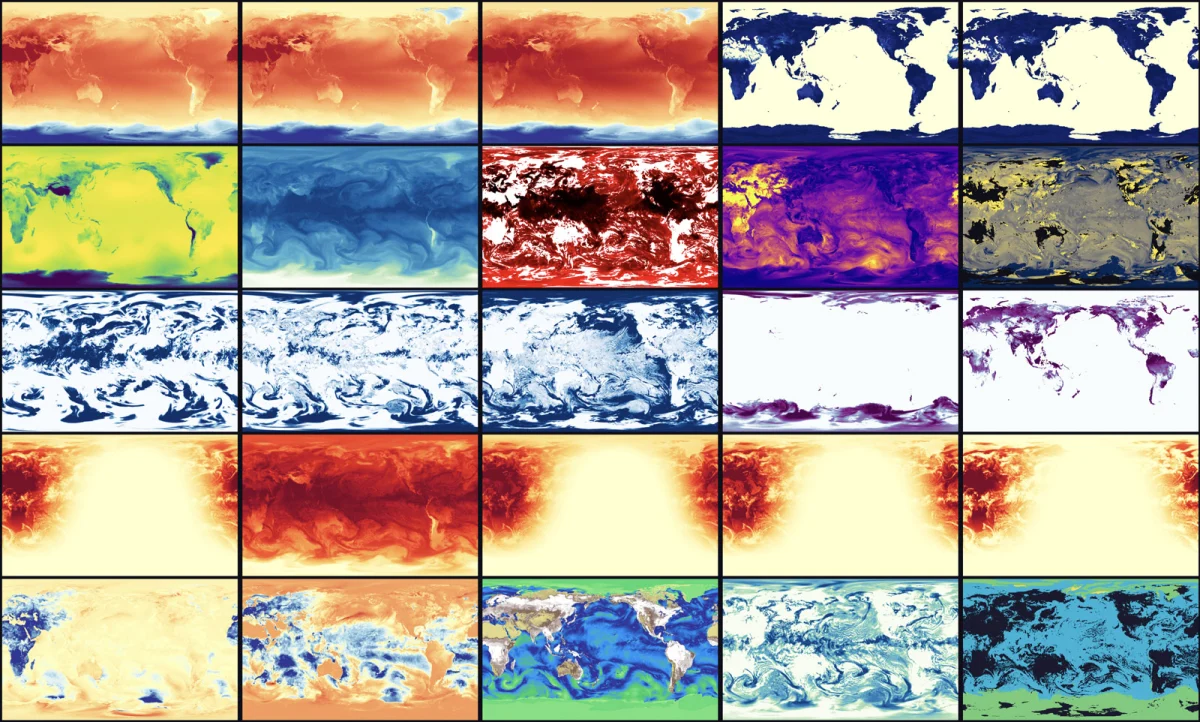
A significant shift is underway in the field of meteorology, propelled by the same deep learning techniques that power large language models, fundamentally altering how weather predictions are made. This technological revolution has not only enabled sophisticated weather simulations to run on conventional computing hardware, moving beyond the traditional reliance on supercomputers, but it has also opened new avenues for private companies to innovate. Leading this charge, WindBorne Systems, a startup renowned for its extensive network of long-duration weather balloons and a powerful proprietary forecasting model, has successfully closed a $37 million Series B funding round. This capital infusion is aimed at tackling the formidable challenge of translating advanced meteorological insights into actionable, lucrative applications for a diverse array of organizations and individuals.
The Evolution of Weather Prediction: From Observation to AI
For centuries, humanity has sought to understand and predict the weather, a pursuit vital for agriculture, navigation, and everyday life. Early attempts relied on empirical observation, local knowledge, and basic instruments like barometers and thermometers. The 20th century marked a pivotal turning point with the advent of numerical weather prediction (NWP). Pioneered by scientists like Vilhelm Bjerknes and later advanced by John von Neumann and Jule Charney, NWP involves translating the physics of the atmosphere into complex mathematical equations, which are then solved by powerful computers.
The sheer computational intensity of NWP necessitated the development and deployment of colossal supercomputers by national meteorological agencies worldwide. These machines, often costing hundreds of millions of dollars and consuming vast amounts of energy, became the backbone of modern weather forecasting, providing the foundational models used by meteorologists globally. While incredibly effective, this centralized, resource-intensive approach inherently limited widespread access to the most advanced forecasting capabilities. Only governments and major research institutions could afford the infrastructure and expertise required.
The past decade, however, has witnessed an exponential leap in artificial intelligence, particularly in machine learning and deep learning. Researchers began exploring how these algorithms, especially those akin to the neural networks driving large language models, could process vast datasets of historical weather observations, satellite imagery, radar data, and existing NWP model outputs. The breakthrough came when these AI models demonstrated the ability to learn the complex, non-linear relationships within atmospheric dynamics, producing highly accurate forecasts with significantly less computational overhead. This paradigm shift means that tasks once exclusive to supercomputers can now be performed on more accessible platforms, democratizing access to high-fidelity weather intelligence. This fundamental change is what WindBorne Systems aims to leverage and commercialize.
WindBorne’s Distinctive Data Collection and Forecasting Prowess
Founded in 2019, WindBorne Systems embarked on a mission to redefine atmospheric data acquisition. Recognizing the limitations of traditional sensing methods—such as ground stations, which are sparse in many regions, and satellites, which offer broad coverage but often lack granular vertical atmospheric profiles—the company developed a novel approach. Their strategy centers on deploying low-cost, long-endurance weather balloons designed to collect unique, high-resolution data from difficult-to-reach areas of the atmosphere.
CEO John Dean refers to this expansive network as a "planetary nervous system." With approximately 20 launch sites strategically positioned across the globe, WindBorne maintains an impressive fleet of around 600 balloons in the air at any given moment. These balloons are not merely passive data collectors; they are equipped with advanced sensors capable of providing crucial measurements that traditional systems often miss. A notable demonstration of their capability includes collecting data from within the turbulent eye of a typhoon, a feat that highlights their resilience and the critical value of their data in extreme weather events. The data gathered by these unique aerial platforms provides a denser, more immediate, and often more localized picture of atmospheric conditions than conventional methods.
Beyond their balloon fleet, WindBorne is also innovating with aerial sensor packages designed to descend into the ocean, transforming into floating buoys to continue collecting marine measurements. This multi-modal data collection strategy further enriches their proprietary dataset, creating a significant competitive advantage, or "moat," for their forecasting model. This advanced model doesn’t just rely on WindBorne’s unique data; it intelligently integrates and learns from vast datasets generated by government weather agencies worldwide, creating a comprehensive and highly accurate predictive tool. Dean emphasizes the tangible benefits: "We demonstrated that when you add balloons to the forecast, you get more accurate forecasts, and the value per data point is much stronger than satellites." This statement underscores the core of their value proposition – superior data leading to superior predictions.
Strategic Investment Fueling Expansion
The recent $37 million Series B funding round represents a robust endorsement of WindBorne Systems’ innovative approach and market potential. The round was co-led by prominent venture capital firms Khosla Ventures and Galvanize, with additional significant investments from TransLink Capital, Lux Capital, and existing investors. This substantial capital injection has elevated the company’s post-money valuation to $250 million, signaling strong investor confidence in its trajectory.
Venture capitalists are increasingly drawn to companies that combine cutting-edge AI with tangible, real-world data collection. For WindBorne, the proven accuracy of their forecasts, bolstered by their unique data, has "de-risked the demand signal to VCs," as Dean explained. The ability to demonstrate not only technological superiority but also growing revenue streams from early adopters—primarily government entities—provided a compelling case for investment. This funding is earmarked for critical strategic initiatives. A portion will be allocated to enhancing computational infrastructure, ensuring their AI models remain at the forefront of forecasting accuracy and speed. Another key investment area involves replacing the current satellite communications network for their balloon fleet with a more robust and potentially more cost-effective mesh radio network, enhancing operational efficiency and data transmission reliability. Crucially, a significant portion of the funds will be dedicated to building out WindBorne’s go-to-market team, a strategic move to aggressively expand their customer base beyond government agencies and into the burgeoning private sector.
Navigating the Complexities of Commercial Weather Intelligence
Historically, translating advanced meteorological data into scalable commercial ventures has proven challenging for many startups. Over the past decade, numerous companies attempting to establish sensing businesses, such as earth-observing satellite networks, encountered significant hurdles in penetrating the private sector. The primary difficulty lay in the fact that extracting actionable value from raw data often requires specialized expertise, established workflows, and significant integration efforts within existing business operations. Consequently, many of these ventures found their most receptive customers to be government agencies, which already possess the infrastructure and experience to utilize complex environmental data.
The private weather forecasting market, while substantial, has largely operated on a model of refining or repackaging government-produced forecasts. Companies in this space typically cater to niche demands, providing services like specialized weather reports for news media, critical data for aviation (e.g., plane de-icing schedules), optimized ship routing to avoid storms, or highly specific forecasts for commodity speculators. While these services are valuable, they often represent an incremental improvement on publicly available information rather than a fundamental shift in forecasting capability.
This landscape, however, is on the cusp of significant transformation. The advent of sophisticated AI tools is making data crunching vastly more efficient and, critically, more actionable. Saloni Multani, a partner at Galvanize and a co-leader of WindBorne’s funding round, articulates this shift clearly: "Integrating weather forecasts into broader business decision-making has traditionally been expensive and difficult. We think AI changes that equation. Better forecasts make the effort worthwhile, and AI makes it much easier to connect those forecasts to the decisions businesses are trying to make." This commentary highlights the core premise behind WindBorne’s commercial expansion: AI not only improves the forecast itself but also drastically lowers the barrier to entry for businesses wanting to leverage that forecast for strategic advantage.
The Future of Commercial Weather Intelligence: Broadening Impact
WindBorne Systems’ immediate commercial focus is on investment funds, where precise weather data can be a powerful predictor of commodity prices, agricultural yields, energy demand, and other market-moving business outcomes. However, the potential applications of their AI-driven, high-resolution forecasting extend far beyond financial markets.
The social and cultural impact of more accurate and accessible weather predictions cannot be overstated. Consider the agricultural sector, where timely and precise forecasts can optimize planting schedules, irrigation, and harvest operations, reducing waste and increasing yields. In logistics and supply chain management, anticipating severe weather events can prevent costly delays and rerouting. The energy sector, particularly renewables like wind and solar, stands to benefit immensely from improved forecasts, enabling more efficient grid management and energy trading. The insurance industry can leverage predictive models for risk assessment and disaster preparedness, potentially mitigating losses from extreme weather events, which are becoming more frequent and intense due to climate change. For disaster management and public safety agencies, hyper-local, accurate forecasts mean earlier warnings and more effective resource deployment, ultimately saving lives and protecting infrastructure.
The broader implications suggest a democratization of advanced weather intelligence. What was once the exclusive domain of supercomputer-wielding government agencies is now becoming accessible to a wider array of private enterprises. This shift promises to embed sophisticated weather insights directly into operational decision-making across countless industries, fostering greater resilience, efficiency, and economic value. WindBorne Systems, positioned at the nexus of innovative data collection and advanced AI, is poised to be a pivotal player in this unfolding future, transforming how businesses and societies interact with the planet’s ever-changing atmosphere. Their success in translating superior atmospheric data into tangible commercial solutions could well redefine the landscape of weather intelligence for decades to come.