Azin Asro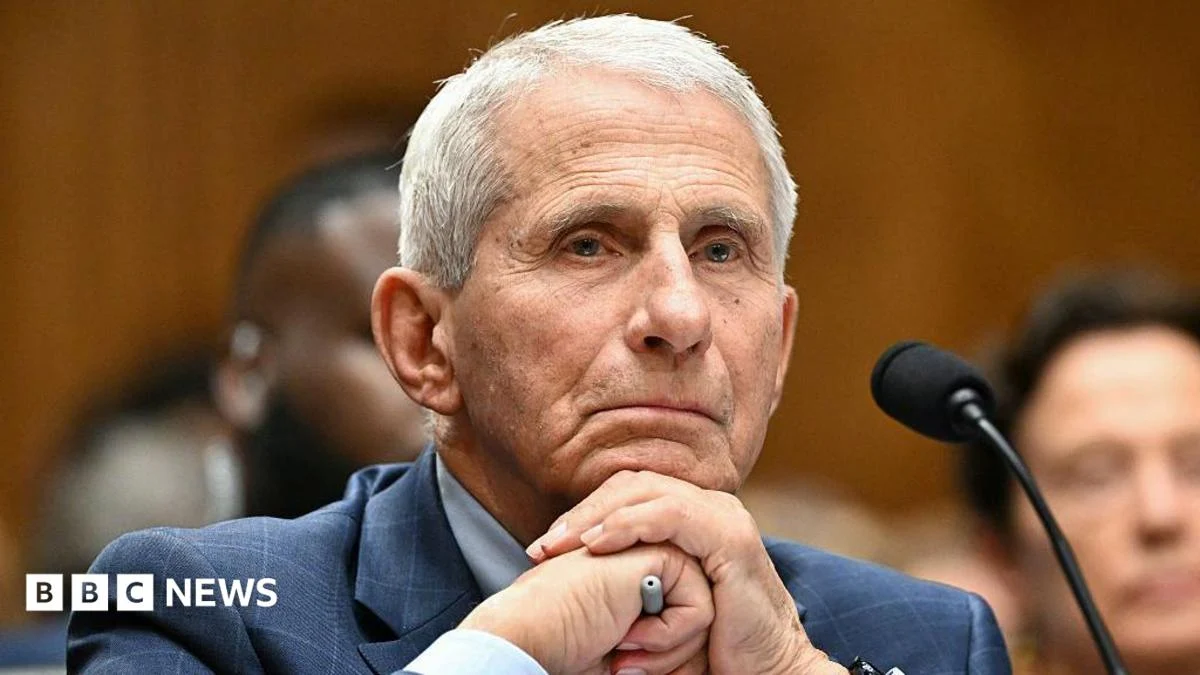
In a dramatic and highly charged session on Capitol Hill, Dr. Anthony Fauci, the former director of the National Institute of Allergy and Infectious Diseases (NIAID) and a pivotal figure in the United States’ COVID-19 response, declined to answer questions during a U.S. Senate hearing concerning the pandemic’s origins. Citing his constitutional right under the Fifth Amendment, Dr. Fauci indicated a fear that Republican lawmakers intended to use his testimony as grounds for a perjury prosecution. This invocation, a rare and significant move for a public official in such a high-profile setting, immediately escalated an already contentious debate surrounding the genesis of the SARS-CoV-2 virus and the handling of the global health crisis.
The Fifth Amendment Standoff
Dr. Fauci’s appearance before the Senate committee was marked by tension from the outset. He formally invoked his Fifth Amendment right, which protects individuals from being compelled to be a witness against themselves in any criminal case. "Although it pains me to do so because of the respect I have for the legislative branch of government," Dr. Fauci, 85, stated, "under the advice of my attorneys, I will invoke my right under the Fifth Amendment of the constitution to refrain from answering your questions." This declaration, made after years of public scrutiny and numerous prior testimonies under oath regarding the pandemic, underscored the deeply polarized political landscape surrounding COVID-19. Invoking the Fifth Amendment is a legal safeguard, not an admission of guilt, designed to shield individuals from potential self-incrimination, coercion, and misinterpretations that could lead to legal jeopardy.
The immediate catalyst for Dr. Fauci’s decision appeared to be the actions of Senator Rand Paul, a Kentucky Republican, who had publicly released more than a thousand pages of Dr. Fauci’s personal pandemic-era diary just days before the hearing. These diary entries, according to Senator Paul, contradicted Dr. Fauci’s public statements regarding the virus’s origins. Dr. Fauci explicitly stated that Senator Paul’s "obvious obsession" with pursuing his prosecution was the sole reason for his refusal to testify this time. He accused the senator of aiming to elicit statements that could be used to fulfill public pledges of seeing him "behind bars." Despite Dr. Fauci’s invocation of his rights, Senator Paul pressed on with his questioning, repeatedly inviting Dr. Fauci to "apologize" and announcing plans for the committee to vote on a resolution holding him in contempt of Congress. The exchange grew so heated that Senator Paul directed a security guard to remove one of Dr. Fauci’s lawyers, who attempted to interject during the senator’s line of questioning.
Dr. Fauci’s Public Service and the Pandemic’s Onset
To understand the weight of this hearing, it’s crucial to contextualize Dr. Fauci’s career and his role during the pandemic. For nearly four decades, Dr. Anthony Fauci served as the director of the NIAID, part of the National Institutes of Health (NIH). His illustrious career, spanning seven presidential administrations, saw him become a leading authority on infectious diseases, most notably for his pioneering work in the fight against HIV/AIDS. When COVID-19 emerged in late 2019 and rapidly spread globally, Dr. Fauci, with his extensive experience and scientific credibility, quickly became the public face of the U.S. response. He frequently appeared alongside President Donald Trump at White House briefings, providing scientific updates and health guidance to a nation grappling with unprecedented uncertainty.
The early days of the pandemic were characterized by a frantic race to understand a novel virus. Scientists worldwide worked tirelessly to identify its characteristics, transmission methods, potential treatments, and, crucially, its origin. Public health officials, including Dr. Fauci, were tasked with communicating rapidly evolving scientific information to the public, often in real-time, as new data emerged. This inherent fluidity of scientific discovery, combined with the immense pressure of a global crisis, created an environment ripe for misinterpretation and, eventually, political weaponization.
The Contentious Quest for Origins
The question of how COVID-19 originated has been a central point of scientific inquiry and political contention since the pandemic’s earliest days. Two primary theories have dominated the discussion:
- Natural Zoonotic Spillover: This theory posits that the virus naturally jumped from an animal host (likely bats) to humans, possibly through an intermediate animal host, in a process similar to previous epidemics like SARS and MERS. Proponents often point to the wet markets in Wuhan, China, as a potential early epicenter.
- Lab Leak Hypothesis: This theory suggests the virus accidentally escaped from a laboratory, specifically the Wuhan Institute of Virology (WIV), which conducts extensive research on coronaviruses. Variations of this theory range from an accidental infection of a researcher during fieldwork to a leak of an engineered virus.
In its 2025 report, the World Health Organization (WHO) stated that the natural-origins theory was the "best supported" idea based on the available evidence, but acknowledged that until more information emerges, the origin determination remains "inconclusive." This ambiguity has fueled persistent speculation and debate.
Dr. Fauci’s released diary entries offer a glimpse into the early scientific deliberations. In an entry from February 2020, discussing a conference call among COVID scientists, he noted that doctors did not have "total agreement" about the virus’s origin. Later, he wrote that he was "almost certain that the virus evolved naturally from a species jump, even though… I keep an open mind about the possibility of a lab leak." He further articulated the scientific principle: "[J]ust because two alternatives are possible that does not mean that they are equally probable." This demonstrates an initial openness to both possibilities, a standard approach in scientific inquiry when data is limited, before leaning towards the natural origin as more evidence accumulated. However, this nuanced scientific process was often lost in the public and political discourse, where certainty was demanded amidst uncertainty.
Political Fray and Public Trust
The relationship between Dr. Fauci and Senator Rand Paul has been notoriously acrimonious throughout the pandemic. Senator Paul, a former eye surgeon, has been one of the most vocal proponents of the lab-leak theory and a consistent critic of Dr. Fauci’s public health recommendations, including mask mandates and other restrictions. This personal and political feud reached a boiling point in numerous past hearings, often devolving into heated exchanges. Senator Paul has repeatedly accused Dr. Fauci of misleading the public and has been at the forefront of efforts to investigate his conduct.
This dynamic reflects a broader trend of political polarization that engulfed the pandemic response. Public health measures, scientific advice, and even the very existence of the virus became entangled in partisan battles, eroding public trust in institutions and experts. Dr. Fauci, as a prominent public figure, became a lightning rod for criticism, facing death threats and intense backlash from segments of the population and political spectrum who viewed him as emblematic of government overreach or a purveyor of misinformation. The release of his personal diaries, obtained through a Freedom of Information Act request after eight months of searching 11 separate government servers by a team associated with current US Health Secretary Robert F. Kennedy Jr., further fueled this narrative, framing his private thoughts as contradictory to his public statements.
Legal Ramifications and Legislative Posturing
The invocation of the Fifth Amendment by a witness in a congressional hearing is a significant event, signaling potential legal vulnerability. While it does not imply guilt, it indicates a witness’s belief that their testimony could be used against them in a criminal proceeding. The threats of contempt of Congress from Senator Paul and other Republicans, such as Senator Josh Hawley, who accused Dr. Fauci of having "contempt for this body," highlight the legislative tools available to Congress to compel testimony. A contempt citation can lead to a referral to the Department of Justice for prosecution, though such actions are often more symbolic than substantive, especially when a witness has invoked constitutional rights. Senator Ron Johnson, another Republican, vowed to push for a subpoena to compel Dr. Fauci’s testimony, underscoring the Republicans’ determination to press the issue.
On the other side of the aisle, Democratic senators came to Dr. Fauci’s defense, characterizing the hearing as a partisan attack designed to "entrap" him. Senator Maggie Hassan, for instance, criticized the hearing’s intent, arguing it served political theater rather than legitimate oversight. Some Democrats also sought to pivot the discussion, raising concerns about other public health issues, such as rising cases of measles and cyclosporiasis (a parasitic infection), indirectly criticizing the current administration’s focus on past pandemic figures.
Adding another layer of complexity, former President Joe Biden had issued a pre-emptive pardon for Dr. Fauci before leaving office, during which Dr. Fauci served as his chief medical officer after retirement from NIAID in 2022. Biden stated at the time that the pardons were not an acknowledgment of wrongdoing, nor should acceptance be misconstrued as an admission of guilt, but rather a recognition of public service. This pre-emptive pardon, however, has been interpreted differently across the political spectrum, with some viewing it as a shield against accountability and others as a deserved protection for a dedicated public servant.
Broader Implications and Enduring Debates
The spectacle of Dr. Fauci invoking the Fifth Amendment underscores the deep fissures that persist in American society regarding the COVID-19 pandemic. The quest for the virus’s origins remains scientifically inconclusive, yet politically charged. This ongoing debate, intertwined with accusations of malfeasance and a profound erosion of trust in scientific and governmental institutions, has significant societal implications. It challenges the ability of public health officials to communicate effectively during future crises, risks deterring talented individuals from public service, and hinders the nation’s capacity to unify in the face of common threats.
As the legal and political maneuvering continues, the episode serves as a stark reminder of how scientific inquiry can become entangled with partisan politics, personal animosities, and the enduring challenges of navigating public health emergencies in an era of intense scrutiny and division. The questions surrounding COVID-19’s origins, and the accountability of those who led the response, will likely continue to reverberate through congressional halls and public discourse for years to come.





 Amir Mahmud