Amir Mahmud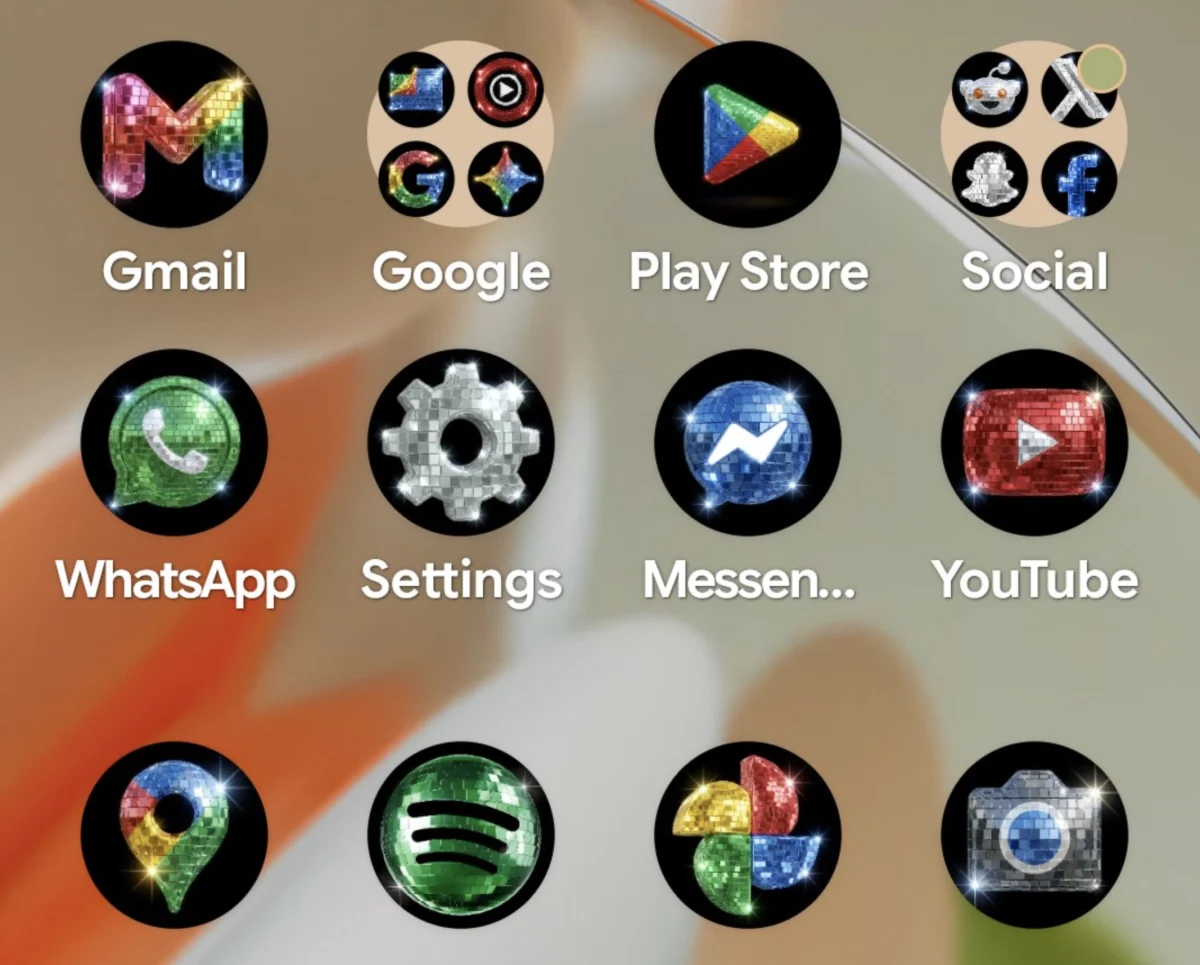
Google has joined a burgeoning trend of playful digital aesthetics, rolling out a custom set of Android app icons for its Pixel devices featuring a shimmering, disco-ball theme. This move follows a similar, temporary design by Spotify that garnered significant online attention, showcasing a shift in user interface design from purely functional minimalism to a more expressive and, at times, self-awarely kitschy approach. The decision by a tech giant like Google to embrace such a distinctive and polarizing visual style underscores a broader industry pivot towards enhanced user customization and a recognition of digital spaces as extensions of personal identity.
The Spark: Spotify’s Glittering Gambit
The origin of this recent "disco icon fun" can be traced back to Spotify, which introduced a temporary disco ball app icon to commemorate its 20th anniversary. Launched two decades ago, Spotify revolutionized music consumption by popularizing streaming and offering a vast library of tracks on demand. Over its history, the company has maintained a relatively consistent brand identity, characterized by its iconic green circular logo. This temporary departure from its established visual language was a bold choice, intended to celebrate a milestone with a touch of nostalgia and festivity.
However, the public reception was sharply divided. Many users expressed strong dislike for the glittering icon, describing it as "ugly," "distracting," or "off-brand." Social media platforms, particularly X (formerly Twitter), became a forum for a deluge of critical comments, with users demanding the return of the original, familiar Spotify logo. Yet, amidst the backlash, a contingent of users praised the icon for its uniqueness, humor, and a certain embrace of "kitsch." These users appreciated the unexpected whimsy and the nostalgic nod to a bygone era of entertainment, finding joy in its unconventional appeal. Spotify itself acknowledged the mixed reactions, playfully posting, "Alright, we know glitter is not for everyone," while reassuring users that the change was indeed temporary.
Google’s Playful Pivot
Seizing on the viral momentum and the spirited debate surrounding Spotify’s design choice, Google, specifically its Android ecosystem team, decided to engage with the trend. Sameer Samat, head of the Android ecosystem, took to X to gauge public interest, playfully tweeting, "Should we make this icon pack happen on Android?" alongside a mock-up of a Chrome icon transformed into a disco ball. The overwhelmingly enthusiastic, albeit often ironic, response seemingly affirmed Google’s decision to proceed.
Shortly after, Samat confirmed the release, posting, "Your wish is our command. Disco icons available on Pixel as of today… Are y’all sure you still want this?" The accompanying screenshot displayed a Pixel phone home screen fully adorned with sparkling, disco-ball-inspired icons for Google’s suite of applications, from Gmail to Google Maps. This immediate and responsive action by Google demonstrates a willingness to engage directly with internet culture and user sentiment, transforming a fleeting meme into an actual product feature.
These new icons are not a standalone app but are integrated into Pixel’s relatively new custom icons feature. This functionality, part of Google’s ongoing commitment to user personalization, allows Pixel owners to select from various AI-generated styles for their app icons. Prior to this, icon customization on Pixel devices was largely limited to dynamic coloring that matched the phone’s wallpaper and theme, a feature introduced with Material You. The disco ball icons represent a significant expansion of aesthetic choices, offering a maximalist alternative to the predominantly minimalist design trends that have dominated digital interfaces for the past decade.
The Evolution of Digital Personalization
The introduction of these highly stylized icons is not an isolated incident but rather a continuation of a longer trajectory in digital interface design. Early smartphone operating systems, exemplified by the original iPhone’s skeuomorphic design, attempted to mimic real-world objects to make digital interactions intuitive. Icons often had depth, shadows, and textures resembling their physical counterparts. However, this approach gradually gave way to "flat design" in the early to mid-2010s, championed by Apple’s iOS 7 and Google’s Material Design. Flat design emphasized simplicity, clean lines, and vibrant colors, prioritizing clarity and efficiency over realism.
For years, Android users have enjoyed a higher degree of customization through third-party launchers and icon packs, allowing them to dramatically alter the look and feel of their home screens. Apple, traditionally more restrictive, slowly began introducing more personalization options with iOS 14, including widgets and shortcuts that allowed users to create custom app icons, often leading to a resurgence of diverse aesthetic trends on iPhones.
Google’s "Pixel Drop" updates have been instrumental in enhancing native customization on its flagship phones. The March 2026 Pixel Drop, for instance, introduced a suite of AI-generated app icon templates, including a whimsical hand-drawn "Scribbles" aesthetic, a luxurious gold "Treasure" theme, and a vibrant, painted style dubbed "Easel." These options empower users to move beyond default settings and truly make their devices reflect their individual tastes. The disco-themed icons are a logical, albeit audacious, extension of this philosophy, pushing the boundaries of what a mainstream tech company is willing to offer in terms of visual flair.
Beyond Aesthetics: Cultural Undercurrents of "Whimsy"
The embrace of "whimsy" in digital design, particularly evident in the disco ball trend, reflects broader cultural shifts. As reported by The New York Times, there’s a growing inclination among younger generations, often dubbed "Zillennials" (the cohort bridging Gen Z and Millennials), towards playful, maximalist, and nostalgic aesthetics. This trend is interpreted by cultural observers as a "playful response to a difficult world." In an era marked by global anxieties, economic uncertainty, and constant digital bombardment, many seek comfort, escapism, and a sense of lightheartedness in their personal spaces, both physical and digital.
The disco ball, a quintessential symbol of the 1970s and early 1980s, evokes a strong sense of nostalgia for an era perceived by some as carefree and glamorous, even if historically inaccurate. This form of "retrofuturism" or nostalgic maximalism offers a contrast to the minimalist, often sterile, interfaces that have dominated technology for years. It’s a statement against the conventional, a desire to inject personality and humor into devices that are otherwise designed for efficiency and productivity. For users, a sparkly home screen can be a small act of rebellion against the seriousness of everyday life, a personal touch that transforms a utilitarian tool into a source of delight.
Strategic Implications in a Crowded Digital Landscape
For tech companies, engaging with such trends carries both risks and rewards. On one hand, adopting "off-brand" or overtly kitschy designs could potentially dilute a company’s carefully curated brand image, which is often built on principles of sophistication, innovation, and reliability. Google, known for its clean, accessible, and intuitive interfaces, venturing into a "terrible (incredible??)" aesthetic might puzzle some long-time users or brand purists.
However, the potential rewards are significant. In an increasingly competitive and commoditized smartphone market, offering unique personalization options can be a powerful differentiator. By tapping into internet memes and cultural trends, Google can foster a sense of connection and relevance with younger demographics who value authenticity and self-expression. It demonstrates agility and a willingness to step outside traditional corporate seriousness, potentially humanizing the brand.
Furthermore, these playful features can drive user engagement and create viral moments. The online chatter around Spotify’s icon, and now Google’s, generates free publicity and keeps the brands top-of-mind. It’s a form of "cultural marketing" that resonates deeply with users who feel seen and understood by the companies whose products they use daily. As X user Race Johnson quipped, seeing the Google icons, "When your home screen gets bottle service," perfectly encapsulates the indulgent and celebratory feeling these designs aim to evoke. Another user’s reaction, "Omg it’s awful. I’ll take it!" highlights the paradoxical appeal of such aesthetics – a recognition of their unconventional nature coupled with an irresistible desire to embrace them.
A Glimpse into the Future of User Interfaces
Google’s foray into disco-themed app icons, following Spotify’s lead, is more than just a fleeting aesthetic choice; it signifies a potential turning point in how we interact with our digital tools. It suggests a future where user interfaces are not just functional but deeply personal, emotionally resonant, and dynamically responsive to cultural currents. As artificial intelligence continues to advance, the capacity for on-demand, highly customized, and even ephemeral design elements will likely grow.
This trend toward personalization and whimsy challenges the long-held dogma of minimalist design, suggesting that digital experiences can be both efficient and expressive. It underscores the idea that our smartphones and digital environments are increasingly extensions of our identities, and as such, they should reflect the full spectrum of our tastes, including the playful, the nostalgic, and even the delightfully "awful." As technology continues to permeate every aspect of life, the lines between utility and personal expression are blurring, paving the way for a more vibrant, diverse, and perhaps, a little bit more sparkly digital future.