Amir Mahmud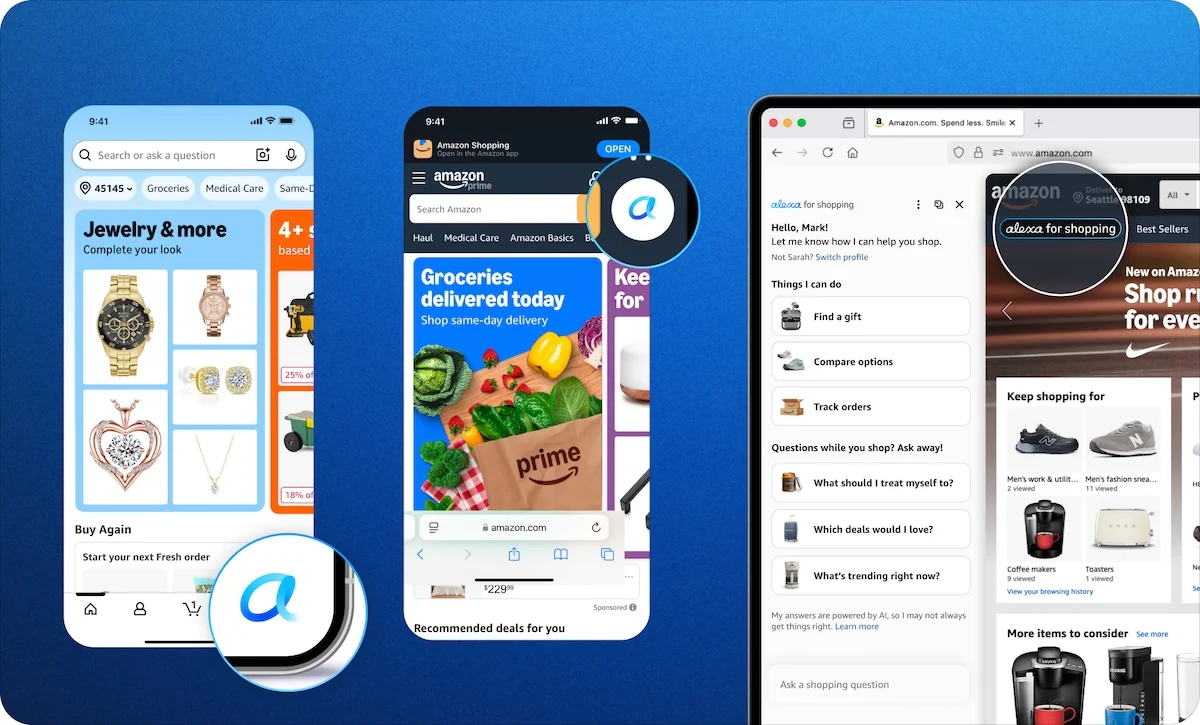
Amazon has significantly intensified its integration of artificial intelligence into the consumer journey with the introduction of "Alexa for Shopping," a sophisticated AI-powered personal assistant. This new system, leveraging the advanced capabilities of Alexa+, is designed to fundamentally reshape how customers interact with the e-commerce giant, offering a deeply personalized and automated shopping experience. The announcement signals a strategic move by Amazon to further embed AI into the very fabric of its retail operations, aiming to streamline product discovery, comparison, and purchasing across its vast marketplace and beyond.
The Evolving Landscape of E-commerce and AI Integration
The launch of Alexa for Shopping represents a pivotal moment in the ongoing evolution of digital retail, an industry Amazon has largely pioneered and dominated for decades. From its humble beginnings as an online bookstore in the mid-1990s, Amazon rapidly expanded its offerings, continually innovating with features like one-click ordering, customer reviews, and a highly effective recommendation engine. This engine, an early form of AI, meticulously analyzed browsing and purchase histories to suggest relevant products, fundamentally altering consumer expectations for personalized service.
Over the past decade, the proliferation of AI, particularly in natural language processing and machine learning, has ushered in a new era of possibilities for e-commerce. Voice assistants like Amazon’s Alexa, introduced in 2014, brought AI directly into homes, enabling hands-free control and basic voice-activated shopping. However, these early iterations often struggled with complex queries and nuanced understanding. The recent surge in generative AI capabilities, exemplified by large language models, has unlocked unprecedented potential for more human-like interactions and comprehensive assistance. This technological leap has set the stage for Amazon to move beyond simple voice commands and basic recommendations towards a truly intelligent shopping companion.
Prior to Alexa for Shopping, Amazon had experimented with other AI-driven initiatives. Most notably, the company introduced "Rufus," a generative AI shopping assistant, earlier in 2024. Rufus aimed to assist customers with product discovery and comparison within the mobile app. However, the rapid pace of AI development and Amazon’s ambition to create a more pervasive and deeply integrated solution led to the swift evolution from Rufus to Alexa for Shopping. This transition underscores Amazon’s commitment to agile development and its relentless pursuit of a seamless, AI-centric customer experience. The new assistant is positioned not merely as an upgrade but as a comprehensive reimagining of AI’s role in the shopping process.
Beyond Basic Recommendations: How Alexa for Shopping Works
Alexa for Shopping is engineered to deliver a cohesive, voice- and touch-enabled experience across a diverse range of devices, including mobile applications, desktop browsers, and Amazon’s Echo Show smart displays. This cross-platform integration ensures that the personalized shopping assistance is accessible wherever and whenever a customer chooses to shop. The core functionality revolves around its ability to understand and respond to complex, conversational queries, moving far beyond the keyword-based searches that have long defined online shopping.
Customers in the U.S. can now engage with Alexa for Shopping either by typing their questions directly into the main search bar on Amazon’s platforms or by utilizing a dedicated chat window for more interactive dialogue. The scope of its capabilities is remarkably broad, extending from practical product advice to logistical support for past purchases. For instance, a user might inquire, "What’s a good skincare routine for men?" or "When did I last order AA batteries?" The assistant is designed to process these natural language inputs and provide tailored responses, complete with product recommendations and even custom shopping guides. This proactive assistance differentiates it from traditional search engines, which typically only return a list of links.
The intelligence behind Alexa for Shopping is its ability to learn and adapt over time. Amazon states that the assistant continuously analyzes individual customer habits, preferences, and extensive purchase histories. This data-driven approach allows the AI to refine its understanding of each user, ensuring that its recommendations become progressively more personal and helpful. The goal is to create a dynamic, evolving relationship between the customer and the AI, where the assistant anticipates needs and preferences, mirroring the experience of a knowledgeable personal shopper but on a vastly larger and more efficient scale. This continuous learning mechanism is crucial for delivering the promised "connected, personalized assistance" that Amazon envisions.
A Deeper Dive into Personalization and Automation
The advanced capabilities of Alexa for Shopping extend well beyond simple question-answering and product recommendations. It is designed to automate and simplify various aspects of the shopping journey, introducing features that promise to save time and effort for consumers. One key function is its ability to compare products across different brands and specifications, providing users with objective insights to aid their decision-making. Instead of manually opening multiple product pages, customers can ask the assistant to highlight differences, read reviews, and summarize key features.
Price tracking is another significant enhancement. Users can instruct Alexa to monitor specific items and notify them when prices drop to a desired threshold. This feature can even be configured to automatically add an item to the cart once a target price is met, removing the need for constant manual vigilance. For example, a customer could tell Alexa, "Add this sunscreen to my cart if the price drops to $10." This level of proactive automation offers both convenience and potential cost savings, catering to value-conscious shoppers.
Furthermore, the assistant can manage recurring orders for essential household items. Customers can schedule regular deliveries of consumables like pet food, paper towels, or coffee, ensuring they never run out. This "set it and forget it" functionality streamlines the replenishment process, transforming what used to be a repetitive chore into an automated background task. By integrating these various forms of automation, Alexa for Shopping aims to free up customer time and mental bandwidth, allowing them to focus on higher-value activities while the AI handles the mundane aspects of shopping.
Navigating the Broader E-commerce Landscape
Perhaps one of the most ambitious and potentially impactful features of Alexa for Shopping is its ability to transcend Amazon’s own marketplace. The assistant is capable of searching and making purchases from other online retailers. This functionality is powered by its "Buy for Me" feature, which can handle the entire purchase process on behalf of the user, even on external websites. This capability marks a significant strategic move, positioning Amazon’s AI not just as an in-house tool but as a universal shopping agent.
While this cross-platform shopping offers undeniable convenience for consumers, allowing them to consolidate their purchasing power through a single interface, it also introduces a layer of complexity and potential controversy. The notion of an AI assistant acting autonomously to make purchases on external sites raises questions about data privacy, security, and the very nature of consumer choice. Some online retailers might view this feature with apprehension, concerned about Amazon’s AI potentially directing traffic or sales away from their direct channels or, conversely, acting as an intermediary that could extract valuable customer data. The broader implications for market competition and digital commerce ethics are likely to be debated as this feature gains traction.
This expansion of AI capabilities into external retail environments aligns with Amazon’s broader strategy of extending its reach across the digital economy. The launch of Alexa for Shopping follows closely on the heels of other recent innovations, such as the expansion of its 30-minute delivery service, "Amazon Now," to dozens of U.S. cities, and a new AI-powered feature that generates real-time conversational audio responses to customer product questions directly on product pages. These initiatives collectively underscore Amazon’s aggressive push to enhance every touchpoint of the customer journey with advanced technology, from discovery and decision-making to delivery speed and post-purchase support.
Strategic Implications and Market Dynamics
The introduction of Alexa for Shopping carries significant strategic implications for Amazon and the broader e-commerce landscape. For Amazon, this advanced AI assistant represents a powerful tool to deepen customer engagement and loyalty. By offering unparalleled convenience and personalization, Amazon aims to make its platform even more indispensable to consumers, potentially increasing transaction frequency and average order value. The wealth of data gathered through these AI interactions will also provide Amazon with even finer-grained insights into consumer behavior, allowing for more precise targeting and product development.
From a competitive standpoint, Alexa for Shopping places Amazon firmly at the forefront of AI-driven retail innovation. Other major players in e-commerce and tech, such as Google, Microsoft, and various retail chains, are also heavily investing in AI to enhance their shopping experiences. However, Amazon’s unique position, combining a vast marketplace, a mature logistics network, and a ubiquitous voice assistant (Alexa), gives it a distinct advantage in integrating these technologies seamlessly. The "Buy for Me" feature, in particular, could disrupt how consumers discover and purchase products across the entire internet, potentially solidifying Amazon’s role as the central hub for all online shopping.
However, the rapid deployment of such sophisticated AI also presents challenges. Algorithmic bias, where AI systems inadvertently favor certain products or brands due to historical data or design choices, is a persistent concern. Ensuring fairness and transparency in recommendations will be crucial for maintaining user trust. Furthermore, the sheer volume of data processed by Alexa for Shopping raises important questions about data privacy and security. As the AI learns more about individual preferences and purchasing habits, customers will expect robust safeguards to protect their personal information.
Ethical Considerations and the Future of Shopping
The profound personalization offered by Alexa for Shopping, while convenient, also invites ethical scrutiny. The assistant’s ability to understand customer habits, preferences, and purchase history to "make the assistant more personal and more helpful over time" raises questions about consumer autonomy and the potential for persuasive technology. When an AI can anticipate needs and subtly guide purchasing decisions, the line between helpful assistance and algorithmic influence can become blurred. Consumers might find their choices subtly narrowed, potentially leading to a "filter bubble" effect where they are primarily exposed to products similar to their past purchases, limiting discovery of new or diverse options.
Moreover, the "Buy for Me" feature, allowing the AI to transact on external sites, brings the concept of AI autonomy into sharp focus. While designed for convenience, this capability could be perceived as a relinquishment of direct control over purchasing decisions. The balance between empowering users through automation and maintaining their agency in consumption choices will be a critical aspect of how this technology is received and regulated. Privacy advocates and consumer watchdogs are likely to monitor these developments closely, pushing for clear disclosures and robust opt-out mechanisms.
Looking ahead, Alexa for Shopping signals a future where AI is not just a tool but an active participant in the daily lives of consumers. It represents a significant step towards a more automated, personalized, and potentially frictionless shopping experience. As AI technology continues to advance, the capabilities of such assistants will undoubtedly grow, posing both exciting opportunities for innovation and complex challenges related to ethics, privacy, and market dynamics. Amazon’s latest AI assistant is more than just a new feature; it is a declaration of intent, reshaping the very definition of online retail for years to come.