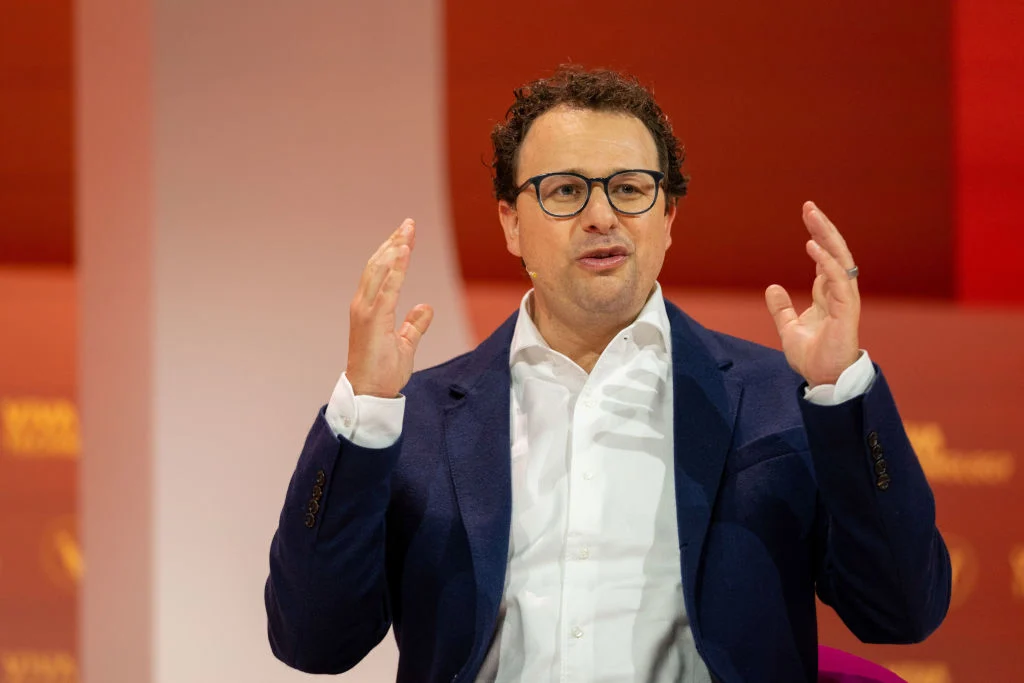
Amir Mahmud
Europe’s technology landscape is undergoing a profound transformation, evolving from a region often perceived as lagging behind global giants to a vibrant epicenter of innovation. While names like Lovable and Mistral AI have recently captured headlines and significant investment, signifying the continent’s growing prowess, a deeper current of ingenuity flows beneath the surface. This new generation of European startups, many operating in critical "deep tech" domains, are poised to redefine industries, address pressing global challenges, and solidify Europe’s strategic position in the global technological race.
The burgeoning European startup ecosystem is not merely a recent phenomenon; it is the culmination of decades of investment in research and development, a rich talent pool emerging from world-class universities, and a concerted effort by governments and private entities to foster an environment conducive to entrepreneurship. Historically, Europe has been a cradle of scientific discovery and industrial revolution. However, in the late 20th and early 21st centuries, the digital revolution saw much of its commercialization concentrated in Silicon Valley. Now, with a renewed focus on technological sovereignty, sustainability, and artificial intelligence, European nations are actively cultivating their own tech champions. Initiatives like the European Innovation Council and national startup funds are providing crucial capital and support, while a cultural shift is encouraging more researchers and engineers to translate their breakthroughs into commercial ventures.
To illuminate this dynamic landscape, a recent curatorial effort involved soliciting recommendations from leading venture capitalists across Europe, alongside internal selections by technology journalists. The mandate was clear: identify two promising startups from each investor’s perspective—one from their existing portfolio, reflecting their conviction, and another outside it, showcasing their broader market insights. This rigorous methodology has yielded a diverse roster of 21 companies, spanning various stages of development from nascent ventures to established unicorns, and operating across sectors from defense and space to clean energy and advanced AI. These selections collectively offer a compelling snapshot of Europe’s strategic focus, particularly its ambition to leverage deep tech talent to carve out its unique role in the global AI competition and beyond.
Forging the Future: Defense and Deep Tech
Alta Ares: Redefining Counter-Drone Warfare
In an era marked by evolving geopolitical tensions and the widespread proliferation of unmanned aerial vehicles (UAVs), effective counter-drone technology has become a critical imperative for national security. Prague-based Alta Ares is at the forefront of this challenge, developing sophisticated AI-powered systems designed to detect, track, and neutralize hostile drone incursions. The conflict in Ukraine has served as a stark reminder for European defense ministries about the urgent need to modernize their capabilities, particularly against low-cost, high-impact drone threats. Alta Ares’s approach, emphasizing cheaper and more efficient interceptor solutions, directly addresses this demand. Its innovations hold significant market potential, not only in military applications but also for safeguarding critical infrastructure, public events, and sensitive commercial zones, transforming a previously niche defense sector into a burgeoning area of innovation.
Cailabs: Photonics for Advanced Data Transmission
Harnessing the fundamental properties of light, Cailabs is a French deep tech company pushing the boundaries of photonics for high-stakes applications in aerospace, defense, and industry. Their core innovation lies in manipulating light to enable faster, more robust, and secure data transmission. As the global demand for instantaneous and reliable communication skyrockets, particularly for satellite networks and complex industrial systems, Cailabs’ technology offers a compelling solution. Backed by a mix of public and private investment, the company is poised to deploy 50 optical ground stations, a critical infrastructure component to support the burgeoning laser communication market with satellites. This strategic move highlights the growing synergy between advanced scientific research and commercial viability, underpinning Europe’s ambition to lead in high-precision engineering.
Optics11: Sensing in Extreme Environments
Monitoring critical infrastructure in harsh, inaccessible environments presents significant challenges, particularly for subsea networks vital to global communication and energy supply. Optics11, based in the Netherlands, specializes in advanced fiber-optic sensing systems capable of operating reliably underwater and in other extreme conditions. Their technology is crucial for preventing disruptions to vital subsea cables, pipelines, and energy grids, which are increasingly vulnerable to both natural hazards and malicious interference. With financial backing from the European Investment Bank, Optics11 underscores Europe’s commitment to safeguarding its strategic assets and ensuring the resilience of essential services, positioning itself as a key player in critical infrastructure protection.
Powering Progress: Energy and Sustainability Innovations
Flower: Intelligent Renewable Energy Management
The transition to a sustainable energy future hinges on effectively integrating intermittent renewable sources like wind and solar into national grids. Swedish startup Flower is tackling this complex challenge head-on, leveraging artificial intelligence and advanced battery energy storage systems to make renewable energy utilization more predictable and stable. As global energy grids become increasingly decentralized and reliant on variable inputs, solutions like Flower’s are indispensable for maintaining grid stability, reducing reliance on fossil fuels, and accelerating decarbonization efforts. Their recent success in raising over $60 million in bonds underscores investor confidence in their ability to scale and contribute significantly to the global energy transition.
Proxima Fusion: Chasing the Dream of Clean Energy
The quest for a limitless, clean energy source has captivated scientists for decades, and nuclear fusion remains the ultimate prize. Proxima Fusion, a German company, stands as one of Europe’s leading contenders in this high-stakes race. Moving beyond traditional nuclear fission, which produces radioactive waste, fusion promises to replicate the sun’s energy-generating process on Earth. The company has garnered substantial support, including a significant $460 million commitment from the state of Bavaria, to advance its ambitious plans. Proxima Fusion aims to build a demonstration stellarator near Munich, a crucial step toward realizing the world’s first commercial fusion power plant in Europe. This endeavor represents a massive scientific and engineering challenge, but its potential impact on climate change and global energy security is unparalleled.
The AI Frontier: Models, Agents, and Infrastructure
Botify: Navigating the AI Search Paradigm Shift
As search engines increasingly integrate generative AI capabilities, the landscape for online visibility is undergoing a seismic shift. Traditional Search Engine Optimization (SEO) is giving way to Generative Engine Optimization (GEO), and Botify, a seasoned player in the search analytics space, has embraced this evolution. The French company helps brands optimize their content for AI-driven search results, a critical function as large language models (LLMs) summarize and synthesize information directly, potentially bypassing traditional website clicks. With major clients like Macy’s and The New York Times, Botify is positioning itself as an essential partner for businesses adapting to this new digital reality, competing with new entrants while leveraging its foundational experience.
BottleCap AI: Efficient Foundational Models for the Masses
From Prague, BottleCap AI is making waves with its dual strategy of developing efficiency-focused foundational large language models (LLMs) and building user-facing applications on top of them. The startup boasts a formidable founding team, including an entrepreneur with a successful exit to Meta and two distinguished AI researchers. Their focus on efficiency addresses a key challenge in the LLM space: the immense computational resources required to train and run these models. By optimizing their foundational models, BottleCap AI aims to democratize access to advanced AI capabilities, exemplified by their AI-powered news app, Pulse. This integrated approach of model development and application promises to deliver tangible value across various industries.
Cala: The Knowledge Layer for Intelligent AI Agents
The next generation of artificial intelligence is moving towards autonomous AI agents, capable of performing complex tasks with minimal human intervention. However, a significant hurdle remains: providing these agents with a robust and structured understanding of the world. Cala, spearheaded by high-profile Spanish entrepreneur and AI expert Elisenda Bou-Balust (who previously sold her company Vilynx to Apple), is developing the crucial knowledge layer that AI agents currently lack. By building sophisticated knowledge graphs, Cala aims to enable AI agents to reason more effectively, access accurate information, and make more reliable decisions. This foundational technology is critical for unlocking the full potential of AI agents across diverse applications, from customer service to scientific research.
Fundamental: AI for Enterprise Data Insight
In an era defined by an exponential surge in data, enterprises are constantly seeking more effective ways to extract actionable insights from their vast datasets. Fundamental, a European startup, addresses this need with Nexus, a proprietary foundation AI model specifically designed for big data analysis. Having recently emerged from stealth mode in February with a remarkable $255 million Series A funding round, valuing the company at $1.4 billion, Fundamental is rapidly gaining traction. Its technology promises to transform how businesses analyze complex information, enabling faster, more accurate decision-making and offering a significant competitive edge in data-driven markets.
Gradium: The Voice of AI Agents
The human-computer interface is increasingly moving beyond text and visuals to include sophisticated voice interactions. Gradium, a spinout from the French AI research lab Kyutai, is a key innovator in this domain, specializing in real-time text-to-speech AI voice models. These models are capable of giving AI agents natural, multi-lingual voices, enhancing user experience and broadening the applicability of AI in areas like customer service, virtual assistants, and content creation. Having secured a substantial $70 million seed round, Gradium is poised to challenge established players like ElevenLabs, pushing the boundaries of realistic and expressive AI-generated speech.
HappyRobot: Deploying AI Agents for ROI
While the development of AI agents is accelerating, the practical challenge of deploying them effectively and ensuring a clear return on investment (ROI) remains paramount for enterprises. HappyRobot, a startup backed by prominent investors like a16z and Y Combinator, is focusing precisely on this gap. Although headquartered in the U.S., its Spanish co-founders and significant European team reflect the continent’s talent in AI. HappyRobot’s mission is to build AI agents that are not just intelligent but also readily deployable and capable of delivering tangible business value across complex use cases, positioning them as a vital enabler for widespread enterprise AI adoption.
Macrodata Labs: The Foundation of Quality AI Training Data
The adage "garbage in, garbage out" holds particularly true for artificial intelligence. The performance and reliability of any AI model are directly proportional to the quality of its training data. Macrodata Labs, a European startup, is poised to address this fundamental need by developing infrastructure and tooling that empowers companies to create robust and high-quality training datasets. While still in its "coming soon" phase, the concept is critical: by providing the necessary tools to curate, clean, and manage data effectively, Macrodata Labs will play a foundational role in enabling the development of more accurate, fair, and powerful AI models across all sectors.
Multiverse Computing: Shrinking AI’s Footprint
The computational demands of large AI models are immense, leading to significant operational costs and energy consumption. Multiverse Computing, a Spanish startup co-founded by physicist Román Orús, offers a groundbreaking solution: technology that compresses open-weight AI models (like those from OpenAI, Meta, DeepSeek, and Mistral AI) into smaller, more efficient versions. This innovation drastically reduces the expense and hardware requirements for running advanced AI, making it more accessible for deployment on a company’s own infrastructure or even edge devices. With $250 million raised, Multiverse Computing is positioned to democratize high-performance AI, reduce its environmental impact, and enable broader adoption across industries.
Roofline: Bridging AI Software and Diverse Hardware
The rapidly evolving landscape of AI hardware, encompassing various types of chips from specialized GPUs to neural processing units (NPUs) and application-specific integrated circuits (ASICs), presents a significant challenge for developers: optimizing AI models for efficient deployment across this fragmented ecosystem. Roofline, a university spinout, is developing crucial software that bridges this gap. Their technology enables users to deploy AI models efficiently on diverse hardware architectures, maximizing performance and minimizing computational overhead. This innovation is vital for accelerating the pace of AI development and deployment, ensuring that cutting-edge models can run effectively on the most suitable and cost-effective hardware available.
Redefining Industries: From Factories to Finance
Apron: Streamlining SMB Finance
Small and medium-sized businesses (SMBs) form the backbone of the European economy, yet they often grapple with complex and time-consuming administrative tasks, particularly in financial management. Apron, a fintech company, offers a solution by simplifying invoice processing for SMB owners. This segment represents a lucrative market for fintech innovators, as business owners are often willing to invest in tools that save them precious time and streamline operations. By alleviating the burden of manual invoice management, Apron empowers SMBs to focus on their core activities, improve cash flow, and enhance overall financial health, contributing to a more efficient and productive business environment.
Inbolt: Intelligent Automation for Manufacturing
The industrial sector is undergoing a profound transformation driven by Artificial Intelligence and robotics, ushering in the era of Industry 4.0. French startup Inbolt is at the forefront of this shift, developing "Physical AI" solutions that enhance and expand automation in factories. By integrating AI with robotics, Inbolt improves precision, flexibility, and efficiency across manufacturing processes, from automotive assembly lines to electronics production and home goods manufacturing. With its technology already deployed in over 70 factories, Inbolt demonstrates the tangible impact of AI in optimizing industrial operations, reducing errors, and driving productivity gains in critical European industries.
Legora: AI in the Legal Realm
The legal profession, traditionally slow to adopt new technologies, is now experiencing a rapid digital transformation, heavily influenced by AI. Legora, an AI platform for lawyers, is not only innovating with its technology but also making a splash with its unique marketing strategy. The Swedish-born startup, now headquartered in New York, famously enlisted actor Jude Law as the face of its brand, drawing attention and creating buzz in a competitive market. This bold move highlights the growing competition in legal tech, where mainstream LLMs are challenging established players. Legora’s success in securing a $5.55 billion valuation underscores the immense potential and investor confidence in AI solutions that can streamline legal research, document review, and other complex tasks, making legal services more efficient and accessible.
Pennylane: A Unified Financial OS for SMBs
Recognized as a French unicorn, Pennylane is on an ambitious trajectory to become the comprehensive financial operating system for small and medium-sized businesses across Europe. Initially focusing on accounting software, Pennylane has strategically expanded its offerings to provide a holistic finance management platform. This evolution reflects a broader trend among growth-stage fintechs to offer integrated solutions that address multiple financial needs of SMBs, from invoicing and expense management to banking and payroll. By consolidating various financial tools into a single, user-friendly platform, Pennylane aims to empower SMBs with greater control over their finances, foster better decision-making, and support their growth within the fragmented European market.
Theker: Robotics as a Service for Diverse Applications
The concept of "Robots as a Service" (RaaS) is democratizing access to advanced automation, allowing businesses to deploy robotic solutions without significant upfront capital investment. Theker, a Spanish startup, is a notable player in this space, developing AI-enabled robots for a variety of complex use cases. Backed by Zara owner Inditex through a dedicated fund, Theker’s innovations have immediate applicability in improving logistics and supply chain efficiency for large retail operations. Beyond this, the startup is also exploring critical applications in waste management and food and beverage production, showcasing the versatility of its robotic solutions and their potential to drive efficiency and sustainability across multiple industrial sectors.
Beyond Earth: Space Exploration and Manufacturing
PLD Space: Europe’s Drive for Space Autonomy
The global "New Space" economy is booming, with private companies playing an increasingly prominent role in space exploration and commercialization. Spain’s PLD Space is a key player in Europe’s push for greater space autonomy, developing launch vehicles for small satellites. Following the successful launch of its suborbital rocket, Miura 1, in 2023, the company is now focused on developing a reusable orbital launcher. This ambition is critical for Europe to reduce its reliance on foreign launch capabilities and foster its own independent access to space. A recent Series C funding round of $209 million, led by Mitsubishi Electric, brought their total funding to over $350 million, signaling strong international confidence in PLD Space’s vision to become a major force in the competitive small satellite launch market.
Space Forge: Manufacturing in the Microgravity Frontier
The unique conditions of microgravity in space offer unparalleled opportunities for advanced materials science and manufacturing, particularly for creating components that are difficult or impossible to produce on Earth. Space Forge, a UK-based company, is capitalizing on this potential by manufacturing semiconductor components in orbit. The company’s focus on high-performance chips, coupled with geopolitical tailwinds emphasizing supply chain resilience and diversification, positions it strategically. Having recently achieved a key milestone by generating plasma in low Earth orbit, Space Forge is demonstrating the viability of in-space manufacturing. This pioneering work could lead to breakthroughs in electronics, pharmaceuticals, and other high-tech industries, opening a new frontier for economic activity beyond our planet.
The collective trajectory of these 21 European startups paints a vivid picture of a continent determined to lead in the next wave of technological innovation. From enhancing national defense and securing critical infrastructure to powering a sustainable future and revolutionizing industries with AI and advanced robotics, these companies are not just building products; they are shaping the future of Europe and beyond. Their diverse geographical origins and wide-ranging specializations underscore the strength and breadth of Europe’s deep tech ecosystem, signaling a potent force in the global economy and a compelling story of innovation yet to fully unfold.