Amir Mahmud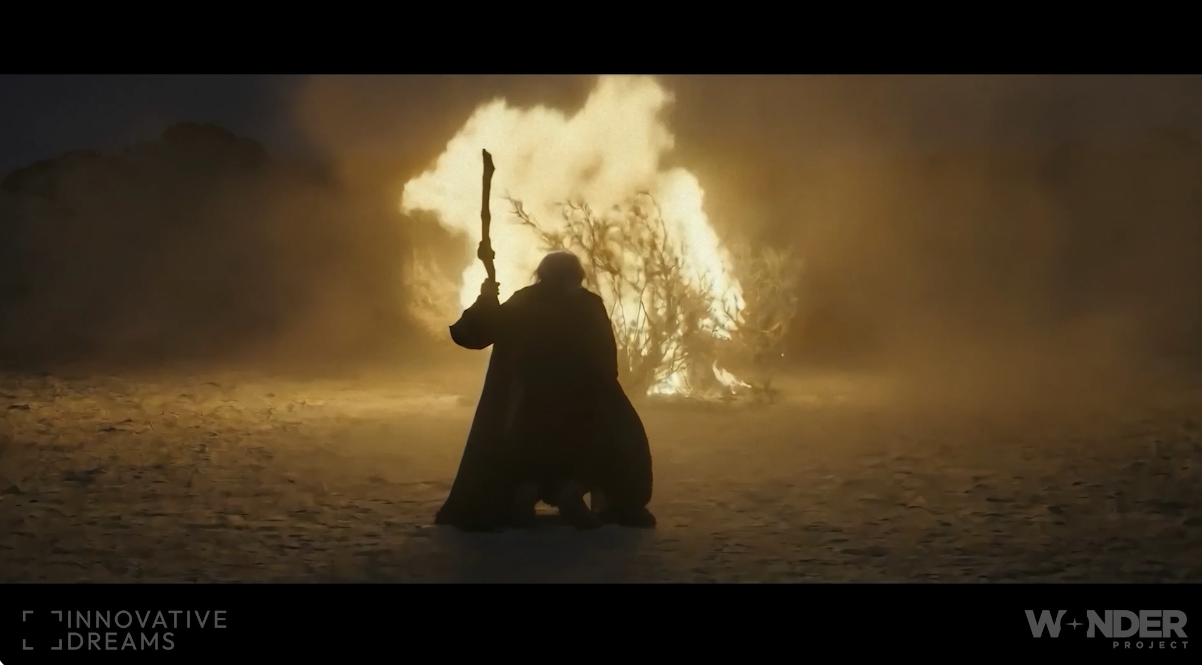
In a significant development poised to reshape the landscape of film and television production, Luma, an innovator in artificial intelligence-driven video generation, has unveiled Innovative Dreams, a new production company. This venture marks a strategic partnership with Wonder Project, a streaming service dedicated to creating religious films and television series available on Amazon Prime, signaling a profound shift in how content, particularly within niche markets, may be conceived, produced, and distributed. The alliance is set to debut its inaugural project, "The Old Stories: Moses," featuring acclaimed British actor Ben Kingsley, with its release anticipated this spring on Prime Video.
A New Paradigm in Production
The launch of Innovative Dreams is more than just the formation of another production house; it represents a tangible leap into the next generation of filmmaking, leveraging Luma’s advanced AI tools to streamline and revolutionize the creative process. According to Luma’s official announcement, Innovative Dreams functions as a production services entity, where seasoned filmmakers from director Jon Erwin’s team collaborate closely with Luma’s creative technologists. This synergy aims to empower studios and independent filmmakers to bring their most ambitious visions to life with unprecedented efficiency and flexibility. The core innovation lies in the integration of Luma Agents—the company’s recently introduced suite of AI tools designed for comprehensive creative work across text, image, video, and audio generation—directly into the production workflow.
These Luma Agents facilitate a real-time collaborative environment, allowing creative teams to make instantaneous modifications to sets, props, and lighting, and seamlessly integrate footage of human actors into digitally generated environments. This capability, Luma asserts, offers a substantial enhancement over conventional virtual production and performance capture methodologies, which typically relegate such intricate integrations to the post-production phase. The company’s social media statement underscored this advancement, proclaiming, "This is the leverage of AI — not just faster or cheaper, but better than what came before." This bold claim suggests a paradigm shift where AI doesn’t merely optimize existing processes but fundamentally elevates the quality and creative scope of filmmaking.
The Genesis of Innovative Dreams
Luma AI, founded with the vision of democratizing high-quality video generation, has been at the forefront of developing sophisticated generative AI models capable of transforming text prompts and simple images into complex, photorealistic video sequences. Their technological prowess stems from deep research in neural rendering and 3D reconstruction, allowing them to create dynamic, immersive digital worlds. By venturing into direct content production through Innovative Dreams, Luma is moving beyond merely providing tools, effectively demonstrating the practical application and transformative potential of its technology in a commercial context.
The partnership with Wonder Project adds a unique dimension to this technological foray. Wonder Project, co-founded in 2023 by accomplished director Jon Erwin and former Netflix executive Kelly Hoogstraten, was established with a clear mission: to cater to the global "faith and values" audience. This demographic, often underserved by mainstream Hollywood, represents a significant and loyal viewership seeking content aligned with their spiritual and ethical perspectives. Wonder Project’s initial success with "House of David," a biblical drama series about King David released on Amazon Prime in 2025, underscored the market’s demand for high-quality, faith-centric storytelling. The collaboration with Luma AI, therefore, positions Innovative Dreams at the intersection of cutting-edge technology and a deeply resonant cultural market, aiming to unlock new creative and economic opportunities within this specialized niche.
Evolution of Cinematic Technology
To fully appreciate the significance of Luma’s "real-time hybrid filmmaking" approach, it’s essential to contextualize it within the broader history of cinematic innovation. For decades, filmmakers have pushed the boundaries of visual storytelling, moving from elaborate practical effects and miniature models to the digital realm. The advent of Computer-Generated Imagery (CGI) in the late 20th century, famously showcased in films like "Jurassic Park," revolutionized what was possible, allowing for the creation of fantastical creatures and environments that defied physical constraints.
This was followed by the refinement of performance capture technology, popularized by films such as "The Lord of the Rings" and significantly advanced by James Cameron’s "Avatar." Performance capture involves actors performing in specialized studios, wearing suits embedded with markers that track their movements and facial expressions, which are then translated into digital characters. While offering unparalleled control over character animation, this process often requires extensive post-production work to integrate the digital elements seamlessly with live-action footage.
More recently, virtual production has emerged as another transformative technology, exemplified by series like "The Mandalorian." In this method, actors perform on physical sets augmented by massive LED screens displaying real-time game-engine graphics. These screens project digital environments that react dynamically to camera movements, allowing filmmakers to capture the blending of physical and digital worlds directly during the shoot. This reduces the need for green screens and extensive post-production compositing, providing immediate visual feedback and enhancing the actors’ immersion. Luma’s innovative approach, combining the best aspects of performance capture and virtual production with the generative power of AI, seeks to further democratize and accelerate these complex processes, making them more accessible and cost-effective.
The Promise of Real-Time Hybrid Filmmaking
Jon Erwin, in a promotional video detailing the partnership, highlighted Innovative Dreams’ adoption of a novel "real-time hybrid filmmaking" process. This methodology fuses the precision of performance capture with the immersive qualities of virtual production, but crucially, it does so live and at a significantly reduced cost, thanks to Luma’s advanced AI tools.
Erwin explained that Luma’s technology allows filmmakers to capture a human actor’s performance anywhere and instantly integrate it into a photorealistic, AI-generated scene. This means a director could film an actor against a plain backdrop, and Luma’s AI could then transport that performance into an elaborate historical setting, a futuristic cityscape, or an alien planet, all in real-time. Going a step further, the AI can even generate entirely new faces or appearances for characters, mapping these digital alterations onto the actor’s original movements and facial expressions, thus creating a completely transformed on-screen persona while retaining the nuance of human performance. This capability opens up extraordinary possibilities for character design, world-building, and iterative storytelling, where creative decisions can be tested and refined on the fly.
Navigating the Faith and Values Market
The decision to launch Innovative Dreams with a faith-based project like "The Old Stories: Moses" holds significant market implications. The faith and values entertainment sector represents a powerful, often underestimated, segment of the global audience. Historically, content for this demographic has sometimes been criticized for lower production values or limited storytelling scope compared to mainstream productions. By bringing state-of-the-art AI technology to this genre, Luma and Wonder Project aim to elevate the quality and appeal of faith-based narratives, potentially attracting a wider audience and setting new industry standards.
The market for religious and inspirational content is substantial, driven by a dedicated audience that actively seeks media reflecting their beliefs and moral frameworks. This audience often exhibits strong community ties and a propensity to support content that resonates with their values, making it a lucrative, albeit specialized, market. The ability to produce high-quality, visually stunning historical dramas or fantastical narratives from religious texts more efficiently could unlock a torrent of new content, addressing the long-standing demand for diverse stories within this genre. While the immediate focus is on "The Old Stories: Moses," it remains to be seen whether Innovative Dreams will exclusively cater to faith-based content or if its services will eventually expand to encompass a broader range of genres, leveraging the same technological advantages.
Industry-Wide Implications and the AI Race
The emergence of Innovative Dreams is not an isolated event but rather indicative of a broader trend within the entertainment industry, where AI startups are increasingly transitioning from merely developing tools to actively engaging in content production. Last week, AI startup Higgsfield unveiled its own original series, commencing with a 10-minute science fiction episode, while London-based creative studio Wonder Studios, backed by OpenAI, is developing a documentary in collaboration with Campfire Studios. These ventures collectively signal a rapid acceleration in the integration of generative AI into the creative process, moving from theoretical potential to practical application.
This competitive landscape is further highlighted by recent commentary from industry leaders. Cristobal Valenzuela, co-founder and co-CEO of Luma’s competitor Runway, articulated a vision where film studios could allocate the $100 million typically spent on a single blockbuster to instead produce 50 films using AI. His rationale is that this strategy would significantly increase a studio’s probability of striking a major success by diversifying its portfolio. Luma founder and CEO Amit Jain echoes this sentiment, observing that Hollywood’s escalating production costs have progressively constrained filmmaking, making it an increasingly exclusive and high-risk endeavor. Jain posits that generative AI offers a viable solution, promising to make filmmaking faster, more economical, and more efficient without compromising artistic quality or narrative depth. This perspective forms the fundamental philosophy underpinning Luma’s strategic partnership with Wonder Project.
The Future Landscape of Storytelling
The implications of Luma’s Innovative Dreams extend beyond mere cost-cutting and efficiency gains. This technological leap has the potential to democratize filmmaking, making high-quality production accessible to a wider array of creators who may lack blockbuster budgets. It could foster a new era of experimental storytelling, where the constraints of physical sets, costly special effects, and lengthy post-production pipelines are significantly reduced. Filmmakers might be empowered to iterate on ideas more rapidly, visualize complex concepts with greater ease, and bring niche stories to life that would otherwise be deemed too expensive or logistically challenging.
However, the rapid advancement of AI in creative fields also raises important questions. Concerns about job displacement for traditional film crews, the ethical considerations of AI-generated content (including potential for deepfakes and intellectual property issues), and the debate over the "authenticity" of AI-assisted art are increasingly central to industry discussions. While AI promises unparalleled creative freedom and efficiency, the industry will need to navigate these complex ethical and labor landscapes carefully.
As "The Old Stories: Moses" prepares for its debut, the world watches to see if Innovative Dreams can deliver on its promise of "better than what came before." The success of this venture could serve as a powerful proof of concept, inspiring further adoption of AI-powered production methods across Hollywood and beyond, forever altering how stories are told and consumed in the digital age.