Amir Mahmud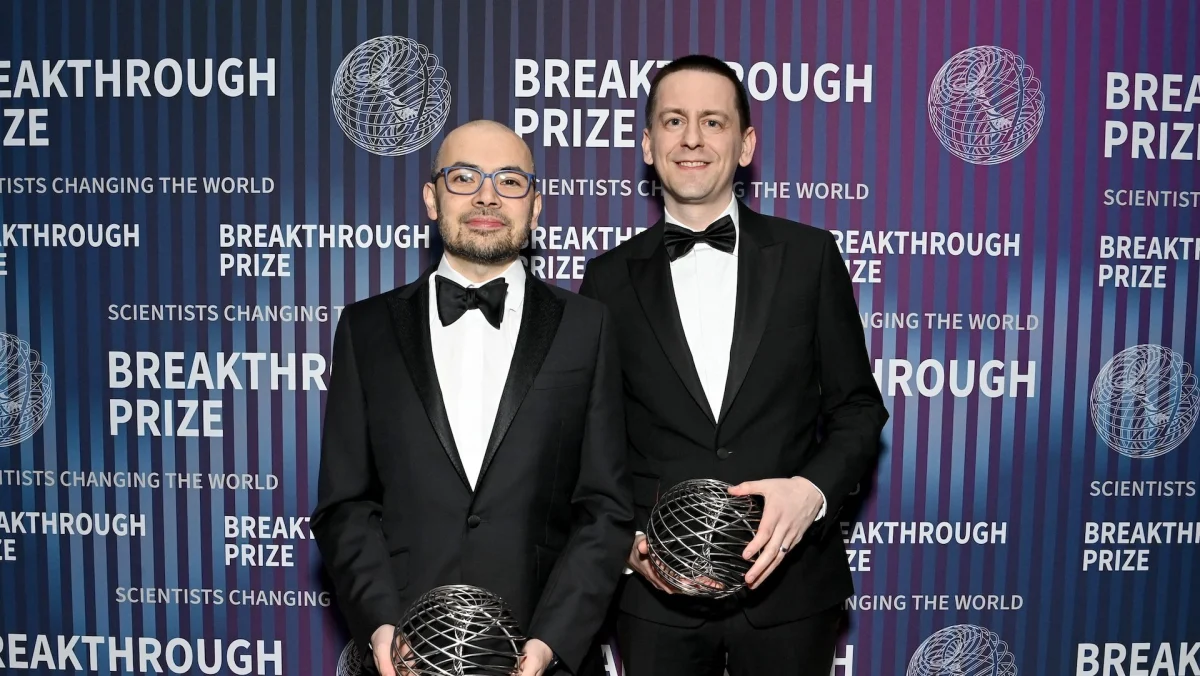
The artificial intelligence landscape is witnessing a significant reconfiguration of top talent, as Nobel Prize-winning chemist Dr. John Jumper announced his departure from Google DeepMind to join its burgeoning competitor, Anthropic. This high-profile transition, revealed on Friday, June 20, 2026, marks a pivotal moment, underscoring the intense competition for leading minds in the rapidly evolving field of AI and its profound implications for scientific discovery.
Dr. Jumper, renowned for his instrumental role in developing AlphaFold, an AI system that revolutionized protein structure prediction, confirmed his move in a post on X. He expressed gratitude for his nearly nine-year tenure at Google DeepMind, acknowledging CEO Demis Hassabis for entrusting him with the leadership of the AlphaFold team shortly after completing his PhD. Jumper lauded DeepMind as a "special place" that greatly contributed to his understanding of scientific research at the highest level, while also indicating his excitement for its future endeavors. His departure, first reported by Bloomberg, highlights a broader trend of top researchers navigating opportunities across the AI ecosystem, including another notable exit this week: Character AI co-founder Noam Shazeer, also formerly of DeepMind, who announced his move to OpenAI.
The AlphaFold Revolution and its Architect
Dr. Jumper’s scientific legacy is inextricably linked to AlphaFold, a breakthrough that earned him and DeepMind CEO Demis Hassabis the Nobel Prize in Chemistry in 2024. The development of AlphaFold addressed one of biology’s "grand challenges" – the protein folding problem, which had perplexed scientists for over half a century. Proteins are the fundamental building blocks and machinery of life, performing a vast array of functions from catalyzing metabolic reactions to replicating DNA. Their ability to function is dictated by their intricate three-dimensional structures. Predicting these structures from a linear sequence of amino acids was a monumental computational hurdle.
Historically, scientists relied on laborious and costly experimental methods like X-ray crystallography, NMR spectroscopy, and cryo-electron microscopy to determine protein structures. These methods could take years and significant resources for a single protein. The lack of structural data was a major bottleneck in understanding disease mechanisms, designing new drugs, and engineering novel enzymes.
AlphaFold, leveraging deep learning techniques, dramatically changed this paradigm. It demonstrated an unprecedented ability to predict protein structures with atomic-level accuracy, often matching or exceeding experimental results. This achievement, first showcased impressively in the Critical Assessment of protein Structure Prediction (CASP) competition in 2020, opened new frontiers in biological and medical research. Suddenly, researchers had access to a vast database of predicted protein structures, accelerating discovery in areas like drug development for diseases such as cancer and Alzheimer’s, vaccine design, and the creation of sustainable biofuels. Jumper’s leadership in this endeavor firmly cemented his status as a titan in both AI and computational biology.
DeepMind’s Journey and Shifting Sands
Google DeepMind, formed from the merger of DeepMind and Google Brain in 2023, has long been at the vanguard of artificial intelligence research. Founded in London in 2010 by Demis Hassabis, Shane Legg, and Mustafa Suleyman, DeepMind quickly garnered attention for its ambitious pursuit of general AI. Its acquisition by Google in 2014 provided the resources to tackle some of the most complex problems in AI.
Over the years, DeepMind has delivered a string of remarkable achievements, from developing AI systems that mastered complex games like Go (AlphaGo) and chess (AlphaZero), to pioneering work in reinforcement learning and, most notably, AlphaFold. These accomplishments have not only pushed the boundaries of AI capabilities but also demonstrated the technology’s potential to solve real-world scientific problems.
However, operating within the vast Google ecosystem presents its own unique dynamics. While providing unparalleled computational power and data, a corporate environment can sometimes present challenges in terms of research freedom, commercialization pressures, and the pace of development. The original report noted Google’s struggles to commercialize some of its AI coding tools, suggesting that the path from groundbreaking research to marketable product can be complex even for a tech giant. The departure of top talent like Jumper and Shazeer, who was involved in foundational large language model research, might signal a desire among leading researchers for different operational structures or a more direct influence on the application and ethical direction of their work.
Anthropic: A New Home for Scientific AI?
Dr. Jumper’s move to Anthropic is particularly noteworthy given Anthropic’s distinct mission and rapid ascent in the AI industry. Founded in 2021 by former OpenAI researchers, including siblings Dario and Daniela Amodei, Anthropic emerged with a strong emphasis on AI safety and alignment. Its core philosophy revolves around developing AI systems that are beneficial, reliable, and interpretable, aiming to mitigate potential risks associated with increasingly powerful models.
Anthropic’s flagship product, the Claude family of large language models, competes directly with OpenAI’s GPT series. The company has secured significant investments from major tech players like Google and Amazon, fueling its growth and research efforts. Its focus on "Constitutional AI," a method for aligning AI models with human values through a set of principles rather than extensive human feedback, differentiates it in a crowded field.
Jumper’s expertise in scientific AI, particularly in the realm of molecular biology and protein dynamics, could significantly bolster Anthropic’s capabilities beyond large language models. While Anthropic has primarily been known for its work on conversational AI and safety, integrating a Nobel laureate of Jumper’s caliber suggests a potential strategic expansion into scientific discovery. This could involve applying Anthropic’s alignment research to scientific AI models, ensuring that powerful tools for drug discovery or materials science are developed with robust safety protocols and ethical considerations from the outset. It could also lead to new avenues of research that merge biological understanding with advanced AI, potentially yielding new breakthroughs in areas where Anthropic has not traditionally focused.
The Intensifying AI Talent Wars
The migration of Dr. John Jumper is not an isolated incident but rather a prominent example of the ongoing "talent wars" gripping the artificial intelligence industry. As AI models become more sophisticated and their potential applications expand across every sector, the demand for top researchers, engineers, and ethicists has skyrocketed. Companies are fiercely competing to attract and retain individuals who can push the boundaries of what AI can achieve.
Several factors contribute to this dynamic environment. Highly skilled AI professionals are often drawn by the promise of working on cutting-edge problems, the opportunity for greater research autonomy, competitive compensation packages, and alignment with a company’s mission and ethical framework. Startups and younger companies like Anthropic might offer a more agile research environment, a direct impact on the company’s trajectory, and a culture that prioritizes specific values, such as AI safety, which can be particularly appealing to researchers concerned about the societal implications of their work.
Conversely, established giants like Google DeepMind offer vast resources, stability, and the chance to impact products used by billions. The movement of talent between these organizations creates a vibrant, albeit intense, ecosystem where knowledge and innovation diffuse across the industry. This constant flux of talent reshapes research agendas, fosters new collaborations, and accelerates the overall pace of AI development.
Broader Market, Social, and Cultural Implications
The implications of Dr. Jumper’s move extend beyond the immediate competitive landscape:
- Accelerating Scientific AI: His transition could galvanize Anthropic’s efforts in applying AI to scientific problems, potentially leading to new breakthroughs in areas like drug discovery, personalized medicine, or even environmental science, where AI can model complex systems. It could introduce a fresh perspective on how AI safety principles can be integrated into scientific discovery tools.
- Shifting Competitive Dynamics: Jumper’s expertise is a significant asset. His departure from DeepMind to a direct competitor like Anthropic intensifies the rivalry among the leading AI research labs. It underscores that intellectual capital, embodied by key researchers, is perhaps the most valuable currency in this domain. This could prompt other companies to re-evaluate their talent retention strategies and research environments.
- Validation of AI Safety Focus: For Anthropic, bringing on a scientist of Jumper’s caliber serves as a powerful validation of its mission and approach. It demonstrates that a focus on AI safety and alignment can attract not only ethically minded researchers but also those at the very pinnacle of scientific achievement. This could influence more researchers to consider the ethical implications of their work when choosing their professional homes.
- The Future of Research Ecosystems: This move prompts questions about the ideal environments for groundbreaking scientific AI research. Is it better fostered within large, well-resourced corporate labs, or within more focused, mission-driven startups? The answer likely varies for different individuals and types of research, but the trend suggests a growing appeal for environments that offer a unique blend of resources, autonomy, and values alignment.
Analytical Commentary: A Strategic Talent Play
From an analytical standpoint, Jumper’s shift represents a strategic coup for Anthropic and a notable challenge for DeepMind. For Anthropic, acquiring a Nobel laureate with a proven track record of revolutionary scientific AI development immediately elevates its scientific credibility and expands its potential research horizons beyond its current large language model focus. It signals to the wider scientific community that Anthropic is not just a player in generative AI, but also a serious contender in AI for scientific discovery, potentially with a unique, safety-first approach to these critical applications.
For Google DeepMind, while the organization boasts an unparalleled roster of talent, the departure of a figure as central to AlphaFold’s success as Dr. Jumper is undoubtedly a loss. It raises questions about retention strategies for highly specialized talent within large corporate structures. While DeepMind continues to innovate, the ongoing movement of key researchers to competitors suggests an internal calculus for top talent that might prioritize factors beyond sheer resources or prestige. It implies that for some, the appeal of a startup’s agility, a focused mission, or a particular ethical stance can outweigh the benefits of a corporate behemoth.
This move also highlights the increasing fragmentation and specialization within the AI field. While general AI remains a long-term goal for many, the immediate impact is often seen in highly specific applications, like protein folding. As AI progresses, we may see more researchers gravitating towards companies whose specific missions align most closely with their own research interests and ethical considerations, rather than remaining within broader, multi-faceted organizations.
In conclusion, Dr. John Jumper’s transition from Google DeepMind to Anthropic is more than just a personnel change; it is a seismic event in the AI world. It underscores the fluidity of top talent, the intensifying competition for innovation, and the evolving landscape of AI research. As Anthropic potentially leverages Jumper’s genius to expand its footprint in scientific AI, the entire industry will be watching to see how this strategic move reshapes the future of AI and its profound impact on scientific discovery.