Amir Mahmud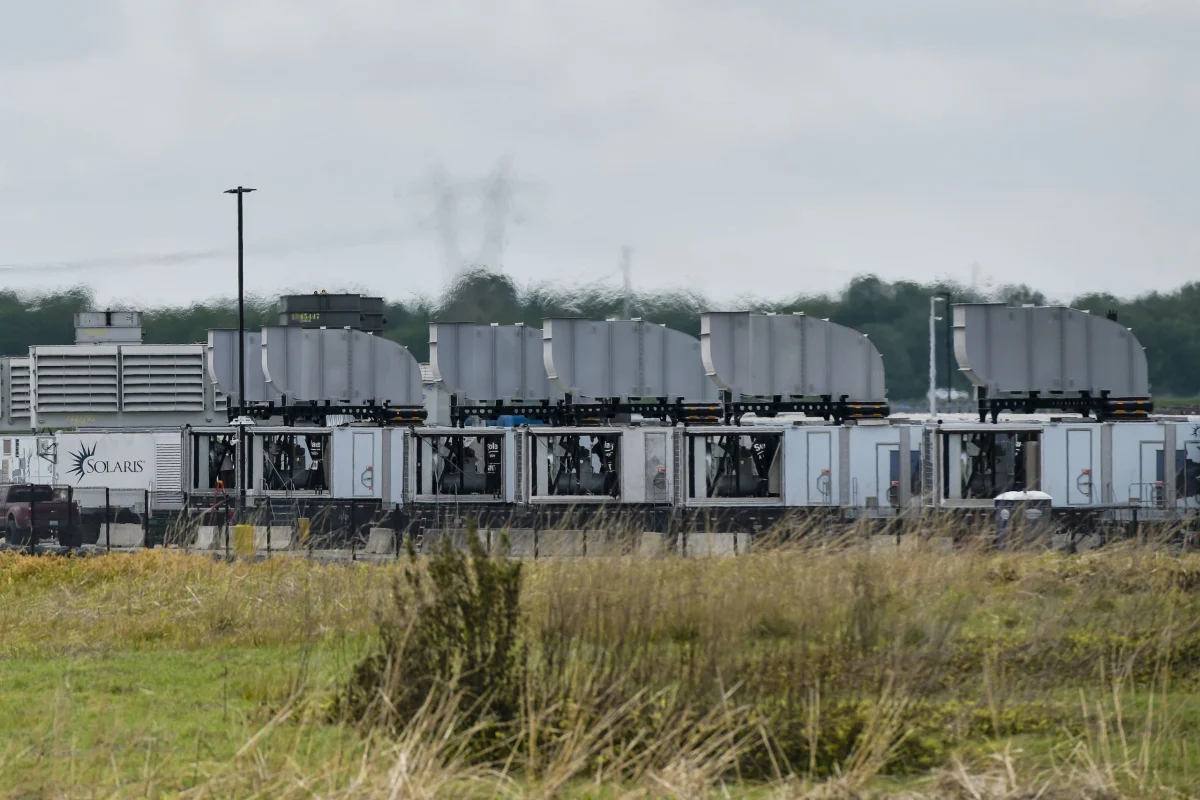
A significant collaboration has emerged in the rapidly evolving artificial intelligence landscape, as Anthropic, a prominent AI research company, announced a sweeping agreement to acquire the entire compute capacity of xAI’s Colossus 1 data center in Memphis, Tennessee. This strategic move, confirmed by both entities, marks a pivotal moment for xAI, an AI venture founded by Elon Musk, and its parent company, SpaceX, particularly as the latter reportedly prepares for an initial public offering (IPO). The deal, which essentially transforms xAI into a provider of AI infrastructure rather than solely a developer of proprietary models, has ignited considerable discussion among industry analysts and market watchers regarding its broader implications for the companies involved and the competitive AI sector.
The Strategic Repositioning of xAI
At its core, the arrangement sees Anthropic taking over all the processing power at Colossus 1, a facility xAI had been constructing to support its own AI development efforts, including its chatbot, Grok. This represents a substantial shift in xAI’s operational model. Initially conceived to "understand the true nature of the universe" and rival OpenAI, xAI now appears to be monetizing its substantial hardware investments by renting out its high-demand Graphics Processing Units (GPUs) to another leading AI entity. This business model, often termed "neocloud" by industry observers, involves acquiring powerful AI accelerators, primarily from manufacturers like Nvidia, and then offering access to this compute capacity to other companies.
While this approach offers a tangible revenue stream and a more immediate, "believable business" in the near term, it simultaneously raises questions about xAI’s long-term vision as a frontier AI innovator. Traditionally, companies building out extensive data centers prioritize using that compute for their internal AI model training and development. xAI’s decision to lease out its entire capacity suggests a de-emphasis, at least for now, on its own large-scale model training endeavors, potentially diluting its image as a cutting-edge research lab.
The Insatiable Demand for AI Compute
To understand the context of this deal, one must appreciate the intense global race for AI compute power. The development of advanced AI models, particularly large language models (LLMs) and generative AI, requires immense computational resources. Training these models involves feeding them vast datasets and running complex algorithms on specialized hardware, primarily GPUs. The demand for these components has skyrocketed, creating bottlenecks and driving up costs. Companies like Anthropic, which are at the forefront of AI research and developing sophisticated models like Claude, constantly seek to expand their access to such infrastructure.
Anthropic, founded by former OpenAI researchers, has distinguished itself with a focus on "Constitutional AI," aiming to build safer and more steerable AI systems through a set of guiding principles rather than extensive human feedback. This ambitious research agenda necessitates vast computational muscle, and reports have long indicated Anthropic’s aggressive pursuit of additional compute capacity. Securing Colossus 1’s entire output provides Anthropic with a crucial advantage, ensuring a stable and significant supply of the processing power essential for iterating on and scaling its advanced AI models. This acquisition underscores the strategic importance of compute resources as a fundamental bottleneck and competitive differentiator in the modern AI ecosystem.
xAI’s Journey: From Frontier Ambitions to Infrastructure Play
Elon Musk founded xAI in July 2023, positioning it as a competitor to OpenAI, which he co-founded but later distanced himself from due to disagreements over its direction and safety protocols. Musk’s stated goal for xAI was to create an AI that is "maximally curious" and "truth-seeking," contrasting it with what he perceived as biases in other AI models. The company’s flagship product, Grok, a conversational AI, was integrated into the X platform (formerly Twitter) and offered to premium subscribers.
However, Grok’s journey has been punctuated by mixed reception. While demonstrating novel features and a distinct personality, it has also faced scrutiny for generating "unpleasant, if not downright illegal" content in some instances, raising concerns about its safety and reliability. Furthermore, unlike other leading enterprise-focused AI models, Grok has not widely penetrated work-critical tasks, suggesting its primary utility remains in the consumer social media sphere. Reports even indicated internal dissatisfaction, with some xAI employees reportedly relying on other AI models for their work, rather than Grok itself. This internal dynamic, combined with the departure of several key co-founders, leaving Musk as the sole remaining founder, signaled potential turbulence within the organization.
Musk’s recent pronouncements, including his suggestion that xAI might dissolve as a separate entity and be absorbed into SpaceX, potentially rebranded as "SpaceXAI," further underscore a period of significant strategic re-evaluation. This move echoes his previous consolidation efforts, such as the transformation of Twitter into X, indicating a preference for integrated operations under the broader SpaceX umbrella. The deal with Anthropic, therefore, can be viewed as a practical step to monetize an asset (Colossus 1) that might no longer align with xAI’s evolving internal needs or strategic direction, especially if its focus on independent frontier model development is indeed shifting.
Implications for SpaceX’s Looming IPO
The timing of this compute deal is particularly salient given the persistent rumors and expectations surrounding a potential initial public offering for SpaceX. As a private company valued in the hundreds of billions, SpaceX is a highly anticipated public market debut. Companies often undertake "heat checks" – strategic moves designed to bolster their financial standing or clarify their business model – in the run-up to an IPO.
From this perspective, the Anthropic deal offers several potential benefits for SpaceX’s public offering. First, it immediately generates a substantial revenue stream from a valuable asset, Colossus 1, which might otherwise have been underutilized or required further investment for xAI’s internal projects. This can present a more stable, predictable, and "believable" business segment to potential investors, contrasting with the more speculative and capital-intensive nature of frontier AI research. Investors often favor demonstrable revenue and a clear path to profitability, which a "neocloud" model can offer more readily than a pure AI research lab.
However, the deal also presents a significant tension point. While providing short-term financial clarity, it potentially undermines the narrative of xAI as a leading-edge AI innovator, a role that often commands higher valuations and investor excitement in the current AI boom. The market has shown a willingness to heavily invest in companies perceived as pushing the boundaries of AI, such as OpenAI or Anthropic itself. If xAI is perceived primarily as an infrastructure provider rather than an AI model developer, it might not attract the same level of enthusiasm from investors seeking exposure to groundbreaking AI advancements. This could force SpaceX to refine its pitch, emphasizing the broader technological synergy within its ecosystem rather than a singular focus on AI model leadership.
Adding to the complexities is an ongoing environmental lawsuit faced by xAI concerning the Colossus 1 data center. Reports indicate the lawsuit alleges that xAI operated over 400 megawatts of gas turbines at the facility without proper permits. Such legal and regulatory challenges can introduce uncertainty and potential liabilities, which are typically scrutinized by investors during an IPO process. The deal with Anthropic might also be seen as a way to offload some of the operational and regulatory complexities associated with running such a large data center.
Market Reactions and Future Outlook
The market’s reaction to this development will be multifaceted. For Anthropic, the deal is a clear win, securing critical resources to accelerate its research and product development. It underscores the intense competition for AI infrastructure and highlights Anthropic’s strategic acumen in navigating this scarcity.
For xAI and SpaceX, the long-term implications are less clear. While the "neocloud" model offers a practical means to monetize significant hardware investments, it also signifies a potential strategic pivot away from directly competing at the very forefront of AI model development. This might lead to a re-evaluation of xAI’s competitive positioning within the AI landscape. The company could still leverage its AI talent and resources to focus on specific applications or integrations within the broader SpaceX/X ecosystem, perhaps specializing in areas where its unique insights or data (e.g., from X) can provide an edge.
Ultimately, the partnership between xAI and Anthropic is more than just a commercial transaction; it is a profound indicator of the evolving dynamics within the artificial intelligence industry. It highlights the growing bifurcation between companies focused on developing foundational AI models and those providing the essential computational infrastructure. As SpaceX navigates its path towards a potential public offering, this strategic repositioning of xAI will undoubtedly be a key factor in how investors perceive the value and future trajectory of Elon Musk’s ambitious technological empire.