Amir Mahmud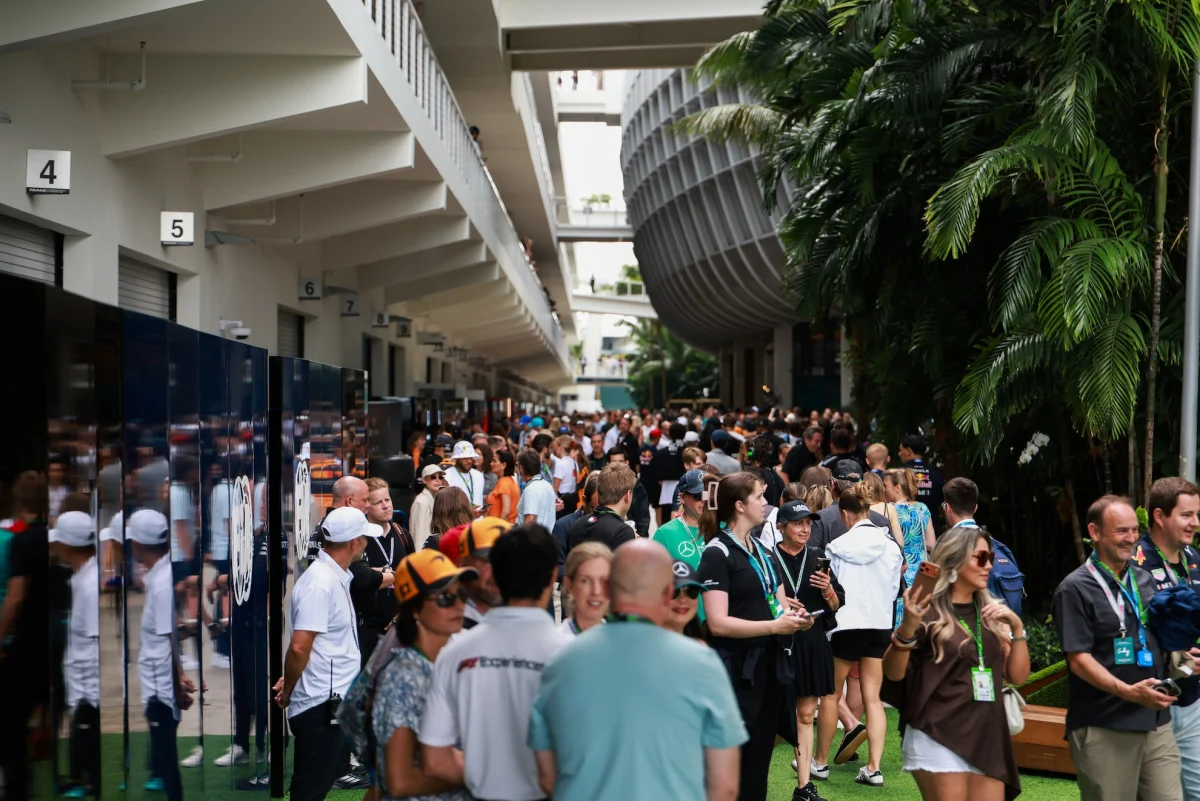
Beneath the warm Florida sun, amidst the roar of high-performance engines and the scent of burning rubber, a unique confluence of power and ambition is unfolding within the exclusive confines of the Formula 1 paddock. Here, founders of burgeoning startups and seasoned venture capitalists, a diverse mix of wealth and potential, converge not just to witness the spectacle of speed, but to forge lucrative partnerships and seal transformative deals. Conversations, punctuated by the occasional glance at the multi-million-dollar machines hurtling around the track, barely pause as the financial elite navigate a landscape where sport, luxury, and cutting-edge technology seamlessly intertwine.
F1’s Meteoric Rise: A New Era of Engagement
The ascendancy of Formula 1 as a premier global sporting event, particularly its surging popularity in the United States, provides crucial context for this shift in business networking. For decades, F1 held a niche appeal in America, overshadowed by indigenous motorsports like NASCAR. However, following its acquisition by Liberty Media in 2017, the sport embarked on a deliberate strategy to broaden its demographic appeal and market footprint. This initiative involved significant investments in digital engagement, social media outreach, and crucially, the creation of "Drive to Survive," a docuseries on Netflix. Launched in 2019, "Drive to Survive" offered unprecedented, behind-the-scenes access to the teams, drivers, and high-stakes drama of the F1 world, captivating a new generation of fans, including a significant increase in younger audiences and women.
This cultural phenomenon translated directly into heightened commercial interest and expanded race calendars, with new, glamorous urban circuits in Miami and Las Vegas joining the established U.S. Grand Prix in Austin. These events are no longer merely races; they are three-day extravaganzas featuring a packed schedule of exclusive kick-off events, soirées, cocktail parties, lavish dinners, and nightclub takeovers. In these opulent settings, the traditional boundaries between business and pleasure blur, creating fertile ground for the kind of informal yet high-impact networking that the tech and venture capital communities are increasingly seeking. The atmosphere is meticulously curated to foster connections among individuals who share not only a passion for the sport but also significant financial influence and a drive for innovation.
From Oil to Algorithms: The Evolution of Sponsorship
Historically, Formula 1 teams bore the logos of established giants from industries like oil, tobacco, banking, and alcohol—sectors synonymous with immense capital and global reach. These sponsorships reflected the traditional power structures of the global economy. However, a seismic shift has occurred over the past five to ten years, mirroring the broader economic transformation driven by technological innovation. The liveries of modern F1 cars now serve as literal billboards for the digital age, plastered with the emblems of artificial intelligence firms, cloud computing providers, and enterprise software companies. This visual metamorphosis is a clear indicator of where economic power and investment capital have migrated.
The past five years, in particular, have seen an accelerated embrace of technology within F1’s commercial ecosystem. Oracle, a global leader in enterprise software, became the title sponsor of the dominant Red Bull Racing team. Mercedes-AMG PETRONAS F1 Team forged a multi-year strategic partnership with Microsoft, leveraging its cloud and AI capabilities. CoreWeave, an AI cloud provider, positioned itself as Aston Martin Aramco’s official AI cloud partner, while Anthropic, a prominent AI safety and research company, began collaborating with Williams Racing. Ferrari, an iconic name in motorsports, entered into partnerships with data analytics specialist Palantir and technology stalwart IBM. Even Formula 1 itself, as an organization, benefits from AWS, which provides sophisticated data analytics to enhance race strategy and fan engagement. More recently, innovative digital companies like the audio AI app ElevenLabs and fintech firm Revolut have teamed up with Audi, signaling the sport’s continued appeal to a diverse range of tech-forward brands. This influx of tech sponsorship is not merely about brand visibility; it often involves deep technical collaborations, with F1 teams acting as high-speed laboratories for cutting-edge technologies.
Beyond sponsorships, venture capital and private equity firms have also recognized the inherent value and growth potential within F1 teams, acquiring stakes in some of the sport’s most storied franchises. Dorilton Capital, a U.S. investment firm, acquired Williams Racing in 2020, injecting crucial capital into the historic team. Similarly, a consortium including Otro Capital, RedBird Capital Partners, and Maximum Effort Investments made a significant 200 million euro investment into Alpine, underscoring the financial community’s confidence in F1’s robust economic trajectory. This direct financial involvement from investment funds further solidifies the link between the high-stakes world of finance and the high-speed realm of Formula 1.
Beyond the Track: The Paddock as a Business Hub
The increasing concentration of tech executives and investors at F1 events is a relatively recent phenomenon, accelerating significantly over the last three to four years. Hannan Happi, founder of the climate startup Exowatt, credits "Drive to Survive" with broadening F1’s audience, but observes that the tech industry’s robust presence is a more contemporary development. "Where the sponsors go, the executives will follow," Happi remarked, highlighting the natural gravitational pull exerted by major corporate investments. This sentiment is echoed by investor Marell Evans, who noted that many industry professionals chose to attend F1 Miami instead of the traditionally influential Milken Institute Global Conference, a testament to the sport’s burgeoning status as a prime networking venue. Chandler Malone, another founder, confirmed this trend, stating he bypassed the race entirely to focus solely on the numerous side events hosted by venture firms, which were far more prevalent than in previous years.
The appeal of the F1 paddock extends beyond mere spectacle; it represents a unique environment for concentrated business development. Josh Machiz, CMO of Lightspeed Ventures, observed a significant presence of founders and executives from his firm’s portfolio companies within the paddock. Their primary objective: to secure enterprise deals with other startups and established tech giants. Machiz highlighted the unique intimacy of the paddock environment, where Chief Information Officers (CIOs) and Chief Information Security Officers (CISOs) might find themselves in close proximity to Chief Executive Officers (CEOs) in relatively compact spaces, facilitating natural, unforced conversations.
Lightspeed Ventures has gone a step further, formalizing its engagement with F1. Machiz revealed a structured program in partnership with the Aston Martin Aramco F1 team, designed to introduce Lightspeed’s portfolio founders directly to Aston Martin’s executives and its network of enterprise clients. This strategic alignment leverages Aston Martin’s active pursuit of cutting-edge technology to gain a competitive edge, creating a direct conduit for startups to present their innovations. The Miami race served as a successful pilot for this program, bringing ten portfolio companies into the fold and yielding tangible results: one blockchain company reportedly secured a handshake deal, while an AI infrastructure startup closed two additional agreements, with two stemming directly from Aston Martin introductions and a third occurring serendipitously.
The Strategic Shift in Venture Capital Networking
This innovative approach by Lightspeed Ventures signals a broader dissatisfaction with traditional founder retreats. Machiz, who previously helped plan such events, noted a consistent plea from founders: "help me meet more buyers." He recalled that "another weekend in Sonoma" often failed to deliver on this critical need, and while the networking and expert speakers were appreciated, founders often felt they could have been more productively engaged in building their products or connecting with customers.
The F1 paddock offers a stark contrast to these conventional formats. It is, as Machiz describes it, "one of the densest concentrations of enterprise buyers anywhere." The opportunity to connect with decision-makers in a dynamic, high-energy environment, away from the structured formality of a typical conference, is proving to be a powerful draw. Farooq Malik, founder of Lightspeed portfolio company Rain, attested to the effectiveness of this model, having closed a deal, connected with a prospective client, and identified a complementary product for Rain’s ERP system during the weekend. Malik found the model "a lot more interactive with more organic interactions," highlighting the value of informal yet high-stakes engagements.
This shift isn’t exclusive to founders. Investors, too, are expressing fatigue with predictable dinners and generic conferences. Marell Evans, an investor, articulated this sentiment, stating, "They want to see real-world experiences, and why not do it at the fastest-growing company in the world right now, F1?" The ability to witness firsthand how cutting-edge technology, particularly AI, is being integrated into high-performance racing cars and driver strategies provides a compelling narrative for potential investments, allowing top money makers to see their business world intertwine with tangible technological applications.
The Allure of Exclusivity and Experiential Deals
The high cost of entry to F1 events, particularly access to the coveted paddock, serves as an effective, albeit expensive, filter. Investor Immpana Srri, who attended F1 Miami specifically to seek out deals, noted that the steep ticket prices ensure a curated attendee list. "By the time you’re inside, the room has done the sorting for you," Srri explained. "Everyone there has capital, the deal flow, or the kind of track record that justifies dropping six figures on a weekend." This inherent exclusivity creates an environment of peer-to-peer networking among a highly vetted group of individuals.
The physical layout of the paddock, characterized by relatively small, intimate spaces, further encourages direct interaction. This "pressure cooker" environment, as some describe it, facilitates conversations where "deals get showcased; names get dropped. Stuff gets teased." Srri reported hearing pitches across a wide spectrum of industries, from defense to consumer packaged goods, illustrating the diverse interests of the attendees.
The very essence of Formula 1 resonates deeply with the ethos of the tech and startup world. Hannan Happi emphasized that F1 embodies "engineering excellence, rapid iteration, a willingness to spend big to win"—qualities that are intrinsically valued within the technology sector. The sport’s international nature, combined with its multi-day event format, provides ample time for relationships to develop and deals to be finalized. The inherent luxury associated with F1 also attracts a specific demographic, further enhancing the networking potential. Anecdotal evidence suggests deals can even be struck in transit, "in the helicopter to the hotel to the track," underscoring the pervasive nature of business within this environment. Furthermore, the selection of entertainment-centric cities like Miami and Las Vegas for marquee races amplifies the overall experience, making these events even more appealing as business and leisure destinations. Even F1 champions like Nico Rosberg, now an active investor, are leveraging the race weekends to engage with promising startups, demonstrating the deep integration of entrepreneurial activity within the F1 ecosystem.
Looking Ahead: The Future of High-Stakes Networking
Lightspeed Ventures’ success at Miami is just the beginning. Machiz plans to continue the Aston Martin program throughout the current season, focusing on the remaining U.S. races, culminating in Las Vegas in November. The ambition extends beyond national borders, with plans to bring a select group of European founders to England’s iconic Silverstone circuit later in the year. This global expansion reflects a clear strategy to leverage F1’s international calendar and diverse audience.
The rationale behind this innovative approach is rooted in the competitive landscape of modern technology, particularly in rapidly evolving fields like artificial intelligence. "In AI, distribution is speed," Machiz asserted. "The firms that win are the ones that can get founders in front of buyers and into deals faster than anyone else." By transforming the traditional venture capital retreat into an immersive, high-octane networking experience within the F1 paddock, Lightspeed Ventures and other forward-thinking firms are redefining how high-stakes business connections are forged, demonstrating a powerful new model for accelerating growth and innovation in the digital age. This trend underscores a broader shift in the business world, where unique experiences, curated access, and the blending of passion with purpose are becoming increasingly vital components of successful dealmaking.