Amir Mahmud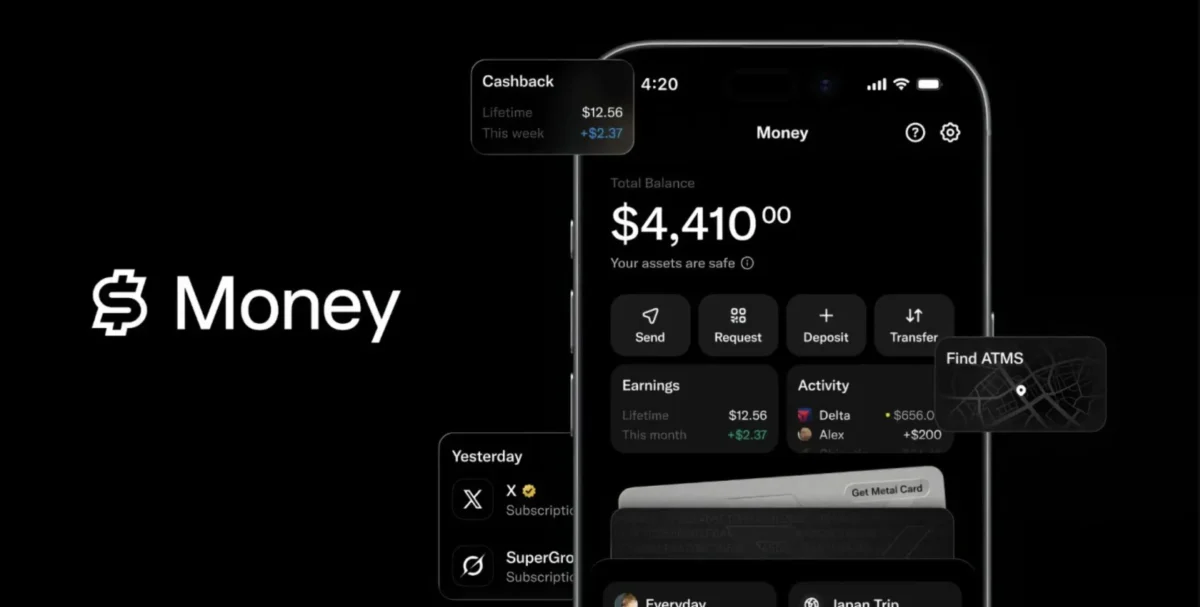
The social media platform X, under the stewardship of Elon Musk, has officially launched its dedicated financial services application, X Money, for eligible paid subscribers across the United States. This strategic rollout represents a significant advancement in Musk’s long-articulated ambition to transform the platform into a comprehensive "everything app," mirroring the multi-faceted digital ecosystems prevalent in certain Asian markets. The debut of X Money introduces a suite of banking-like features, including an X Visa debit card, seamless peer-to-peer transfers, competitive annual percentage yields (APYs), and cashback rewards, signaling a pivotal expansion beyond its traditional social networking roots.
The Genesis of the "Everything App" Vision
The concept of an "everything app" is not new, but its widespread adoption in Western markets remains elusive. The primary inspiration for Musk’s vision is often cited as WeChat, developed by Tencent in China. WeChat transcends mere messaging, integrating social networking, mobile payments, e-commerce, food delivery, ride-hailing, utility bill payments, and myriad other services into a single, indispensable application. For its hundreds of millions of users, WeChat is not just an app; it is a digital operating system for daily life. Musk has frequently expressed his admiration for this model, articulating a desire to replicate its success by consolidating a vast array of functionalities within X. This includes not only communication and content consumption but also financial transactions, business operations, and potentially even broader services, creating a singular digital hub for users. The reacquisition of the X.com domain name and the subsequent rebranding of Twitter to X in 2023 were explicit steps taken to align the platform with this ambitious, multi-faceted identity, laying the groundwork for initiatives like X Money.
A Decades-Long Financial Pursuit
The introduction of X Money is not an isolated tactical move but rather the culmination of a financial services dream that Elon Musk has harbored for over two decades. His entrepreneurial journey into finance began in 1999 with the co-founding of X.com, an online financial services and email payment company. At the time, X.com was a pioneering venture, aiming to revolutionize how people managed their money and conducted transactions online. Its innovative approach quickly attracted attention, leading to a merger with Confinity in 2000, a rival company co-founded by Peter Thiel and Max Levchin, which had developed a popular payment product called PayPal. The combined entity eventually adopted the name PayPal, with Musk serving as CEO for a period before being replaced. PayPal went on to become a titan in the online payment processing industry, facilitating e-commerce globally and eventually being acquired by eBay in 2002 for $1.5 billion.
While Musk’s direct involvement with PayPal ended prior to its acquisition, his initial vision for X.com was arguably more expansive than PayPal’s eventual focus. He envisioned a comprehensive financial institution that encompassed banking, investments, and payments. This early foray into fintech provided Musk with invaluable experience and, perhaps, a persistent conviction that a truly integrated digital financial service could transform consumer behavior. The re-acquisition of the X.com domain in 2017 and its subsequent central role in the rebranding of Twitter underscored the deep-seated nature of this aspiration, positioning X Money as a direct descendant of his initial financial technology ambitions.
X Money’s Feature Set and Market Positioning
X Money is rolling out with a robust set of features designed to attract and retain paid X subscribers. Central to its offering is an X Visa debit card, available both digitally for immediate integration with platforms like Apple Pay and as a physical card. This debit card is touted to offer practical benefits such as no foreign transaction fees and free cash withdrawals at ATMs worldwide, addressing common pain points for global users or travelers.
A key draw for users is the promise of instant, fee-free, and limit-free peer-to-peer (P2P) transfers within the X Money app. This feature directly challenges established P2P services like Venmo, Zelle, and PayPal, leveraging X’s existing user base for rapid adoption. Furthermore, X Money aims to entice users with attractive financial incentives: X Premium+ subscribers (who pay $40 per month or $395 annually) are eligible for a 6% annual percentage yield (APY) on their balances. Standard Premium users ($8 per month or $84 annually) can also access this 6% APY by linking a direct deposit to their X Money account. These APY rates are notably competitive, often surpassing those offered by many traditional banks and even some leading online-only banks. Additionally, users can earn up to 3% cash back on select purchases, and the service promises early access to direct deposits, a feature popularized by challenger banks that allows users to receive their paychecks a few days ahead of schedule.
This suite of features positions X Money as a direct competitor to a burgeoning sector of fintech companies and challenger banks such as Chime, SoFi, Revolut, and Monzo, which have disrupted the traditional banking landscape with user-friendly apps, lower fees, and innovative digital services. X Money’s primary differentiation, however, lies in its integration with a social media platform, aiming to leverage the inherent network effects and user engagement of X to drive adoption and usage.
Navigating Regulatory Complexities and Building Trust
Launching a financial services platform in the United States is an undertaking fraught with regulatory complexities. The U.S. financial system is highly regulated, with oversight from numerous federal agencies (like the FDIC, Federal Reserve, OCC, CFPB) and state-specific licensing requirements. Obtaining the necessary money transmitter licenses, ensuring compliance with Know Your Customer (KYC) and Anti-Money Laundering (AML) regulations, and adhering to consumer protection laws is a monumental task. X Money will undoubtedly face intense scrutiny regarding data security, privacy, and the safeguarding of user funds.
Beyond regulatory hurdles, a significant challenge for X Money will be cultivating trust among potential users. While X boasts a massive global user base, the platform has undergone substantial changes and controversies since its acquisition, leading to fluctuating public perception regarding its stability, content moderation policies, and data handling practices. Entrusting personal finances to a social media company, even one with sophisticated banking features, requires a higher level of confidence than simply sharing posts or messages. X will need to demonstrate unwavering commitment to security, transparency, and consumer protection to convince users to integrate their financial lives into the platform. This involves not only robust technological safeguards but also clear communication and a reliable customer service infrastructure.
Potential Market and Social Impact
The success of X Money could have far-reaching implications for the financial technology landscape and consumer behavior. If X manages to achieve significant adoption, it could further blur the lines between social media, communication, and financial services, potentially accelerating the trend towards integrated digital ecosystems in Western markets. For X, a successful financial services arm offers a powerful new monetization channel, diversifying its revenue streams beyond advertising, which has faced headwinds since the acquisition. The transaction fees, interchange revenue from debit card usage, and interest income from balances could provide a stable and growing source of revenue.
From a user perspective, a consolidated "everything app" could offer unparalleled convenience, reducing the need to juggle multiple applications for different daily tasks. However, it also raises questions about digital dependency, data privacy, and the concentration of power in a single platform. The social impact could be profound, influencing how people manage their money, interact with businesses, and even engage in civic discourse, all within a single digital environment. The potential for financial inclusion, particularly for underserved populations who may find traditional banking barriers, is also a consideration, although X Money’s initial focus on paid subscribers might limit this broader impact initially.
Challenges and the Road Ahead
Despite the ambitious vision and significant investment, X Money faces formidable challenges. The U.S. fintech market is fiercely competitive, with established players ranging from traditional banks with vast customer bases to nimble challenger banks and tech giants like Apple and Google, all vying for a share of consumer wallets. User inertia, the comfort with existing financial providers, and skepticism towards a social media company handling finances could hinder adoption.
Furthermore, integrating such diverse functionalities into a single, cohesive, and bug-free application is an immense technical and operational undertaking. Ensuring scalability, reliability, and robust security for millions of financial transactions while simultaneously managing a dynamic social media platform will test X’s engineering and operational capabilities. The company’s ability to market X Money effectively, clearly communicating its value proposition and differentiating itself from well-entrenched competitors, will be crucial.
The launch of X Money marks a critical juncture in Elon Musk’s journey to transform X into his long-envisioned "everything app." It represents not just a new product offering but a fundamental shift in the platform’s strategic direction, echoing a decades-old ambition to integrate finance at the core of a digital utility. While the path ahead is fraught with regulatory complexities, intense competition, and the necessity of building profound user trust, the debut of X Money undeniably signals a bold step towards a future where social interaction and financial transactions may become inextricably linked within a single digital ecosystem. The coming months will reveal whether this audacious gamble can redefine the digital experience for millions of users in the United States and beyond.