Amir Mahmud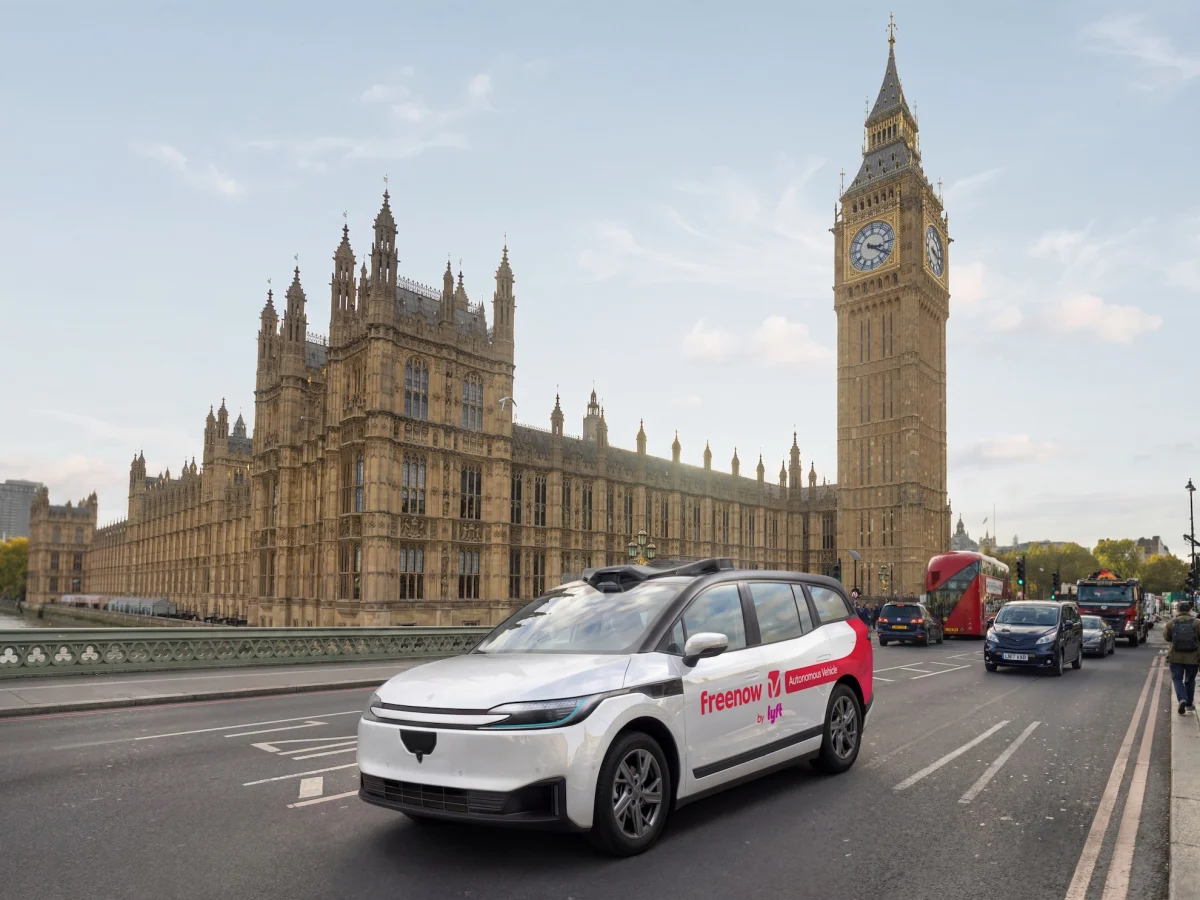
London, a global hub renowned for its intricate transport network and bustling urban landscape, is now at the forefront of the burgeoning autonomous vehicle revolution. Chinese technology titan Baidu, in collaboration with American ride-hailing giant Lyft and its recently acquired European multi-mobility subsidiary Freenow, has commenced testing self-driving vehicles on the city’s roads. This significant development marks a pivotal moment in the global race to deploy commercial robotaxi services, positioning the British capital as a crucial battleground for future mobility solutions.
A Global Alliance Targets European Streets
The initiation of these trials, which began recently with human safety operators diligently overseeing the vehicles, is the tangible outcome of a strategic partnership forged nearly a year prior. This alliance was designed to introduce Baidu’s cutting-edge Apollo Go RT6 robotaxi platform into key European markets, primarily leveraging the extensive network and operational expertise of Lyft and Freenow. The ultimate vision is to integrate these autonomous vehicles seamlessly into Freenow’s existing services, offering a new dimension of urban transportation to European consumers.
Lyft’s strategic acquisition of Freenow in 2025 for approximately $197 million was a critical move, providing the American company with an invaluable foothold in Europe’s highly competitive ride-hailing sector. This acquisition not only expanded Lyft’s geographical reach but also granted it access to Freenow’s established user base and regulatory relationships across the continent. Freenow, with its deep roots in the traditional taxi industry and its evolution into a comprehensive multi-mobility app offering e-scooters, car-sharing, and ride-hailing, provides an ideal platform for introducing advanced autonomous services.
London: The Epicenter of Autonomous Innovation
The decision to launch these trials in London underscores the city’s strategic importance in the autonomous vehicle (AV) ecosystem. London’s complex road infrastructure, diverse weather conditions, and high population density present a formidable testing ground, pushing AV technology to its limits. Success in London could serve as a powerful validation for wider European and global deployments.
The British capital has quickly become a magnet for leading autonomous vehicle developers. Prior to Baidu and Lyft’s entry, other major players had already staked their claims. In April, Waymo, Google’s self-driving subsidiary and a pioneer in the field, began its own autonomous vehicle testing with safety operators in the city. Similarly, Uber, a direct competitor to Lyft, and its self-driving technology partner Wayve, a UK-based startup, publicly announced their intentions to launch a robotaxi service in London this year. These early services are also expected to feature human safety operators, gradually transitioning to fully driverless operations as regulatory frameworks mature and public confidence grows. The intense competition among these well-funded companies highlights the immense market potential they foresee in London and the broader European urban mobility sector.
The UK’s Regulatory Landscape and Vision
The United Kingdom government has been proactive in fostering an environment conducive to the development and deployment of autonomous vehicles. Recognizing the transformative potential of this technology, the government has been diligently working on comprehensive AV regulations designed to ensure safety, promote innovation, and build public trust. The Centre for Connected and Autonomous Vehicles (CCAV), a joint policy unit of the Department for Transport and the Department for Business and Trade, plays a crucial role in shaping this regulatory landscape.
In May, the government further signaled its commitment by opening applications for an AV pilot program, inviting companies to test self-driving vehicles under rigorous governmental oversight. This initiative is part of a broader strategy to position the UK as a global leader in AV technology, attracting investment and creating high-skilled jobs. The ongoing discussions between Lyft, Freenow, and key regulatory bodies such as Transport for London (TfL) and the CCAV are essential for navigating the complex legal and operational requirements that precede any widespread commercial launch. The regulatory journey is often protracted, involving detailed assessments of safety protocols, data privacy, liability frameworks, and ethical considerations. The proposed Automated Vehicles Act, currently making its way through Parliament, aims to establish a robust legal framework, including a new system for regulating self-driving vehicles and assigning responsibility for accidents.
Baidu’s Apollo: A Proven Track Record
Baidu’s Apollo program is a cornerstone of its technological prowess and a testament to China’s ambitious strides in artificial intelligence and autonomous driving. Launched in 2017, Apollo quickly evolved into an open-source platform, inviting partners to collaborate and accelerate the development of self-driving technology. This collaborative approach has allowed Apollo to accumulate vast amounts of data and refine its algorithms at an unprecedented pace.
In China, Baidu’s Apollo Go robotaxi service has already achieved significant milestones. It operates fully driverless services in multiple cities, including Wuhan, Chongqing, and Beijing, serving a substantial number of public rides daily. The Apollo Go RT6, the specific robotaxi model being tested in London, is a purpose-built autonomous vehicle designed from the ground up for driverless operation. It features advanced sensor suites, powerful computing capabilities, and a sleek, passenger-centric design. Baidu’s extensive experience in challenging urban environments in China provides valuable insights and technological maturity that it now brings to the European market. The deployment of the RT6 in London represents a crucial step in globalizing Baidu’s autonomous driving expertise.
Lyft’s Strategic European Expansion
For Lyft, this venture into Europe, spearheaded by Freenow and powered by Baidu’s technology, represents a significant strategic pivot. While Lyft has primarily focused on the North American market, its acquisition of Freenow signals a clear intent to broaden its global footprint. By integrating autonomous technology into Freenow’s platform, Lyft aims to enhance service efficiency, reduce operational costs in the long term, and offer a differentiated experience to its European users. This move also aligns with a broader industry trend where ride-hailing companies are investing heavily in AV technology to future-proof their business models against rising labor costs and the promise of increased safety and efficiency. The partnership allows Lyft to leverage Baidu’s substantial R&D investment in AVs without having to build the technology from scratch, a common strategy in the capital-intensive AV sector.
Navigating the Path to Commercial Deployment
Baidu and Freenow by Lyft have set an ambitious target, expecting to invite the public to hail their robotaxis in London by 2027. This timeline, while forward-looking, is inherently contingent upon securing the necessary regulatory approvals and demonstrating robust operational safety. The initial testing phase, confined to the borough of Brent with dozens of test vehicles, is crucial for collecting data, refining algorithms for London’s unique conditions, and proving the technology’s reliability to city officials and regulators.
Achieving public readiness by 2027 will require not only technological perfection but also significant public acceptance. Consumer trust in autonomous vehicles is a critical factor, influenced by perceived safety, reliability, and ease of use. Educational campaigns and transparent reporting on safety metrics will likely be essential to foster this trust. The journey from initial testing to widespread commercial deployment is complex, marked by continuous innovation, stringent safety validation, and adaptable regulatory frameworks.
The Hybrid Model: Bridging Human and Machine
A key aspect of Freenow by Lyft’s proposed service model is the adoption of a "hybrid network," a strategy also articulated by rivals like Uber. This model envisions a co-existence where traditional human drivers operating taxis and private-hire vehicles work alongside the new fleet of robotaxis. This approach offers several advantages, particularly during the initial phases of AV deployment.
Firstly, it allows for a gradual introduction of autonomous vehicles, mitigating potential disruption to the existing workforce and ensuring continuity of service. Secondly, the hybrid model can address demand fluctuations and operate in areas or conditions where AVs may still face limitations (e.g., extreme weather, complex construction zones). Thomas Zimmermann, CEO of Freenow by Lyft, emphasized this commitment, stating, “As a platform with deep roots in the taxi industry, our priority is ensuring that autonomous technology supports the professional drivers who keep London moving.” This statement reflects an understanding of the social and economic implications of introducing AVs, aiming for a transition that incorporates rather than displaces the human element of the transport ecosystem. This strategy aims to soothe anxieties about job displacement while slowly integrating the new technology.
Broader Implications for Urban Mobility
The advent of robotaxis in cities like London carries profound implications for urban mobility, societal structures, and economic landscapes. On the economic front, while concerns about job displacement for professional drivers are valid, the AV industry is also expected to create new employment opportunities in areas such as remote monitoring, maintenance, data analysis, and software development. Furthermore, the potential for reduced operational costs could lead to more affordable transportation options, stimulating economic activity.
Socially, autonomous vehicles promise enhanced safety by eliminating human error, a leading cause of road accidents. They could also improve accessibility for individuals unable to drive, such as the elderly or those with disabilities. Environmentally, if robotaxi fleets are predominantly electric, they could contribute significantly to reducing urban air pollution and carbon emissions, aligning with London’s ambitious sustainability goals. However, careful urban planning will be necessary to manage potential increases in vehicle miles traveled if robotaxis become exceedingly convenient and affordable, leading to what is known as "rebound effect."
Challenges and the Road Ahead
Despite the significant progress and optimistic projections, the path to widespread robotaxi adoption is fraught with challenges. Regulatory harmonization across different jurisdictions remains a complex hurdle, as each city and country may have unique legal frameworks and public expectations. Public acceptance, as noted, is not guaranteed and requires consistent demonstration of safety and reliability. The technology itself, while advanced, still faces "edge cases"—unforeseen scenarios that challenge even the most sophisticated AI systems. Cybersecurity is another critical concern, as autonomous vehicles are essentially computers on wheels, vulnerable to hacking.
Nevertheless, the entry of Baidu, Lyft, and Freenow into London’s burgeoning robotaxi scene signifies a critical step forward in the evolution of urban transportation. As these global technology leaders continue to test, refine, and eventually deploy their autonomous fleets, Londoners stand on the cusp of experiencing a new era of mobility that promises to be safer, more efficient, and potentially more sustainable. The next few years will be instrumental in shaping how these futuristic visions translate into the everyday reality of city life.