Amir Mahmud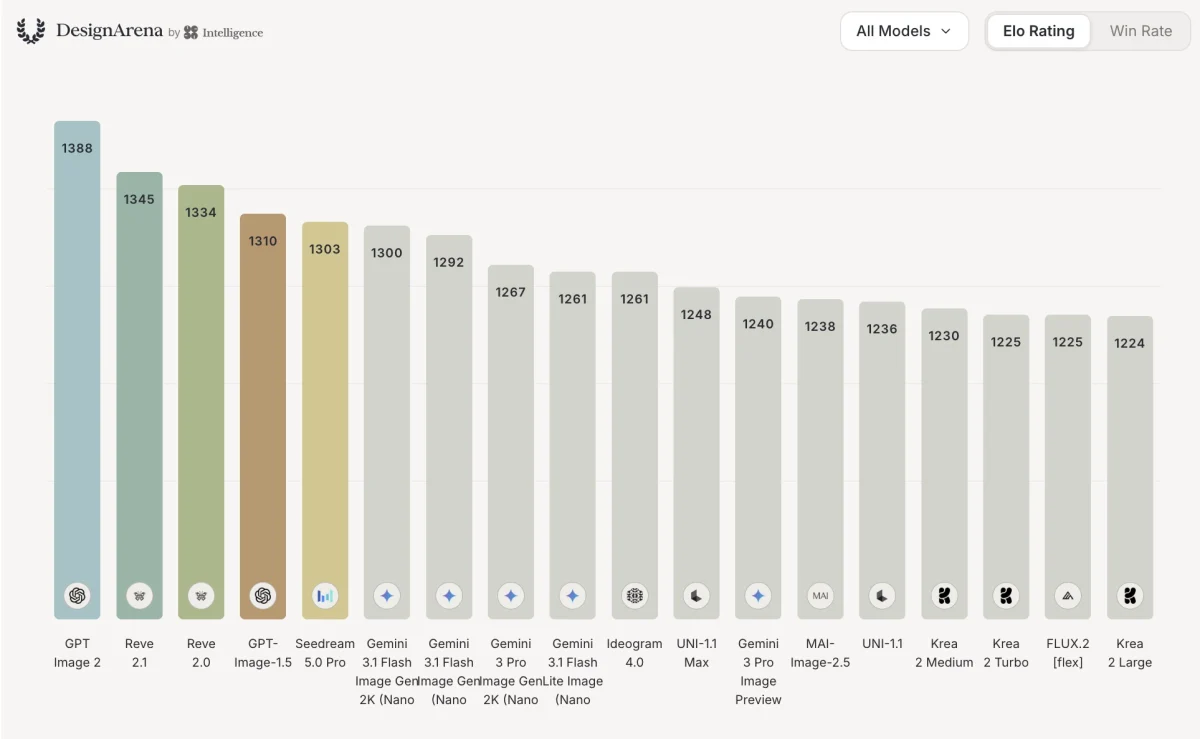
A significant stride in the quest to imbue artificial intelligence with nuanced human judgment and aesthetic preference has been marked by Intelligence, the parent company behind the innovative platform Design Arena. The firm recently announced the successful closure of a $7.9 million seed funding round, a capital injection led by Index Ventures, with substantial participation from notable investors including Conviction (Sarah Guo and Mike Vernal), A*, and Valkyrie, among others. This funding underscores a growing recognition within the tech industry that for AI to truly resonate with human users, it must move beyond mere functionality to embrace subjective qualities like "fun," "beauty," and "taste."
The Genesis of "Taste" in AI
The origins of Intelligence, and its flagship product Design Arena, trace back to a pivotal realization by co-founder Grace Li and her college peers just weeks before their graduation in 2025. Their initial endeavor focused on developing an AI game engine capable of generating functional games. While the technical prowess of the AI was undeniable, a critical flaw emerged: the games, despite being fully operational, lacked an essential element—enjoyment. This presented a profound philosophical and practical challenge: how does one quantify or even define "fun" for an artificial intelligence?
The team quickly concluded that the elusive quality of "fun" was inherently subjective and deeply rooted in human experience, making direct programmatic definition exceedingly difficult. Traditional AI models excel at pattern recognition, optimization, and task execution based on quantifiable metrics. However, areas like aesthetic appeal, user experience, and emotional resonance—often summarized as "taste"—have long remained a significant hurdle. This gap highlighted a crucial bottleneck in the development of sophisticated AI: the absence of a scalable, reliable mechanism to gather and integrate honest human feedback, particularly concerning subjective attributes. This insight sparked the creation of Design Arena, a platform designed to bridge this divide by harnessing collective human intuition.
Design Arena: A Human-Powered Feedback Loop
Design Arena functions as a sophisticated conduit for human-centric evaluation, addressing the intricate challenge of teaching AI models what humans genuinely prefer. For the everyday user, interacting with Design Arena is an intuitive experience, akin to navigating a highly refined model router. The interface features a familiar ChatGPT-style prompt window, augmented by specialized dropdown menus catering to a diverse array of visual formats, from website layouts and image compositions to various other media types. Users input their requests, specifying desired format and style. What follows is a dynamic, iterative process where users are presented with a series of "A vs. B" choices, systematically ranking outputs from best to worst. This gamified, comparative approach allows users to express their preferences without needing to articulate complex design principles, focusing solely on which option appeals more. The core motivation for these non-enterprise users is straightforward: to obtain the highest quality output possible for their specific needs.
However, the true strategic value and economic engine of Design Arena reside in its enterprise-facing applications. For "frontier labs"—leading AI research and development organizations—Design Arena offers an invaluable service: an endless, instant stream of human-validated feedback for their media-generating models. These enterprise clients leverage the platform as a continuous learning mechanism, allowing their AI models to rapidly iterate and refine their outputs based on real-world human preferences. This constant influx of qualitative data is transformative, moving AI development beyond mere technical correctness to a realm where subjective appeal is a core metric. According to Li, this service addresses "the missing bottleneck for a lot of these models to make improvements in the design space." The platform’s success is palpable, evidenced by its reported Annual Recurring Revenue (ARR) of $60 million, cementing its position as a critical source of human-led evaluation data within the burgeoning AI industry. The immediate adoption by a major frontier lab shortly after its inception underscored the urgent market need for such a solution.
The Broader Landscape of AI Evaluation
The evolution of AI evaluation has undergone several paradigm shifts. Initially, AI systems were often assessed against rule-based criteria or carefully curated, static benchmark datasets. While these methods offered a degree of scalability and objectivity, they frequently fell short in capturing the nuances of real-world human interaction and subjective judgment. The limitations of purely automated benchmarks became starkly apparent as AI capabilities advanced, especially in generative tasks. Automated systems, while efficient, are susceptible to being "gamed" or manipulated, as demonstrated by incidents like the high-profile Hugging Face breach mentioned in the original context, where vulnerabilities could be exploited to skew evaluation metrics.
This inherent fragility of automated benchmarks underscores why human-in-the-loop evaluation, despite its perceived cost and complexity, is becoming increasingly indispensable. It directly addresses the "alignment problem" – the profound challenge of ensuring that AI systems not only perform tasks efficiently but also align with human values, ethics, and preferences. In creative and design-oriented fields, where "good" is often defined by perception rather than objective fact, human feedback provides an irreplaceable layer of insight. Design Arena’s model represents a sophisticated attempt to scale this inherently human process, offering a dynamic and responsive mechanism for AI models to learn and adapt to the ever-changing landscape of human taste.
Market Dynamics and Competitive Landscape
The market for human-centric AI evaluation platforms is dynamic and highly competitive, characterized by both rapid success stories and notable failures. While Intelligence’s Design Arena demonstrates significant traction, the path to sustainable success in this niche is not guaranteed. A cautionary tale in this space is Yupp AI, which, despite securing $33 million in funding from prominent investors like a16z crypto’s Chris Dixon and claiming over 1.3 million users, ultimately shuttered its operations less than a year after launch. Yupp also targeted frontier models as customers, highlighting that a large user base and substantial funding alone do not guarantee long-term viability.
Conversely, other startups employing similar human evaluation approaches are thriving. LM Arena, which specializes in text-based responses, achieved a remarkable $1.7 billion valuation just four months after launching its paid product, securing $150 million in a Series A round in January. This stark contrast between Yupp AI’s demise and LM Arena’s meteoric rise suggests that success hinges on several critical factors: the scalability of the feedback mechanism, the quality and relevance of the data collected, the robustness of the enterprise sales strategy, and the ability to build a defensible moat around proprietary data and user engagement. Intelligence, with its focus on diverse visual formats and its impressive ARR, appears to be navigating these complexities effectively, leveraging its early traction with frontier labs and a growing user base to establish a strong market position.
The Value of Nuance: Tracking Evolving Preferences
A crucial differentiator for Intelligence lies in its ability to meticulously track and analyze how human tastes evolve across different demographics and geographical regions, and over time. By requiring users to log in to access their outputs, Intelligence can gather invaluable metadata about preferences. This enables the platform to provide highly granular insights into global aesthetic trends, moving beyond a monolithic understanding of "good design." For instance, Grace Li has observed that "web dashboards in Asia tend to have a more maximalist design style" compared to other regions.
This capacity to detect and quantify cultural variations in design preferences offers an immense strategic advantage to AI developers. In an increasingly globalized digital landscape, understanding regional aesthetic sensibilities is paramount for creating universally appealing or culturally specific AI-generated content. Such detailed insights help prevent the inadvertent imposition of a single cultural aesthetic by AI models, fostering greater diversity and relevance in AI outputs. This data not only enhances the performance of AI models but also contributes to a more culturally sensitive and inclusive development of artificial intelligence, aligning AI with the diverse tapestry of human experience.
Future Implications and Vision
The successful funding of Intelligence and the growing adoption of Design Arena signify a critical juncture in the evolution of artificial intelligence. As AI models become increasingly adept at generating creative content—from sophisticated images and videos to interactive experiences—the ability to imbue them with an understanding of human "taste" will become a defining characteristic of truly impactful AI. This shift holds profound implications for numerous industries. In design, AI could generate highly personalized brand identities or product prototypes that resonate deeply with specific target audiences. In entertainment, AI might craft narratives or visual styles tailored to individual viewer preferences, enhancing immersion and engagement. Marketing campaigns could become hyper-relevant, with AI-generated content optimized for cultural and aesthetic appeal across different markets.
While the prospect of AI models with refined "taste" is exciting, it also raises important considerations. There’s a potential for the emergence of "filter bubbles" where AI, constantly optimizing for individual preferences, might inadvertently limit exposure to diverse aesthetics. Striking a balance between personalization and promoting artistic diversity will be a continuous challenge. Intelligence’s role in this evolving landscape is to provide the infrastructure for AI to learn from collective human intuition, facilitating a future where AI acts as an intelligent collaborator, augmenting human creativity rather than merely replicating it. Their vision is to ensure that AI-generated content is not just functional or technically impressive, but genuinely appealing, engaging, and resonant with the intricate tapestry of human experience.
The investment in Intelligence represents more than just a financial endorsement; it is a validation of the critical need for a human-centric approach to AI development. As artificial intelligence continues its rapid advancement, the ongoing dialogue and feedback loop between human intuition and machine intelligence will be indispensable in shaping a future where AI not only performs tasks but also understands, reflects, and enriches the subjective dimensions of human life.