Amir Mahmud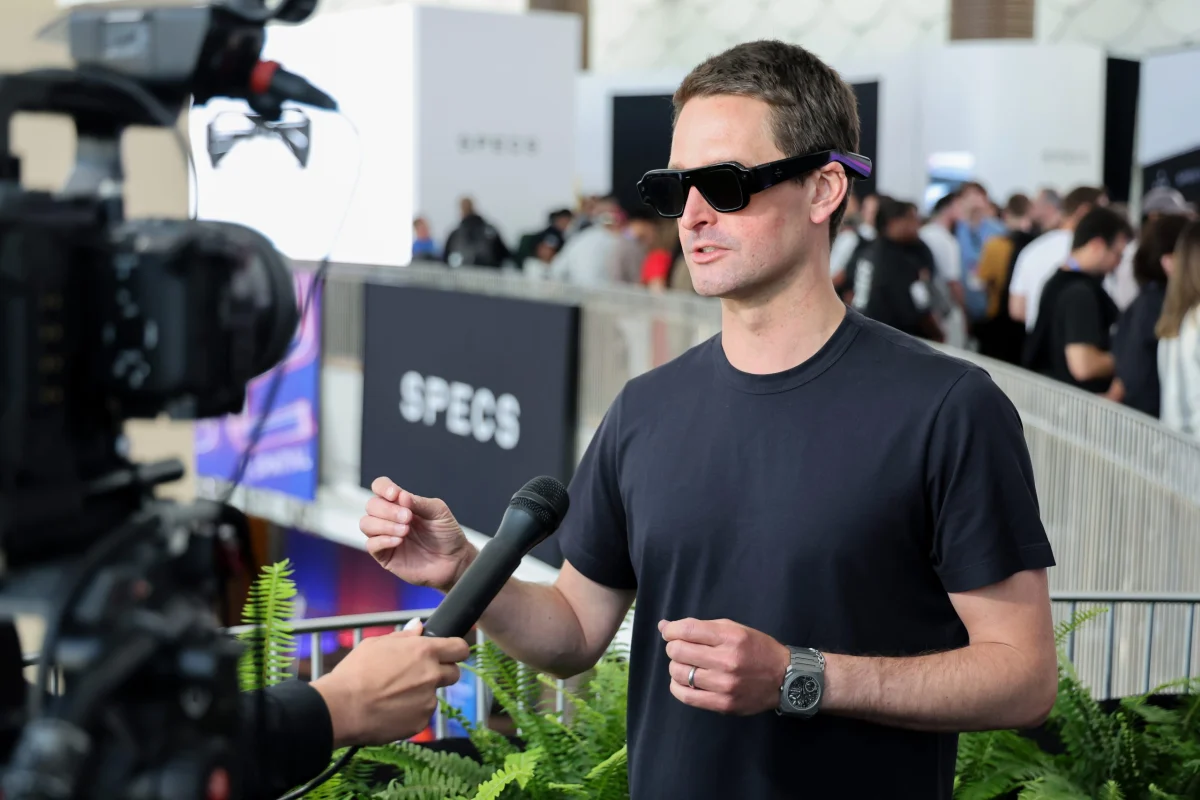
During a recent second-quarter earnings call, Snap CEO Evan Spiegel skillfully avoided direct questions from investors regarding the preorder demand for the company’s highly anticipated augmented reality (AR) smart glasses, known as Specs. This strategic evasion occurred just weeks before the device’s official September launch event, underscoring the delicate balance between investor expectations for immediate returns and the long-term vision Snap holds for its ambitious hardware venture.
Navigating Investor Concerns and Future Vision
Spiegel acknowledged the inherent challenges of introducing a cutting-edge, high-priced consumer electronic device into an nascent market. "What we’re hearing from folks is really that they want to try Specs," Spiegel explained to the assembled investors. He candidly described Specs as a "high consideration purchase" due to its substantial $2,195 price tag. While acknowledging that developers and those intimately familiar with the platform readily grasp the significant technical advancements embedded in this latest generation, Spiegel emphasized the critical need for broader public and consumer hands-on experiences. He positioned the upcoming launch event as a crucial "starting point for that consumer-oriented journey," suggesting that tactile interaction would be key to winning over a wider audience.
The Q2 earnings call provided a pivotal platform for investors to scrutinize Snap’s strategic direction. Queries extended beyond immediate preorder figures, delving into the fundamental financial viability of such an ambitious hardware play for a company of Snap’s current scale. Investors questioned the rationale behind Snap’s decision to pursue this path independently, rather than forging partnerships with more established hardware manufacturers or tech giants. Furthermore, skepticism surfaced regarding Snap’s capacity to effectively compete with formidable industry titans like Apple, Meta, and Alphabet, all of whom possess vast resources and established ecosystems in the burgeoning AR/VR space.
Spiegel’s response was resolute, reaffirming Snap’s conviction in the "enormous" long-term potential of developing what he believes will be the next transformative computing platform. He articulated that many observers might not yet fully grasp the profound technical complexity involved in executing such a product, particularly because Specs represents a genuine "first mover" in its specific category. Drawing a historical parallel, Spiegel recalled Snap’s entry into the social media landscape, where it was a late entrant competing against established platforms like Facebook, Instagram, and Twitter. In that environment, innovation was a necessity for growth. With Specs, however, Spiegel contended that Snap’s pioneering position in AR glasses allows it to leverage its core strengths as an innovator, setting the pace rather than playing catch-up.
The Specs Vision: A Decade in the Making
Snap’s journey into wearable technology is far from new, though the current Specs represent a monumental leap. The company officially unveiled these advanced AR glasses in June, a culmination of over a decade of dedicated research and development. This long gestation period underscores the significant engineering hurdles involved in miniaturizing complex AR technology into a wearable, untethered form factor.
Snap’s initial foray into hardware began in 2016 with the launch of the first generation of Spectacles – camera-equipped sunglasses designed to capture short video clips directly from the wearer’s perspective and share them on Snapchat. While these early Spectacles garnered initial media buzz and sold modestly, they did not achieve widespread consumer adoption. Subsequent iterations, Spectacles 2 and 3, introduced minor improvements, including water resistance and dual cameras for a rudimentary 3D effect. However, these earlier versions primarily served as novelty camera devices, lacking true augmented reality capabilities.
The current Specs are fundamentally different. They are full-fledged augmented reality glasses, featuring dual 3D waveguide displays that overlay digital content onto the real world. Equipped with multiple cameras, microphones, and spatial tracking sensors, they are designed to run complex AR experiences powered by Snap’s Lens Studio platform. This evolution signifies a strategic pivot from a consumer novelty item to a sophisticated development platform, targeting creators and developers as primary early adopters. This historical context is crucial for understanding Snap’s current strategy: the company isn’t merely dabbling in hardware; it’s building on years of iterative development, learning from past market reactions, and now aiming for a much more ambitious technological goal.
Competitive Landscape and Market Positioning
The augmented reality and virtual reality market is quickly becoming a battleground for tech giants, each approaching the "next computing platform" from different angles. Specs are positioned in a unique segment, priced at $2,195. This places them significantly above casual smart glasses like Meta’s Ray-Ban Stories, which begin around $350 and primarily focus on camera and audio functions rather than immersive AR. Conversely, Specs are considerably less expensive than Apple’s Vision Pro, a mixed-reality headset starting at $3,500, which offers a more encompassing and tethered experience.
Snap’s strategy with Specs appears to be a targeted approach. Rather than aiming for immediate mass consumer adoption, the high price point and advanced capabilities suggest a focus on developers, enterprise users, and early-adopter enthusiasts who are eager to experiment with the cutting edge of AR. This contrasts with Meta’s broader consumer push with its Quest VR headsets and its more accessible smart glasses. Apple, with the Vision Pro, is targeting a premium segment with an emphasis on productivity and entertainment, blurring the lines between AR and VR.
Snap’s Specs, notably lighter and designed for more mobile, on-the-go AR experiences compared to bulkier headsets, aim to carve out a niche by offering a truly wearable AR experience that seamlessly integrates with the physical world. This differentiation is critical as the market matures and various form factors and use cases emerge.
The "Next Computing Platform" Bet
Spiegel’s consistent framing of AR glasses as the "next computing platform" is a bold declaration, echoing similar pronouncements made by other industry leaders about virtual reality or even earlier shifts like mobile computing. This concept envisions a future where digital information and interactions are seamlessly interwoven with our physical environment, moving beyond screens and into our direct line of sight.
For Snap, this vision is deeply intertwined with its core identity as an AR-first company. Snapchat’s success has been heavily driven by its innovative AR Lenses, which allow users to transform their faces, overlay digital objects onto their surroundings, and engage with interactive experiences. Specs represent the ultimate evolution of this philosophy, moving AR from a smartphone screen to a truly immersive, hands-free experience.
The potential societal and cultural impact of such a platform is immense. It could revolutionize how we work, learn, socialize, and consume information. Imagine navigating a city with digital overlays guiding you, collaborating on projects with virtual 3D models appearing in your office, or enhancing live events with interactive digital content. However, the path to this future is fraught with challenges, including technological maturity, cost reduction, power efficiency, and, crucially, social acceptance. Early attempts at wearable tech, such as Google Glass, faced significant privacy concerns and social stigma, highlighting the delicate balance required for widespread adoption.
Challenges of Early Adoption and Long-Term Strategy
When pressed on the timeline for product-market fit and mass consumer adoption, Spiegel offered a cautious outlook, suggesting that it would likely be closer to the end of the current decade before Snap observes meaningful unit volumes. This acknowledgment reflects a pragmatic understanding of the steep hurdles involved in bringing a revolutionary technology to the mainstream.
Spiegel specifically highlighted two primary barriers: "weight and cost are going to have to come down to see you know unit volumes really meaningfully pick up." Current AR glasses, while advanced, are still relatively heavy and expensive for the average consumer. Reducing these factors requires significant advancements in battery technology, display manufacturing, and component miniaturization, areas that often take years of dedicated research and development.
Despite these challenges, Spiegel emphasized a key advantage: the established developer ecosystem. "We do have, I think, a real advantage here in that developers have been building on the Specs platform now for several years," he noted. This pre-existing community of creators, familiar with Snap’s Lens Studio and AR tools, is crucial for populating the Specs ecosystem with compelling experiences. The availability of diverse and engaging content is often the "killer app" that drives consumer adoption for new platforms, and Snap’s strategy is clearly to foster this content creation early on.
Looking Ahead
Snap’s ambitious bet on Specs represents a high-stakes play in the evolving landscape of computing. While investors seek tangible signs of immediate market traction, Spiegel maintains a long-term perspective, emphasizing the foundational work required to establish the "next computing platform." The company is navigating the delicate path between showcasing innovative technology and managing the practical realities of market readiness and consumer acceptance.
The upcoming September launch event for Specs will be a critical moment, offering the broader public and industry observers their first real "hands-on" experience with the device. This event will not only serve as a showcase for Snap’s technological prowess but also as a crucial test of its ability to articulate a compelling vision that resonates beyond the developer community. As the AR market continues to evolve, Snap’s journey with Specs will be a key indicator of whether a social media innovator can successfully transition into a leader in the next generation of personal computing. The road ahead is long, expensive, and uncertain, but for Snap, the potential rewards of pioneering the future of AR are seemingly worth the wait.