Amir Mahmud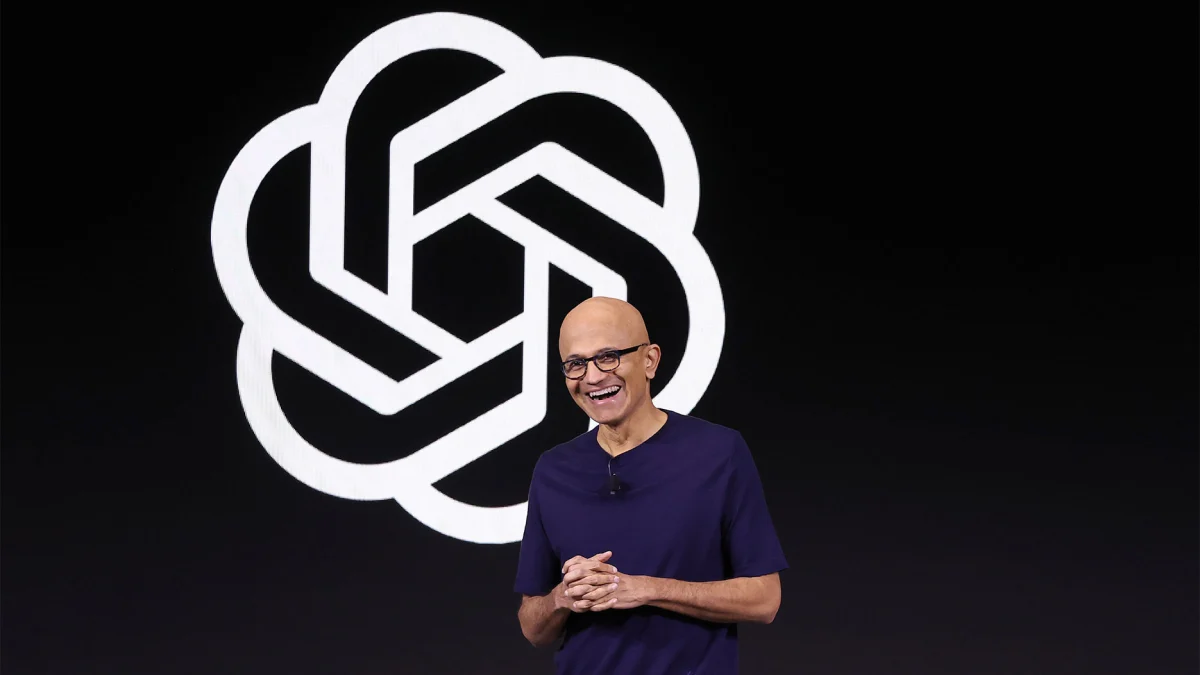
Microsoft CEO Satya Nadella has delivered a potent and unequivocal caution to businesses globally, asserting that companies risking complete reliance on single, proprietary artificial intelligence models for all their operational needs may ultimately face extinction. This amplified admonition, articulated during a recent interview on CNN’s "Fareed Zakaria GPS," expands upon earlier statements, underscoring a critical juncture in the rapidly evolving landscape of AI adoption for the corporate world. Nadella’s thesis posits that such singular dependence constitutes an "outsourcing of thinking," a strategic vulnerability that could prove fatal in the long run.
The Peril of Outsourcing Cognitive Core
Nadella’s concern centers on the fundamental control businesses exert over their intellectual assets and strategic direction in an AI-driven future. When asked to delineate the boundaries of excessive sharing with AI model providers, he emphasized the need for enterprises to scrutinize every piece of information handed over, from proprietary data sets to the specific prompts used to interact with these sophisticated systems. His argument highlights the importance of retaining granular control over "metadata" – the contextual information surrounding each interaction with an AI model. This metadata, according to Nadella, is invaluable for future development, allowing companies to potentially train their own custom "weights" (the trained parameters that essentially form an AI model’s "brain") or even develop proprietary open models.
"Any firm that doesn’t have this control," Nadella declared, "I will claim will not remain a firm because you’ve essentially outsourced your thinking." This powerful statement underscores a belief that relinquishing this core cognitive control is tantamount to surrendering strategic autonomy. Businesses, in his view, risk becoming mere conduits for services powered by external intelligence, rather than innovators driving their own destinies. The implication is clear: without the ability to leverage their unique data and interaction patterns to refine or build their own AI capabilities, companies risk losing a crucial competitive edge and becoming entirely dependent on external AI labs.
Architectural Imperatives: Gateways and Independent Harnesses
To mitigate this existential risk, Nadella advocates for a specific architectural approach involving "AI gateways" and the separation of "harnesses" from core AI models. AI gateways function as an intermediary layer, designed to abstract and separate a company’s prompts and data from the underlying AI model itself. This architectural pattern provides a crucial buffer, enhancing security, managing access, and facilitating the interchangeability of different AI models.
Furthermore, Nadella specifically advised against an over-reliance on the built-in coding tools, or "harnesses," offered directly by proprietary AI labs. Examples include Anthropic’s Claude Code and OpenAI’s ChatGPT Codex, which are deeply integrated solutions provided by model creators. While convenient, these integrated tools bind companies more tightly to a single provider. Nadella’s recommendation is to maintain these harnesses—the interface and context management tools that orchestrate AI interactions—as distinct and separate from the models themselves.
"By keeping the harness separate from the model and the context and memory separate from the model, you absolutely can use multiple models for what they’re great at," Nadella explained. "At the same time, any one model can go away, and you can still continue to be in control of your own destiny." This modular approach champions flexibility and resilience, enabling businesses to leverage the best-of-breed AI solutions for specific tasks while maintaining the ability to switch providers or integrate new models without fundamentally disrupting their operations. It’s a strategy that prioritizes interoperability and avoids vendor lock-in, a recurring theme in technology strategy across various eras.
The Platform Playbook and Historical Echoes
Nadella’s warning, while seemingly paradoxical given Microsoft’s substantial investments in leading AI labs like OpenAI and Anthropic, resonates deeply with historical patterns of technological platform evolution. This dynamic, often referred to as the "platform playbook," describes how dominant platform providers can, over time, leverage insights and data from their ecosystem partners to develop competing services, potentially marginalizing or even acquiring those partners.
This concern is not new. In the past, companies relying heavily on a single operating system, cloud provider, or app store have faced similar dilemmas regarding control, pricing, and competitive threats. For instance, developers on early mobile platforms grappled with the risk of platform owners introducing similar features or applications that directly competed with their offerings. Similarly, in the cloud computing era, companies have become increasingly aware of the challenges of vendor lock-in, where migrating vast datasets and complex applications from one cloud provider to another can be prohibitively expensive and time-consuming.
The advent of AI agents, which can be granted deep access to an enterprise’s internal systems and data, intensifies this risk. As these agents become more sophisticated and embedded, the potential for an AI lab to gain an intimate understanding of a company’s unique processes and intellectual property grows exponentially. This knowledge could then theoretically be used to develop competing services, effectively turning a service provider into a direct competitor. Seed investor Jason Calacanis voiced similar apprehension when OpenAI offered AI credits to Y Combinator startups, warning that such an offer could be a Trojan horse, allowing OpenAI to "study exactly what your startup is doing, copy your idea and put your app into their free offering." Nadella’s current warning extends this apprehension from the startup ecosystem to the broader enterprise landscape.
The Rise of Open-Source and Diversification Strategies
Despite the commercial success of proprietary AI models, there’s a discernible shift in enterprise sentiment towards diversification. Businesses are increasingly recognizing the necessity of exploring multiple model options, driven by factors such as cost-efficiency, customization requirements, and the desire for greater control. This trend has fueled a growing interest in "open-weight models"—AI models whose underlying parameters and code are publicly available, allowing enterprises to fine-tune them on their own hardware and data.
The allure of open-source AI is multifaceted. It offers transparency into the model’s workings, enabling better auditing and understanding of its biases and limitations. Furthermore, running open-source models on internal infrastructure can reduce ongoing operational costs compared to pay-per-use proprietary APIs, especially for high-volume applications. Perhaps most importantly, open-source models empower companies to tailor AI to their precise needs, embedding their unique business logic and data without relinquishing control to external vendors.
This diversification, however, introduces new complexities. Managing multiple AI models, each with its own strengths, weaknesses, and deployment requirements, necessitates robust AI orchestration and management platforms. This is where Microsoft’s strategic positioning becomes evident. While Nadella advocates for caution regarding single-vendor reliance on AI labs, Microsoft’s Azure cloud business simultaneously offers the very infrastructure and tools—such as AI gateways, model management services, and platforms for deploying open-source models—that enable enterprises to implement the multi-model, independent strategy he recommends. This positions Microsoft as a key enabler of the diversified AI future, regardless of which specific models enterprises choose to integrate.
Data Privacy and the Consumer-Enterprise Divide
A notable distinction in Nadella’s commentary lies in his differentiation between enterprise and consumer data sharing. When questioned about how individuals could protect themselves from oversharing with AI models, Nadella adopted a more conventional stance, characterizing consumer data sharing as a "value exchange." He suggested that consumers often receive free services in return for their data, a model akin to the advertising-driven internet economy.
This perspective highlights the vastly different stakes involved. For individual consumers, the trade-off between privacy and convenience, especially for free services, has long been a societal debate. However, for businesses, the data involved is often proprietary, containing trade secrets, customer insights, and strategic operational details. The potential for competitive harm or intellectual property compromise is exponentially higher. Therefore, while individuals might accept the implicit contract of trading data for free services, enterprises must approach data governance and AI model interaction with a far more rigorous and strategic mindset, recognizing that their "thinking" and competitive advantage are directly tied to the integrity and control of their information assets.
Strategic Imperatives for the AI Era
In essence, Nadella’s warning serves as a clarion call for strategic foresight in the age of artificial intelligence. It urges businesses to move beyond simply adopting AI as a tool and instead to view it as a foundational element of their long-term competitive strategy. This involves:
- Investing in internal AI literacy and capabilities: Building in-house expertise to understand, manage, and develop AI.
- Adopting a multi-vendor AI strategy: Diversifying across proprietary and open-source models to avoid single points of failure and leverage specialized strengths.
- Prioritizing data governance and control: Establishing clear policies for data usage, retention, and interaction with AI models.
- Implementing robust AI infrastructure: Utilizing AI gateways and independent harnesses to maintain architectural flexibility and data sovereignty.
The message is clear: the future of enterprise survival in an AI-driven world hinges not just on embracing AI, but on strategically controlling its deployment to safeguard intellectual property, maintain competitive agility, and ultimately, retain cognitive destiny.