Amir Mahmud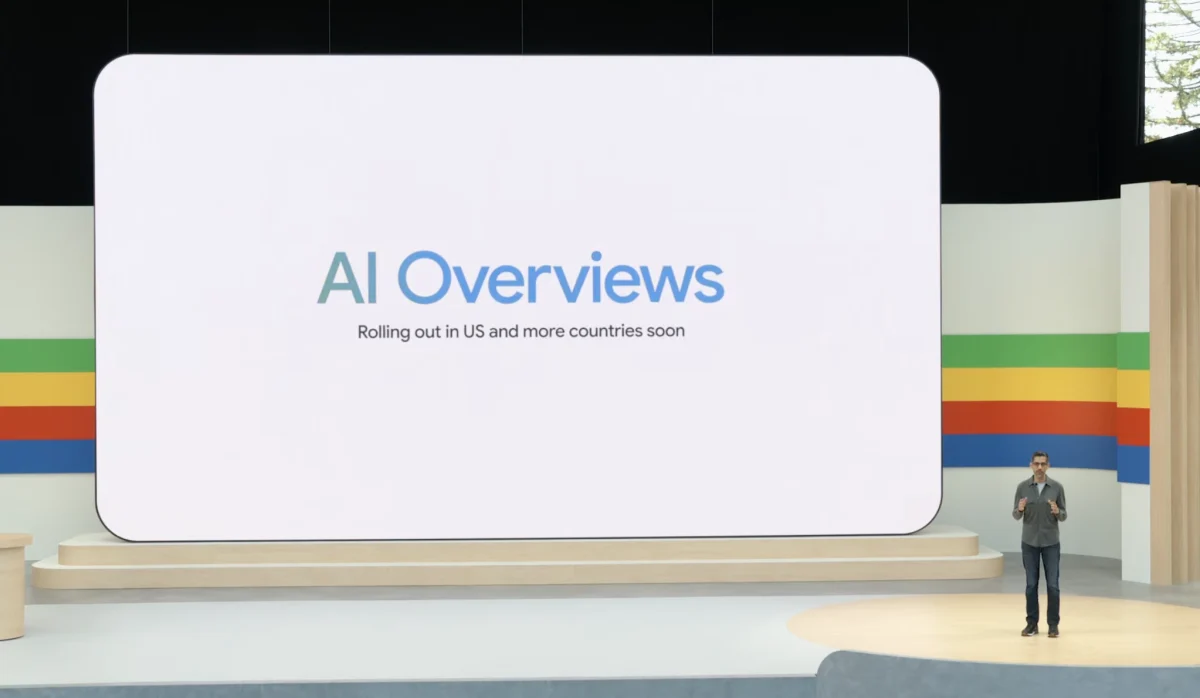
A fundamental transformation is underway in how internet users access information, with artificial intelligence-powered summaries rapidly becoming the default interface for Google searches. New data reveals a dramatic increase in the prevalence of Google’s AI-generated answers, termed "AI Overviews," signaling a significant shift away from the traditional model of clicking through a list of blue links to discover content. This evolution is redefining the very essence of web search, concentrating information consumption within Google’s ecosystem and sparking considerable debate across the digital landscape.
The Rapid Ascent of AI Overviews
In a remarkably short span, AI Overviews have transitioned from an experimental feature to a pervasive element of the search experience. A recent analysis by market intelligence firm Similarweb indicates that AI Overviews appeared in a staggering 43% of searches by a specified date, a substantial leap from just 15% merely a year prior. This swift integration underscores Google’s commitment to embedding generative AI directly into its core search product, making it an integral part of the user journey rather than an optional add-on.
The journey often begins with an AI Overview, from which users can delve deeper into their queries through Google’s more interactive and conversational "AI Mode." The adoption metrics for this deeper engagement are equally compelling. Visits to AI Mode nearly doubled within a year, soaring from 126 million in June 2025 to 279 million by May 2026. This trajectory highlights a clear user embrace of the more direct, synthesized answers offered by AI, signaling a departure from the investigative browsing habits of the past.
Shifting User Behavior and Search Dynamics
The burgeoning prominence of AI Overviews reflects a broader metamorphosis in how individuals interact with search engines. Historically, Google served primarily as a conduit, presenting users with a directory of links to external websites where information resided. The current paradigm, however, positions Google itself as the ultimate destination, a platform capable of directly providing comprehensive answers by synthesizing content from across the indexed web. This shift profoundly impacts user behavior, influencing both the nature of queries and the duration of engagement with the search platform.
Data indicates that the average length of Google searches has noticeably increased over the past year. This phenomenon suggests that users are increasingly moving away from concise, keyword-based inputs towards more elaborate, natural language queries designed to elicit detailed, conversational responses from AI. Instead of typing "best coffee maker," a user might now phrase a query as "What are the best coffee makers for espresso and how do they compare?" This behavioral adaptation suggests a growing comfort with and expectation for AI to process complex requests and deliver curated information upfront. Consequently, users are spending more time within Google’s environment, engaging with the presented AI summaries and follow-up conversational prompts, rather than immediately navigating to external sites.
A Brief History of Search Evolution
To fully appreciate the magnitude of this transformation, it’s essential to contextualize it within the broader history of Google Search. Launched in 1998, Google revolutionized web discovery by prioritizing relevance through its PageRank algorithm, presenting users with a simple, uncluttered list of "blue links." Over the years, the platform incrementally enhanced its capabilities, introducing features like the Knowledge Graph in 2012, which provided factual information directly on the search results page, and "featured snippets," offering quick answers extracted from web pages. These innovations were precursors to the current AI-driven model, gradually moving Google from a pure directory to a more active information provider.
The advent of large language models (LLMs) and the explosion of generative AI, particularly catalyzed by the public release of tools like ChatGPT in late 2022, spurred a new era of competition and innovation. Google, having invested heavily in AI research for years, responded by accelerating the integration of its own advanced AI capabilities, such as those powering its Gemini model, into its flagship search product. AI Overviews and AI Mode are direct manifestations of this strategic pivot, designed to maintain Google’s dominance in a rapidly evolving information landscape where direct answers and conversational interfaces are becoming paramount.
Impact on the Content Ecosystem: A Publisher’s Dilemma
While Google’s AI integration offers enhanced convenience for users, it poses significant challenges for the vast ecosystem of content creators, news organizations, and publishers that have historically relied on search engines for referral traffic. The rise of AI Overviews, which often present synthesized information directly, means users may no longer need to click through to the original source website. This reduction in outbound clicks translates directly into a loss of advertising revenue and audience engagement for publishers, jeopardizing their economic models.
Many publishers have voiced concerns that Google is effectively monetizing their content by summarizing it, without adequately compensating them or driving traffic back to their platforms. This dynamic creates an existential threat for some, particularly smaller news outlets and niche content creators, who depend on web traffic to sustain their operations. The debate around fair use, copyright, and the value exchange between AI aggregators and original content producers has intensified, becoming a central issue in digital media.
Industry Responses and Evolving Monetization Models
In response to these mounting concerns, some industry players are actively developing countermeasures. Tech infrastructure company Cloudflare, for instance, has introduced tools designed to empower publishers in this new environment. These tools enable websites to detect and block AI crawlers from accessing their content unless specific terms, potentially including financial compensation, are met. Cloudflare’s marketplace allows publishers to charge AI companies for scraping their content, creating a potential new revenue stream for those impacted by reduced referral traffic. This initiative represents a proactive effort to rebalance the power dynamic between content creators and AI platforms.
The issue of citations within AI-generated responses also remains a critical point of discussion. While the number of AI responses including citations has increased more than fivefold over the past year, the overall proportion remains relatively low. For example, as of May 2026, only 6.8% of U.S. ChatGPT desktop queries included citations. This figure varies by industry, with sectors like travel, retail, and sports seeing more frequent citation inclusion. The challenge for AI models is to attribute sources clearly and prominently enough to incentivize user clicks, thereby providing value back to the content originators.
Encouragingly, there have been some positive developments for publishers, particularly concerning ChatGPT. Following a search update in May 2026, U.S. desktop referrals from ChatGPT showed significant improvement. The proportion of visits landing on external webpages more than doubled, climbing from 25% in March 2026 to nearly 60% by the end of May 2026. This suggests that when "blue links" are made more prominent or contextually relevant within AI-driven results, users are indeed willing to click through to explore original sources further. This trend offers a glimmer of hope that a balanced coexistence between AI summaries and traditional web traffic might be achievable.
The Broader Implications for Digital Information
The shift towards AI-dominated search carries profound implications beyond economics. It raises questions about information diversity, critical thinking, and the potential for algorithmic bias. When users primarily consume summarized information, there’s a risk of missing nuanced perspectives, diverse viewpoints, or the original context of content. AI models, while powerful, are trained on existing data, and their summaries can inadvertently reflect biases present in that data or in their own design. Ensuring accuracy, transparency, and fairness in AI-generated information is a paramount challenge for developers and regulators alike.
Moreover, this transformation fundamentally redefines the role of the internet. From a distributed network of interconnected sites, it is evolving into a more centralized information hub, with major platforms like Google acting as powerful gatekeepers and synthesizers. This concentration of information access could have long-term cultural and social impacts, influencing how knowledge is disseminated, consumed, and even created.
Looking Ahead: The Future of Search
The data unequivocally shows that the era of AI-powered search is not merely on the horizon; it is already here and rapidly solidifying its position as the primary mode of information discovery. Google’s strategic integration of AI Overviews and AI Mode represents a calculated move to evolve its product in response to both technological advancements and changing user expectations.
As this transformation continues, the focus will likely shift to finding a sustainable equilibrium that benefits users, platforms, and content creators. This could involve innovative monetization models for publishers, more sophisticated citation practices by AI systems, and ongoing discussions about the ethical responsibilities of powerful AI platforms. The future of search will undoubtedly be characterized by ongoing innovation, adaptation, and a continuous negotiation of the digital landscape’s evolving rules. The transition from a web of links to a web of answers is well underway, marking a new chapter in our relationship with digital information.