Amir Mahmud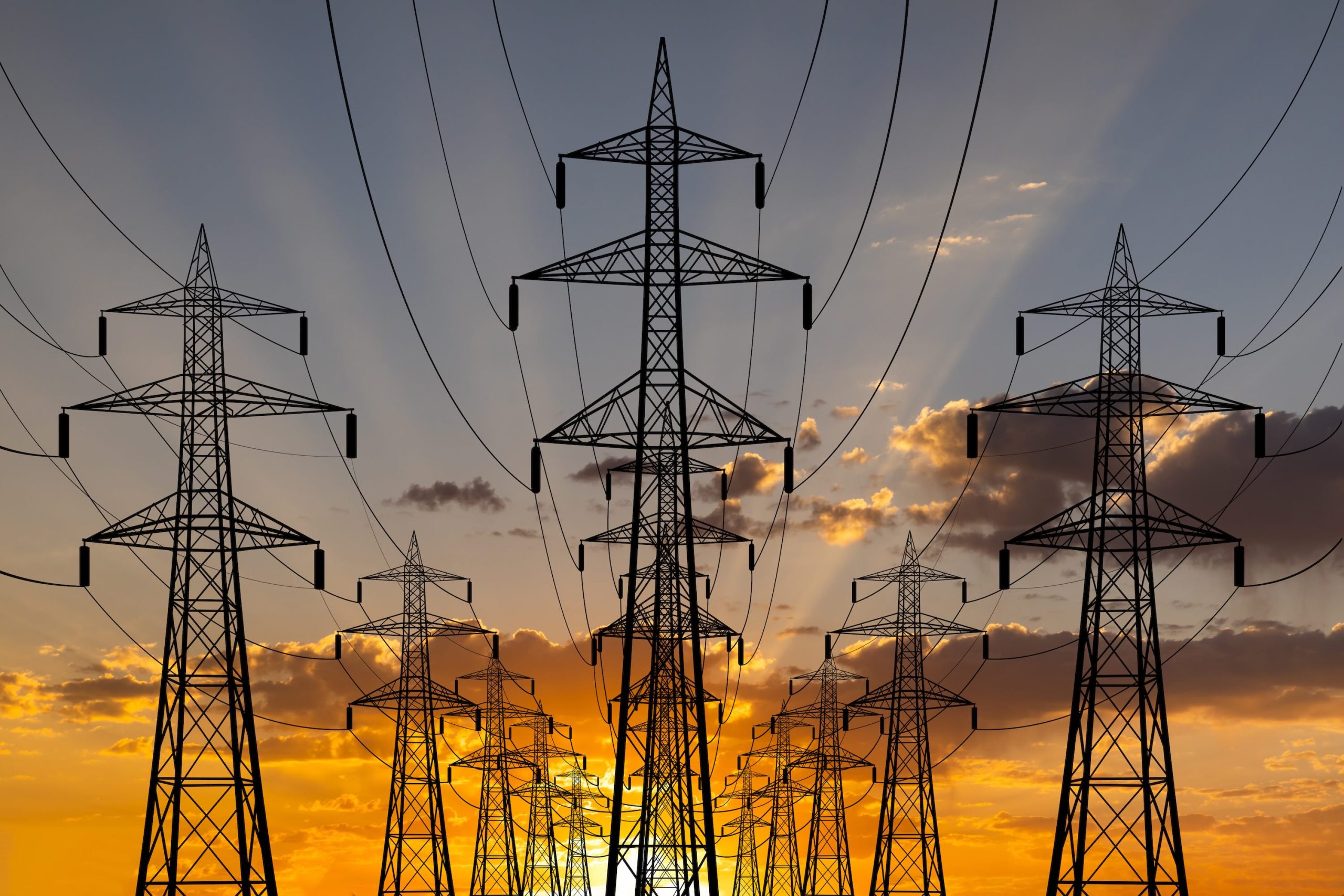
The relentless acceleration of artificial intelligence has captivated global imagination and drawn unprecedented capital, with venture capitalists injecting over half a trillion dollars into AI startups over the past five years. Yet, a looming challenge is redirecting this investment flow: the sheer energy demands of powering advanced AI models and the data centers that house them. Industry analysts now suggest that the most astute investment in the AI era may not be in algorithms or chips, but in the foundational energy infrastructure that enables them to operate.
The Unseen Constraint: Data Centers’ Insatiable Appetite
Data centers, the digital factories of the 21st century, form the backbone of the internet, cloud computing, and increasingly, artificial intelligence. Their growth has been exponential, driven by everything from streaming services to enterprise software. However, the rise of sophisticated AI models, particularly large language models (LLMs) and generative AI, has amplified their energy requirements to unprecedented levels. Training a single advanced AI model can consume as much electricity as hundreds of homes for an entire year, underscoring the immense computational and power intensity involved.
This voracious appetite for power is creating a significant bottleneck. A recent report by Sightline Climate highlights a concerning trend: up to 50% of announced data center projects are facing potential delays, with access to reliable and sufficient power being one of the primary culprits. Out of 190 gigawatts (GW) worth of data center capacity currently being tracked, a mere 5 GW is actively under construction. While approximately 6 GW of new capacity came online last year, a far larger percentage—around 36%—experienced timeline slippages in 2025. These delays are not isolated incidents; they represent a systemic issue that could ripple through the global economy, impacting large enterprises, smaller businesses, and even individual consumers who rely on AI-powered services.
A Historical Perspective on Energy and Technology
The relationship between technology and energy consumption has evolved dramatically over decades. Early computing, characterized by mainframe systems, was centralized and relatively modest in its power needs by today’s standards. The advent of personal computers and the internet in the late 20th century decentralized computing, but the real energy surge began with the rise of hyperscale data centers in the early 2000s. As companies like Google, Amazon, and Microsoft built vast server farms to support their cloud services, their energy footprints grew exponentially.
Initially, the focus was on efficiency within the data center itself – optimizing cooling, server utilization, and power delivery to reduce operational costs. However, as the scale of these operations expanded, tech giants began to recognize the broader implications of their energy consumption, particularly concerning environmental impact. This led to ambitious commitments to power their operations with 100% renewable energy, setting a precedent for corporate sustainability. Companies started actively investing in large-scale solar and wind projects, often through power purchase agreements (PPAs), and engaging with utilities to accelerate the transition to cleaner grids. This historical trajectory now culminates in the current moment, where the sheer volume of demand from AI necessitates not just cleaner energy, but fundamentally new ways of generating and delivering it.
The Grid Under Strain: A National Challenge
The existing electrical grid in many parts of the world, particularly in the United States, is a complex patchwork of infrastructure, much of which dates back to the mid-20th century. Designed for a more predictable, centralized model of generation and consumption, it struggles to adapt to the sudden, localized, and massive power demands of modern data centers. Furthermore, the rapid integration of intermittent renewable energy sources like solar and wind, while crucial for decarbonization, adds layers of complexity to grid management, requiring sophisticated balancing acts to maintain stability and reliability.
These unprecedented shortages are leading to significant consequences. Electricity prices across various regions are rising, impacting not just data center operators but also businesses and residential consumers. The economic implications are substantial, potentially increasing the operational costs of AI services and slowing down innovation. Recognizing this looming crisis, governmental bodies, including the Trump administration, have urged technology companies to take greater responsibility for their power needs, suggesting they either build their own generation sources, pay higher rates to utilities, or pursue a combination of both. Many tech companies, already anticipating these challenges, had proactively begun exploring such strategies.
Strategic Shifts: Tech Giants Invest in Energy Independence
In response to these escalating power constraints, major technology companies are pivoting their investment strategies. Giants like Amazon, Google, Meta, and Oracle are increasingly devoting substantial portions of their balance sheets to developing dedicated energy projects. This includes direct investments in utility-scale solar, wind, and even advanced nuclear projects, moving beyond simply purchasing renewable energy credits to actively shaping their power supply.
A significant trend emerging is the move towards on-site or hybrid power solutions for data centers. Rather than relying solely on the traditional grid, companies are planning facilities that incorporate their own generation assets, or blend grid connectivity with substantial on-site capabilities. While less than a quarter of new data center projects explicitly identify an on-site or hybrid power source, these projects collectively represent a disproportionately large 44% of total planned capacity, indicating that the largest and most energy-intensive developments are leading this charge.
This shift is partly a pragmatic response to equipment shortages, particularly for components like gas turbines, and the inherent limitations of an antiquated grid. It has opened a clear path for alternative energy sources and innovative energy management solutions. Google’s recent deal to power a new data center in Minnesota exemplifies this approach. The company plans to blend wind and solar generation with a massive 30 gigawatt-hour (GWh) battery storage system from Form Energy. Furthermore, Google collaborated with Xcel Energy to devise a new rate structure designed to incentivize the adoption of novel technologies within the utility’s long-term planning processes, illustrating a proactive engagement to influence broader energy infrastructure development.
Innovation in Energy Storage and Distribution
Beyond large-scale generation, the need for robust energy storage and efficient distribution technologies is paramount. Grid-scale batteries are poised to revolutionize the power market by addressing the intermittency of renewables and providing critical capacity during peak demand. The U.S. Energy Information Administration projects that the nation will have nearly 65 GW of battery storage capacity by the end of this year, a testament to the rapid deployment of this technology. Companies like Form Energy, with their innovative 100-hour iron-air batteries designed for long-duration storage, are at the forefront, attracting significant investment rounds, such as their reported $500 million raise, in anticipation of future public offerings.
Equally critical, though often less heralded, are advancements in power conversion and management. The humble transformer, a technology largely unchanged for 140 years, relies on massive blocks of iron wrapped in copper wire to convert voltage. While reliable, this traditional design is becoming increasingly bulky and inefficient for the escalating power densities of modern data centers. Experts point out that as server racks approach 1 megawatt (MW) in power density, the auxiliary power equipment required to run them can occupy twice the physical space of the server rack itself, leading to significant real estate and cooling challenges.
This constraint has spurred considerable investor interest in solid-state transformers (SSTs). These next-generation devices leverage silicon-based power electronics to achieve far greater efficiency, compactness, and flexibility compared to their traditional counterparts. Although initially more expensive, SSTs can consolidate the functions of several pieces of traditional data center power equipment, ultimately making them cost-competitive by reducing overall infrastructure footprint and complexity. Startups like Amperesand, DG Matrix, and Heron Power are pioneering these new power conversion technologies. Concurrently, companies such as Camus, GridBeyond, and Texture are developing sophisticated software platforms to intelligently manage the flow of electrons within data centers and across the grid, optimizing efficiency and ensuring reliability in an increasingly dynamic energy landscape.
Market Dynamics and Investment Outlook
While the blockbuster funding rounds for core AI technology have dominated headlines, the scale of investments in underlying energy infrastructure companies—from battery storage to advanced transformers and grid management software—has been comparatively smaller. This, however, is not necessarily a disadvantage. These "more tractable" investment rounds offer potentially more accessible entry points for venture capitalists and provide a more diversified portfolio against the inherent volatility of rapidly evolving AI applications.
From an analytical perspective, investing in energy infrastructure offers a strategic hedge. Even if specific AI applications or companies fail to meet hyped expectations, the broader trend of global electrification—encompassing everything from electric vehicles and industrial processes to smart cities—ensures a persistent and growing demand for efficient, reliable, and sustainable power solutions. The foundational need for energy will only intensify, making investments in generation, storage, and distribution technologies robust regardless of the specific trajectory of the AI market. This long-term stability and broad market applicability present a compelling case for investors seeking enduring value beyond the immediate AI gold rush.
Broader Societal and Environmental Implications
The shift towards energy-focused investments for AI carries significant societal and environmental implications. The sheer carbon footprint of data centers, already substantial, is set to grow exponentially with AI’s expansion. Goldman Sachs estimates that AI will drive data center power consumption up 175% by 2030, underscoring the urgency of clean energy solutions. By intertwining AI development with advancements in renewable energy, battery storage, and grid modernization, the tech sector can help mitigate its environmental impact, fostering a more sustainable digital future.
This synergy also has the potential to accelerate the broader energy transition. The massive capital and innovative drive of tech companies, when directed towards energy infrastructure, can catalyze breakthroughs that benefit society at large, improving grid resilience, reducing energy costs, and promoting wider adoption of clean technologies. Ultimately, the cultural shift implied by these investments suggests a deeper appreciation for the foundational infrastructure that underpins all digital progress. The best AI investment, it seems, might truly be in the very power that brings it to life.