Amir Mahmud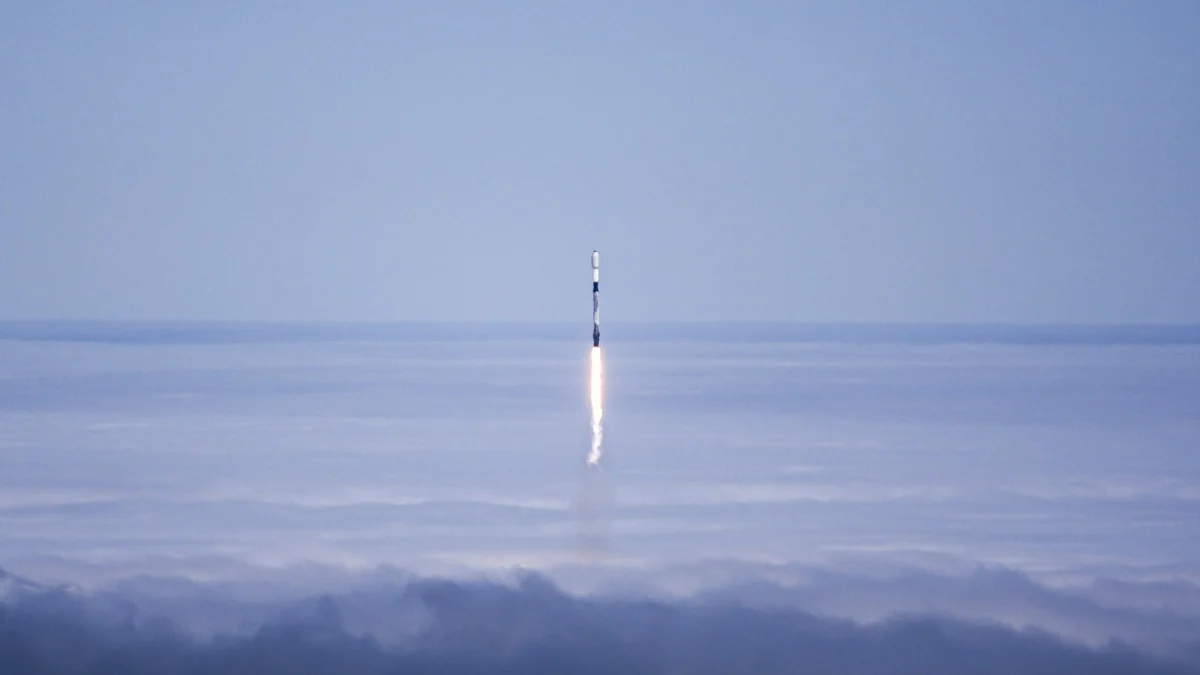
Space Exploration Technologies Corp., more commonly known as SpaceX, has officially confirmed a groundbreaking initial public offering (IPO), pricing its shares at $135 each. This monumental move has allowed the aerospace and artificial intelligence conglomerate, founded by visionary entrepreneur Elon Musk, to secure an unprecedented $75 billion from the sale of its shares to underwriters. These financial institutions are now poised to introduce the company’s stock to the Nasdaq exchange, marking a pivotal moment in both financial markets and the burgeoning space industry.
A New Benchmark in Capital Markets
The scale of SpaceX’s public debut instantly redefines the landscape of capital markets, dwarfing previous records. By raising $75 billion, SpaceX has not merely surpassed but profoundly eclipsed the prior record holder, Saudi Aramco, which garnered $24.9 billion during its 2019 public offering. This achievement underscores the immense investor confidence in SpaceX’s audacious long-term vision and its established track record of innovation. The pricing of 555.6 million shares at $135 each reflects a valuation that positions the company as a titan among publicly traded entities from its very inception. The ticker symbol SPCX will soon become a familiar sight, signaling the arrival of a new era for space-related investments on Wall Street.
This historic IPO also carries significant personal implications for its founder. Should the company’s valuation continue on its current trajectory, analysts suggest this offering could cement Elon Musk’s status as the world’s first trillionaire, a testament to the compounding success of his various ventures, including Tesla and Neuralink. Such a personal milestone would not only highlight Musk’s extraordinary wealth accumulation but also reflect the staggering market capitalization attributed to companies operating at the cutting edge of technological disruption.
SpaceX’s Genesis and Ascent: From Concept to Cosmic Powerhouse
The journey of SpaceX began in 2002, born from Elon Musk’s ambitious and often doubted vision to revolutionize space travel. His core mission was clear: drastically reduce the cost of space transportation to enable the colonization of Mars. In an industry historically dominated by government agencies and established aerospace contractors like Boeing and Lockheed Martin, SpaceX emerged as a disruptive force, challenging conventional wisdom and engineering paradigms.
Early years were fraught with challenges and near-failures. The initial launches of the Falcon 1 rocket faced setbacks, pushing the company to the brink of bankruptcy. However, persistent innovation and a relentless pursuit of reusability ultimately led to breakthrough successes. The development of the Falcon 9 rocket and the Dragon capsule proved instrumental, securing crucial contracts with NASA for cargo resupply missions to the International Space Station (ISS) and eventually for crewed flights. These achievements demonstrated SpaceX’s capability to deliver reliable, cost-effective access to orbit, fundamentally altering the competitive landscape.
Over two decades as a private entity, SpaceX attracted approximately $40 billion in private capital, drawing investments from a diverse pool of venture capitalists and institutional funds. Key milestones include the development of Starlink, a rapidly expanding satellite internet constellation aimed at providing global broadband access, and the ambitious Starship program, designed for lunar and Martian missions. These projects, each a massive undertaking in its own right, have collectively fueled the company’s extraordinary valuation and investor excitement. SpaceX’s ascent is often seen as a cornerstone of the "New Space" movement, a global trend toward increased private sector participation in space exploration and commercialization.
The Unconventional Path to Public Markets
SpaceX’s approach to its IPO diverged significantly from traditional practices. While most companies finalize their share pricing closer to the market opening, SpaceX adopted a proactive strategy. Reports from financial media outlets, including the Financial Times, indicated that the company had been testing its $135 share target with potential investors well in advance of its official roadshow. This unconventional method allowed SpaceX to gauge market appetite and secure commitments, creating a sense of certainty around its valuation before the public debut.
The market’s response to this pre-emptive pricing was overwhelmingly positive. Bloomberg reported that the offering was oversubscribed by more than four times, meaning investor demand far outstripped the available shares. This intense interest signals robust confidence from both large institutional investors and individual buyers who are eager to acquire a stake in the 24-year-old technology company. Such heavy oversubscription is a strong indicator of a potential "IPO pop" – a significant increase in share price on the first day of trading. Indeed, speculative crypto betting markets, such as Hyperliquid, which attempt to offer synthetic exposure to SpaceX stock, have already priced shares at $167, suggesting that market participants anticipate an immediate gain of around 20% post-listing.
Should this intense demand persist once active trading commences, the underwriters have an option to bring an additional 83.3 million shares to market. This "greenshoe" option, if exercised, would allow the company to raise another $11 billion at the initial offering price, further expanding the capital injection and signaling continued strong market interest.
The Valuation Conundrum: Justifying a Galactic Price Tag
While the immediate market reaction has been effusive, the long-term justification for SpaceX’s eye-popping valuation remains a subject of considerable analytical scrutiny. The company’s future growth hinges on the successful execution of an incredibly ambitious and technologically challenging roadmap. Key projects include the development of Starship, the world’s largest reusable rocket, intended for deep-space missions and potential point-to-point travel on Earth. Another significant venture is the continued expansion and monetization of the Starlink satellite internet service, which represents a substantial, recurring revenue stream. Furthermore, the company has hinted at other ventures, including a new American chip fabrication facility, diversifying its technological footprint beyond core aerospace.
Industry experts and financial analysts are grappling with how to model the value of such ambitious, long-horizon projects. Starlink, while operational, is still in its growth phase, and Starship, despite significant progress, faces numerous engineering and regulatory hurdles. The ultimate vision of establishing a self-sustaining human colony on Mars, a long-shot bet that underpins a portion of Musk’s contingent shareholdings, introduces an unprecedented level of speculative value into the company’s valuation.
Neutral commentary often points to the dual nature of SpaceX’s appeal: it is both a proven leader in commercial space services and a frontier-pushing research and development entity. Its valuation reflects not just current revenue streams from launch services and Starlink subscriptions, but also the immense potential of future innovations that could fundamentally transform humanity’s relationship with space. However, the inherent risks associated with such complex technological endeavors, along with intense competition from both established aerospace players and emerging "New Space" startups, demand careful consideration from long-term investors. Regulatory landscapes, particularly for satellite constellations and potential space debris, also present evolving challenges.
A Windfall for Visionaries and Investors
The historic IPO delivers substantial windfalls to a select group of early believers and key figures within SpaceX. Unsurprisingly, Elon Musk stands as the primary beneficiary. His ownership structure is complex, including just under 850 million Class A shares, each entitled to one vote. Additionally, he holds rights to another 5.6 billion Class B shares, which carry ten votes per share. This latter category includes a billion shares contingent on the incredibly audacious, long-shot bet that a million people will eventually live in a SpaceX colony on Mars. This structure ensures Musk retains significant control and upside potential, aligning his personal fortune with the company’s most ambitious goals.
Beyond Musk, other major stakeholders are also poised for substantial gains. Antonio Gracias, founder and CEO of Valor Management, a prominent early investor, holds 503.4 million shares, valuing his position at nearly $68 billion at the IPO price. Luke Nosek, a SpaceX board member and investor, owns 33 million shares, while Chief Operating Officer Gwynne Shotwell, a critical figure in the company’s day-to-day operations and strategic execution, holds nearly 12.6 million shares. These figures highlight the immense wealth creation for individuals who committed early to Musk’s vision.
The offering also represents a significant return for the roughly 400 venture capitalists who provided crucial backing during the company’s two-decade tenure as a private entity. Their initial investments, totaling approximately $40 billion, have now multiplied dramatically, validating their foresight in supporting a deep-tech company with ambitious, long-term goals. Furthermore, an uncountable number of smaller investors who participated in SpaceX via special purpose vehicles (SPVs) are also set to see their initial capital grow. However, due to the complex nature of these investment structures, many of these SPV participants may not ascertain the exact magnitude of their gains or whether they are fully entitled to them until after the company’s staggered lock-up periods expire, a common feature designed to prevent immediate sell-offs post-IPO.
Broader Implications for the Global Economy
SpaceX’s record-breaking IPO extends its influence far beyond the immediate financial markets, sending ripples through the global economy and significantly impacting the future of space exploration. The sheer volume of capital raised and the public validation of a "New Space" company at this scale are likely to invigorate further investment in the commercial space sector. This could foster intensified competition, drive down costs for launch services, and accelerate innovation across various segments, from satellite manufacturing to in-orbit services and resource utilization. Access to space, once the exclusive domain of national governments, is becoming increasingly democratized, opening new avenues for scientific research, economic activity, and international collaboration.
Culturally, SpaceX’s public debut reinforces the renewed public interest in space. Elon Musk’s vision of making humanity a multi-planetary species has captivated imaginations worldwide, and the company’s public listing transforms this grand ambition into a tangible investment opportunity for a broader audience. This cultural resonance could inspire a new generation of scientists, engineers, and entrepreneurs, fueling a virtuous cycle of innovation and progress.
Economically, the success of SpaceX’s IPO signals a robust appetite for "deep tech" investments, potentially encouraging more capital to flow into ventures tackling complex, long-term technological challenges. The company’s expansive operations, from manufacturing facilities to launch sites and ground stations for Starlink, create thousands of high-skilled jobs and stimulate growth across numerous supply chains. The technological advancements pioneered by SpaceX, such as reusable rockets and advanced satellite technology, have the potential for significant spin-off benefits in other industries, from materials science to artificial intelligence. As SpaceX embarks on its journey as a publicly traded company, its performance will be closely watched, not just as a financial indicator, but as a barometer for humanity’s collective aspirations in the cosmos.