Amir Mahmud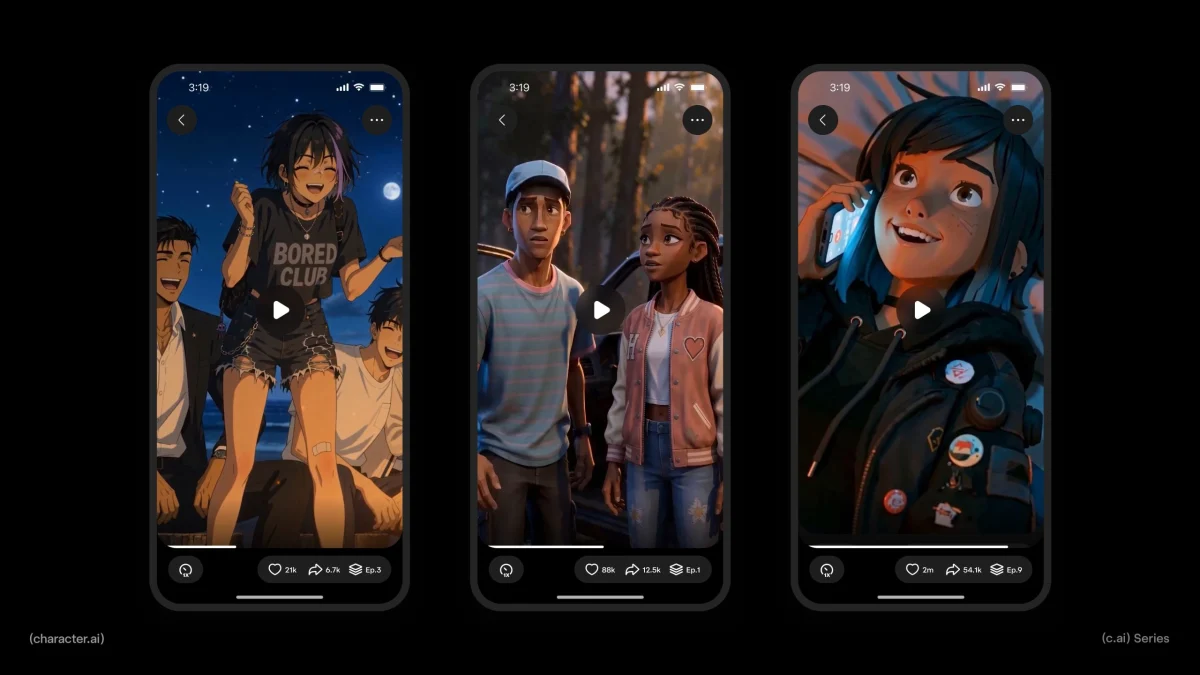
In a significant evolution of digital entertainment, Character.ai, a platform renowned for enabling users to chat with custom artificial intelligence avatars, is making a strategic foray into the booming microdrama market. This venture introduces a novel dimension by integrating its core conversational AI technology, allowing viewers to not only consume short-form serialized content but also to interact directly with the AI-powered characters inhabiting these narratives. This innovative approach promises to redefine engagement within the rapidly expanding attention economy, distinguishing Character.ai from the growing multitude of companies vying for dominance in the microdrama space.
The Ascendance of Microdramas in the Digital Age
Microdramas, characterized by their concise episodes, often lasting just a few minutes, have become a ubiquitous phenomenon across various digital platforms. Their surge in popularity is deeply intertwined with contemporary media consumption habits, particularly the preference for bite-sized, mobile-optimized content that caters to increasingly fragmented attention spans. Platforms like TikTok and Instagram initially popularized the short-form video format, inadvertently paving the way for scripted, serialized narratives to thrive in similar compact packages. This trend has not gone unnoticed by major players in the entertainment and tech industries. Dedicated microdrama applications, alongside established social media giants and even traditional streaming services such as Peacock, Amazon Prime, and India’s JioHotstar, have all begun to invest heavily in producing or hosting these captivating, rapid-fire stories. The allure lies in their accessibility, low barrier to entry for viewers, and the addictive nature of cliffhangers delivered in quick succession. Analysts project this segment to generate billions, underscoring its pivotal role in the future of digital content.
Character.ai’s Distinctive Entry into Storytelling
Character.ai’s entry into this competitive landscape is marked by a unique proposition: leveraging its foundational expertise in advanced conversational AI. While other platforms focus primarily on passive viewing, Character.ai introduces an interactive layer that transforms spectators into active participants. The company’s innovative twist allows users, specifically those aged 18 and older, to engage in real-time conversations with the AI characters featured in its microdramas. This capability extends beyond mere dialogue, enabling users to pose questions, delve deeper into character motivations, or even explore alternative plotlines through role-playing scenarios. This dynamic interaction fundamentally alters the traditional viewer experience, offering an unprecedented level of personalized engagement with fictional worlds and their inhabitants.
To kickstart this ambitious initiative, Character.ai is launching with an initial slate of three distinct microdramas. These inaugural series span popular genres, designed to appeal to a broad audience. "Last Summer" is a romance series, promising emotional depth and character-driven narratives. For those inclined towards suspense and the supernatural, "The Nighttime Game" offers a horror experience. Completing the trio is "Eden Fall," a survival microdrama that evokes the high-stakes tension often found in dystopian narratives like "The Hunger Games." Each series is meticulously crafted, not just for its plot, but also as a vehicle to showcase the interactive capabilities of the AI characters within.
The Technological Backbone: AI Production and Interactive Systems
The production of these microdramas is a testament to the increasing sophistication of artificial intelligence in creative fields. Character.ai states that these series are generated using advanced AI production tools, encompassing elements from script generation to character animation and voice synthesis. This approach signifies a broader industry trend towards utilizing AI to streamline and accelerate content creation, potentially democratizing access to high-quality production resources.
At the heart of Character.ai’s innovation is its underlying large language model (LLM) and character generation technology. When a user interacts with a character, the AI draws upon a vast dataset of information, including the character’s pre-defined personality, background, and the ongoing narrative of the microdrama. This allows the AI to generate contextually relevant and engaging responses, creating the illusion of genuine conversation. The challenge lies in maintaining narrative coherence and character consistency across diverse user interactions, ensuring that the role-playing experience remains immersive and satisfying. The 18+ age restriction for interactive elements underscores the company’s awareness of the complexities and potential sensitivities involved in unscripted, open-ended character interactions.
Character.ai’s Strategic Evolution: From Chatbots to Comprehensive Entertainment
This venture into microdramas represents a significant milestone in Character.ai’s strategic evolution. Founded by former Google AI researchers Noam Shazeer and Daniel De Freitas, the company initially gained traction by offering a platform where users could create and interact with AI chatbots based on famous personalities, fictional characters, or entirely original creations. The platform quickly cultivated a dedicated user base drawn to the novelty and depth of these AI companions.
Over the past year, Character.ai has conspicuously shifted its focus towards more entertainment-centric features, moving beyond open-ended chat to structured storytelling and creative tools. This pivot is evident in several recent introductions:
- Lorebook: Teased in April, Lorebook is a tool designed to help users build comprehensive world-building information that their custom characters can reference. This feature enhances the depth and consistency of AI-driven narratives and interactions, allowing for richer, more detailed role-playing scenarios.
- Books: Launched previously, this feature enables users to insert themselves into select classic literature titles or role-play as characters from them. It bridges the gap between traditional reading and interactive engagement, offering a personalized narrative experience.
- c.ai FM (Audio Series): Currently in testing under the experimental c.ai Labs program, this feature allows users to assemble audio series. The company has indicated that professional writers are already utilizing this tool to craft serialized audio dramas, suggesting a future expansion into auditory storytelling.
- c.ai Reads (Fiction Creation): Another feature under development, c.ai Reads aims to empower users to create their own works of fiction. This signifies Character.ai’s long-term vision of transitioning from a content consumer platform to a robust creator ecosystem.
A company spokesperson articulated this vision, stating, "Starting with a studio-led model, c.ai Series lets our production team develop the format, refine the workflow, and understand what audiences want from Character-native Microdrama entertainment. Over time, the goal is to turn those learnings and workflows into creator tools, enabling users to make their own series from original Characters and share them with a global audience." This statement clarifies a dual-phase strategy: initially, the company will lead content creation to establish best practices and understand user preferences, eventually decentralizing production to its community.
Market Dynamics and the Competitive Landscape
The decision by Character.ai to enter the microdrama arena underscores the intense competition within the attention economy. Every platform is vying for user engagement, and short-form video has proven to be an exceptionally sticky format. While social media giants like TikTok have popularized the format, and streaming services are adapting, Character.ai carves out a niche through its unique interactive element. This differentiator could be crucial in attracting and retaining users who seek more than passive consumption.
The potential market for interactive AI content is substantial. Data from Sensor Tower indicates that Character.ai users already spend an average of over 950 minutes per month on the platform during the first half of 2026. This impressive engagement metric suggests a strong appetite for the kind of immersive, personalized experiences that Character.ai offers. By layering microdramas onto its existing conversational AI framework, the company aims to capitalize on this inherent user loyalty and expand its appeal to a broader audience interested in narrative entertainment.
Monetization strategies for this new venture could be multifaceted. Beyond traditional advertising models, Character.ai could explore premium subscriptions for exclusive content, in-app purchases for advanced character interactions or customization options, or even a revenue-sharing model once user-generated content becomes prominent. The ability to directly interact with characters opens up possibilities for personalized storytelling services, virtual merchandise, or even collaborative narrative experiences.
Social and Cultural Implications of Interactive AI Storytelling
The introduction of interactive microdramas by Character.ai carries significant social and cultural implications. It represents a further blurring of lines between content consumption and creation, empowering users to actively shape narratives rather than merely observe them. This shift resonates with the cultural phenomenon of fan fiction and role-playing games, where audiences have long sought to extend and personalize beloved stories. AI now provides a sophisticated, scalable tool for realizing these desires.
From a user perspective, the ability to converse with characters offers a deeply immersive experience, fostering a sense of connection and agency within fictional worlds. This could lead to new forms of creative expression, as users experiment with different plot outcomes or character developments. The platform also has the potential to democratize storytelling, enabling individuals without traditional production resources to create and share their own interactive narratives.
However, the rise of AI-generated and AI-interactive content also brings forth important considerations. Questions around content moderation, especially in open-ended role-playing scenarios, become paramount. Ensuring a safe and respectful environment for users, particularly with the 18+ restriction, will require robust AI governance and human oversight. Furthermore, the ethical implications of AI-generated content, including issues of originality, copyright, and the potential for deepfakes or misinformation if applied in different contexts, remain ongoing discussions in the broader tech landscape. Character.ai’s success will depend not only on technological innovation but also on its responsible implementation.
Challenges and Future Prospects
While Character.ai’s initiative is groundbreaking, it faces several challenges. Maintaining narrative consistency and high production quality across a multitude of AI-generated and eventually user-generated series will be a complex endeavor. The "uncanny valley" effect, where AI-generated content feels almost human but subtly off-putting, is another hurdle to overcome in achieving truly immersive experiences. Furthermore, balancing creative freedom for users with the need for content moderation and safety will be a delicate act.
Looking ahead, Character.ai’s long-term vision of enabling users to create their own series from original characters could be transformative. This move positions the company not just as a content producer, but as an infrastructure provider for a new generation of interactive storytellers. If successful, it could foster a vibrant ecosystem of user-generated, AI-powered narratives, expanding the creative potential of millions. The experimentation with c.ai FM and c.ai Reads further indicates a commitment to exploring diverse storytelling formats, signaling a future where AI plays an increasingly central role in how stories are conceived, created, and consumed.
In conclusion, Character.ai’s entry into the microdrama market with an interactive twist is more than just another content play; it’s a bold step towards an entirely new paradigm of digital entertainment. By fusing the compelling brevity of microdramas with the immersive power of conversational AI, the company is not merely competing in the attention economy, but actively shaping its future, promising a world where stories are not just watched, but truly lived and conversed with.