Amir Mahmud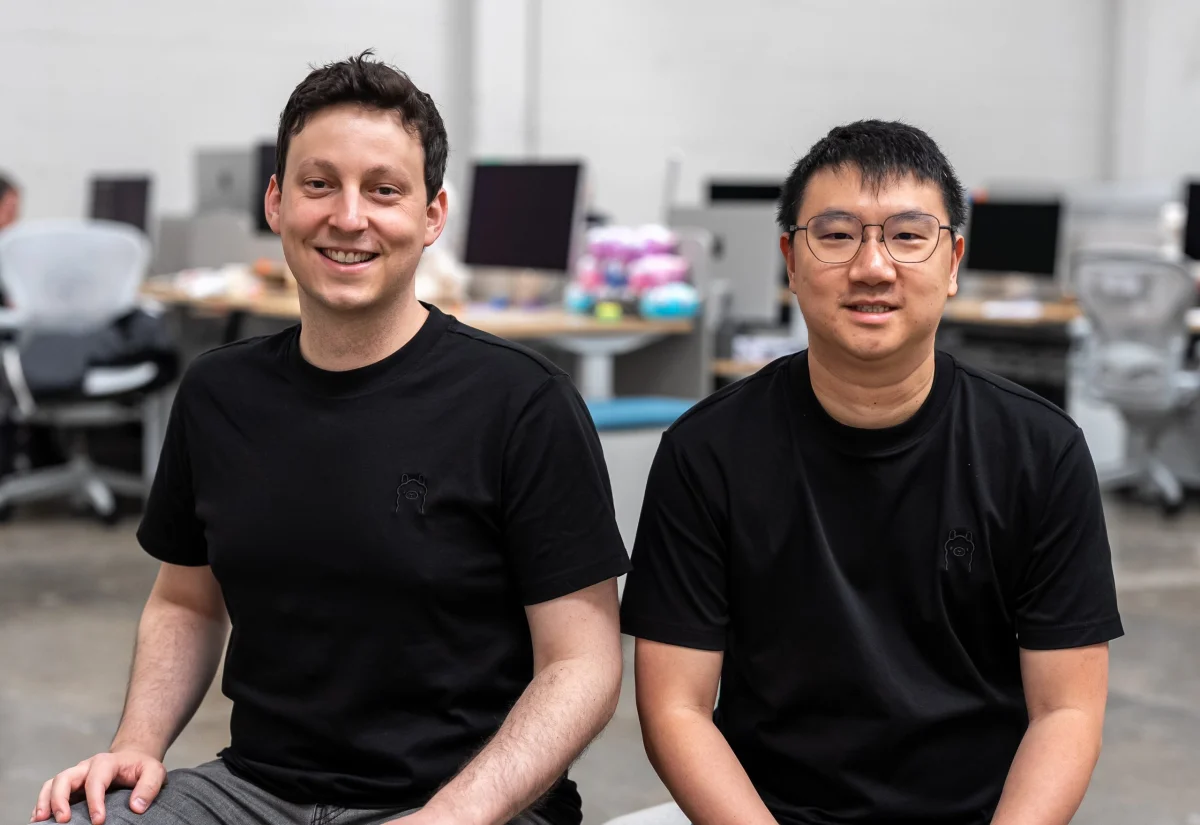
Ollama, a pivotal force in the burgeoning field of open-source artificial intelligence tools, has successfully concluded a Series B funding round, raising an impressive $65 million. This significant investment, spearheaded by Theory Ventures, brings the company’s total capital infusion to $88 million, following a previous $15 million Series A round led by Benchmark’s Peter Fenton. The substantial backing underscores growing investor confidence in platforms that simplify the deployment and management of advanced AI models, particularly within individual developer environments and enterprise settings.
The Dawn of Accessible AI Development
The recent surge in AI capabilities, notably with the widespread adoption of large language models (LLMs) and generative AI, has presented both unprecedented opportunities and significant technical hurdles for developers. Prior to tools like Ollama, integrating and running sophisticated AI models often required extensive expertise in machine learning frameworks, complex dependency management, and substantial computational resources. This steep learning curve and infrastructure demand often relegated cutting-edge AI development to well-funded research institutions and large tech companies.
Ollama emerged in 2023 with a clear mission: to democratize access to these powerful open-weight AI models. By providing a streamlined, user-friendly interface and backend, it enables developers to run these models directly on their personal computers within minutes. This ease of access has resonated deeply within the developer community, transforming what was once a daunting task into a manageable process. The platform’s utility has garnered widespread acclaim across numerous developer forums, instructional videos, technical blogs, and social media platforms, accumulating a formidable presence on GitHub with 176,000 stars and nearly 17,000 forks. Such metrics are a testament to its practical value and widespread adoption among a global network of innovators.
A Proven Blueprint: From Containers to AI Models
The leadership behind Ollama, co-founders Jeff Morgan and Michael Chiang, bring a rich history of simplifying complex technological infrastructure for developers. Their journey is notably marked by their prior contributions to Docker Desktop, a tool that revolutionized software deployment by making containerization accessible to millions. Docker’s innovation lay in abstracting away the intricacies of hardware configuration and environment dependencies, allowing applications to run consistently across various computing environments—from local machines to cloud servers. Morgan and Chiang joined Docker after their previous startup, Kitematic, which focused on simplifying Docker usage, was acquired by the company.
This background provides critical context for understanding Ollama’s strategic approach. Just as Docker containers encapsulated applications and their dependencies to ensure portability and ease of deployment, Ollama aims to do the same for AI models. Jeff Morgan articulated the initial challenge in 2023, noting that "open models started coming out in 2023 but they were really hard to use." He explained that these models were initially "geared toward researchers…not programmers," making them difficult to operationalize. Ollama directly addresses this gap, essentially replicating for the AI ecosystem the transformative simplification that Docker brought to cloud-native application development. This parallel is a cornerstone of investor confidence, as evidenced by Peter Fenton of Benchmark, who highlighted the founders’ "creative powers to create a product that goes to ubiquity for developers is extremely rare."
Expanding Horizons: Cloud Services and Enterprise Adoption
While Ollama’s foundational offering focuses on local model execution, the company has strategically expanded its services to address the evolving needs of its user base. Recognizing that many state-of-the-art open models exceed the computational capabilities of typical personal computers, Ollama introduced a "neocloud" service. This platform allows developers to discover and access larger, more complex models hosted by Ollama through various subscription tiers, ranging from free access to plans up to $100 per month. A key differentiator in its cloud offering is its usage tracking mechanism, which is based on GPU time rather than restrictive token limits, providing a more transparent and predictable cost structure for intensive AI workloads.
This hybrid approach, blending robust local capabilities with scalable cloud resources, has propelled Ollama into a position of significant influence. Jeff Morgan proudly stated that Ollama is "used by over 8.9 million developers every month, sitting in 85% of the Fortune 500 and growing like crazy." This remarkable adoption, achieved with a lean team of only 14 employees, underscores the immense demand for accessible AI infrastructure and the efficiency of Ollama’s product design and execution.
Navigating the Open vs. Closed AI Landscape
The AI industry is currently characterized by a dynamic tension between proprietary, closed-source models (like those offered by OpenAI or Anthropic) and open-weight models, which are publicly available for inspection, modification, and deployment. The "proving point" for Ollama’s business model, according to Morgan, occurred around January with the rise of models capable of "agentic tasks" such as coding. This demonstrated that open models could perform "real work," challenging the perception that only closed, high-cost models were suitable for complex applications.
This shift has profound market implications. Enterprises and fast-growing AI application-layer startups are increasingly scrutinizing their "inference expenses"—the costs associated with running AI models. As Peter Fenton observed, companies with high inference costs face a "vital existential project" to migrate towards more cost-effective open-weight models. While Fenton believes there is ample business for both open and closed models, emphasizing that it’s "not an either/or" scenario, the economic imperative to reduce operational costs is a powerful driver for open-source adoption. This trend directly benefits Ollama’s cloud business, positioning it as a critical enabler for companies seeking to optimize their AI infrastructure spend without compromising on capability. The ongoing evidence of businesses turning to open models for daily operational needs validates Ollama’s strategic direction.
Strategic Growth and Community Tensions
The rapid commercialization of successful open-source projects often generates debate within their core communities, and Ollama has been no exception. Approximately a year ago, discussions on platforms like Hacker News, blogs, and Reddit raised concerns about Ollama’s cloud business potentially diverting attention from its free, beloved desktop project. Some critics invoked the concept of "enshittification," a term coined to describe the gradual degradation of online platforms as they prioritize profit over user experience.
However, the company’s leadership maintains that its cloud service is a natural evolution and an extension of its original mission to simplify access to AI models. Morgan explained that for state-of-the-art, large open models that are "too big to run on your own computer," the company saw an opportunity to "help find the compute for that." Board member Peter Fenton further clarified that "nothing has changed for the core product that’s free on the desktop. There’s zero change to the premise that this is the place you can discover and run local models." This perspective frames the cloud offering not as a pivot away from open source, but as a necessary complement to ensure developers can access the full spectrum of AI models, regardless of their local hardware limitations.
The Future of AI Accessibility
Ollama’s successful funding round and rapid user growth are indicative of a broader industry trend: the increasing viability and investor interest in open-source AI projects that evolve into commercial entities. Beyond Ollama, the landscape is rich with other examples, such as Inferact (maker of vLLM), RadixArk (maker of SGLang), and specialized model developers like Arcee. This ecosystem of innovation is fostering a more decentralized and accessible future for AI.
The impact of tools like Ollama extends beyond mere technical convenience; it democratizes AI development, lowering the barrier to entry for a new generation of innovators. By enabling individuals and smaller teams to experiment with, customize, and deploy powerful AI models without prohibitive infrastructure costs or deep machine learning expertise, Ollama is accelerating the pace of innovation across industries. The substantial investment in Ollama reflects a strong belief in the foundational role of open-source tools in shaping the next wave of AI applications and solutions, ensuring that the power of artificial intelligence is not confined to a select few, but rather put into the hands of millions of developers worldwide.