Amir Mahmud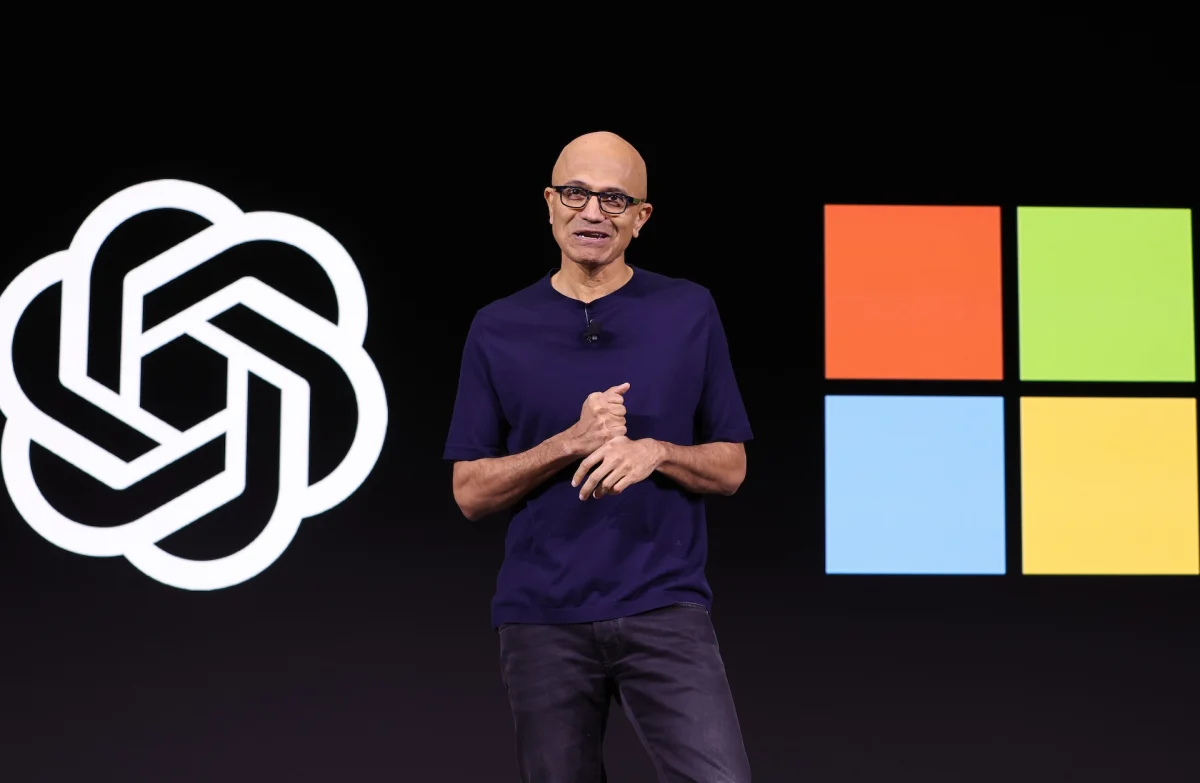
Microsoft’s latest quarterly financial disclosures for its fiscal year 2026, ending June 30, have unveiled a nuanced picture of its expansive artificial intelligence investment strategy, highlighting significant shifts in the valuations of its two major AI partners. The Redmond-based technology giant reported a substantial $3.2 billion gain from its investment in Anthropic during the fourth quarter alone, a development that contributed an impressive 33 cents to its diluted earnings per share. This positive movement contrasts with a $600 million markdown in the value of its OpenAI investment over the same period, which subsequently trimmed diluted EPS by approximately 7 cents. While these figures represent a fraction of Microsoft’s overall robust performance—with Q4 revenue reaching $90 billion and net income at $35.8 billion—they underscore the dynamic and sometimes unpredictable nature of high-stakes ventures in the rapidly evolving AI sector.
A Dual-Track Approach to Artificial Intelligence
Microsoft’s strategy in the generative AI space has been characterized by a calculated dual-pronged approach, backing both OpenAI, a pioneer in large language models, and Anthropic, a prominent competitor known for its focus on AI safety. This diversification is not merely about hedging bets but about securing access to a broader spectrum of cutting-edge AI technologies and talent. The initial, monumental investment in OpenAI, which began in 2019 and deepened significantly over subsequent years, including a multi-billion-dollar commitment in January 2023, positioned Microsoft as a dominant force in the nascent generative AI market. This partnership granted Microsoft preferential access to OpenAI’s models, integrating them deeply into its Azure cloud services and various product lines like Bing Search, Microsoft 365 Copilot, and Windows.
However, the competitive landscape of AI began to intensify, leading Microsoft to broaden its horizons. In November 2025, the company announced a significant $5 billion investment in Anthropic, an AI research company founded by former OpenAI researchers. This strategic move was structured as a circular agreement, where Anthropic also committed to spending $30 billion on Microsoft’s Azure cloud services over several years. This arrangement not only provided Anthropic with crucial capital and computational resources but also solidified Microsoft’s position as a foundational provider of AI infrastructure, regardless of which particular model ultimately achieves market dominance. The recent quarterly results offer a glimpse into the early returns of this diversified portfolio, suggesting that while OpenAI remains a cornerstone, Anthropic is quickly proving its worth as a high-growth asset.
The OpenAI Partnership: A Journey of Innovation and Valuation Swings
Microsoft’s relationship with OpenAI has been pivotal in shaping the current AI landscape. Starting with a modest $1 billion investment in 2019, Microsoft progressively scaled its commitment, culminating in a reported multi-billion-dollar infusion in 2023. This partnership was groundbreaking, granting Microsoft a substantial stake in OpenAI’s capped-profit entity, estimated at around 27%, while still preserving OpenAI’s unique governance structure. The collaboration has been instrumental in accelerating the development and deployment of generative AI technologies, bringing models like GPT-3, GPT-4, and DALL-E to a broader audience through Azure AI.
The integration of OpenAI’s capabilities into Microsoft’s product ecosystem has been a significant market differentiator. Tools like Microsoft 365 Copilot, which leverages generative AI to enhance productivity across Word, Excel, PowerPoint, and Outlook, have redefined enterprise software. Similarly, the enhanced Bing search engine, powered by OpenAI’s models, marked a bold challenge to Google’s long-standing search dominance. Yet, the journey has not been without its complexities. The dramatic leadership upheaval at OpenAI in late 2023, which saw CEO Sam Altman briefly ousted before his swift return, underscored the unique governance challenges inherent in the partnership. Microsoft’s steady support during this period highlighted the critical nature of the alliance to its long-term AI strategy.
Financially, while the recent quarter saw a valuation adjustment for the OpenAI investment, a broader perspective reveals its overall positive trajectory. For the full fiscal year, Microsoft reported a $5 billion gain from its OpenAI investment, adding $0.67 to its diluted EPS. This annual performance demonstrates the long-term value Microsoft continues to derive from this strategic alliance, even amidst quarterly fluctuations that are common in the high-growth, speculative technology sector. The recent markdown could be attributed to various factors, including internal accounting adjustments, increased operational expenses at OpenAI, or a reassessment of its near-term revenue projections in a fiercely competitive market.
Anthropic’s Emergence: A Strategic Hedge and Rapid Appreciation
Anthropic, founded by siblings Daniela and Dario Amodei, both former key researchers at OpenAI, emerged with a distinct philosophy centered on developing "safe" and "interpretable" AI systems. Their flagship model, Claude, is designed with a strong emphasis on "Constitutional AI," a set of principles aimed at aligning AI behavior with human values and reducing harmful outputs. This focus on responsible AI development resonated with Microsoft’s broader ethical AI commitments and offered a valuable alternative in the market.
Microsoft’s $5 billion investment in Anthropic in November 2025 was a clear signal of its intent to diversify its AI portfolio. This move provided Microsoft with a stake in another leading foundational model provider, effectively hedging against potential risks associated with over-reliance on a single partner. The substantial $3.2 billion gain recorded in just one quarter for the Anthropic investment suggests a rapid appreciation in the company’s valuation, indicating strong market confidence in its technology and growth prospects. This swift increase could be attributed to several factors: successful product development milestones, significant new customer acquisitions, or a general uplift in investor sentiment for AI companies prioritizing safety and robust ethical frameworks. The accompanying commitment from Anthropic to utilize $30 billion worth of Azure services further solidifies Microsoft’s cloud dominance, guaranteeing a substantial revenue stream for its infrastructure division, irrespective of the specific AI models being developed and deployed.
The Broader Implications for the AI Ecosystem
Microsoft’s dual investments and their divergent quarterly performances are emblematic of the broader trends shaping the artificial intelligence industry. The rapid pace of innovation demands continuous investment in research, development, and high-performance computing infrastructure. This environment fosters intense competition, not just among AI labs but also among cloud providers vying to host these compute-intensive workloads. Microsoft Azure, benefiting from these strategic partnerships, is solidifying its position as a leading platform for AI development and deployment, attracting vast enterprise customers seeking to integrate generative AI into their operations.
The market for foundational models is expanding, moving beyond a single dominant player to a more diverse ecosystem of providers like OpenAI, Anthropic, Google DeepMind, and Meta AI. This competition is generally beneficial for consumers and businesses, driving innovation, improving model capabilities, and potentially reducing costs. However, it also raises complex questions around intellectual property, data privacy, and the ethical implications of powerful AI systems. Regulators worldwide are grappling with how to govern this nascent technology, and companies like Microsoft, through their investments, are playing a significant role in shaping the industry’s direction and self-governance standards.
Socially and culturally, the rapid deployment of AI-powered tools is transforming how people work, interact, and access information. From automating routine tasks to generating creative content, AI’s impact is pervasive. Microsoft’s strategy ensures it remains at the forefront of this transformation, influencing the tools and platforms that will define the next era of computing.
Navigating the Complexities of AI Valuation
The disparity between the quarterly performance of Microsoft’s OpenAI and Anthropic investments highlights the inherent challenges in valuing private, high-growth AI companies. Unlike public companies with readily available market data, the valuation of private entities involves complex methodologies, often relying on future projections, strategic importance, and recent funding rounds. A quarterly markdown in OpenAI’s value could reflect internal adjustments based on new data, a conservative re-evaluation by Microsoft, or simply the natural ebb and flow of a company operating in a highly competitive and capital-intensive sector. Conversely, Anthropic’s significant quarterly gain underscores a period of rapid growth and increased market confidence, perhaps reflecting successful product launches or major enterprise adoption.
For Microsoft, a company with annual revenues exceeding $330 billion and net income upwards of $130 billion, a $600 million write-down, while noteworthy, is indeed a "rounding error" in its vast financial landscape. This immense financial strength allows Microsoft to absorb such fluctuations and pursue aggressive, long-term strategic investments in transformative technologies like AI, where the returns might not always be linear or predictable on a quarterly basis.
Outlook: Microsoft’s Continued Dominance in the AI Era
Looking ahead, Microsoft’s diversified AI investment strategy positions it strongly to capitalize on the continued growth and evolution of artificial intelligence. By maintaining close ties with multiple leading AI research labs, the company ensures access to a broad portfolio of models, expertise, and innovative approaches. This flexibility is crucial in a field where technological paradigms can shift rapidly. The substantial financial returns already being realized from Anthropic, alongside the long-term gains from OpenAI, validate Microsoft’s foresight and willingness to make significant, strategic bets. As AI continues to permeate every facet of technology and business, Microsoft’s robust cloud infrastructure, coupled with its deep partnerships, firmly establishes its role as a pivotal enabler and beneficiary of the AI era. The market will undoubtedly continue to watch these valuations closely, as they offer key insights into the dynamic power plays shaping the future of artificial intelligence.