Amir Mahmud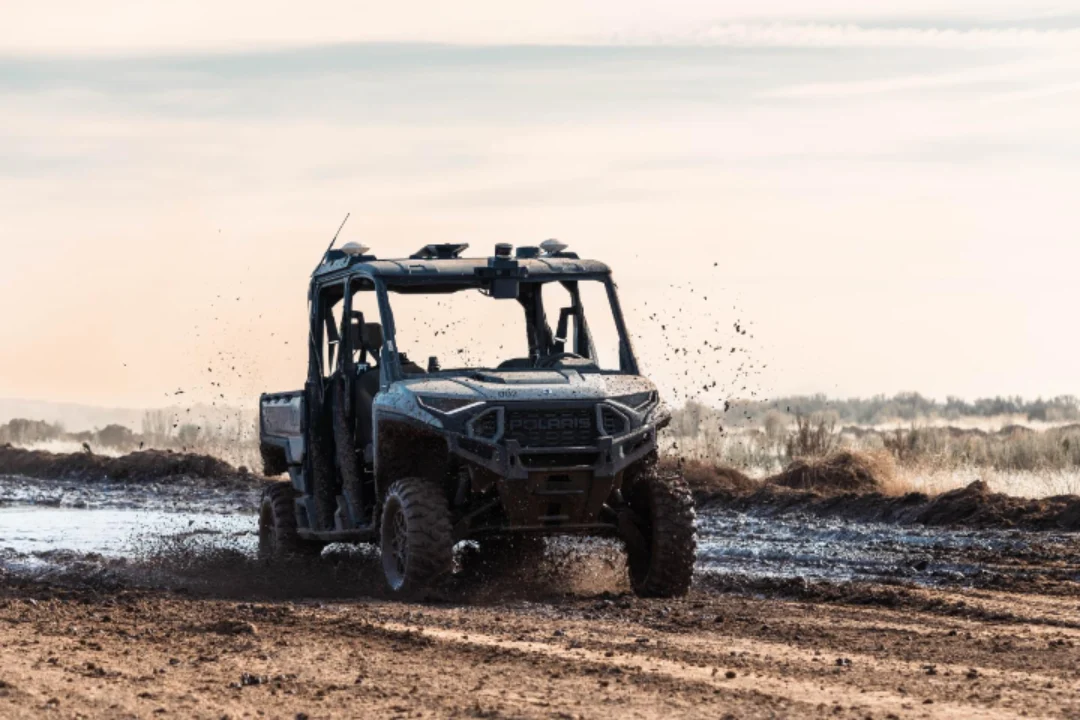
Over one hundred self-driving all-terrain vehicles, developed by the American company Forterra, have been actively operating in the conflict zones of Ukraine for the past nine months, marking what the firm believes to be the most extensive deployment of autonomous ground vehicles in combat by any U.S. defense technology enterprise. This deployment signifies a pivotal moment in modern warfare, highlighting the accelerating integration of unmanned systems into frontline operations and offering invaluable real-world insights into their capabilities and limitations under extreme conditions.
The Evolving Battlefield: A Pressing Need for Ground Autonomy
The ongoing conflict in Ukraine has served as a crucible for military innovation, dramatically accelerating the development and adoption of new technologies. While aerial drones, from small commercial quadcopters adapted for reconnaissance and munition drops to larger, more sophisticated unmanned aerial vehicles (UAVs), have captured significant global attention for their transformative impact, they have also inadvertently created new challenges. The ubiquitous nature of drone surveillance has rendered vast areas of the battlefield into "no-go zones" for human personnel, where any exposed movement can quickly attract deadly fire from above or from advanced artillery systems.
This high-surveillance, high-attrition environment has compelled military strategists to seek alternative methods for essential tasks like logistics, reconnaissance, and casualty evacuation, leading to a renewed focus on ground-based autonomous solutions. As Scott Sanders, Forterra’s chief growth officer and a former U.S. Marine officer, articulated, "Until you hit the realities of combat, you’re just not going to know." This sentiment underscores the critical importance of real-world deployment in validating and refining defense technologies. Sergeant Major Corey Wilkens, who spearheads a program developing autonomous vehicles and tactics for the U.S. Army, echoed these concerns, explaining the extreme vulnerability faced by human soldiers. "There’s nowhere to hide," Wilkens noted, emphasizing that personnel become "very, very vulnerable to be able to be attacked by [first-person view drones], other sorts of drones dropping munitions, artillery, mortar, the full range of things that they have." This stark reality has been a primary driver behind the urgent push for ground autonomy.
A Brief History of Military Robotics
The concept of military robots is not new, tracing its roots back to early remote-controlled devices and bomb disposal units. However, the last two decades have witnessed a rapid acceleration in capabilities, largely driven by advances in artificial intelligence, sensor technology, and miniaturization. The early 2000s saw the deployment of rudimentary unmanned ground vehicles (UGVs) in Iraq and Afghanistan, primarily for explosive ordnance disposal (EOD) and perimeter security. These early iterations were often teleoperated, relying heavily on human control.
The current generation of UGVs represents a significant leap forward, moving towards greater levels of autonomy. The shift was partly inspired by the success of aerial drones, which demonstrated the potential for unmanned systems to execute complex missions with reduced risk to human life. However, ground environments present unique challenges that are often more complex than airspaces, including varied terrain, obstacles, limited line-of-sight communications, and the constant threat of electronic warfare. The conflict in Ukraine, characterized by its extensive use of drones and layered defenses, has thus provided an unprecedented testing ground for these evolving technologies.
Forterra’s Lancer: Design, Deployment, and Impact
Forterra’s contribution to this technological frontier comes in the form of its Lancer vehicles. These robust UGVs are built upon modified Polaris ATVs, integrating a custom-engineered sensor and compute stack that enables their autonomous capabilities. Unlike many of Ukraine’s domestically produced uncrewed ground vehicles, which are typically battery-powered and limited to carrying around 250 kilograms, the gas-powered Lancers boast a significantly greater payload capacity of 750 kilograms. This enhanced capability makes them far more versatile for a range of logistical and support missions.
The practical impact of these vehicles has been profound. An unnamed Ukrainian soldier, speaking to the utility of the Lancers, described them as "the most important UGV in Ukraine" for logistics and defense, adding, "It’s fantastic, and we are dying to get more." This strong endorsement underscores their value on the ground. Since their deployment in Ukraine last October, the Forterra vehicles have collectively covered over 2,500 miles across more than 1,100 missions. During this period, they have transported an impressive 777,440 pounds of total cargo and performed 52 casualty evacuations, directly contributing to force sustainment and humanitarian efforts in dangerous environments.
However, the path to acceptance wasn’t entirely smooth. Ukrainian Armed Forces initially held mixed experiences with Western contractors providing new technology, often finding that early offerings were too tailored for the specific, high-end requirements of the U.S. Army. Forterra’s team adapted swiftly, modifying the Lancers to better suit the Ukrainian context. A crucial modification involved integrating Starlink satellite internet antennas, significantly enhancing communication capabilities and making the vehicles far more valuable in areas with compromised infrastructure. Despite their utility, the Lancers are not invulnerable; some have been lost in combat, particularly when they become immobilized in challenging terrain like deep mud, making them easy targets for Russian forces.
Lessons from the Front Lines and the Road Ahead for Autonomy
The deployment in Ukraine has provided Forterra with invaluable lessons, accelerating its research and development cycles. The company has gained critical insights into the realities of electronic warfare, learning how to adapt its systems to withstand jamming and interference. They have also refined their processes for remote software updates, ensuring that vehicles can be continuously improved and adapted without needing to be physically returned from the front lines. Furthermore, navigating diverse and challenging terrain under combat conditions has pushed the boundaries of their autonomous navigation algorithms, as has the imperative for extreme vehicle reliability in a theater of attrition. These practical insights are now positioning Forterra to be a more formidable contender for lucrative national security contracts, building on existing successes like their work with the U.S. Marine Corps for the Rogue Fires Block 2 production award.
Despite these advancements, the full potential of ground autonomy remains a work in progress. Ukrainian soldiers primarily teleoperate the Lancers in active combat zones. This human-in-the-loop approach stems from two key factors: the inherent value of the vehicles, which are too important to lose to an unproven autonomous decision, and the current limitations of autonomous systems in the dynamic and unpredictable environment of war. While the vehicles can navigate challenging terrain autonomously, they are not yet capable of independently identifying unexpected enemy forces and reacting appropriately. As the Ukrainian soldier explained, "We actually need to be able to respond to the enemy threats, live, while it’s in front of the enemy, which the autonomy doesn’t know how to do yet."
Forterra, with two decades of experience in autonomous vehicle development, is now focused on bridging this gap. The company aims to combine established algorithms used in self-driving cars with newer generative AI software. This hybrid approach seeks to enable machines to react to their surroundings in a more generalized and intelligent manner. A significant obstacle remains the acquisition of appropriate data. As Sanders highlighted, many necessary tasks in combat—such as navigating a minefield or operating a weapon system—are not typical human activities, meaning that relevant data is scarce in open-source models. The solution, he suggests, involves a blend of "classical robotics approach" for precise control and leveraging AI where generalized decision-making is required.
The Competitive Landscape and Strategic Implications
The push for advanced military autonomy is not unique to Forterra. Several other companies are vying for leadership in this evolving sector. Scout AI, for instance, recently secured $100 million in funding to develop foundational models and a suite of autonomous platforms for military applications, including UGVs. Other startups like Field AI and Overland AI are also actively trialing their uncrewed ground vehicles with the U.S. military, signaling a robust and competitive market.
American military experts are increasingly convinced of the strategic imperative to invest in these tools. Sergeant Major Wilkens affirmed, "Ground autonomy is achievable now and we’ve seen it." The strategic implications are vast, promising to reduce human casualties, enhance logistical efficiency, and provide new tactical advantages. The ability to deploy unmanned systems for dangerous missions—whether it’s resupplying isolated units, evacuating wounded personnel under fire, or conducting reconnaissance in heavily contested areas—fundamentally alters the risk calculus for military operations.
Scott Philips, Forterra’s Chief Innovation Officer, gained firsthand appreciation for these challenges during a visit to a Ukrainian unit’s operations center, an area within range of Russian attacks. His observations provided critical "ground truth." "What struck me most was seeing exactly where the seams are: which steps are still manual, where data has to be re-entered or re-verified by hand, and where the team has already found ways to automate or speed things up," Philips recounted. This direct insight underscores the iterative process of integrating advanced technology into complex human operations, revealing precise points where better tools can alleviate pressure on frontline personnel.
A key challenge articulated by the Ukrainian forces is the cost of these advanced systems. While Forterra’s Lancers are considered relatively inexpensive within their category due to their reliance on Polaris’s commercial supply chain, they remain too valuable to be deployed with the same expendability as some smaller UAVs. "Attrition is just a fact of this battlefield, and we have lost a few at this point, and it hurt, and we need more, and therefore we need them cheaper," the Ukrainian soldier emphasized. This feedback highlights a crucial tension in defense innovation: the balance between cutting-edge capability and the economic realities of large-scale attrition warfare. The ability to produce effective, yet affordable, autonomous systems will likely dictate the pace and scale of their future integration into global military doctrines.
The deployment of Forterra’s Lancers in Ukraine marks a significant milestone in the journey towards autonomous warfare. It offers a real-time proving ground for emerging technologies, demonstrating their immediate impact while simultaneously exposing their current limitations. The lessons learned from this crucible of conflict will undoubtedly shape the future of military robotics, driving further innovation and redefining the operational landscape for armed forces worldwide.