Amir Mahmud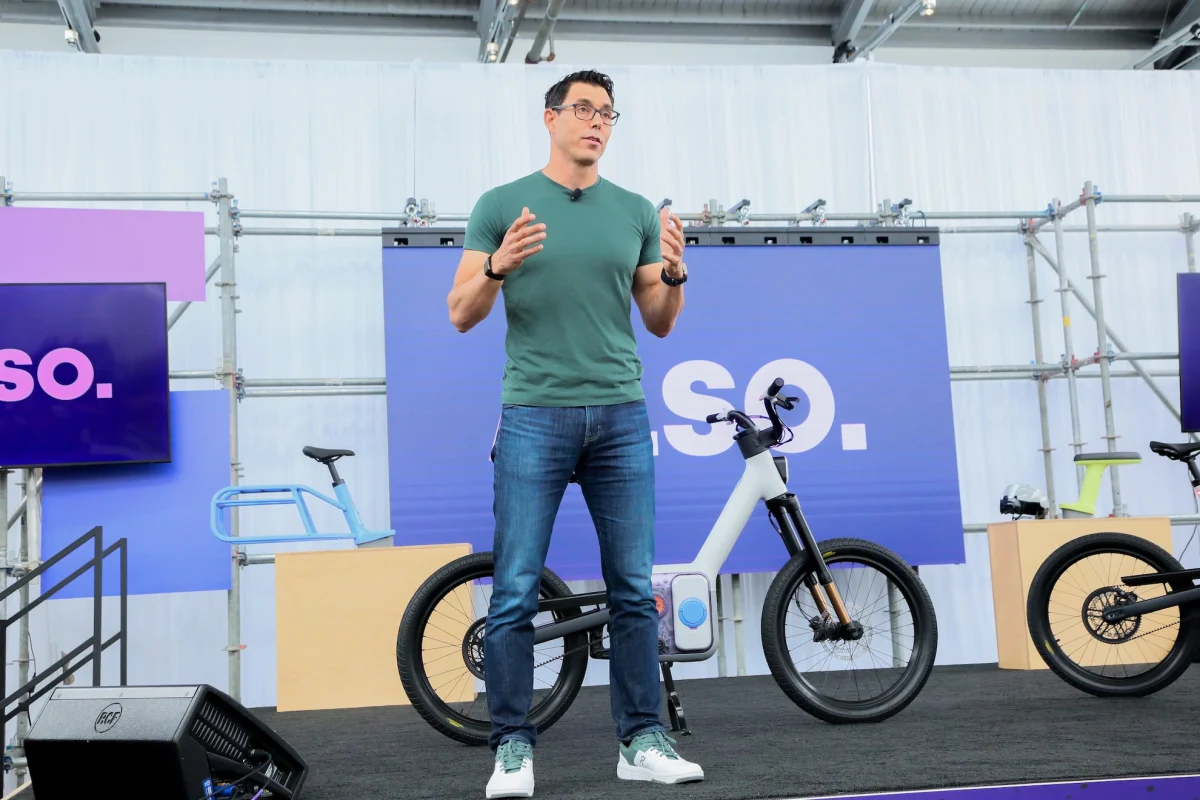
The global transportation industry is undergoing a profound transformation, driven by the pervasive influence of artificial intelligence. This technological shift is not merely optimizing existing processes; it is fundamentally redefining job roles, demanding new skill sets, and creating an intensely competitive landscape for talent within the automotive sector and beyond. The shift signals a new epoch where traditional manufacturing prowess must converge with cutting-edge software and data science capabilities.
The Shifting Landscape of Automotive Employment
A prominent example of this seismic shift comes from General Motors (GM), a titan of American manufacturing. The automaker recently initiated a strategic overhaul of its workforce, resulting in the layoff of over 10% of its information technology (IT) department, approximately 600 salaried employees. This was not a cost-cutting measure in isolation, but a deliberate move to create organizational space for a new cohort of professionals equipped with advanced AI skills. While GM maintains an active recruitment drive for AI-focused IT personnel, the immediate outcome points to a net-negative effect on overall job numbers, underscoring the disruptive nature of this transition.
Historically, the automotive industry has been a cornerstone of industrial employment, characterized by large-scale manufacturing operations and a workforce skilled in mechanical engineering, assembly, and traditional IT support. The introduction of robotics in the mid-20th century marked the first major wave of automation, streamlining production lines and enhancing efficiency. However, the current AI revolution represents a far more intricate evolution, shifting demand from repetitive tasks to complex cognitive functions. The skills now most coveted by automotive giants like GM include AI-native development, which involves building AI systems from the ground up; sophisticated data engineering and analytics, crucial for processing the vast datasets generated by modern vehicles; cloud-based engineering, essential for scalable infrastructure; agent and model development; prompt engineering, focusing on optimizing interactions with AI models; and the design of entirely new AI workflows. This signifies a move beyond simply using AI as a productivity tool, towards designing, training, and engineering AI pipelines as core competencies.
This reorientation of labor demand extends far beyond GM. Major players such as Ford and Stellantis are navigating similar challenges. Recent analyses indicate that these three automotive giants collectively shed over 20,000 U.S. salaried positions from their peak employment levels this decade, representing nearly a fifth of their combined workforce. While various factors contribute to these reductions, including economic pressures and the costly transition to electric vehicles, technological advancements, particularly in AI, are consistently cited as a significant underlying cause. This trend highlights a broader industrial retooling, where the value proposition of human capital is being reassessed through the lens of AI integration.
The implications for the broader labor market are substantial. Regions with historical reliance on automotive manufacturing face the dual challenge of job displacement and the urgent need for reskilling initiatives. Educational institutions, vocational programs, and government bodies are increasingly pressured to adapt curricula and training programs to prepare the workforce for these emerging roles. The cultural impact of these shifts is also profound, as workers grapple with the evolving nature of job security and the imperative for continuous learning in a rapidly changing technological landscape.
The Strategic Imperative for AI Adoption
For automotive manufacturers, embracing AI is not merely an option but a strategic imperative for long-term survival and competitiveness. The global race for technological supremacy in mobility, particularly in electric vehicles (EVs) and autonomous driving (AD), demands sophisticated AI capabilities. Companies that fail to integrate AI into their product development, manufacturing processes, and customer experiences risk falling behind agile, tech-first competitors.
However, the path to AI integration is not without its complexities. While many companies are heavily investing in AI, there’s a prevailing sentiment among some engineers and founders that not all businesses fully grasp how to effectively leverage this technology. This discrepancy can lead to significant resource expenditure without commensurate returns, creating a disconnect between executive mandates and practical implementation. It underscores the challenge of translating ambitious AI visions into tangible, revenue-generating applications within established corporate structures.
Beyond the Hype: Tangible AI Applications
Amidst the broader industry-wide experimentation, some companies have successfully identified and deployed AI for practical, revenue-generating use cases. Samsara, a company that has equipped millions of trucks with interior cameras for purposes ranging from driver monitoring to theft prevention and liability claims, provides a compelling example. Over the past decade, Samsara amassed a colossal dataset from these cameras. By leveraging this "mountain of data," the company trained its proprietary AI model to detect potholes and assess their rate of deterioration.
This innovative application of AI has transformed Samsara from a data collection service into a critical infrastructure partner for urban environments. The company is actively pitching this product to municipal governments, offering a data-driven solution to a persistent and costly urban problem. Chicago is among several cities that have already contracted with Samsara, recognizing the potential for AI to enhance public works efficiency, reduce infrastructure damage costs, and improve road safety. This demonstrates how AI can move beyond abstract concepts to deliver clear, measurable value in the real world, addressing tangible challenges with intelligent solutions.
The success of such applications highlights a critical distinction: AI’s true power lies not just in its computational ability, but in its capacity to extract actionable insights from vast, previously unmanageable datasets. For the automotive industry, this means moving beyond predictive maintenance to creating entirely new services and revenue streams, from intelligent traffic management to personalized in-car experiences.
Fueling Innovation: The Capital Infusion
The development and deployment of advanced AI and mobility solutions require colossal capital investments. The venture capital landscape is buzzing with activity, channeling billions into startups pushing the boundaries of automotive technology. A notable figure in this ecosystem is RJ Scaringe, the visionary behind Rivian and its spinoff, Mind Robotics. Scaringe has demonstrated an extraordinary ability to attract substantial funding, a testament to his strategic acumen and persuasive prowess.
Mind Robotics, for instance, secured an additional $400 million in funding shortly after an initial $500 million raise, totaling $900 million within a mere two months. This rapid influx of capital underscores investor confidence in Scaringe’s ventures. Across his three startups – including an earlier, undisclosed project – investors have reportedly poured over $12.3 billion. This figure excludes the nearly $12 billion in gross proceeds from Rivian’s initial public offering (IPO) and recent strategic partnerships with industry giants like Volkswagen Group and Uber, which could add another $7 billion to Rivian’s coffers.
Insiders and investors frequently attribute Scaringe’s fundraising success to his exceptional interpersonal skills, particularly his ability to give undivided attention to his interlocutors. Whether engaging with a potential investor, a key supplier, or a senior executive, he reportedly makes each individual feel like the most important person in the room. This personal touch, coupled with a compelling vision, proves invaluable in a sector where relationships and trust are as critical as technological innovation.
Beyond Scaringe’s ventures, the broader mobility tech ecosystem continues to attract significant investment:
- Arkeus, an Australian startup specializing in perception software for autonomous drones and aircraft, successfully closed an $18 million Series A round. This investment, led by QIC Ventures with participation from R+VC, Folklore Ventures, DYNE Ventures, Main Sequence Ventures, Salus Ventures, and Beaten Zone, signifies growing interest in AI-powered aerial autonomy solutions, particularly for defense and industrial applications.
- Aseon Labs, emerging from stealth in Redwood City, California, secured undisclosed backing from Y Combinator. The startup is developing a "depot in a box" solution for autonomous fleets, providing integrated charging, cleaning, and inspection services. This innovation addresses a crucial infrastructural gap for the widespread adoption of autonomous vehicles, ensuring their operational readiness and efficiency.
- Rapido, an Indian ride-hailing company, raised $240 million in a round led by Prosus, valuing the company at $3 billion. Existing investors, including WestBridge Capital and Accel, also participated in this financing, part of a larger $730 million primary and secondary funding effort. This substantial investment highlights the continued growth and competitive nature of ride-hailing markets, particularly in populous emerging economies where mobility solutions are in high demand.
- Quantum Systems, a German drone startup with backing from prominent investor Peter Thiel, is reportedly in discussions to raise approximately €600 million ($703 million). Potential investors include aerospace giant Airbus and investment firm Blackstone, indicating a strategic convergence of traditional industrial players and financial institutions in advanced drone technology, often with defense applications.
These diverse funding activities underscore the robust investor confidence in the future of AI-driven mobility, spanning ground transportation, aerial systems, and the infrastructure required to support them.
Navigating the New Mobility Frontier: Challenges and Evolution
While the promise of AI in mobility is immense, the journey is fraught with challenges, as evidenced by recent developments from industry leaders.
Redwood Materials, a company focused on battery recycling, is a key player in the sustainable mobility ecosystem. The question of its IPO readiness is a significant topic, especially with the appointment of Deepak Ahuja as CFO. Ahuja, known for his tenure as Tesla’s former finance chief and more recently at drone company Zipline, brings invaluable experience in scaling tech companies and navigating public markets. His presence signals a potential acceleration towards a public offering, crucial for financing the massive infrastructure required for widespread battery recycling.
Tesla’s Robotaxi ambitions, while bold, have faced practical hurdles. Recent unredacted information submitted to the National Highway Traffic Safety Administration (NHTSA) revealed that Tesla Robotaxis were involved in at least two crashes since July 2025, even when a teleoperator was remotely driving the vehicles. These incidents highlight the ongoing complexities of achieving fully autonomous driving, where human intervention, even remote, remains a necessary contingency, indicating that the technology is still in a developmental phase requiring rigorous testing and safety protocols.
Uber is expanding its global footprint, particularly in India, a market with immense growth potential. The company announced plans for two new engineering campuses, capable of accommodating around 9,600 employees, and a strategic data center partnership. This expansion is designed to bolster Uber’s product development capabilities and infrastructure operations, demonstrating a commitment to localized innovation and scaling its platform in key international markets.
Waymo, a leader in autonomous vehicle technology, recently issued a software update for its fleet of nearly 4,000 vehicles in response to a recall announced by the NHTSA. The update aims to help vehicles avoid flooded roads, a critical safety concern. However, Waymo acknowledged that it has not yet "fully solved the problem of how its vehicles behave in these conditions," indicating that even sophisticated AI systems still encounter environmental challenges that require continuous refinement and iteration. These real-world limitations underscore the technical complexities and the long road ahead for achieving truly robust and all-weather autonomous capabilities.
Looking ahead, the convergence of AI, robotics, and autonomous systems is poised to revolutionize not only transportation but also manufacturing, defense, and industrial operations. Events like TechCrunch Disrupt’s "AI in the Real World Stage" serve as critical platforms for industry leaders and innovators to delve into these advancements, discuss challenges, and chart the future trajectory of intelligent machines and systems. The ongoing transformation demands adaptability, innovation, and a collaborative spirit across industries to harness the full potential of AI for a smarter, more efficient, and potentially safer future. The journey will undoubtedly involve continued job redefinition, significant capital flows, and a relentless pursuit of practical, safe, and scalable AI applications.






 Azin Asro