Amir Mahmud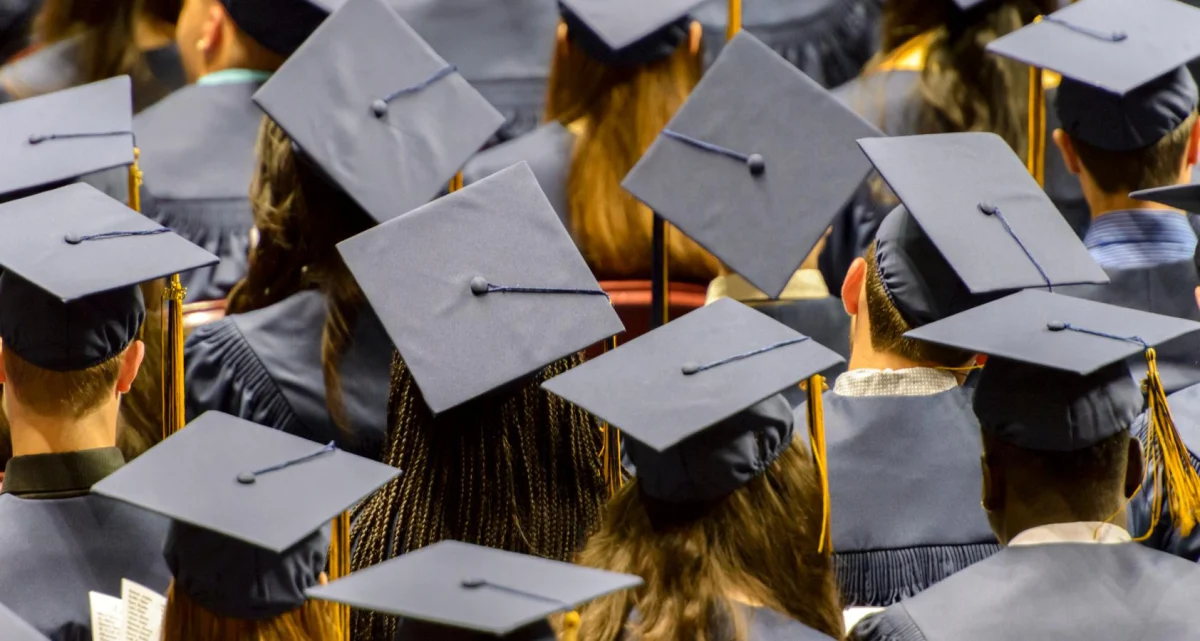
As cap and gown season draws to a close, a distinct pattern has emerged at various commencement ceremonies across the United States: remarks concerning artificial intelligence, often intended to inspire, have instead been met with palpable skepticism, and in some instances, outright boos from the graduating class. This unexpected reaction signals a profound shift in how younger generations perceive the future shaped by rapidly advancing technology, highlighting anxieties that extend far beyond mere technological innovation.
A Striking Disconnect: UCF and the University of Arizona Incidents
One of the most notable instances occurred at the University of Central Florida (UCF), where Gloria Caulfield, an executive at Tavistock Development Company, delivered a speech acknowledging the "profound change" of the current era, describing it as both "exciting" and "daunting." However, when Caulfield declared, "The rise of artificial intelligence is the next industrial revolution," the audience’s reaction was immediate and overwhelmingly negative. Students began to boo, their discontent growing louder until Caulfield, visibly surprised, chuckled and turned to other speakers, asking, "What happened?" She attempted to resume, noting that "only a few years ago, AI was not a factor in our lives," but this too was met with a renewed wave of audience interruption, this time in the form of loud cheers and applause, indicating a clear preference for a narrative that downplayed AI’s omnipresence.
A similar scenario unfolded at the University of Arizona with former Google CEO Eric Schmidt. For Schmidt, the pushback began even before he took the stage, fueled by student groups who had called for his removal as commencement speaker due to a lawsuit involving a former girlfriend and business partner. Schmidt has consistently denied the allegations, but the controversy created a charged atmosphere. When he eventually addressed the graduates, specifically telling them, "You will help shape artificial intelligence," the boos erupted again. Despite the audience’s vocal dissent, Schmidt persisted, attempting to motivate the students with an analogy: "You can now assemble a team of AI agents to help you with the parts that you could never accomplish on your own. When someone offers you a seat on the rocket ship, you do not ask which seat, you just get on." Yet, the "rocket ship" metaphor, often used to symbolize rapid growth and opportunity in the tech world, clearly failed to resonate with many in attendance, who seemed less interested in boarding than in expressing their concerns about the destination.
It is important to note that this sentiment is not universally shared. Nvidia CEO Jensen Huang, a prominent figure in the AI revolution, delivered a commencement address at Carnegie Mellon University without encountering similar audible pushback when discussing AI’s role in "reinventing computing." This suggests that the reception of AI-related messages can be highly dependent on various factors, including the speaker’s public image, the specific framing of the message, and the demographic or academic background of the graduating class.
The Deep Roots of Student Pessimism
The negative reactions to AI at these ceremonies are not isolated incidents but rather symptomatic of deeper anxieties prevalent among young adults entering the workforce. A recent Gallup poll revealed a significant decline in optimism regarding job prospects, with only 43% of Americans aged 15 to 34 believing it’s a good time to find local employment, a sharp drop from 75% in 2022. This widespread pessimism forms a critical backdrop to the AI skepticism.
Economic Anxieties and the Future of Work:
Graduates today face a unique confluence of economic pressures. They are often burdened by substantial student loan debt, entering a housing market characterized by soaring costs, and navigating a job landscape that feels increasingly precarious. The gig economy, while offering flexibility, often lacks the stability and benefits associated with traditional employment. For many, AI is not seen as a tool for empowerment or progress, but rather as another potential disruptor that could automate away entry-level positions, depress wages, or create a bifurcated job market where only highly specialized roles remain secure. This perspective aligns with the observations of journalist and tech industry critic Brian Merchant, who has suggested that for many students, AI has become "the cruel new face of hyper-scaling capitalism." This "hyper-scaling" model, characterized by rapid growth, automation, and a focus on efficiency, can be perceived as prioritizing corporate profits over human labor, leaving graduates feeling expendable.
Beyond Job Displacement: Broader Existential Fears:
The concerns extend beyond just job displacement. As Eric Schmidt himself acknowledged, there is a pervasive "fear in your generation that the future has already been written, that the machines are coming, that the jobs are evaporating, that the climate is breaking, that politics are fractured, and that you are inheriting a mess that you did not create." This statement encapsulates a generational burden that includes climate change, political polarization, and a sense that institutions are failing. In this context, AI, with its potential for unprecedented societal transformation, can feel less like a solution and more like an accelerant to existing problems, or even a new, complex problem in itself.
Historical Parallels and the Evolution of Technological Fear
To understand the current sentiment, it’s useful to look at historical reactions to major technological shifts. Throughout history, every industrial revolution has been met with a mixture of excitement and profound apprehension. The Luddite movement in early 19th-century Britain, for instance, saw textile workers destroying machinery in protest against automation that threatened their livelihoods. The advent of the automobile initially raised fears about horse-related jobs and societal disruption. The rise of computing and the internet in the late 20th century also prompted debates about privacy, job losses, and the impact on human connection.
What distinguishes the current AI revolution is its perceived speed, pervasiveness, and the abstract nature of its intelligence. Unlike a steam engine or a factory loom, AI’s impact isn’t limited to a specific industry or physical task. It has the potential to influence creative fields, analytical roles, and decision-making processes, leading to anxieties about the very definition of human work and creativity. While past technological advancements often created new categories of jobs to replace those lost, the fear with generative AI is that its capabilities might outpace humanity’s ability to innovate new, universally accessible roles.
The Cultural and Social Impact on a Generation
The unease surrounding AI reflects a significant cultural and social impact on graduating students.
Misaligned Narratives:
The celebratory tone often adopted by commencement speakers, many of whom are successful figures from previous eras of technological expansion, frequently clashes with the lived realities and anxieties of the graduating class. For example, the UCF graduate, Alexander Rose Tyson, noted that Gloria Caulfield had already begun to lose the audience even before mentioning AI, with her "generic" praise of corporate executives like Jeff Bezos. This highlights a disconnect where traditional narratives of individual success and corporate heroism fail to resonate with a generation increasingly aware of systemic inequalities and the broader societal implications of unchecked corporate power. The idea that AI simply offers a new "rocket ship" of opportunity might feel tone-deaf to students grappling with student debt, climate change, and geopolitical instability.
The "Resilience" Mandate:
It’s telling that "resilience" has been a recurring theme in many commencement speeches this year, even when AI wasn’t explicitly mentioned. The emphasis on resilience implicitly acknowledges that graduates are entering a world fraught with challenges. While traditionally a virtue, the constant call for resilience can also feel like a tacit admission that the systems they are inheriting are inherently unstable and demanding, placing the onus of adaptation squarely on the individual rather than addressing systemic issues.
Impact on Education and Career Choices:
The shadow of AI also influences educational pathways and career choices. Students in arts and humanities, like those at UCF, may feel particularly vulnerable to AI’s impact on creative industries, content creation, and even analytical roles. There’s a growing pressure to pursue STEM fields, perceived as more "future-proof," potentially at the expense of other disciplines that are vital for a well-rounded society. The question "What can I do that AI can’t?" is a silent, yet powerful, determinant for many in their academic and professional pursuits.
Moving Forward: Bridging the Divide
The booing at commencement ceremonies serves as a potent, if informal, referendum on the current narrative surrounding artificial intelligence. It’s not necessarily a rejection of technology itself, but rather a vocal expression of a generation’s anxieties about its ethical implications, its economic consequences, and its potential to exacerbate existing societal challenges.
For leaders and innovators in the AI space, these reactions should prompt a re-evaluation of how AI’s future is communicated. Instead of solely focusing on unbridled optimism and technological inevitability, there’s a clear need for more nuanced conversations that acknowledge the legitimate concerns of those who will inherit this future. This includes addressing issues of job security, promoting ethical AI development, ensuring equitable access to its benefits, and fostering meaningful human roles alongside technological advancement.
Ultimately, the graduates’ response is a call for a future that is not merely efficient or automated, but one that is also just, sustainable, and offers genuine opportunities for human flourishing beyond simply "entering prompts into an LLM." As society continues to grapple with the transformative power of AI, listening to the voices of those who will live most directly with its consequences will be crucial for shaping a future that benefits all.







 Azin Asro