Amir Mahmud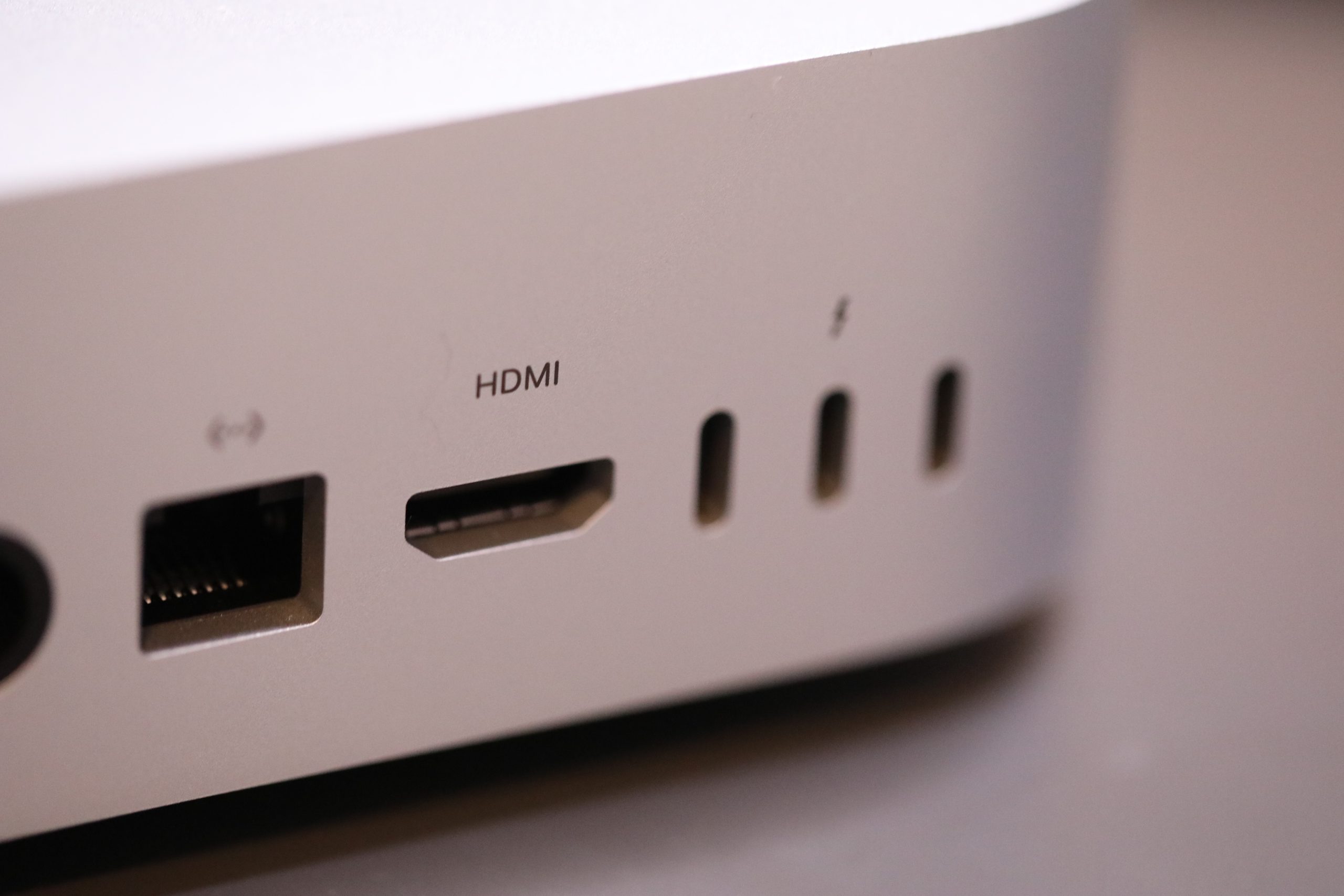
Apple’s latest quarterly earnings call revealed a surprising surge in Mac sales, significantly outperforming Wall Street’s cautious predictions and underscoring a burgeoning consumer and enterprise appetite for powerful, AI-capable personal computers. While the tech giant’s iPhone sales and Services revenue continued their robust performance, it was the Mac segment that quietly delivered an unexpected triumph, largely attributed by company leadership to the escalating demand for running local artificial intelligence workloads. This unforeseen acceleration in adoption has not only bolstered Apple’s financial standing but also signals a pivotal shift in the personal computing market, with AI capabilities becoming a critical differentiator.
A Quarterly Triumph for Cupertino
For the second fiscal quarter, ending March 28, Apple reported Mac revenue of $8.4 billion, comfortably exceeding analysts’ consensus estimates, which hovered in the low $8 billion range. This marked a notable 6% increase year-over-year, defying earlier investor expectations that predicted essentially flat sales for the segment. The Mac’s strong showing contributed to Apple’s impressive overall revenue of $111.2 billion for the quarter, representing a substantial 17% rise from the same period last year. This financial beat, particularly from a segment often considered secondary to the iPhone and Services ecosystem, highlights a strategic inflection point for Apple’s hardware portfolio. The robust performance of the Mac line suggests that the market is beginning to recognize and reward devices equipped for the next generation of computing tasks, primarily those involving artificial intelligence.
The Unexpected AI Catalyst
A primary driver behind this unexpected Mac resurgence, as articulated by Apple CEO Tim Cook, is the growing utilization of the platform for executing local AI models. Unlike cloud-based AI solutions, which rely on remote servers for processing, local AI models perform computations directly on the user’s device. This approach offers significant advantages in terms of privacy, reduced latency, and potentially lower long-term operational costs, particularly for users or organizations dealing with sensitive data or requiring immediate AI responses. Cook specifically pointed to the burgeoning popularity of models like "OpenClaw," a hypothetical but representative example of the types of sophisticated, locally runnable AI applications gaining traction. This trend has led to a rapid sell-out of certain high-performance Mac models, including the Mac mini and Mac Studio, in recent weeks, indicating that customers are actively seeking out hardware capable of handling these intensive computational demands. Cook noted that the customer recognition of Macs as ideal platforms for AI and "agentic tools" has materialized "faster than what we had predicted," leading to higher than anticipated demand.
Apple Silicon’s Foundational Role
The exceptional performance of Macs in handling AI workloads is intrinsically linked to the innovative architecture of Apple Silicon, specifically the M-series chips. Introduced initially in 2020 with the M1 chip, these custom-designed processors integrate several key components onto a single system-on-a-chip (SoC), including the CPU, GPU, and a dedicated Neural Engine. The Neural Engine is a specialized hardware accelerator designed specifically to boost machine learning tasks, enabling Macs to execute complex AI algorithms with remarkable speed and energy efficiency.
This integrated design, coupled with a unified memory architecture that allows the CPU and GPU to access the same pool of high-bandwidth memory, provides a significant advantage for AI applications. Large language models and other generative AI tools often require vast amounts of memory and rapid data transfer, areas where Apple Silicon excels. This contrasts with traditional computing architectures, which typically separate CPU and GPU memory, introducing bottlenecks. The M-series chips, from the entry-level M1 to the more powerful M3 Max and Ultra variants, are engineered to deliver desktop-class performance while maintaining impressive power efficiency, making them ideal for sustained AI processing without excessive heat generation or power consumption. This technological foundation has quietly positioned the Mac as a frontrunner in the emerging "AI PC" category, long before the term became an industry buzzword.
The MacBook Neo Phenomenon
Beyond the raw processing power for AI, Apple’s recent product launches have also played a significant role in stimulating demand. The MacBook Neo, a well-received addition to the Mac lineup, contributed substantially to the quarter’s success. Characterized by its fun, colorful design and accessibility, the Neo quickly garnered immense popularity. Despite being available for only a few weeks following its March 4 pre-order launch, with most units shipping mid-to-late March, demand for the Neo was "off the charts," according to Tim Cook. This new model was instrumental in setting a record for new customers adopting the Mac platform during the quarter.
The appeal of the MacBook Neo extended into the educational sector, where institutions like Kansas City Public Schools have reportedly begun transitioning from Chromebooks to the Neo. This shift underscores a broader trend where schools and students seek more powerful, versatile, and potentially longer-lasting computing solutions that can support diverse learning environments and emerging technologies, including AI-powered educational tools. The Neo’s blend of performance, user-friendliness, and Apple’s robust ecosystem seemingly offered a compelling alternative to its competitors in the education space.
Global Recognition and Enterprise Adoption
The AI-driven demand for Macs is not confined to individual users or specific regions; it is a global phenomenon with significant enterprise implications. The Mac mini, a compact yet powerful desktop, notably emerged as the top-selling desktop computer in China during the quarter. This success is particularly significant given China’s vibrant and rapidly evolving technology landscape, where there has been a considerable "OpenClaw frenzy" and a strong cultural inclination towards advanced technological adoption. The Mac mini’s affordability relative to its processing capabilities, especially when configured with Apple Silicon, makes it an attractive option for developers and users experimenting with local AI models in a market that is highly responsive to such innovations.
Furthermore, Apple highlighted increased enterprise demand, with several large companies, including the AI search engine Perplexity, adopting Macs as their preferred platform for developing enterprise-grade AI assistants. This trend reflects a growing recognition within corporate environments of the Mac’s capabilities in high-performance computing, data security, and seamless integration within professional workflows. Enterprises are increasingly looking for robust, secure, and efficient platforms to build and deploy their internal AI solutions, and the Mac, powered by Apple Silicon, is proving to be a compelling choice for these demanding applications.
Navigating Supply Chain Realities
Despite the overwhelmingly positive sales figures, the unexpected surge in demand has presented Apple with significant supply chain challenges. Mac revenue, while strong year-over-year, remained flat on a quarter-over-quarter basis, suggesting that the full potential of this new demand has yet to be realized due to production limitations. Tim Cook openly acknowledged that Apple "under-called the demand" for key models like the Mac mini, Mac Studio, and MacBook Neo, leading to supply constraints.
Cook indicated that it might take "several months" for Apple to achieve a balance between supply and demand for these popular Mac models. This situation, while frustrating for customers and potentially deferring revenue, also underscores the genuine and sustained nature of the demand. It’s not a temporary spike but rather an ongoing requirement that outstripped Apple’s initial production forecasts. The company’s experience highlights the delicate balance between market forecasting, production capacity, and rapid technological shifts, especially in dynamic sectors like artificial intelligence.
The Broader Market Shift: AI’s Influence on PC Demand
Apple’s unexpected Mac success provides a vivid early indicator of a broader transformation within the personal computing industry. For years, the PC market has seen incremental improvements, but the advent of sophisticated, generative AI capabilities is poised to trigger a new "supercycle." This era, often dubbed the "AI PC" era, envisions computers with integrated hardware and software specifically optimized for AI tasks, making AI features not just an add-on but a core part of the user experience.
Competitors like Intel, AMD, and Microsoft are aggressively pursuing their own strategies to integrate dedicated Neural Processing Units (NPUs) into their chips and operating systems (e.g., Windows AI features). However, Apple’s M-series chips, with their mature Neural Engine and unified memory architecture, appear to have given the company a significant head start. This competitive advantage is now translating into tangible sales, positioning Apple as a leader in defining what an "AI PC" truly means for consumers and professionals. The market is increasingly demanding devices that can not only run traditional applications but also efficiently handle complex AI algorithms, from real-time language translation and image generation to advanced data analysis and predictive modeling, directly on the device.
Looking Ahead: Apple’s AI Strategy and Future Outlook
While Apple has historically maintained a degree of secrecy around its specific AI initiatives, its products have long incorporated sophisticated machine learning features, from Siri and Photos organization to advanced computational photography. The current, AI-driven surge in Mac demand provides a powerful validation of Apple’s long-term investment in its custom silicon and integrated hardware-software ecosystem.
This unexpected boost for the Mac line offers Apple a crucial strategic advantage. It diversifies the company’s revenue streams beyond the dominant iPhone and Services segments, strengthening its overall hardware portfolio. Looking forward, this renewed emphasis on local AI capabilities on the Mac could pave the way for deeper integration of generative AI features directly into macOS and Apple’s professional applications. This could include more intelligent creative tools, enhanced productivity features, and even more personalized user experiences, all leveraging the power of Apple Silicon. The unexpected AI-fueled Mac renaissance not only highlights Apple’s engineering prowess but also positions the company as a formidable player in shaping the future of personal computing in an increasingly AI-centric world.