Amir Mahmud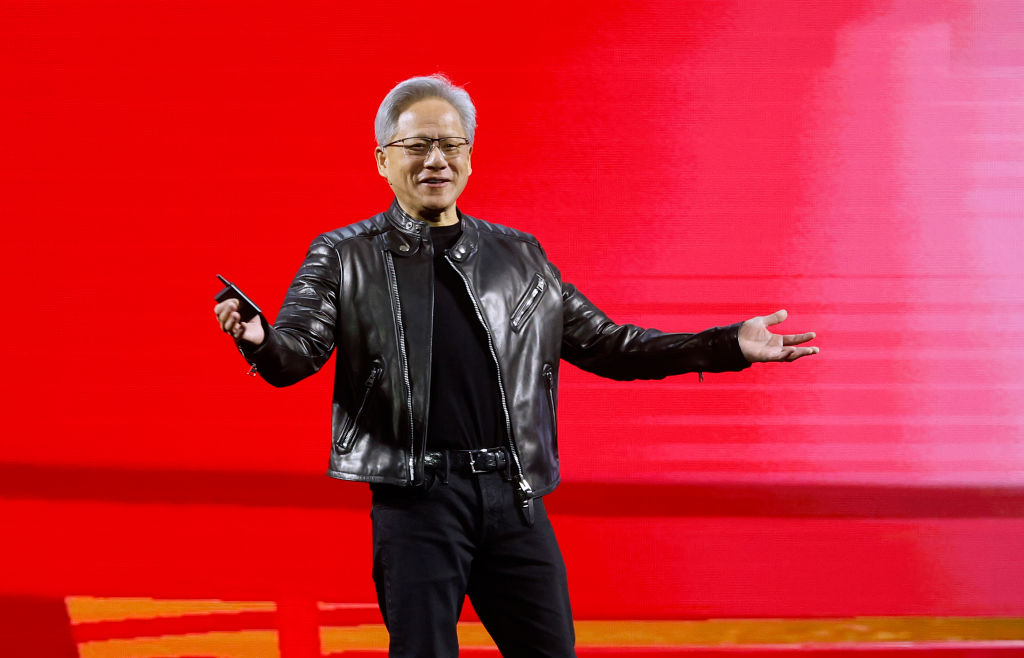
The looming question of artificial intelligence’s impact on employment frequently evokes concerns about widespread job displacement. However, Jensen Huang, the influential CEO of Nvidia, recently offered a starkly optimistic counter-narrative, asserting that fears of mass unemployment are largely unfounded. Speaking at a Milken Institute event during a conversation with MSNBC’s Becky Quick, Huang presented AI not as a threat to the workforce, but rather as a powerful catalyst for unprecedented job creation and a unique opportunity for the United States to re-establish its industrial might. His remarks challenge a prevalent narrative that positions AI as a disruptive force destined to render vast swathes of human labor obsolete, instead framing it as a transformative technology that will fundamentally reshape and enrich the global economy.
A Vision of Industrial Renewal
Huang’s perspective, delivered to an audience keenly interested in economic policy, positioned artificial intelligence as an "industrial-scale generator of jobs." This assertion directly contrasts with the apprehension expressed by many economists, policymakers, and workers regarding the rapid advancement of AI. According to Huang, the rise of AI represents the United States’ "best opportunity to re-industrialize itself," signaling a profound shift in economic priorities. This vision isn’t merely theoretical; it’s rooted in the tangible infrastructure required to power the AI revolution.
The burgeoning AI industry, Huang elaborated, demands a new generation of sophisticated industrial facilities. These "AI factories" are not traditional manufacturing plants but rather advanced data centers and specialized production units churning out the hardware—like Nvidia’s own graphics processing units (GPUs)—that forms the foundational infrastructure for artificial intelligence. These facilities, and the expansive ecosystem they support, inherently necessitate a skilled workforce for their design, construction, operation, and maintenance. From chip designers and software engineers to data center technicians and cybersecurity specialists, the demand for human capital across this new industrial landscape is projected to be substantial. Huang’s company, Nvidia, stands at the epicenter of this hardware demand, with its advanced GPUs being critical for training and running complex AI models, underscoring his unique vantage point and vested interest in this technological trajectory.
Historical Parallels and Future Transformations
The debate surrounding technological unemployment is far from new. Throughout history, major technological advancements have consistently sparked fears of widespread job losses, only to eventually lead to the creation of new industries, roles, and increased overall prosperity. The Luddite movement of early 19th-century England, where textile artisans protested against the introduction of mechanized looms, stands as a classic example of resistance to industrial automation. Similarly, the advent of the personal computer, the internet, and early forms of automation in the 20th century each triggered anxieties about job displacement. While certain jobs or tasks were indeed automated, new roles emerged that were previously unimaginable.
For instance, the widespread adoption of computers eliminated many clerical positions but simultaneously created millions of jobs in software development, IT support, data analysis, and digital marketing. This historical pattern suggests that while technology can be a disruptive force, it is also a powerful engine for economic evolution and growth. However, the speed and pervasive nature of AI’s current development cycle are often cited as differentiating factors. Unlike previous industrial revolutions that unfolded over decades, the current AI surge, particularly with generative AI, appears to be accelerating at an unprecedented pace, compressing potential transition periods and exacerbating anxieties about adaptation.
Dissecting the "Job vs. Task" Debate
A core tenet of Huang’s argument rests on the crucial distinction between automating specific tasks and replacing entire jobs. He contends that many who foresee mass unemployment "misunderstand that the purpose of a job and the task of a job are related" but not synonymous. An individual’s job typically comprises a multitude of tasks, some of which are repetitive, routine, or data-intensive, making them prime candidates for AI automation. Yet, the overarching purpose or strategic function an employee serves within an organization often involves complex problem-solving, creative thinking, interpersonal communication, emotional intelligence, and strategic decision-making—areas where human capabilities remain largely superior.
Consider the role of a marketing manager. While AI might automate tasks like drafting social media posts, analyzing campaign performance data, or even generating preliminary content ideas, the manager’s core function—developing comprehensive marketing strategies, understanding brand identity, negotiating partnerships, and leading a team—requires a level of judgment and creativity that current AI systems cannot replicate. AI, in this view, becomes a powerful tool that augments human capabilities, freeing up employees from mundane tasks to focus on higher-value activities that require uniquely human skills. This augmentation, rather than replacement, is what Huang envisions as the primary impact of AI on the workforce, leading to increased productivity and the potential for entirely new types of roles that leverage AI as a collaborative partner.
The Spectrum of AI’s Economic Influence
While Huang’s optimistic outlook emphasizes job creation, a more nuanced analysis reveals a complex and potentially dual-sided impact of AI on the global economy. On one hand, AI promises significant productivity gains, driving innovation across sectors from healthcare and finance to logistics and entertainment. By automating routine processes, optimizing supply chains, and accelerating research and development, AI could unlock new levels of economic efficiency and create entirely new markets. This surge in productivity could lead to higher wages for some, increased corporate profits, and overall economic growth, potentially lifting living standards.
However, the potential for significant job dislocation remains a serious concern for many economists and policymakers. Reputable financial and academic organizations, including reports from consulting firms like BCG, have suggested that as much as 15% of jobs in the U.S. could be eliminated over the next several years as a direct result of AI. This figure often reflects roles susceptible to automation, particularly those involving repetitive cognitive tasks. The impact is unlikely to be uniform, with certain industries and demographic groups potentially experiencing greater disruption. Concerns about widening economic inequality also persist, as the benefits of AI might disproportionately accrue to highly skilled workers and capital owners, leaving behind those whose skills become less valuable or obsolete without adequate reskilling initiatives. The long-term societal effects of such a shift could be profound, necessitating careful planning and robust social safety nets.
Navigating Public Perception and "AI Doomerism"
Huang also took aim at what he termed "AI doomers"—individuals who propagate extreme narratives about AI leading to human subjugation or widespread societal collapse. He expressed concern that such "science fiction stories" could foster excessive fear, making AI so unpopular or intimidating that people "don’t actually engage it." This reluctance to engage, he argued, could hinder the very progress and innovation that AI promises.
Ironically, a significant portion of this "doomer" rhetoric has been generated, at times, by the AI industry itself. Critics argue that hyperbolic claims about AI’s potential, often bordering on the apocalyptic, have been strategically deployed as a marketing gimmick. This sensationalism aims to generate buzz, attract investment, and create a sense of urgency around products and technologies that may not yet possess the advanced capabilities suggested by such grandiose pronouncements. While a healthy discussion about AI’s ethical implications and potential risks is crucial, the line between constructive caution and unfounded alarmism can blur, potentially leading to misinformed public discourse and counterproductive regulatory impulses. Balancing innovation with responsible development requires a nuanced approach that avoids both uncritical optimism and paralyzing pessimism.
Addressing the Dislocation: A Call for Adaptation
Regardless of whether AI primarily creates or displaces jobs, it undeniably necessitates a significant societal adaptation. The skills demanded by the evolving economy will change, requiring a proactive approach to education and workforce retraining. Investment in lifelong learning, vocational training programs, and accessible educational resources will be critical to equip individuals with the competencies needed to thrive alongside AI technologies. Governments, educational institutions, and private industries must collaborate to identify future skill gaps and develop robust pathways for workers to transition into new roles.
Furthermore, policy discussions around social safety nets, universal basic income, and new forms of social support may become increasingly relevant as the labor market undergoes transformation. The goal should be to harness AI’s immense potential for economic growth and societal benefit while mitigating its potential downsides, ensuring that the transition is equitable and inclusive. This involves fostering an environment where innovation is encouraged, but also where the human element of work is valued and supported through periods of change.
The Path Forward: Policy and Preparation
Jensen Huang’s optimistic vision offers a compelling counterpoint to the prevailing anxieties surrounding AI and employment. His argument for AI as a driver of job creation and re-industrialization highlights the transformative potential of this technology. However, the diverse perspectives and complex economic models underscore that the future of work with AI is not predetermined. It will be shaped by the choices made by businesses, governments, educators, and individuals. The journey ahead demands a balanced approach: embracing innovation while simultaneously preparing for disruption, investing in human capital, and fostering policies that ensure a resilient and adaptive workforce. The challenge lies not in stopping the march of AI, but in steering its trajectory toward a future that maximizes human potential and broad-based prosperity.