Amir Mahmud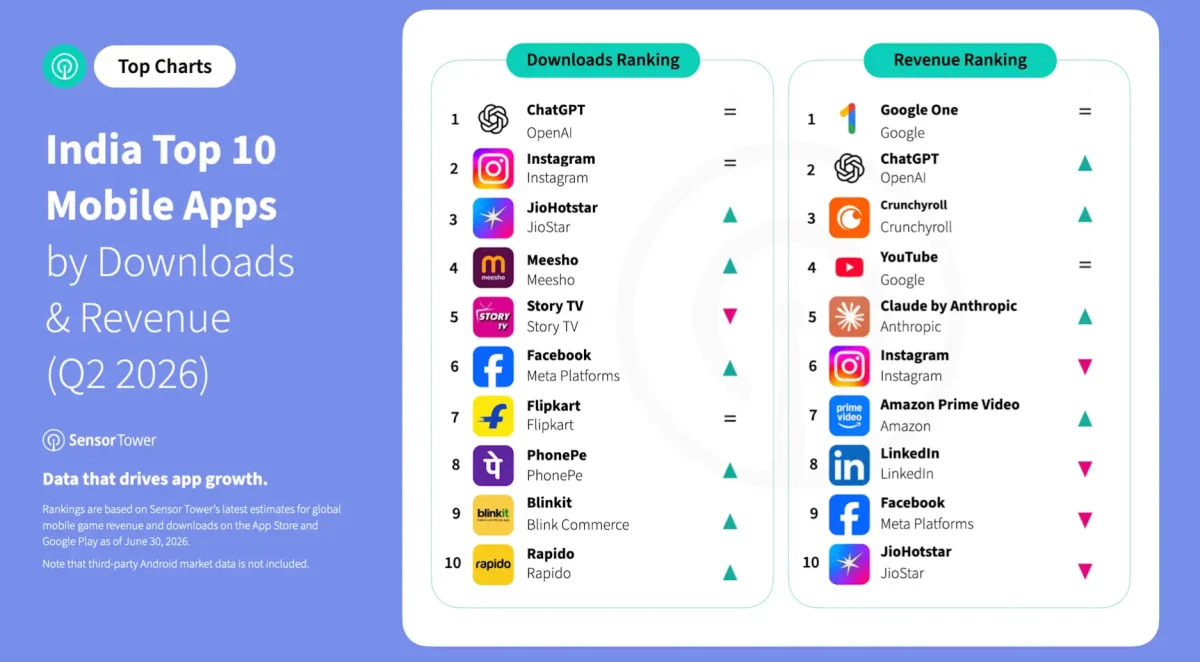
India, long recognized as the world’s preeminent market for mobile application downloads, is now undergoing a significant transformation, evolving into a burgeoning landscape for consumer spending on digital services. This pivotal shift marks a new era where Indian users, once primarily accustomed to free applications, are increasingly willing to pay for premium features, subscriptions, and enhanced digital experiences across a diverse range of categories, from artificial intelligence tools to entertainment and productivity platforms.
The Maturation of a Digital Giant
The second quarter of the current year witnessed India’s mobile app market achieve an unprecedented milestone, generating a record $345 million in consumer spending. This figure represents a remarkable 35% surge compared to the same period last year, according to a recent analysis by Sensor Tower, a leading app-market intelligence firm. This impressive growth is not merely an isolated spike but rather indicative of a broader, sustained trend towards greater app monetization. Unlike previous periods where gaming largely dominated the nascent monetization efforts, the current momentum is predominantly fueled by innovative generative artificial intelligence applications, a plethora of streaming services, and essential productivity tools, underscoring a deepening acceptance of paid digital subscriptions among Indian consumers.
The financial data highlights a profound change in the market dynamics. Over the past three and a half years, the revenue generated per app download in India has more than doubled. This acceleration in revenue per download contrasts sharply with the relatively stable quarterly app download figures, which have consistently hovered around 6.3 billion since 2023. This stabilization in downloads, coupled with a significant increase in spending, signals a maturing market where user engagement is translating directly into economic value rather than just volume.
Eve Chen, an insights analyst at Sensor Tower, characterized India as "a rapidly evolving mobile market with a large user base and growing willingness to pay for digital services." This expert perspective encapsulates the paradigm shift occurring within the nation’s digital ecosystem, pointing towards an increasingly sophisticated consumer base.
A Decade of Digital Transformation
Understanding India’s current digital landscape requires a look back at its rapid technological evolution. For years, India was a paradox: a country with an enormous, digitally-savvy youth population and a voracious appetite for mobile technology, yet notoriously challenging for app developers to monetize effectively. The journey from this "download-only" phase to its current trajectory has been nothing short of revolutionary.
The groundwork for this transformation was laid by several critical developments. The widespread adoption of smartphones, initially driven by affordable Android devices, made digital access ubiquitous. However, it was the entry of Reliance Jio in 2016 that truly democratized internet access. By offering incredibly cheap, and initially free, mobile data, Jio catalyzed an unprecedented surge in internet penetration, bringing millions of first-time online users into the digital fold. This "Jio effect" dramatically lowered the barrier to entry for mobile internet, fostering a massive user base that quickly became accustomed to consuming digital content and services.
Concurrently, the launch of the Unified Payments Interface (UPI) in the same year, developed by the National Payments Corporation of India (NPCI), provided a seamless, real-time payment system directly linked to bank accounts. UPI, alongside the proliferation of digital wallets, significantly reduced the friction associated with online transactions and in-app purchases. This robust digital payment infrastructure has been a cornerstone of the burgeoning monetization trend, making it easier and more secure for users to pay for digital goods and services. The COVID-19 pandemic further accelerated digital adoption across all sectors, from online education and remote work to digital entertainment and healthcare, reinforcing the reliance on mobile applications and enhancing trust in online transactions.
The Mechanics of Monetization: Digital Payments and Trust
The transition from a download-centric model to a revenue-generating one is intrinsically linked to the advancements in India’s digital payment ecosystem. As Eve Chen articulated, the widespread adoption of digital payment solutions, particularly UPI and various digital wallets, has been instrumental. These platforms have streamlined the process of making in-app purchases, transforming what was once a cumbersome experience into a quick and secure transaction.
Beyond the technical ease, there’s been a significant cultural shift. Indian consumers, traditionally price-sensitive and accustomed to free content, are increasingly recognizing the value proposition of premium digital services. This growing acceptance of app-based subscriptions and exclusive digital offerings indicates a maturing market where quality, convenience, and an uninterrupted experience are becoming compelling motivators for payment. This evolution reflects a broader economic trend where rising disposable incomes, particularly among the younger, digitally native population, are being channeled into enhancing their digital lifestyles.
Global Ambitions, Local Dynamics
India’s app revenue growth stands out prominently on the global stage. During the second quarter, India registered the fastest growth among major app markets, generating over $200 million in quarterly consumer spending, according to Sensor Tower’s data shared with TechCrunch. To put this in perspective, Mexico’s app revenue grew by 30% and Turkey’s by 25% over the same period. In stark contrast, the United States, a long-established mature market, experienced a 3% decline in app revenue, highlighting India’s unique upward trajectory.
"These figures suggest that India is no longer just the world’s largest market by downloads, but is also emerging as one of the fastest-growing markets for app monetization," Chen emphasized. While India still trails more mature app markets significantly in terms of revenue per download – for instance, revenue per download stands at approximately $4.60 in the U.S., $3.90 in South Korea, and $6.10 in Japan, compared to a mere fraction of those figures in India – the rapid improvement in monetization signals substantial room for long-term expansion. The trajectory, rather than the absolute current level, is what truly matters, indicating a robust and sustainable growth pathway.
The Rise of Generative AI and Non-Gaming Categories
A key driver of this monetization surge has been the emergence of generative artificial intelligence applications. This segment has rapidly become one of the fastest-growing categories. In the second quarter, AI apps like OpenAI’s ChatGPT and Anthropic’s Claude collectively commanded nearly 83% of India’s AI app revenue, illustrating a strong demand for advanced AI capabilities. These tools, offering everything from content creation assistance to complex problem-solving, are finding a receptive audience willing to pay for their sophisticated functionalities.
Furthermore, a significant portion of India’s overall app revenue growth is now stemming from non-gaming applications. Sensor Tower reported that non-gaming categories accounted for 68% of India’s mobile app revenue in the first half of the current year, a notable increase from 58% just three years prior. This shift underscores a diversification of consumer spending beyond traditional entertainment, reflecting a growing utility and integration of apps into daily life, work, and education.
Global subscription apps are among the primary beneficiaries of this escalating app spending. Google One, for example, emerged as India’s highest-grossing mobile app during the quarter, indicating a strong demand for cloud storage and ecosystem services. Streaming platforms like Amazon Prime Video, Crunchyroll, Sony LIV, and JioHotstar also recorded substantial increases in consumer spending, highlighting the nation’s burgeoning appetite for diverse digital content. Interestingly, the gaming sector in India bucked the global trend, with revenue rising 3.7% from the previous quarter, despite a worldwide decline in gaming revenue, demonstrating the unique resilience and growth potential of India’s mobile gaming market.
Challenges and the Path Ahead
While the growth figures are impressive, the journey towards full market maturity presents its own set of challenges. App intelligence firm Appfigures observes that while India’s app subscription market continues to expand, the pace has moderated slightly after an initial AI-fueled surge over the past two years. Ariel Michaeli, founder and CEO of Appfigures, noted that while subscription revenue is still on an upward trajectory, some of the initial excitement surrounding AI might have settled. Nevertheless, the numbers remain "staggering," according to Michaeli, with estimates suggesting ChatGPT generates approximately $60,000 daily in India and attracted around 1.8 million downloads over the past month, even if these figures are slightly down from an October peak of roughly $80,000 daily.
The path ahead for India’s digital economy involves navigating complexities such as price sensitivity, intensifying competition among app providers, and ensuring robust digital infrastructure across all regions. Data privacy concerns and the need for continuous digital literacy initiatives will also play crucial roles in sustaining consumer trust and engagement. However, the foundational elements are firmly in place: a vast, young, and increasingly tech-savvy population, coupled with a robust digital payment ecosystem and supportive government policies aimed at fostering a ‘Digital India.’
This transformation signifies more than just financial figures; it reflects a profound societal shift. Indian consumers are moving beyond basic digital consumption to actively investing in tools and services that enhance their lives, productivity, and entertainment. This evolution positions India not just as a market of immense scale, but as a dynamic and increasingly valuable contributor to the global digital economy, ripe with opportunities for innovation and sustained growth. The country’s journey from a mobile-first, download-heavy market to a mature, monetization-driven digital powerhouse is well underway, promising exciting developments for both domestic and international app developers alike.