Amir Mahmud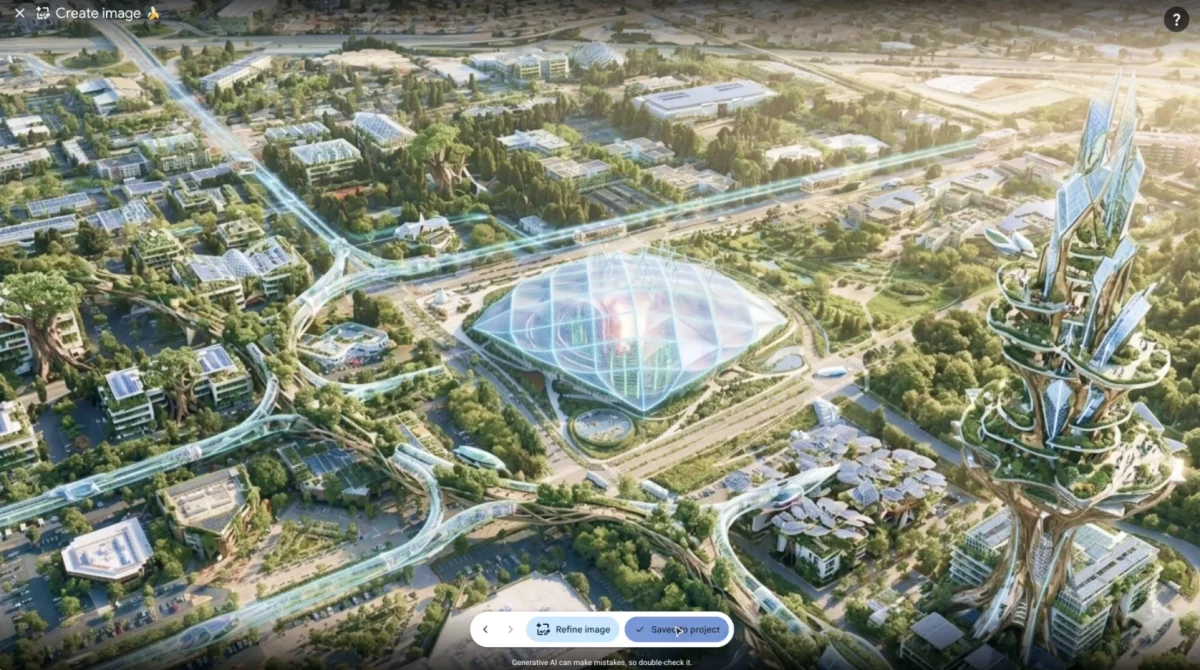
Mountain View, CA – In a swift reversal that underscores the ongoing challenges of integrating powerful artificial intelligence into widely used platforms, Google has retracted a newly launched AI image generation feature within its Google Earth application. The decision came barely 24 hours after its public debut, following a significant wave of criticism from users and media professionals who raised alarm over the potential for the tool to rapidly disseminate fabricated geospatial information. The feature, powered by Google’s Nano Banana 2 AI image generator, allowed users to superimpose AI-generated imagery directly onto real-world satellite maps, an capability that Google initially presented as a creative exploration of geography.
Rapid Rollback and Public Outcry
The controversial tool, unveiled on a Thursday, was designed to enable users to create "fabricated images" within the familiar interface of Google Earth. The company’s stated intention was to foster creativity and novel geographical interpretations. However, the immediate public reaction was largely one of concern, not creativity. Critics swiftly highlighted the ease with which this prompt-based system could be manipulated to generate and spread misleading content, transforming a trusted mapping service into a potential vector for digital deception.
One particularly poignant critique came from a BBC journalist, who sarcastically remarked on social media, "There’s no way that this new AI image generation feature on Google Earth, one of the most reliable sources of visual evidence for journalists and researchers, could possibly be abused to spread misinformation online." This sentiment resonated widely, encapsulating the anxieties of many who rely on platforms like Google Earth for factual, verifiable visual data. The implication was clear: by allowing arbitrary images to be overlaid onto real maps, the tool could effortlessly craft visually convincing but utterly false narratives, potentially undermining the integrity of geographical information.
Responding to the burgeoning backlash, Google issued a statement confirming the feature’s removal. "We’ve seen geospatial professionals using this feature for a range of useful purposes, however we’ve also seen people sharing screenshots of generated imagery that appear to violate our policies," the company acknowledged. The statement concluded with a commitment to re-evaluate: "We’re rolling back this feature in Google Earth while we work on implementing stronger guardrails." This rapid retraction signals a company grappling with the delicate balance between pushing technological boundaries and upholding user trust and safety in an increasingly complex digital landscape.
The Promise and Peril of Geospatial AI
Google Earth, since its inception, has served as a pivotal resource for everyone from casual explorers to professional geographers, researchers, and journalists. Launched in 2001 as Keyhole EarthViewer, before its acquisition by Google in 2004 and subsequent rebranding, it revolutionized how people interact with global satellite imagery. Its core value has always rested on providing an accurate, detailed, and verifiable representation of the planet. Over the years, it has become an indispensable tool for urban planning, environmental monitoring, disaster relief, and even historical research, offering layers of data that enrich our understanding of the world. Its utility as a reliable visual evidence source has been paramount, a reputation now potentially jeopardized by the introduction of generative AI without sufficient safeguards.
The integration of Nano Banana 2 into this venerable platform represented a significant leap into the realm of generative AI for Google Earth. Generative AI, exemplified by models like DALL-E, Midjourney, and Google’s own offerings, possesses the remarkable ability to create novel content—text, images, audio, video—from simple prompts. While these technologies offer immense creative and practical potential, they also present profound ethical and societal challenges. The very strength of generative AI—its capacity to produce highly realistic and novel content—is also its greatest vulnerability when it comes to truth and authenticity. These models can "hallucinate" information, fabricating details or entire scenarios that are entirely untrue but appear credible to the untrained eye.
The Widening Shadow of AI-Generated Misinformation
The incident with Google Earth is not an isolated one; it is merely the latest manifestation of a broader societal concern surrounding the proliferation of AI-generated misinformation. In an era where digital content is consumed at an unprecedented rate, the ease with which artificial intelligence can create convincing but false images, videos, and texts poses a formidable threat to public discourse, democratic processes, and even personal reputations. So-called "deepfakes" – highly realistic manipulated media – have already demonstrated the potential for harm, from political propaganda to harassment.
The sheer accessibility of AI image generators exacerbates this problem. What once required sophisticated graphic design skills and considerable time can now be achieved by anyone with an internet connection and a few descriptive words. This democratization of content creation, while empowering in many respects, also lowers the barrier to entry for those seeking to intentionally deceive or spread disinformation. When a platform as globally trusted as Google Earth becomes a canvas for such fabrications, the implications for how we perceive and trust visual information become dire. Journalists, researchers, and educators, who rely on such tools for factual context, face an escalating challenge in discerning genuine imagery from sophisticated fakes. The erosion of trust in digital media, already a significant issue, risks accelerating if platforms do not rigorously vet the integrity of AI-generated content.
Navigating the Innovation-Responsibility Divide
This episode highlights the persistent tension within the tech industry between rapid innovation and the imperative for responsible deployment. Companies like Google are under immense pressure to integrate cutting-edge AI capabilities into their products to stay competitive in a fast-evolving market. However, the speed of development often outpaces the development of robust ethical frameworks and safety protocols. This isn’t Google’s first encounter with such issues; previous iterations of their generative AI models, such as certain features within Gemini, have also faced scrutiny for generating historically inaccurate or biased imagery, leading to similar pauses and reconfigurations.
The market impact of such missteps can be significant, affecting brand reputation, user loyalty, and even investor confidence. While Google’s quick response may mitigate some of the damage, it underscores a perceived lack of foresight in the initial rollout. The incident serves as a stark reminder that powerful AI tools, particularly those integrated into platforms with a global reach and an established reputation for accuracy, demand meticulous vetting for potential misuse before public release. The challenge for tech giants is not just to build powerful AI, but to build it with an inherent understanding of its societal implications and a commitment to mitigating potential harms.
The Road Ahead for AI Guardrails
Google’s commitment to "implementing stronger guardrails" suggests a future where AI features might be deployed with more stringent controls. These guardrails could encompass several strategies. Technical solutions might include advanced watermarking or cryptographic signatures embedded in AI-generated images, allowing for easy identification of synthetic content. More sophisticated content moderation systems, combining AI detection with human oversight, could be developed to flag and remove policy-violating imagery. Prompt filtering, which prevents users from generating harmful or misleading content, will likely become more robust. Furthermore, clear user education and disclaimers about the nature of AI-generated content will be crucial to manage expectations and inform users about what they are seeing.
Ultimately, the Google Earth incident serves as a microcosm of the larger societal debate surrounding artificial intelligence. As AI capabilities continue to advance at an astonishing pace, the onus is on developers, policymakers, and users alike to collectively define the ethical boundaries and safety standards for its deployment. The aspiration to unlock new creative possibilities with AI must be tempered with a profound sense of responsibility to prevent its misuse, ensuring that these powerful tools enrich humanity rather than undermine the foundational trust in our shared information environment. The path forward will undoubtedly involve continuous iteration, learning from mistakes, and a proactive approach to anticipating and mitigating the unforeseen consequences of groundbreaking technology.