Amir Mahmud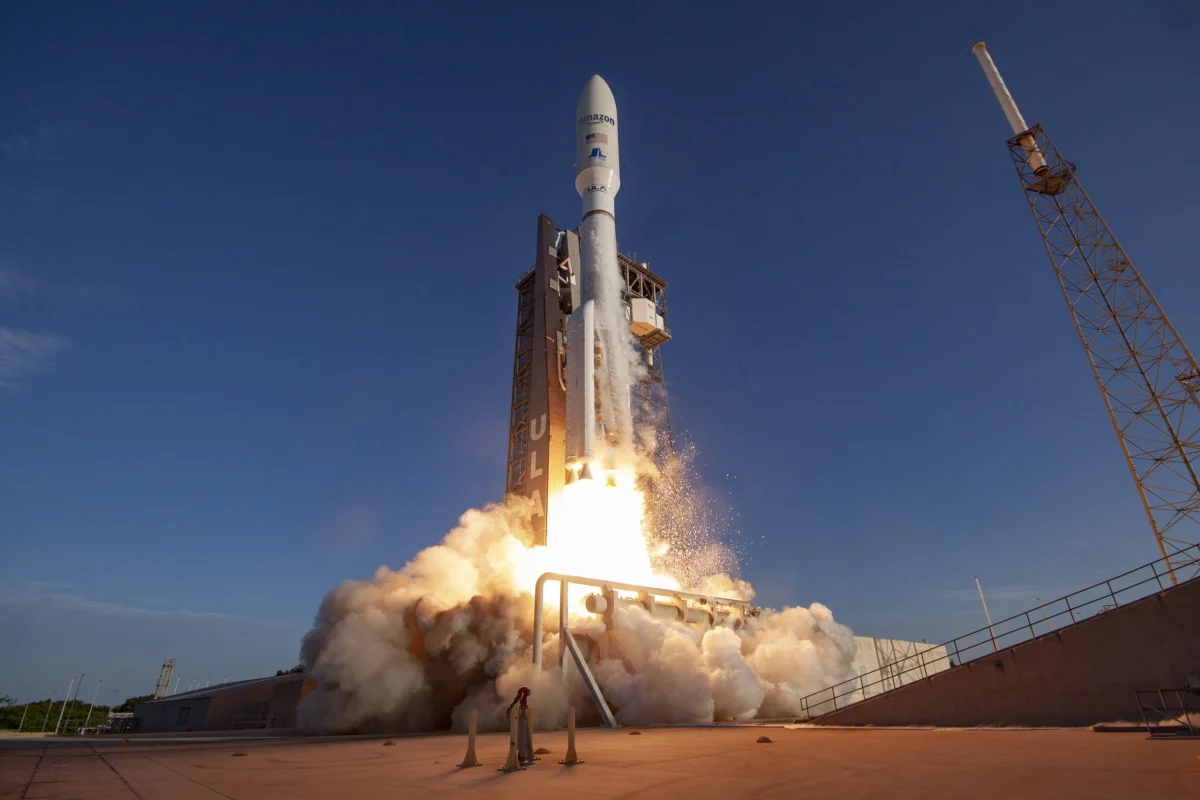
Amazon has formally signaled its intent to become a major player in direct-to-mobile satellite connectivity, filing an application with the Federal Communications Commission (FCC) for a license to operate a vast network of 5,105 satellites designed to deliver service directly to mobile phones. This ambitious undertaking, slated to commence satellite launches in 2028, represents a significant escalation in the burgeoning commercial space industry and sets the stage for intensified competition in the global telecommunications landscape. The move solidifies Amazon’s long-term vision to expand its Project Kuiper initiative beyond fixed broadband internet access, aiming for ubiquitous connectivity that reaches handheld devices anywhere on Earth.
The Genesis of Amazon’s Orbital Ambition
This strategic pivot towards direct-to-mobile service builds upon a foundational acquisition made several months prior, when Amazon secured the satellite operations of Globalstar. Globalstar is a well-established name in satellite communications, known for providing emergency connectivity to Apple iPhones and facilitating Internet-of-Things (IoT) device communication. The FCC filing explicitly outlines Amazon’s intention to harness Globalstar’s valuable radio spectrum assets, integrating them seamlessly with Project Kuiper, the company’s existing low-Earth orbit (LEO) broadband internet satellite network. This synergy is crucial; acquiring Globalstar not only brought essential spectrum licenses into Amazon’s portfolio but also provided a proven operational infrastructure and a direct connection to a significant existing user base, particularly through the Apple partnership.
Project Kuiper itself was unveiled in 2019, representing Amazon’s multi-billion-dollar commitment to provide high-speed, low-latency broadband internet globally, particularly to unserved and underserved communities. The initial plan involved a constellation of over 3,200 LEO satellites. By extending this infrastructure to include direct-to-mobile capabilities, Amazon aims to create a comprehensive, multi-layered connectivity solution, blurring the lines between traditional cellular networks and satellite-based services. This expansion highlights a broader trend in the space industry, where companies are increasingly looking to leverage their orbital assets for a wider array of applications, moving beyond just internet provision to encompass direct mobile communication, navigation, and advanced earth observation.
A New Front in the Space Race
Amazon’s entry into the direct-to-mobile satellite arena directly challenges SpaceX, which has largely dominated both the LEO satellite internet market with Starlink and has been an early mover in the satellite-to-mobile services sector. SpaceX has aggressively pursued this market segment, reportedly investing an estimated $20 billion to acquire critical spectrum from EchoStar, a move detailed in its initial public offering (IPO) filings as a key growth strategy for its mobile constellation. The competition between these two technology giants, led by two of the world’s wealthiest individuals, Jeff Bezos (Amazon/Blue Origin) and Elon Musk (SpaceX), has often been characterized as a modern-day space race, extending from rocket development to orbital infrastructure and now, direct consumer connectivity.
The concept of satellite-to-mobile connectivity, while promising, is not entirely new. Historically, companies like Iridium pioneered satellite phone services in the late 20th century, though these often required specialized, bulky handsets and came with high costs. The current generation of LEO constellations, however, aims to enable standard smartphones to connect directly to satellites, a technological leap that promises far greater accessibility. SpaceX’s Starlink, in partnership with T-Mobile, has already begun offering a limited form of satellite connectivity to customers, primarily for emergency text messaging in areas without cellular coverage. Similarly, Globalstar’s existing partnership with Apple for emergency SOS features on iPhones demonstrates the immediate, life-saving applications of such technology. Amazon’s move signifies a belief that this market is poised for significant expansion beyond niche emergency services, envisioning a future where basic text, voice, and even low-bandwidth data could be universally accessible.
Navigating Technical and Market Realities
Despite the ambitious plans and significant investments, the true commercial value and widespread adoption of satellite-to-mobile connections remain subjects of considerable debate. Current offerings typically provide limited bandwidth, making them suitable primarily for text messages or critical emergency situations rather than high-speed data streaming or voice calls. The technical challenges of connecting a small, low-power smartphone antenna to a fast-moving satellite hundreds of kilometers away are immense, often resulting in lower data rates and higher latency compared to terrestrial cellular networks.
Skepticism regarding immediate mass market demand has been voiced by industry leaders. For instance, Srini Gopalan, CEO of T-Mobile, a company that utilizes SpaceX satellites for some customer connectivity, shared revealing data earlier this year. "Just to give you an example, we look at our data in May, and satellite usage is 0.0002% of our total network usage. That’s three zeros," Gopalan stated at a conference in May. He further observed that this minimal usage was "largely focused on the national parks," underscoring its current utility as primarily a lifeline in remote, unserved areas rather than a daily communication tool.
This commentary highlights a critical juncture for satellite-to-mobile providers: will the market expand beyond emergency and niche applications, or will it remain a supplemental service? Proponents argue that current low usage is a function of limited functionality and awareness. As technology matures, offering higher bandwidth and more seamless integration, customer interest could surge. The potential social and cultural impact of pervasive connectivity, especially in bridging the digital divide for billions who still lack reliable internet access, is enormous. Furthermore, the growth of the Internet of Things (IoT) could create a significant demand for low-power, wide-area satellite connectivity for devices in remote locations, from agricultural sensors to maritime logistics trackers, far outweighing individual consumer usage.
Launch Logistics: Amazon’s Terrestrial Challenge
One of Amazon’s most significant hurdles in realizing its Project Kuiper and direct-to-mobile ambitions lies not in orbital mechanics, but in terrestrial launch capabilities. Unlike SpaceX, which boasts its own highly successful and frequently flying Falcon rocket fleet, Amazon does not possess an operational, proprietary launch vehicle. The company had initially placed its faith in Blue Origin, the space company founded by Jeff Bezos, intending to rely on its New Glenn rocket for launching Project Kuiper satellites. However, New Glenn has faced repeated delays, and its development recently encountered a major setback. In May, an anomaly during testing led to the destruction of its launch pad in Florida, further grounding the heavy-lift vehicle and pushing back its inaugural flight.
These delays have had tangible consequences for Amazon’s timeline. The company was compelled to request an extension to the deadline imposed by its FCC license for building out the Project Kuiper network, a clear indicator of the ripple effect of launch vehicle availability. While Amazon has secured contracts with other providers like United Launch Alliance (ULA) and Arianespace for some Kuiper launches, the dependency on third parties introduces complexities in scheduling, cost, and overall control compared to an integrated approach like SpaceX’s. The ability to rapidly and reliably deploy thousands of satellites is paramount for building out and maintaining a LEO constellation, making a robust and independent launch capability a crucial strategic advantage. The setbacks with Blue Origin therefore represent not just a technical challenge, but a significant strategic impediment that Amazon must navigate carefully to meet its deployment goals.
The Financial Firepower Advantage
Despite the launch-related challenges, Amazon possesses a formidable asset that provides a distinct advantage in the capital-intensive space industry: its immense financial reserves. As of the end of April, the e-commerce and cloud computing giant reported $255 billion in current assets on its books. This staggering capital allows Amazon to sustain long-term investments in Project Kuiper and its mobile connectivity expansion, absorbing development costs and potential setbacks over an extended period. The satellite industry, particularly the deployment of large LEO constellations, requires colossal upfront investments in research, development, manufacturing, and launch services, with profitability often many years down the line.
This financial muscle stands in contrast to the capital needs of competitors like SpaceX, whose ambitious plans across Starlink, Starship development, and Mars exploration often mean its capital requirements appear far more pressing. While SpaceX has successfully raised significant private capital and operates a revenue-generating launch business, its diverse and often pioneering ventures constantly demand substantial funding. Amazon’s deep pockets offer a cushion, enabling it to weather market fluctuations, invest in cutting-edge technology, and potentially outlast competitors in a prolonged race for orbital dominance. This financial stability could be a deciding factor in the long-term viability and ultimate success of Project Kuiper and its new mobile frontier.
Broader Implications and Future Outlook
Amazon’s aggressive move into direct-to-mobile satellite services holds profound implications for the future of global connectivity. Beyond the competitive dynamics with SpaceX, it signals a broader shift towards a more interconnected world, where the boundaries between terrestrial and space-based communication networks blur. The potential societal impact is immense, offering the promise of bridging the digital divide by extending basic communication services to the billions of people worldwide who still lack reliable cellular coverage. For emergency services, this ubiquitous reach could mean the difference between life and death in disaster zones or remote wilderness areas.
Furthermore, the expansion of satellite-to-mobile capabilities will catalyze innovation in related sectors. The Internet of Things (IoT) stands to benefit significantly, enabling real-time data collection from devices deployed in previously inaccessible locations, transforming industries such as logistics, agriculture, environmental monitoring, and remote infrastructure management. The increased competition from Amazon’s entry could also drive down costs and improve service quality for consumers, fostering a more dynamic and accessible global communication ecosystem.
However, regulatory complexities, spectrum allocation debates, and the environmental concerns surrounding the proliferation of thousands of satellites in LEO are ongoing challenges that all players, including Amazon, must address. The long-term vision for pervasive global connectivity, enabled by constellations like Project Kuiper, relies not only on technological prowess and financial strength but also on international cooperation and sustainable space practices. Amazon’s latest declaration underscores a future where seamless, ubiquitous mobile connectivity, irrespective of geographic location, is not just an aspiration but an increasingly tangible reality.