Amir Mahmud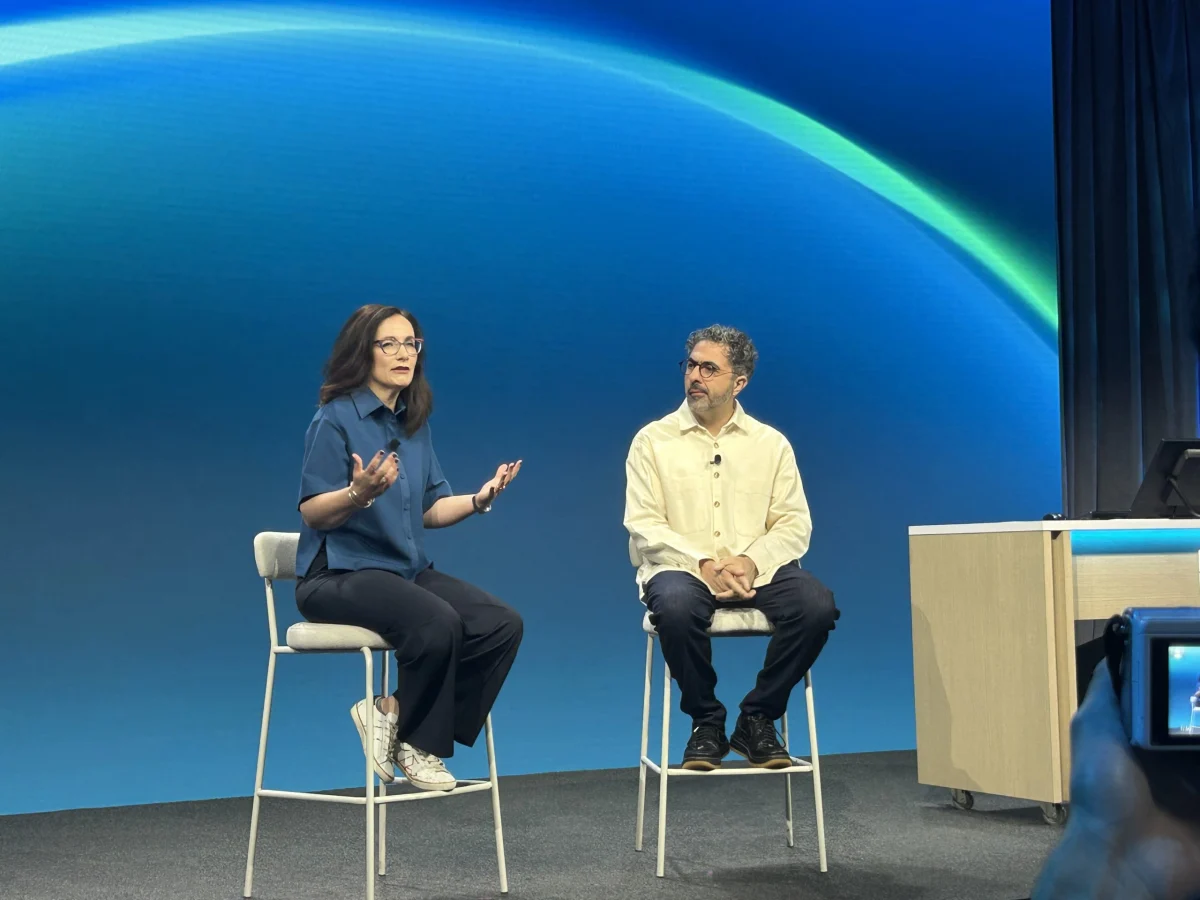
Microsoft has announced the launch of its inaugural cybersecurity-specialized artificial intelligence model, MAI-Cyber-1-Flash, alongside a sophisticated new AI cybersecurity platform named Perception. Revealed at a focused event in San Francisco, this strategic move positions the Redmond giant as a formidable contender in the rapidly evolving AI security landscape, directly challenging established and emerging players like Anthropic, Google, and OpenAI. The company’s latest innovations are designed to fundamentally reshape how enterprises identify, mitigate, and respond to an increasingly complex array of cyber threats, leveraging the power of advanced AI to counter the very technologies now being wielded by malicious actors.
The Dawn of AI in Cybersecurity
The introduction of MAI-Cyber-1-Flash and Perception marks a significant inflection point in the ongoing battle for digital security. For decades, cybersecurity has been a reactive discipline, with defenders constantly playing catch-up against an ever-innovating adversary. From the earliest computer viruses of the 1980s to sophisticated state-sponsored attacks and ransomware gangs of today, the challenge has consistently been one of scale, speed, and complexity. Traditional security tools, while essential, often rely on signature-based detection or rule-sets that struggle to keep pace with polymorphic malware and zero-day exploits. The advent of artificial intelligence, particularly large language models (LLMs) and agentic AI systems, promises a paradigm shift, offering the potential for proactive threat intelligence, automated vulnerability assessment, and rapid incident response at an unprecedented scale.
Microsoft, a long-standing leader in enterprise software and cloud services, has also been a significant player in the cybersecurity domain through offerings like Microsoft Defender and Azure Security. Their deep understanding of the enterprise attack surface and extensive telemetry data provides a rich foundation for developing AI-driven security solutions. This latest announcement underscores a broader industry trend where major technology firms are channeling substantial resources into applying AI to some of the most pressing challenges facing businesses and governments globally. The motivation is clear: as cybercriminals increasingly integrate AI into their attack methodologies, the need for equally, if not more, sophisticated AI-powered defenses becomes paramount.
MAI-Cyber-1-Flash: A Specialized Sentinel for Code Integrity
At the core of Microsoft’s new defensive arsenal is MAI-Cyber-1-Flash, described as a model specifically engineered to uncover challenging vulnerabilities embedded within intricate codebases. This specialization is crucial in an era where software supply chain attacks and obscure logical flaws pose significant risks. Unlike general-purpose AI models, MAI-Cyber-1-Flash is fine-tuned on vast datasets of code, vulnerabilities, and security patterns, enabling it to detect subtle anomalies and potential weaknesses that might elude human reviewers or less sophisticated automated tools. The model’s primary role is to animate MDASH, Microsoft’s proprietary harness dedicated to the identification and subsequent remediation of software vulnerabilities.
The capability to rapidly scan and analyze millions of lines of code for security flaws represents a monumental leap in software development lifecycle (SDLC) security. Historically, vulnerability assessments have been time-consuming, resource-intensive processes, often involving manual code reviews, penetration testing, and static/dynamic application security testing (SAST/DAST) tools. While these methods remain vital, MAI-Cyber-1-Flash aims to significantly accelerate the initial discovery phase, allowing developers and security teams to address issues earlier in the development cycle, a practice known as "shifting left" in security.
Microsoft claims MAI-Cyber-1-Flash demonstrates superior performance and cost-effectiveness compared to competing models, citing its results on an established AI cybersecurity benchmark. Mustafa Suleyman, CEO of Microsoft AI and co-founder of DeepMind, highlighted these achievements, stating, "We have MAI-1 Cyber Flash binded with GPT 5.4 inside of the MDASH harness — which beats out Gemini, GPT 5.5 Cyber, GPT 5.6 Sol, and Mythos 5 on Cyber Gym, which is the primary benchmark that we all use. The golden benchmark." This emphasis on benchmark performance signals a competitive drive, illustrating Microsoft’s confidence in its model’s capabilities against rivals. The "Cyber Gym" benchmark likely involves evaluating an AI’s ability to find, explain, and propose fixes for vulnerabilities in a controlled environment, providing an objective measure of its effectiveness.
Perception: Orchestrating Autonomous Cyber Defense
Complementing MAI-Cyber-1-Flash is Perception, Microsoft’s new agentic AI cybersecurity platform. Perception is engineered to deploy "teams of agents" designed to assist with and automate various security workflows, from identifying and triaging bugs to enacting corrective actions. The platform also integrates seamlessly with MDASH, creating a unified system for vulnerability management and incident response.
The concept of "agentic AI" is central to Perception’s functionality. Unlike simpler AI tools that perform specific tasks, agentic systems are designed to operate autonomously, perceive their environment, reason about goals, plan actions, and execute them, often with the ability to learn and adapt. In the context of cybersecurity, this means AI agents can act as virtual security analysts, threat hunters, and remediation specialists, working collaboratively to defend an organization’s digital assets.
Perception leverages a multi-team approach, mimicking traditional human cybersecurity roles:
- Red Teams: These agents are tasked with detailed simulations of potential attacks. They act as ethical hackers, providing context about potential threat actors, their tactics, techniques, and procedures (TTPs), and the likely vulnerabilities they might exploit. This proactive probing helps organizations understand their weaknesses before adversaries do.
- Blue Teams: Dedicated to detection and triage, these agents continuously monitor systems for signs of intrusion or anomalous behavior. Upon detecting a potential threat, they analyze its nature, scope, and severity, prioritizing incidents for further investigation or automated response.
- Green Teams: Focused on corrective actions, these agents are responsible for remediating identified bugs and vulnerabilities. This can involve recommending configuration changes, patching systems, or even generating and applying code fixes directly.
Dave Weston, lead engineer for Perception, underscored the platform’s potential for efficiency gains. "We’ve gone from this taking hours and hours of manual work from multiple specialized folks across the security organization — appsec hunters, remediation engineers, you name it — and in minutes, we have a fix for all of this. Not only do we discover the issues and prioritize them, but we have detection, posture fixing, and even a code fix." This dramatic reduction in response time is critical in a landscape where the speed of attack often outpaces human defenders. The ability to automatically generate code fixes, for instance, could revolutionize patch management and significantly reduce the window of vulnerability for many organizations.
The Broader Market and Societal Implications
The introduction of such advanced AI security tools has profound implications for the cybersecurity market, enterprise operations, and the broader digital ecosystem.
Market Impact: The competitive landscape in AI cybersecurity is heating up. Microsoft’s entry with these specialized tools directly challenges competitors like Anthropic, which launched its Mythos security platform earlier this year through its Glasswing program, and OpenAI, which introduced its own security solution via the Day Break program. Google also has robust AI security offerings within its Mandiant and Chronicle Security operations. This intense competition is likely to drive innovation, improve product quality, and potentially lower costs for consumers in the long run. However, it also raises questions about market consolidation and the potential for a few dominant players to control critical security infrastructure.
Operational Impact: For enterprises, AI-powered platforms like Perception promise a massive efficiency upgrade. Security Operations Centers (SOCs) are often overwhelmed by alerts, suffering from analyst burnout and a significant skills gap. By automating routine tasks, prioritizing critical threats, and even proposing solutions, AI can free up human experts to focus on complex strategic challenges and threat intelligence. This could lead to more resilient organizations, fewer successful breaches, and a significant reduction in the financial and reputational costs associated with cyberattacks.
Societal and Cultural Impact: The "AI arms race" in cybersecurity has broader societal implications. As AI becomes more accessible, it lowers the barrier for entry for cybercriminals, enabling them to launch more sophisticated and widespread attacks with less effort. This necessitates an equally robust, AI-driven defense. The continuous escalation of this technological arms race could lead to a more secure digital environment overall, but it also presents risks. The potential for AI-driven systems to make mistakes, generate false positives or negatives, or even be exploited themselves, underscores the critical need for human oversight, transparency, and explainability in these advanced tools. Furthermore, the ethical considerations surrounding autonomous decision-making in security, and the potential for these powerful tools to be misused if they fall into the wrong hands, demand careful consideration from developers, policymakers, and users alike.
The Road Ahead: Availability and Future Outlook
Microsoft’s new security tools, MAI-Cyber-1-Flash and the Perception platform, are slated for preview availability on November 3. This phased rollout allows early adopters to test the capabilities, provide feedback, and help refine the systems before a wider release. Such previews are standard practice for complex enterprise solutions, ensuring robustness and compatibility across diverse IT environments.
Looking ahead, the trajectory of AI in cybersecurity is one of continuous evolution. Experts anticipate that future iterations will feature even greater levels of autonomy, predictive capabilities, and integration across various security domains. The ability of AI to learn from vast amounts of data, adapt to new threat vectors, and anticipate attacker movements will become increasingly critical. However, the human element will remain indispensable. AI will augment, not replace, human security professionals, allowing them to leverage these powerful tools for more strategic and complex problem-solving. The collaboration between human intelligence and artificial intelligence will define the next era of digital defense, ensuring that organizations can navigate the treacherous waters of the cyber world with greater confidence and resilience.