Amir Mahmud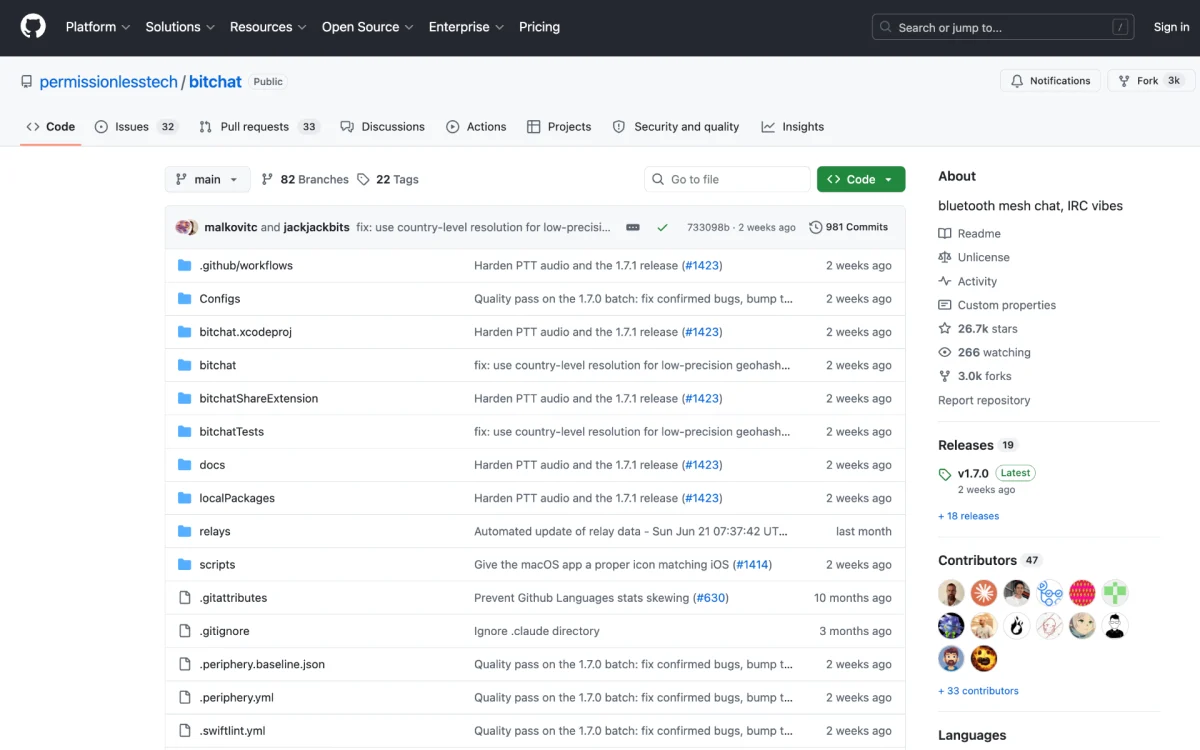
The Indian government’s recent attempt to compel GitHub into removing repositories associated with Bitchat, a decentralized, offline messaging application spearheaded by Jack Dorsey, has ignited a profound discussion regarding the legal justifications for regulating open-source software based on its inherent operational design. This contentious situation gained public attention following an announcement by Dorsey on X, where he revealed what appeared to be an official communication from India’s Ministry of Home Affairs. The directive reportedly instructed GitHub to limit access to three specific Bitchat repositories, imposing a stringent three-hour compliance deadline. The core of the government’s concern stems from the application’s anonymous, decentralized architecture, which authorities argue could inadvertently facilitate illicit activities and allow users to communicate unimpeded during periods of internet restrictions, thereby complicating lawful interception and traceability efforts.
This move by Indian authorities unfolds amidst a broader context of heightened digital surveillance and increasing internet restrictions, particularly following weeks of significant student-led demonstrations in New Delhi. These protests, triggered by alleged examination paper leaks, have seen thousands of young people take to the streets, demanding accountability and the resignation of Education Minister Dharmendra Pradhan. In response, authorities have not only imposed restrictions on public marches towards parliament but have also frequently suspended internet services in affected areas. It was during these communication blackouts that local media reported a surge in the adoption of offline messaging applications, including Bitchat and its peer, Briar, by protesters seeking to circumvent the digital blockade and maintain coordination.
The Rise of Decentralized Communication in a Controlled Digital Landscape
Bitchat represents a new generation of communication tools designed for resilience in environments where traditional internet infrastructure is compromised or controlled. Utilizing Bluetooth mesh networking, the application allows users to send messages to nearby devices, which then relay those messages across a network of users, effectively creating a localized communication grid independent of cellular data or Wi-Fi. This peer-to-peer functionality, coupled with its open-source nature, makes it particularly appealing in regions experiencing frequent internet shutdowns or pervasive surveillance.
The app’s appeal became acutely evident in India during the recent "cockroach movement" protests. Market intelligence data from Sensor Tower revealed a dramatic surge in Bitchat’s popularity within the country. Between July 17 and July 23, India accounted for approximately 85% of the app’s global downloads, a stark contrast to the mere 1% recorded in the preceding 30 days. Downloads in India skyrocketed, increasing thirty-two-fold on July 19 alone, leading to over 91,000 downloads within a five-day period. By Thursday, the application’s daily active users in India surpassed 330,000, marking an unprecedented level of engagement for the platform in the nation. This rapid adoption underscores a growing demand for resilient communication methods among citizens facing state-imposed communication restrictions.
India’s Evolving Digital Control Mechanisms
Historically, the Indian government has leveraged Section 69A of the Information Technology Act, 2000, alongside the Information Technology (Procedure and Safeguards for Blocking for Access of Information by Public) Rules, 2009, to issue nationwide content removal orders. These provisions grant the government powers to block public access to any information through any computer resource if it deems it necessary or expedient in the interest of India’s sovereignty and integrity, defense, security, friendly relations with foreign states, public order, or for preventing incitement to the commission of any cognizable offense relating to these. Prior to 2021, these rules primarily focused on specific content deemed unlawful.
However, the directive against Bitchat signals a potentially new and more expansive approach to digital governance. Mishi Choudhary, founder of SFLC.in, a prominent Indian digital rights legal advocacy group, observed that while the document shared by Dorsey bore the stylistic hallmarks of recent government takedown notices, the legal provisions cited within it appeared to lack clear authorization for demanding the wholesale removal of an entire software project based on its architectural design rather than any specific piece of illegal content it might host. Unlike conventional takedown requests that target individual posts, messages, or repositories containing specific unlawful material, this notice, dated July 23 and reportedly issued by the Indian Cybercrime Coordination Centre (I4C) under the Home Ministry, broadly argued that Bitchat’s ability to operate during internet blackouts and its serverless nature enable users to "circumvent lawful restrictions," thus impeding "lawful interception, attribution, and traceability." This represents a significant shift from targeting content to targeting the underlying technology itself.
Legal Ambiguity and Digital Rights Concerns
The legal implications of this directive are profound and contentious. Experts and digital rights advocates argue that applying existing content-blocking laws to an entire open-source software project based on its potential for misuse is legally tenuous and sets a dangerous precedent. The Internet Freedom Foundation (IFF), a New Delhi-based digital rights advocacy group, publicly questioned the practical efficacy of such a request. The IFF highlighted that "deleting a repository does not delete the application from any phone that carries it, and the mesh keeps functioning without servers. What the takedown actually prevents is scrutiny of the underlying code." This observation underscores the technical challenges governments face when attempting to suppress decentralized technologies, which are inherently designed to resist single points of failure or control.
Raman Chima, global program director at the Association for Progressive Communications, a global digital rights network, further emphasized that the apparent notice extended beyond merely targeting a messaging service. It seemingly aimed to suppress the open-source development of such products altogether, implying an attempt to dictate what kind of software can be developed and shared. This interpretation raises serious concerns about the future of open-source innovation and the broader principles of internet freedom.
Namrata Maheshwari, Asia Pacific policy manager and encryption policy lead at digital rights group Access Now, articulated the human rights implications. She stated that blocking an offline messaging platform during internet restrictions risks transforming shutdowns into a "communication blackout," thereby violating fundamental rights. Maheshwari stressed that in any democratic society, protesters possess the right to communicate privately and coordinate peacefully. The ability to access and utilize tools like Bitchat becomes critical for exercising these rights when traditional communication channels are suppressed.
GitHub, the platform targeted by the directive, has a stated policy of transparency regarding government takedown requests. While the company did not confirm receipt of this specific document, its principal online safety counsel, Rose Coogan, reiterated their standard procedure: "When we receive a complete government takedown request, we notify the affected account owners and give them an opportunity to appeal. We share every government takedown request we take action on publicly." As of Friday, Bitchat’s primary GitHub repositories remained accessible from India, and no recent requests related to Bitchat had appeared in GitHub’s public repository of government takedown notices, suggesting either the request was not fully processed, or GitHub had not yet complied.
Global Precedents and the Future of Open Source
This incident in India contributes to a growing global narrative where governments are grappling with the implications of rapidly evolving decentralized technologies. From encryption debates to the regulation of cryptocurrencies, states worldwide are attempting to assert control over digital spaces, often citing national security and public order concerns. The targeting of open-source code, however, introduces a new dimension to this struggle. Open-source software is foundational to much of the modern internet, promoting transparency, collaborative development, and security through peer review. Any attempt to suppress it based on its inherent design rather than specific illegal content could have chilling effects on innovation and digital freedoms globally.
The Indian government’s actions could set a precedent for other nations contemplating similar measures, influencing how software development and distribution are regulated worldwide. It highlights the inherent tension between a government’s desire for control and surveillance capabilities, and the fundamental rights of individuals to privacy, freedom of expression, and assembly. As digital tools become increasingly sophisticated and resilient to state control, the legal and ethical frameworks governing their use and development will continue to be tested. The Bitchat controversy is a stark reminder of this ongoing battle, forcing a re-evaluation of how societies balance security with the imperative of an open and free digital environment. The outcome of this particular challenge will undoubtedly resonate far beyond India’s borders, influencing the trajectory of digital rights and open-source development for years to come.