Amir Mahmud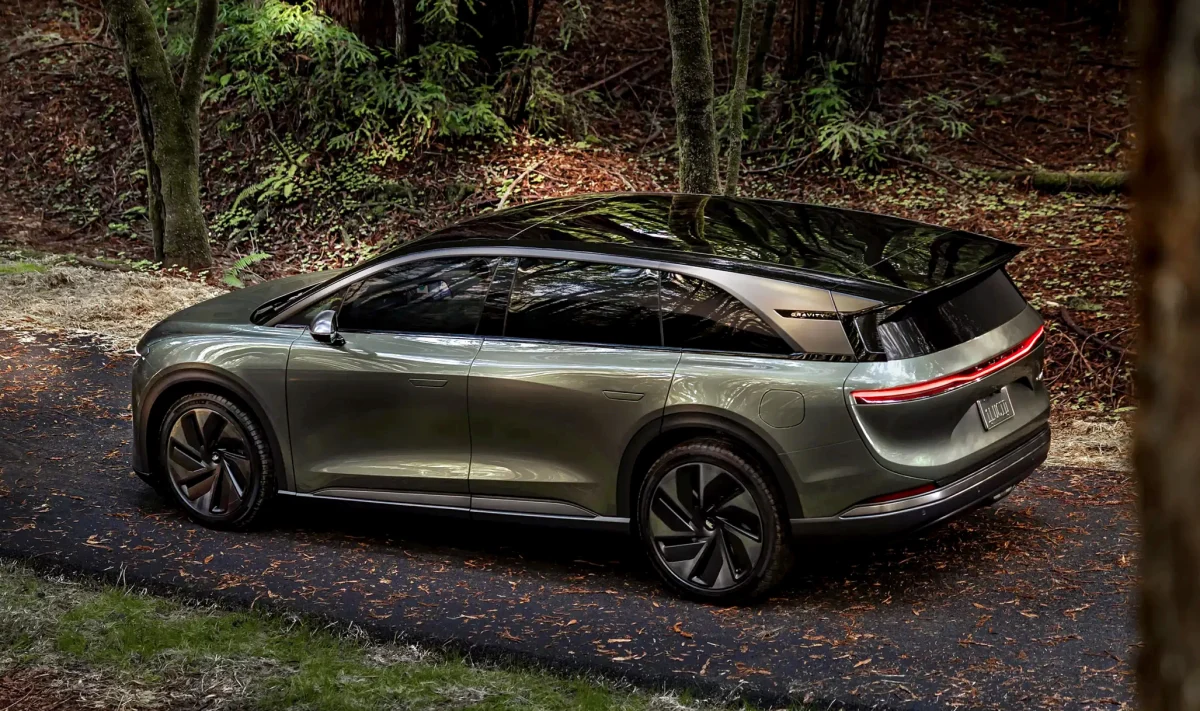
Luxury electric vehicle manufacturer Lucid Motors has vehemently refuted claims circulating about its consideration of filing for Chapter 11 bankruptcy protection. The denial comes as the company navigates a challenging automotive landscape, marked by intense competition, evolving consumer demands, and significant capital expenditure requirements inherent in scaling EV production.
The Genesis of Rumors and Immediate Market Reaction
The swirling speculation began with a report published by an electric vehicle blog, citing two anonymous sources who alleged that Lucid was weighing either a Chapter 11 bankruptcy filing or a move to go private. The report suggested these options were being considered on the recommendation of consulting firm AlixPartners. This unverified information triggered an immediate and dramatic reaction in the stock market. Lucid’s shares experienced their largest intra-day drop ever, plummeting more than 50% on Tuesday, a stark indicator of investor sensitivity to negative news in the volatile EV sector. While the stock later recovered some ground, it remained significantly lower than its opening price, underscoring the fragility of market confidence.
In response to the escalating rumors, Nick Twork, Lucid Motors’ chief communications officer, issued a definitive statement to TechCrunch, dismissing the reports as "completely false." He emphasized the company’s robust financial position, stating, "The company has sufficient liquidity to carry its operations well into next year, as recently published in its last quarterly filings, and it has not formed any special Board committee to explore the scenarios reported today." Twork further clarified that AlixPartners’ engagement with Lucid was solely focused on "strengthening its operations" and that the firm "has not recommended bankruptcy to management or the Board." This direct rebuttal aimed to stabilize investor sentiment and reaffirm the company’s strategic direction.
Lucid’s Strategic Adjustments and Financial Outlook
Lucid Motors, known for its high-performance, long-range luxury sedans like the Air, has been undertaking significant strategic adjustments to optimize its operations and prepare for future growth. The company recently appointed a new CEO, a move often indicative of a broader organizational recalibration. This leadership change is part of a series of initiatives designed to streamline processes and enhance execution.
In a challenging year, Lucid has also implemented substantial workforce reductions, laying off over 2,000 employees as part of a comprehensive restructuring effort. These personnel changes, coupled with the elimination of a second production shift at its Arizona manufacturing facility, are strategic decisions to align production capacity with anticipated market demand. While such measures can be unsettling, they are often seen by analysts as necessary steps for nascent automakers to achieve operational efficiency and manage cash burn in the capital-intensive automotive industry. The company’s stated focus remains on improving execution, strengthening operations, and leveraging its proprietary technology, products, and innovation to realize its full market potential. A critical component of this strategy is the anticipated launch of its smaller, more accessible electric SUV, the Gravity, later this year, which is expected to broaden Lucid’s market appeal beyond the ultra-luxury segment.
AlixPartners and the Landscape of EV Startups
The mention of AlixPartners in connection with potential financial distress immediately drew comparisons to other struggling electric vehicle ventures. AlixPartners is a prominent global consulting firm specializing in corporate restructuring, operational improvement, and turnaround management. Its involvement with companies often signals a period of intense scrutiny over financial health and operational efficiency, although not exclusively for bankruptcy scenarios.
The firm has a notable history of working with EV startups facing significant headwinds. For instance, Lordstown Motors, a company that aimed to produce electric pickup trucks, engaged AlixPartners in 2021 following the resignations of its CEO and CFO. While the firm assisted in restructuring efforts, Lordstown ultimately entered into a partnership with Taiwanese electronics giant Foxconn, a relationship that later dissolved, leading to Lordstown Motors’ eventual bankruptcy filing. Similarly, Faraday Future, another ambitious luxury EV startup, brought in AlixPartners in 2022 to help implement recommendations stemming from an internal probe. These precedents highlight the complex and often precarious journey for new entrants in the automotive industry, where even established consulting expertise cannot guarantee success.
Lucid’s situation, however, presents a different profile. Unlike Lordstown, which struggled with production and governance from early on, or Faraday Future, which faced repeated delays and financial instability, Lucid has successfully brought a highly acclaimed product to market, albeit in limited volumes. Its technology, particularly its powertrain efficiency and battery management, is widely recognized as industry-leading. Therefore, AlixPartners’ role with Lucid may be more focused on optimizing existing operations and supply chains rather than a full-scale financial restructuring, as the company’s communication officer indicated.
Challenges in the Luxury EV Market and Production Hurdles
Lucid Motors has historically faced an uphill battle in translating its impressive technological specifications—including record-breaking range and rapid charging capabilities—into substantial sales volumes. The luxury EV market, while growing, remains a niche segment with intense competition. Established players like Tesla’s Model S and X, alongside luxury giants such as Mercedes-Benz (with its EQ series), Porsche (Taycan), BMW (i7, i5), and Audi (e-tron series), offer compelling alternatives, often backed by extensive dealer networks and brand loyalty. Lucid’s premium pricing places its vehicles out of reach for many consumers, limiting its addressable market and necessitating high demand within a very specific demographic.
The company’s production and delivery figures have also been a point of concern for investors. In the second quarter of this year, Lucid delivered 3,953 vehicles, a modest increase from the same period last year. While any growth is positive for a startup, these numbers indicate a slower production ramp-up than initially anticipated and a struggle to meet aggressive volume targets. Automotive manufacturing is inherently capital-intensive, requiring massive investments in factories, tooling, and supply chains. Underperforming delivery numbers directly impact revenue generation and exacerbate cash burn, which can quickly erode investor confidence and fuel skepticism about a company’s long-term viability. The decision to cut a production shift further illustrates the company’s efforts to match output with actual sales, acknowledging that demand has not yet caught up with potential production capacity.
Future Prospects and Diversification Strategies
Despite the current challenges and market volatility, Lucid Motors is actively pursuing strategies to broaden its market appeal and diversify its revenue streams. The forthcoming launch of the Gravity SUV is pivotal. This vehicle represents a strategic pivot towards a more family-friendly and potentially higher-volume segment, moving beyond the ultra-luxury sedan market. SUVs and crossovers dominate global automotive sales, and an electric luxury SUV with Lucid’s technological prowess could unlock a significantly larger customer base.
Beyond direct consumer sales, Lucid is also venturing into the nascent but potentially lucrative robotaxi service market. The company has forged partnerships with Uber and Nuro, aiming to launch a luxury robotaxi service by the end of this year. These collaborations are particularly significant, as Uber has committed to purchasing at least 35,000 Nuro-equipped Lucid Motors vehicles over the next few years. This commitment includes 10,000 Gravity SUVs and 25,000 vehicles based on Lucid’s upcoming midsize EV platform. Such large-scale fleet orders provide guaranteed revenue streams, offer validation for Lucid’s core technology, and represent a crucial step towards diversifying its business model beyond direct retail sales of its high-end vehicles. This strategy could also leverage Lucid’s technology for autonomous driving applications, opening further avenues for growth.
Broader Market Context and Investor Sentiment
Lucid Motors’ current predicament is not entirely isolated; it reflects broader trends affecting the electric vehicle industry. After a period of explosive growth and speculative investment, the EV market has entered a more mature, and in some segments, a challenging phase often referred to as an "EV winter." Factors such as rising interest rates, persistent inflation, and general economic uncertainty have dampened consumer spending, particularly on big-ticket items like luxury vehicles. This tougher economic climate also makes it more difficult for EV startups to secure additional funding, as investors become more risk-averse and demand clearer paths to profitability.
The company’s majority ownership by Saudi Arabia’s Public Investment Fund (PIF) provides a substantial financial backstop, distinguishing Lucid from many other struggling EV startups that rely heavily on public markets or venture capital. The PIF’s deep pockets and long-term investment horizon offer a degree of stability and patience that is rare in the startup world. However, even with significant institutional backing, market perception and investor confidence remain critical for a publicly traded company. Rumors, even when swiftly denied, can create significant volatility and erode trust, impacting valuation and future fundraising efforts.
In conclusion, Lucid Motors stands at a critical juncture. While firmly denying bankruptcy rumors and asserting its robust liquidity, the company is concurrently executing a comprehensive strategic overhaul. This involves optimizing operations, expanding its product portfolio with the Gravity SUV, and diversifying into new business models like robotaxi services. The path ahead will demand meticulous execution and a compelling demonstration that its innovative technology can translate into sustainable commercial success amidst an increasingly competitive and scrutinized electric vehicle market.