Amir Mahmud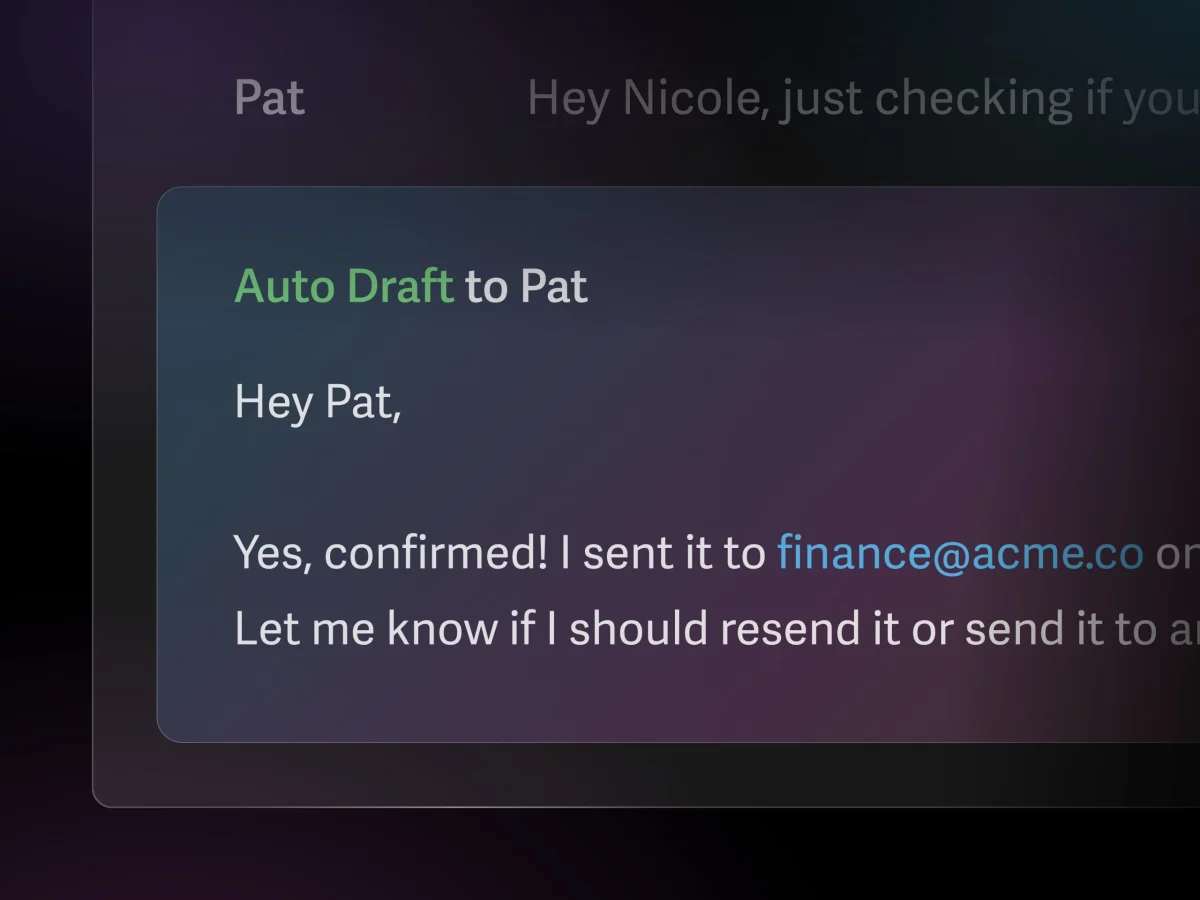
The ceaseless tide of digital correspondence, a ubiquitous feature of modern professional life, has long presented a formidable challenge to productivity and focus. As inboxes swell with an ever-increasing volume of messages, the quest for effective management tools has become more urgent than ever. Into this landscape steps Superhuman, a premium email client, with a significantly enhanced auto-draft feature designed to revolutionize how users interact with their email, moving beyond generic AI responses to offer highly personalized and context-aware replies.
The Persistent Challenge of Email Overload
Email, initially conceived as a revolutionary tool for asynchronous communication, has evolved into a central nervous system for businesses, personal networks, and global interactions. However, its very success has spawned an unintended consequence: email overload. Professionals across industries report spending a significant portion of their workday managing their inboxes, a task that often involves sifting through irrelevant messages, crafting thoughtful replies, and ensuring timely follow-ups. This constant cognitive load contributes to digital fatigue and can detract from core responsibilities, creating a bottleneck in personal and organizational efficiency.
Historically, the initial attempts to alleviate this burden were rudimentary, focusing primarily on categorization and basic filtering. Spam filters, introduced decades ago, were among the first AI-driven solutions to manage incoming mail. Later, features like "Smart Reply" in mainstream email platforms such as Gmail offered pre-written, short responses, but these were often generic and lacked the nuanced understanding required for professional correspondence. While they provided a quick fix for simple acknowledgments, they rarely captured the individual’s voice or the specific context of a complex conversation. This era highlighted a critical need for more sophisticated, personalized AI assistance that could genuinely mimic human communication style and intent.
Evolution of AI in Communication
The advent of large language models (LLMs) marked a pivotal turning point in AI’s capacity to engage with human language. These models, trained on vast datasets of text, gained the ability to understand context, generate coherent narratives, and even adopt specific tones. This breakthrough ignited a new wave of innovation across various sectors, including digital communication. Companies began exploring how LLMs could move beyond simple categorization or templated replies to generate truly bespoke, human-like text. Early implementations, while promising, often suffered from a lack of genuine personalization, sometimes producing replies that, as one beta user noted, sounded like an "overly enthusiastic AI salesperson" – an impression that undermined trust and adoption.
Superhuman, known for its focus on speed, keyboard-driven interface, and a minimalist design philosophy, has been at the forefront of integrating such advanced AI capabilities. The company’s journey with AI began with features like "instant replies" and earlier versions of auto-drafts. However, these iterations, often built on foundational models like GPT-3.5, were limited by their smaller context windows and less advanced reasoning capabilities. The challenge was to transcend these limitations, to create an AI that not only understood the literal meaning of an email but also absorbed the user’s unique communication style, professional persona, and specific conversational history. The recent acquisition by Grammarly and subsequent rebranding under the Superhuman banner further underscored its commitment to leveraging advanced linguistic AI to redefine the email experience.
Superhuman’s Next-Generation Auto-Drafting
The latest iteration of Superhuman’s auto-draft feature represents a significant leap forward in AI-powered email assistance. It intelligently identifies emails that likely require a response and then generates draft replies tailored to the user’s established tone and prior conversational context. A key enhancement is the provision of not just one, but two alternative drafts, offering users immediate options to choose from, or to serve as a starting point for minor edits. This multi-option approach acknowledges the inherent variability in human communication and the need for flexibility.
The efficacy of this new feature has been highlighted by early beta testers. For instance, scenarios where the AI successfully drafted responses agreeing to embargoes for press pitches, confirmed meeting schedules, or politely declined requests for authored content (accurately reflecting the user’s role and organizational policies) demonstrate a level of contextual understanding previously unseen. The ability to produce drafts requiring "little to no editing" in these situations is a testament to its improved accuracy and personalization.
Personalization is central to this new system. Users can fine-tune the AI’s understanding of their professional identity by navigating to Settings > Personalization. Here, they can input details about their role, company, and preferences, and even provide files or links for additional context. This granular control allows the AI to learn and adapt, progressively refining its output to mirror the user’s unique voice and professional requirements more accurately. The system is designed to be adaptive, learning from user interactions and corrections. An initial misstep, such as suggesting a meeting at an inconvenient time (e.g., post-midnight), can be corrected by the user, and the AI subsequently incorporates this feedback, avoiding similar errors in future drafts and offering more appropriate responses.
Under the Hood: Leveraging Advanced AI Models
The technological backbone of Superhuman’s advanced auto-drafting capability is a sophisticated blend of cutting-edge AI models. Rahul Vohra, co-founder of Superhuman, elucidated that while earlier features relied on older, less capable models like GPT-3.5, the new implementation leverages an "array of models." Specifically, the actual text generation is handled by "frontier models from both Anthropic and OpenAI." This strategic decision to employ best-in-class models signifies a commitment to harnessing the maximum available intelligence and contextual understanding.
The choice of frontier models from leading AI research labs implies access to larger parameter counts, more extensive training data, and superior reasoning abilities. These models are designed to handle complex language tasks, maintain coherence over longer contexts, and exhibit a more nuanced understanding of human intent and emotion. This multi-model approach allows Superhuman to cherry-pick the strengths of different AI architectures, ensuring robust performance, highly accurate contextual interpretation, and the generation of text that is not only grammatically correct but also stylistically appropriate and truly personalized. This blend of technologies is crucial for moving beyond the generic and into the realm of truly intelligent, adaptive assistance.
Real-World Impact and User Experience
The promise of this enhanced AI lies in its potential to significantly mitigate the burden of email management. For professionals inundated with thousands of emails monthly, a tool that can reliably draft responses to routine or even moderately complex inquiries can free up valuable time and mental bandwidth. While the prospect of completely handing over inbox control to AI may still be a step too far for many, the ability to rapidly address a significant portion of correspondence with minimal human intervention represents a substantial productivity gain.
Early metrics from the beta phase are encouraging. Vohra reported that 40% of auto-generated drafts were sent within a single day of generation, and a remarkable 60% of those were dispatched without any manual editing whatsoever. These figures suggest a high level of accuracy and user satisfaction, indicating that the drafts are often production-ready. This efficiency could transform workflows, allowing users to respond to a greater number of emails more promptly, thereby fostering better communication and responsiveness in their professional networks. The implication is not just about saving time but also about reducing the mental friction associated with email, making it a less daunting task.
Navigating the AI-Driven Inbox Economy
The proliferation of AI-powered drafting tools, while beneficial for individual users, also introduces a complex dynamic into the broader digital communication ecosystem. As AI makes it easier for professionals, such as communications and public relations specialists, to generate first drafts of emails, the sheer volume of messages circulating is likely to increase. This creates a feedback loop: AI helps senders craft emails more quickly, leading to more emails being sent, which in turn contributes to the very problem of inbox overload that AI is trying to solve for recipients.
This "AI-driven inbox economy" necessitates a careful balance. While efficiency is paramount, the authenticity of communication remains a critical consideration. The ability of Superhuman’s AI to learn and adapt to a user’s tone is key to maintaining a semblance of genuine human interaction, preventing the recipient from feeling they are conversing with a bot. However, the ethical implications of AI-generated communication, particularly in sensitive or highly personal contexts, will continue to be a subject of debate. Maintaining a "human-in-the-loop" approach, where AI assists but humans retain ultimate oversight and editing capabilities, appears to be the most responsible and effective strategy for now. The feature serves as an intelligent co-pilot, not an autonomous agent, ensuring that the final message truly reflects the sender’s intent and personality.
The Future of Personalized Digital Assistance
Looking ahead, Superhuman’s strategic vision extends beyond just email. The company, now under the Grammarly umbrella, is actively developing "Superhuman Go," an ambitious AI assistant designed to operate across multiple platforms and applications. The core innovation of Superhuman Go will be its ability to carry context seamlessly from one app to another, offering a unified and intelligent layer of assistance throughout a user’s digital workflow.
This cross-platform contextual awareness represents the next frontier in personal productivity AI. Imagine an AI that not only helps you draft an email based on previous conversations but also understands your calendar, project management tasks, and research notes, and can proactively offer assistance or insights across these disparate tools. This integrated approach aims to create a truly omnipresent and intelligent digital assistant that can anticipate needs, streamline tasks, and enhance productivity in a holistic manner. The journey from a specialized email client to a pervasive digital assistant underscores a broader industry trend towards integrated, intelligent, and context-aware AI tools that promise to reshape how individuals navigate their increasingly complex digital lives.
In conclusion, Superhuman’s advanced auto-draft feature marks a significant evolution in AI-powered communication, demonstrating the potential of sophisticated LLMs to provide genuinely personalized and effective assistance. While the digital landscape continues to evolve with both the benefits and challenges of AI proliferation, tools like Superhuman’s new offering underscore a future where intelligent automation plays a pivotal role in making digital communication more efficient, manageable, and ultimately, more human.