Amir Mahmud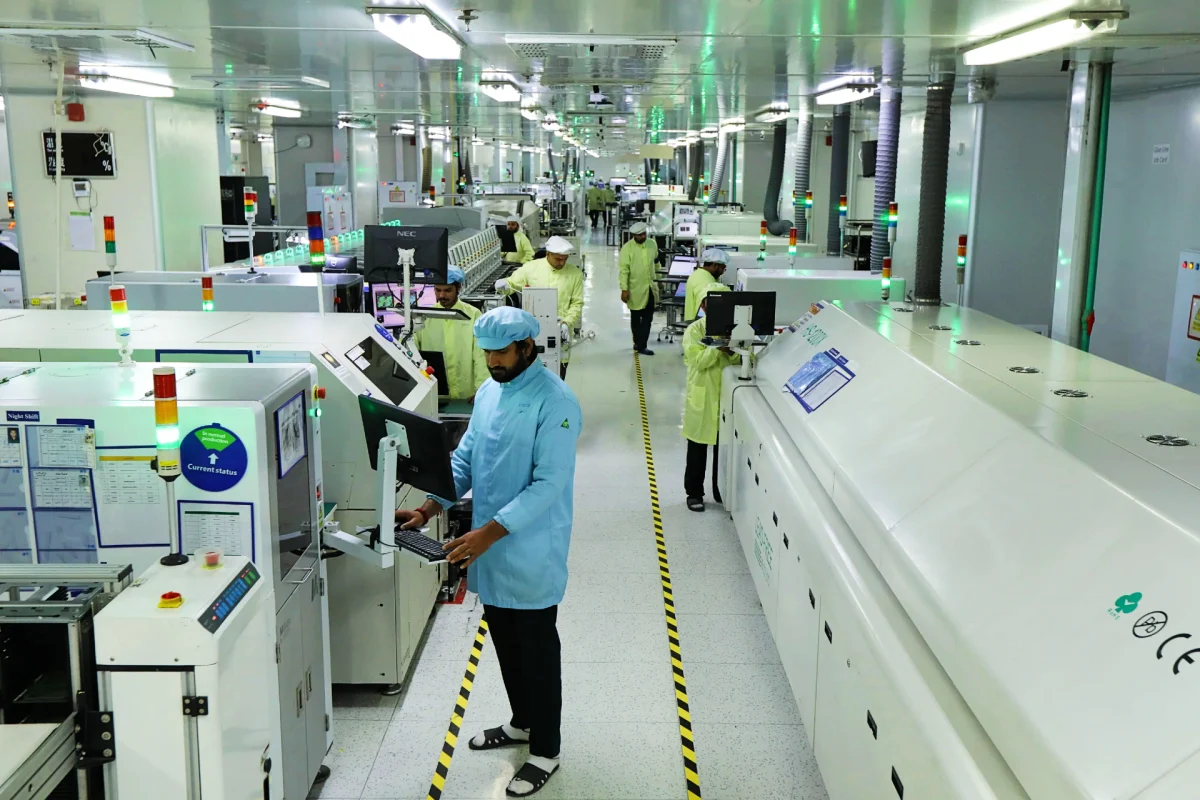
The Indian government has formally sanctioned a manufacturing joint venture between Chinese smartphone giant Vivo and local electronics manufacturing services provider Dixon Technologies, a pivotal development poised to redefine the landscape of smartphone production in the South Asian nation. This regulatory clearance, coming after a period of heightened scrutiny for investments originating from countries sharing a land border with India, marks a significant turning point, signaling a maturing phase for India’s ambition to become a global electronics manufacturing powerhouse, building upon the foundations laid by companies like Apple.
A New Paradigm for Foreign Investment
The approved partnership allows Vivo to move forward with a manufacturing collaboration initially announced in December 2024. This venture had been subject to rigorous review under investment guidelines introduced by New Delhi in 2020, which mandate enhanced governmental oversight for foreign direct investment (FDI) from nations contiguous to India – a category that explicitly includes China. Under the terms of the agreement, the joint venture will acquire specific manufacturing assets from Vivo, undertake the production of a portion of the company’s smartphone orders within India, and possesses the capability to manufacture electronic products for other brands. This detail was disclosed in a filing submitted by Noida-based Dixon to the stock exchange.
Crucially, the joint venture is structured with Dixon holding a majority 51% stake, while Vivo retains the remaining 49%. This particular equity arrangement is seen by industry observers as a potential blueprint for how Chinese smartphone manufacturers might navigate India’s evolving regulatory and geopolitical environment. It represents a notable departure from previous direct investment models, reflecting a broader trend wherein Chinese brands are increasingly opting for local partnerships to expand their manufacturing footprint in India. For an industry keenly observing the dynamics between foreign capital and domestic manufacturing capabilities, this majority-Indian-owned structure could become a standardized template, helping to broaden India’s smartphone manufacturing narrative beyond the significant contributions of Apple and its supply chain partners.
The "Make in India" Imperative
India’s journey towards becoming a significant global smartphone manufacturing hub is deeply intertwined with its ambitious "Make in India" initiative, launched in 2014 by Prime Minister Narendra Modi. This program aimed to transform the country into a global manufacturing and design hub, reducing reliance on imports and fostering domestic production across various sectors. The electronics sector, particularly smartphone manufacturing, quickly emerged as a key focus area due to its high value addition, employment generation potential, and strategic importance in a digitally connected world.
A cornerstone of this initiative in electronics has been the Production-Linked Incentive (PLI) scheme, introduced around 2020. This scheme offers financial incentives to companies based on their incremental sales from products manufactured in India, effectively encouraging both domestic and international players to set up or expand their manufacturing operations within the country. The PLI scheme has proven instrumental in attracting global electronics manufacturers, significantly boosting India’s role in the global smartphone production ecosystem. Companies that commit to increasing local value addition, investing in research and development, and meeting certain production targets are eligible for these incentives, making India an attractive destination for supply chain diversification efforts.
Historical Context and Geopolitical Undercurrents
The shift towards local partnerships, particularly for Chinese firms, cannot be fully understood without acknowledging the geopolitical tensions that have influenced India-China relations in recent years. The 2020 border clashes in the Galwan Valley, which resulted in casualties on both sides, profoundly impacted economic ties between the two nations. In the immediate aftermath, New Delhi tightened its foreign direct investment rules, specifically targeting investments from countries sharing a land border, to prevent opportunistic takeovers of Indian companies during the economic downturn caused by the COVID-19 pandemic. This regulatory change introduced an additional layer of government scrutiny and approval processes for such investments, significantly slowing down new Chinese capital inflows.
Beyond investment regulations, several Chinese smartphone brands, including Oppo, Vivo, and Xiaomi, have faced extensive tax and regulatory investigations in India over the past few years. These investigations often centered on alleged customs duty evasion, money laundering, or irregular remittances. Such scrutiny has created an environment of uncertainty for Chinese enterprises operating independently in India, making a majority stake for an Indian partner a more strategically sound and sustainable path forward. This approach not only addresses regulatory concerns but also aligns with India’s overarching policy goal of increasing local participation and control within its burgeoning manufacturing sector.
Apple’s Precedent and the Export Gap
Over the past few years, India has demonstrably emerged as a major global smartphone manufacturing hub, largely propelled by Apple and its extensive network of suppliers. Tech giants like Foxconn, Wistron (now largely acquired by Tata), and Pegatron have significantly expanded their iPhone production capabilities in the country. This strategic diversification has been driven by a global push for supply chain resilience, particularly after disruptions caused by the COVID-19 pandemic and geopolitical tensions between the United States and China, which prompted many companies to adopt a "China+1" strategy.
Currently, Apple holds a dominant position in India’s smartphone export market, accounting for a substantial 57% of the country’s smartphone exports by volume, according to data from Counterpoint Research. This figure underscores the success of Apple’s strategy in leveraging India as an export base. In stark contrast, Chinese brands, while commanding a formidable 72% share of India’s domestic smartphone market sales, contribute less than 10% to the country’s overall smartphone exports. This significant disparity highlights an immense untapped potential for Chinese manufacturers to scale up their export operations from India, mirroring Apple’s successful model. The Vivo-Dixon joint venture, with its emphasis on manufacturing for both domestic consumption and potential exports, aims to bridge this very gap, unlocking new avenues for growth and contribution to India’s trade balance.
The Dixon Advantage and Market Dynamics
For Dixon Technologies, India’s largest electronics manufacturing services (EMS) company, this joint venture represents a monumental opportunity for expansion and market consolidation. Dixon’s Managing Director, Atul Lall, indicated during the company’s May earnings call that the venture could add an annualized manufacturing volume of approximately 20 million to 22 million smartphones, based on Vivo’s current sales figures. This projected volume bump is highly significant for a publicly listed company whose growth trajectory is increasingly dependent on securing and executing large-scale manufacturing contracts.
Dixon’s expertise and established infrastructure make it an attractive partner. The company already manufactures smartphones for Xiaomi, another prominent Chinese brand, signaling its proven capability to handle high-volume production for major global players. This existing relationship reinforces Dixon’s position as a reliable and strategic partner in India’s rapidly expanding electronics manufacturing ecosystem, bolstering its reputation as one of the more dependable entities in the country’s ambitious build-out of its electronics sector. The partnership provides Vivo with a stable operating model that aligns with India’s policy directives, while simultaneously granting Dixon the scale and operational depth necessary to enhance local value addition and aggressively pursue export markets. This symbiotic relationship creates a "win-win" scenario, as noted by Tarun Pathak, research director at Counterpoint Research, who emphasized that the majority-Indian-owned structure offers Vivo greater policy alignment and Dixon the opportunity to deepen its manufacturing capabilities and export ambitions.
Broader Implications for India’s Economic Vision
The strategic alliance between Vivo and Dixon transcends the immediate commercial benefits for the involved parties; it carries broader implications for India’s long-term economic vision. The increasing localization of smartphone manufacturing, facilitated by such partnerships, is expected to create a multitude of direct and indirect employment opportunities across the manufacturing, supply chain, and retail sectors. This job creation is critical for a country with a large, young workforce. Furthermore, it fosters skill development and technological transfer, as Indian workers gain expertise in advanced manufacturing processes and quality control standards.
The establishment of robust local supply chains reduces India’s vulnerability to global supply shocks and foreign exchange fluctuations, contributing to economic resilience. As more components are sourced and manufactured domestically, the country moves closer to self-reliance in critical sectors. This initiative also enhances India’s global standing as a viable alternative manufacturing hub to traditional powerhouses, attracting further foreign investment and boosting its export revenues. The success of the smartphone manufacturing sector could serve as a model for other electronics segments, such as consumer durables, IT hardware, and automotive electronics, accelerating India’s transformation into a comprehensive global manufacturing destination.
Challenges and the Road Ahead
While the Vivo-Dixon joint venture represents a significant step forward, challenges persist. India still needs to further develop its indigenous component ecosystem, moving beyond mere assembly to deeper levels of manufacturing, including semiconductor fabrication and advanced display technologies. Ensuring consistent quality control, managing logistical complexities, and navigating a dynamic global trade environment will also be crucial. Furthermore, the competitive landscape is intense, with established players and new entrants vying for market share and government incentives.
Despite these hurdles, the approval of the Vivo-Dixon partnership underscores a clear commitment from the Indian government to foster domestic manufacturing while carefully managing foreign investment, particularly from geopolitical rivals. This approach seeks to balance economic growth with national security and self-reliance objectives. As India continues to refine its policies and infrastructure, partnerships like the one between Vivo and Dixon are instrumental in propelling the nation towards its aspiration of becoming a truly formidable global force in high-tech manufacturing, reducing its dependence on single-source supply chains, and solidifying its position in the global economy. The evolving dynamics suggest a future where ‘Made in India’ smartphones, irrespective of brand origin, become a common sight in global markets, fulfilling a key aspect of the nation’s ambitious economic agenda.