Amir Mahmud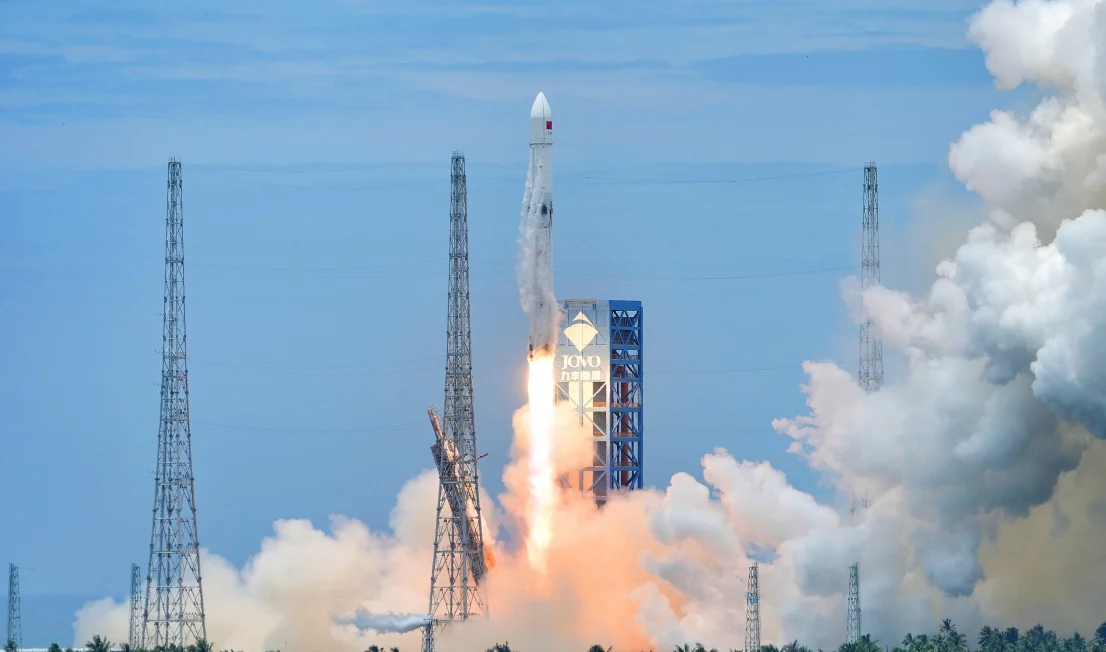
China has marked a significant milestone in its ambitious space program, successfully executing the first sea-based recovery of a Long March series rocket booster. This pivotal achievement, accomplished by the state-owned China Aerospace Science and Technology Corporation (CASC), positions China as only the second nation globally to demonstrate this sophisticated reusability capability, a feat previously mastered primarily by SpaceX. The demonstration, which saw the booster return to a seagoing recovery vessel, underscores Beijing’s accelerating trajectory in advanced rocketry and its commitment to fundamentally altering the economics of space access. CASC has articulated its intent to attempt the reuse of this recovered booster, which boasts a payload capacity comparable to SpaceX’s widely utilized Falcon 9, by the close of the current year.
A New Era of Access: The Reusability Imperative
The pursuit of reusable rocket technology represents a paradigm shift in space exploration and commercialization. Historically, space launches have been prohibitively expensive, primarily due to the single-use nature of rocket components. Each mission necessitated the construction of an entirely new launch vehicle, akin to discarding an airplane after a single flight. This model constrained the frequency of launches and limited the scale of space-based endeavors.
The landscape began to transform dramatically with the advent of private space companies, notably SpaceX. Led by Elon Musk, SpaceX pioneered the development of reliable, routinely reusable orbital-class rockets. The Falcon 9, first achieving a successful propulsive landing of its first stage in December 2015, revolutionized the industry. This breakthrough dramatically reduced launch costs by allowing the most expensive component of the rocket – the first stage booster – to be refurbished and flown multiple times. This innovation has been instrumental in enabling projects like the Starlink satellite internet constellation, which demands frequent and cost-effective launches to deploy and maintain thousands of satellites in low Earth orbit. The economic advantages of reusability extend beyond commercial ventures, significantly impacting government agencies like NASA and the U.S. Space Force, which now benefit from more affordable and frequent access to space.
China’s Distinct Approach to Booster Recovery
While sharing the overarching goal of cost reduction through reusability, China’s CASC has adopted a distinctive technical approach to booster recovery. Unlike SpaceX’s Falcon 9, which deploys landing legs to execute a precise, propulsive vertical landing on a drone ship or landing zone, China’s method involves a large netting system strung across a specialized recovery vessel. The descending rocket is guided into this net, where it is captured.
This sophisticated maneuver demands exceptional precision and reliability across several critical systems. The booster must possess highly advanced guidance and navigation software, integrating an array of sensors to track its position and trajectory with extreme accuracy. Crucially, the rocket engines must be robust enough to restart multiple times during the descent, providing controlled thrust for atmospheric re-entry and guidance. Furthermore, these engines and the rocket structure itself must be ruggedized to withstand the immense thermal and aerodynamic stresses of returning through Earth’s atmosphere. Each method presents its own set of engineering challenges and operational complexities. The netting system, for instance, might offer advantages in terms of potentially reducing the weight of the booster by eliminating heavy landing legs, but it places significant demands on the recovery vessel and the precision of the booster’s terminal guidance.
Geopolitical Implications and Market Shifts
The successful demonstration of reusable rocket technology by China carries profound geopolitical and market implications. While international regulations and national security concerns largely segment the global launch market – typically dividing it between U.S./European providers and those from Russia/China – Beijing’s advancement will reshape the competitive landscape within its sphere of influence.
A primary impact will be on the burgeoning market for satellite communications and orbital data services. With access to cheaper, more frequent launches, China can rapidly deploy and expand its own satellite constellations, such as its planned GuoWang broadband network, directly challenging the global market dominance of services like Starlink. This competition is anticipated to intensify particularly in regions like Africa, the Middle East, and Southeast Asia, where reliable and affordable internet access is in high demand and where China has actively sought to expand its economic and technological footprint. Providing competitive satellite services backed by a robust and cost-effective launch infrastructure could serve as a powerful tool for China’s digital Silk Road initiatives, fostering closer technological ties with developing nations.
From a strategic military perspective, the erosion of a perceived technological advantage held by the United States in space is a significant concern. Reusable launch systems enable rapid replenishment of orbital assets, enhancing resilience and responsiveness in a potential conflict scenario. If China can launch satellites more frequently and at lower cost, it could diminish the U.S. military’s current edge in deploying and maintaining its critical space-based reconnaissance, communication, and navigation capabilities. This shift underscores the evolving nature of space as a contested domain, where technological parity in key areas like reusability becomes a critical component of national power projection.
The Shadow of Starlink and International Rivalry
SpaceX’s Falcon 9, with its proven reusability, has not only facilitated commercial ventures but has also become a strategic asset for the U.S. government. Its consistent performance and cost-effectiveness underpin the deployment of the Starlink constellation, which has demonstrated significant strategic utility, particularly in conflict zones like Ukraine, where it has provided vital communication links. This dual-use capability has not gone unnoticed by geopolitical rivals.
Recent investigative reports have highlighted alleged cooperation between China and Russia aimed at developing methods to counter or disrupt Starlink’s operations. Such efforts underscore the strategic importance of satellite internet constellations and the intense rivalry to control or deny access to space-based communication. Against this backdrop, China’s reusability achievement is not merely a technical triumph but a clear signal of its intent to build a resilient and competitive space infrastructure capable of supporting its national interests and projecting its influence.
Looking ahead, SpaceX itself is pushing the boundaries with its much larger Starship rocket system, designed to be fully reusable from booster to upper stage. Starship aims to revolutionize heavy-lift capabilities, enabling ambitious missions to the Moon and Mars, as well as highly efficient point-to-point travel on Earth. While a recent orbital test flight yielded mixed results, highlighting the immense engineering challenges, SpaceX remains committed to further attempts, with a static fire test of the colossal booster recently completed successfully. Should Starship achieve its full potential, it could once again redefine the benchmarks for space access, potentially creating a new competitive gap. However, its developmental timeline provides a window for other nations and companies to mature their current-generation reusable technologies.
A Global Race: Other Contenders in Reusability
The global push for reusable rockets extends beyond the U.S.-China dynamic, encompassing a diverse array of international players. In the United States, Jeff Bezos’s Blue Origin is a prominent contender, developing the New Glenn heavy-lift rocket with a reusable first stage. Blue Origin has successfully recovered and subsequently reused a booster in its test flights, demonstrating its own technical prowess. Nevertheless, the inherent difficulties of rocketry were underscored by a recent incident where a New Glenn rocket experienced an anomaly on the launch pad, leading to an explosion and delaying further testing. This incident serves as a stark reminder of the complex and unforgiving nature of spaceflight development.
Other U.S. companies are also making strides. Rocket Lab is developing its Neutron rocket, explicitly designed with a reusable first stage to service the growing demand for medium-lift launches. Stoke Space, an emerging player, is focused on creating a fully reusable rocket system, with testing anticipated within the year. In Europe, the ArianeGroup is investing in its "Themis" demonstrator program, exploring technologies for future reusable stages for its next-generation launchers. These global efforts collectively highlight that reusability is no longer a niche concept but a foundational pillar for the future of space exploration and commercialization.
Conclusion
China’s successful sea-based recovery of a Long March booster marks a pivotal moment in the global space race. It not only signifies a remarkable engineering achievement but also signals China’s firm resolve to become a dominant force in space, challenging established norms and reshaping the geopolitical and economic landscape of orbital access. As nations and private entities continue to innovate, the era of routine, affordable, and sustainable access to space is rapidly becoming a reality. This intense competition, characterized by diverse technological approaches and strategic ambitions, promises to drive unprecedented advancements in space capabilities over the coming decade, with profound implications for technology, commerce, and global power dynamics.