Amir Mahmud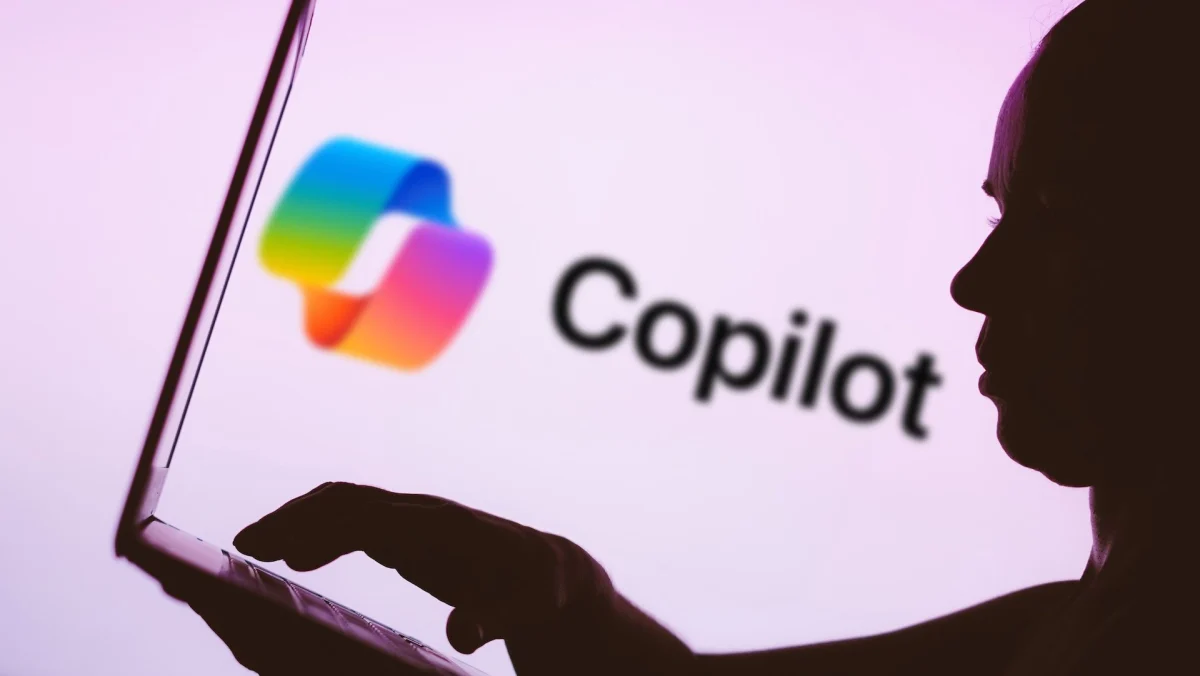
OpenAI, a pivotal force in the artificial intelligence domain, recently declared its newly unveiled GPT 5.6 as the "preferred model" for Microsoft’s ubiquitous Copilot 365 suite. This announcement, made public during the launch of the advanced language model, directly addresses burgeoning speculation regarding the evolving relationship between the two technology titans. The declaration follows closely on the heels of a Bloomberg report indicating Microsoft’s increasing deployment of its proprietary in-house AI models, dubbed MAI, within applications like Word and Excel, ostensibly as a strategy to mitigate operational costs associated with external AI services.
A Partnership Under Scrutiny
The narrative surrounding Microsoft and OpenAI has been one of deep strategic alliance, characterized by significant financial investment and technological integration. However, recent developments have introduced a nuanced layer to this seemingly indivisible bond. The Bloomberg report, widely disseminated earlier this week, highlighted Microsoft’s internal pivot, suggesting a gradual reduction in its reliance on OpenAI’s foundational models for certain functionalities within its vast software ecosystem. This shift immediately fueled a wave of "breakup chatter" across tech media and financial markets, prompting questions about the long-term trajectory of their intricate collaboration. The concern was that if Microsoft, OpenAI’s largest benefactor and primary commercialization partner, began to cultivate its own robust AI capabilities, it could signal a cooling of the partnership or a strategic diversification that might lessen OpenAI’s influence.
OpenAI’s subsequent announcement regarding GPT 5.6 appears to be a calculated move to stabilize the narrative and reinforce its indispensable role in Microsoft’s AI strategy. By designating GPT 5.6 as the "preferred model" for Copilot 365, OpenAI aims to underscore the continued depth of their technological integration, reassuring stakeholders that its advanced AI remains central to Microsoft’s flagship productivity tools.
The Genesis of an AI Alliance
To fully appreciate the current dynamics, a look back at the origins of the Microsoft-OpenAI partnership is essential. The collaboration formally began in 2019 when Microsoft made an initial $1 billion investment in OpenAI, then a relatively nascent AI research laboratory. This investment was revolutionary, granting Microsoft exclusive rights to commercialize OpenAI’s breakthroughs through its Azure cloud platform. At the time, OpenAI was structured as a non-profit, but this investment marked a strategic shift towards a "capped-profit" model, allowing it to raise capital while maintaining its core mission of developing safe and beneficial artificial general intelligence.
The partnership deepened significantly in 2021 with another substantial, albeit undisclosed, investment, and culminated in early 2023 with a multi-billion dollar commitment, widely reported to be around $10 billion. This unprecedented financial backing solidified Microsoft’s position as OpenAI’s most crucial partner, providing the immense computational resources (primarily through Azure’s supercomputing infrastructure) necessary to train and deploy increasingly sophisticated large language models like GPT-3, GPT-4, and now GPT 5.6.
This alliance was not merely financial; it was deeply symbiotic. OpenAI gained access to Microsoft’s vast computing power and global enterprise reach, accelerating its research and deployment efforts. Microsoft, in turn, secured a significant competitive advantage in the burgeoning AI race, integrating OpenAI’s cutting-edge models into its product lineup, from the revitalized Bing search engine to the revolutionary Microsoft 365 Copilot. The partnership even weathered a leadership crisis at OpenAI in November 2023, during which Microsoft played a crucial role in negotiating stability, underscoring the profound interdependence between the two entities.
Microsoft’s Strategic Imperative: Cost and Control
Despite the outward appearance of a seamless partnership, the underlying economics and strategic imperatives for a tech giant like Microsoft are complex. Operating advanced large language models at scale, especially for a user base of hundreds of millions, incurs astronomical computational costs. Each query processed by a sophisticated model like GPT-4 or its successors requires significant processing power, translating into substantial operational expenses.
Microsoft’s reported pivot towards its in-house MAI models is a pragmatic response to these economic realities. By developing and deploying its own AI, even if initially for simpler or more routine tasks within applications like Word and Excel, Microsoft can gain greater control over its operational expenditures. Internal models can be optimized for specific Microsoft workloads, potentially leading to greater efficiency and lower inference costs compared to licensing and running external models, even from a close partner. This move also provides Microsoft with a degree of strategic independence, reducing its sole reliance on an external vendor, which is a common strategy for large technology companies seeking to diversify their supply chains and intellectual property. The ability to fine-tune models directly for its proprietary data and user interactions offers further advantages in terms of customization and data security.
OpenAI’s Reaffirmation: The Role of GPT 5.6
Against this backdrop of evolving strategies, OpenAI’s announcement about GPT 5.6 carries considerable weight. The new model, launched with much anticipation, is positioned as the "preferred model" for Microsoft 365 Copilot, a suite of AI-powered productivity tools integrated across Microsoft’s ecosystem, including Word, Excel, PowerPoint, and Cowork. This designation aims to convey that for the most critical and complex AI tasks within Copilot 365, OpenAI’s technology remains the foundational engine.
In a blog post accompanying the announcement, OpenAI articulated, "Our partnership with Microsoft has always been about bringing the benefits of advanced AI to more individuals and organizations, and we’re excited to continue building on that shared commitment." This statement emphasizes continuity and shared vision, attempting to dispel notions of a strained relationship. For OpenAI, securing the "preferred model" status for such a prominent product is vital. It guarantees a continued stream of revenue and, perhaps more importantly, access to a massive user base that generates invaluable data for further model training and refinement. It also reinforces OpenAI’s market position against a growing cohort of competitors, including Google, Anthropic, and Meta, all vying for supremacy in the enterprise AI space.
Navigating Ambiguity: What "Preferred" Truly Means
While OpenAI’s declaration serves as a powerful counter-narrative to the "breakup chatter," the exact implications of "preferred model" remain open to interpretation. The term itself is inherently ambiguous. It does not necessarily imply exclusivity, nor does it explicitly negate Microsoft’s increased usage of its internal MAI models. It is entirely plausible, and indeed strategically sensible, for Microsoft to adopt a hybrid AI architecture. In such a setup, GPT 5.6 could handle complex, nuanced tasks requiring advanced reasoning and language generation, leveraging its superior capabilities. Concurrently, MAI models could be deployed for more routine, cost-sensitive operations or specialized internal tasks where efficiency and proprietary control are paramount.
This "best-of-both-worlds" approach would allow Microsoft to optimize for both performance and cost. For example, generating a sophisticated summary of a long document in Word or crafting a complex data analysis in Excel might still be powered by GPT 5.6, while simpler auto-completion or formatting suggestions could be handled by MAI. Such a strategy is common in large-scale software development, where different components are chosen based on their optimal fit for specific functions, rather than a monolithic reliance on a single provider.
Broader Market and Ecosystem Ramifications
The evolving dynamics between OpenAI and Microsoft offer significant insights into the broader AI market. Firstly, they underscore the immense costs associated with deploying and scaling advanced generative AI models. As AI becomes more ubiquitous, companies are under increasing pressure to find cost-effective solutions, leading to the development of smaller, more specialized, and internally optimized models.
Secondly, this situation highlights a growing trend among major tech companies: the pursuit of a "hybrid" AI strategy. Rather than committing solely to external vendors or entirely to in-house development, many enterprises are likely to cultivate a diverse portfolio of AI models. This approach allows them to harness the cutting-edge innovation of leading AI labs like OpenAI while simultaneously building proprietary capabilities for cost efficiency, customization, and strategic independence. This trend could foster a more diversified AI ecosystem, with opportunities for specialized model providers and AI infrastructure companies.
Finally, the public maneuvering between OpenAI and Microsoft illustrates the intense competitive landscape in AI. Every announcement, every reported shift in strategy, is scrutinized for its potential impact on market share, innovation leadership, and the long-term viability of partnerships. The "preferred model" designation, while technically significant, also functions as a powerful piece of strategic communication, designed to maintain market confidence and reinforce OpenAI’s critical position in the global AI hierarchy. The partnership, far from dissolving, appears to be evolving into a more mature and strategically complex relationship, reflecting the rapidly changing demands and opportunities within the artificial intelligence sector. The future of AI collaboration will likely involve a delicate balance of deep integration, strategic independence, and continuous adaptation to technological advancements and economic realities.







 Azin Asro