Amir Mahmud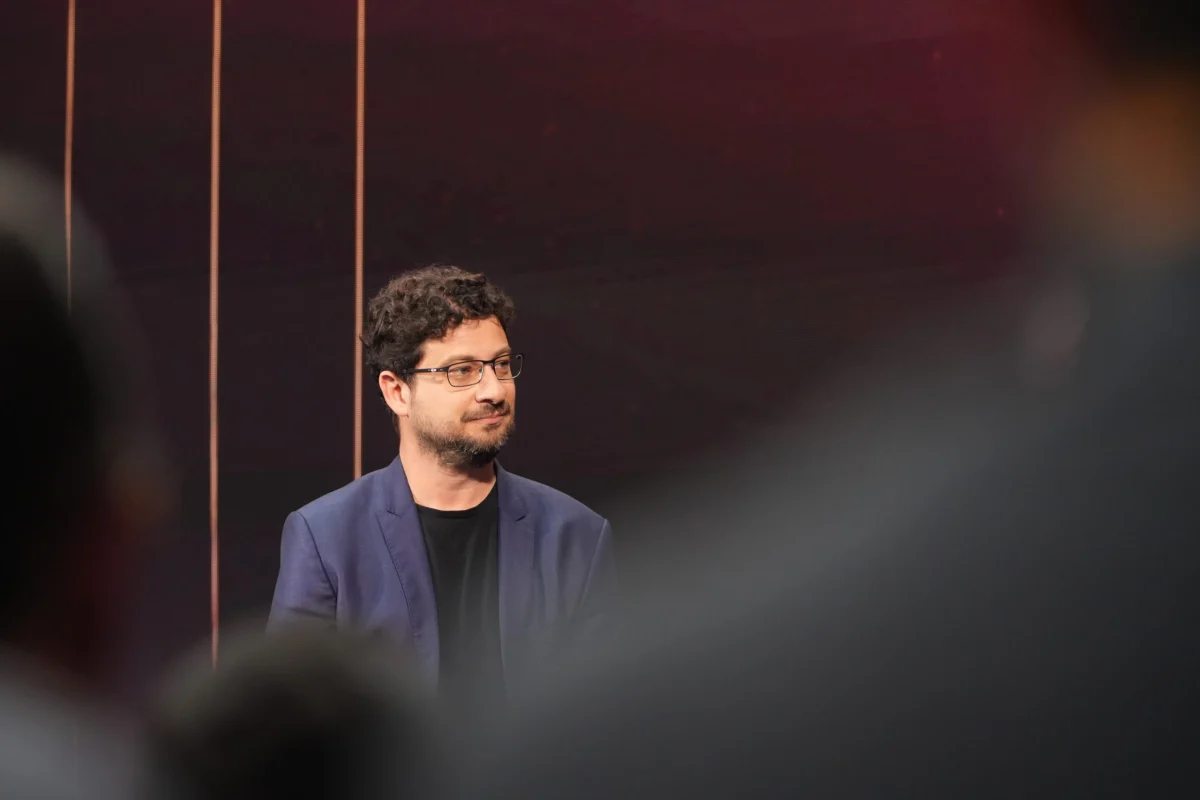
Jean-Baptiste Kempf, the visionary lead developer behind the globally ubiquitous VLC Media Player, is now channeling his profound expertise in real-time media processing into a new venture poised to underpin the coming age of robotics. With VLC, the free video player distinguished by its distinctive orange traffic-cone icon, Kempf helped democratize digital media consumption, seeing it downloaded over six billion times worldwide. Now, he anticipates an equally transformative shift with the widespread deployment of autonomous machines, predicting that "hundreds of millions of robots and drones" will soon become an integral part of our daily lives and industrial landscapes.
The Visionary Behind VLC’s Ubiquity
Kempf’s journey from a student project at École Centrale Paris to leading one of the most successful open-source software initiatives in history provides critical context for his current ambitions. VLC Media Player, originally VideoLAN Client, emerged in the late 1990s as a solution for streaming video across a campus network. Its open-source nature, coupled with its ability to play virtually any video or audio format without requiring additional codecs, quickly propelled it to global prominence. This accessibility and robust performance made it a staple for internet users across diverse operating systems. The philosophy of open source, championing collaborative development and universal access, has been a cornerstone of Kempf’s career, fostering a community-driven approach to complex technological challenges. This experience instilled in him a deep understanding of building highly efficient, scalable, and adaptable software infrastructure that can serve a vast and varied user base, a skill set proving invaluable in his current endeavors.
Pivoting to the Physical AI Frontier
Convinced that the future will be populated by vast fleets of intelligent, interconnected machines, Kempf, a French serial entrepreneur and open-source luminary, has founded Kyber. This Paris-based startup is developing an essential infrastructure layer designed for the real-time control and synchronization of remote devices. At its heart is a sophisticated Software Development Kit (SDK) engineered to integrate and synchronize critical data streams—video, audio, sensor telemetry, and control inputs—with an unprecedented level of minimal latency. This innovation aligns perfectly with the burgeoning field of "physical AI," which refers to artificial intelligence systems that interact with the real world through robotic bodies, drones, and other autonomous agents.
The rise of physical AI is driven by a confluence of factors, including advancements in sensor technology, computing power, machine learning algorithms, and network connectivity. Industries from logistics and manufacturing to agriculture, defense, and urban infrastructure are increasingly looking to deploy autonomous systems for efficiency, safety, and scalability. This transition from static, factory-bound robots to mobile, adaptive agents operating in complex, dynamic environments presents significant technological hurdles, particularly in ensuring reliable and instantaneous control, a gap Kyber aims to fill.
Kyber’s Foundational Technology: Bridging Real-Time and Remote
Kyber’s fundamental offering, the SDK, is more than just a software library; it is a meticulously engineered platform built to manage the intricate dance between remote human operators or AI systems and physical machines. The synchronized delivery of video, audio, and sensor data is crucial for situational awareness, allowing operators or AI to "perceive" the remote environment accurately. Simultaneously, the low-latency transmission of control inputs ensures that commands are executed almost instantaneously, bridging the physical distance with digital immediacy. This capability is paramount for tasks requiring precision and responsiveness, such as remotely piloting a drone through a hazardous environment, manipulating robotic arms in a distant factory, or overseeing autonomous vehicles navigating urban landscapes.
Kempf’s background in video streaming, particularly from his tenure as CTO at the cloud gaming startup Shadow, provides a strong foundation for Kyber’s technological approach. Cloud gaming demands extremely low latency to provide a seamless user experience, mirroring the real-time requirements of controlling physical devices. The company’s name itself, "Kyber," is a deliberate nod to the fictional lightsaber crystals in the Star Wars universe, symbolizing the precision and responsiveness vital for real-world remote control. This convergence of expertise in high-performance video streaming and the intricate demands of Internet of Things (IoT) optimization is central to Kyber’s strategy, ensuring that performance can be meticulously tuned to a device’s available computational resources, even at massive scale.
The Imperative of Low Latency
In the realm of physical interactions, every millisecond carries significant weight. Kempf emphasizes that "If you control things in the real world, every millisecond matters." This isn’t just about user convenience; it’s about operational integrity and safety. For an autonomous delivery drone navigating unpredictable urban airspaces, a fraction of a second delay in processing sensor data or executing a corrective maneuver could lead to catastrophic outcomes. Similarly, in remote surgical applications or hazardous material handling, precise, instantaneous feedback and control are non-negotiable.
Traditional remote control systems often contend with inherent delays caused by network infrastructure, data processing, and rendering. Kyber’s innovation lies in its ability to dramatically reduce these latencies by optimizing every step of the data pipeline, from device capture to remote command execution. This focus on minimizing lag is a direct application of the deep technical knowledge gained from perfecting video streaming for billions of users and adapting it to the far more stringent demands of physical control.
Scaling Remote Operations: A Market in Need
The challenge Kyber addresses is not entirely new; large organizations with specific, high-stakes needs have previously developed bespoke software for their unique remote control use cases, such as tele-operated driving. However, these solutions are typically proprietary, incredibly expensive, and designed for relatively contained fleets, perhaps managing a few thousand vehicles at most. Kempf highlights the critical distinction: "The largest fleets today have maybe 2,000 or 3,000 vehicles. Imagine you need to manage millions of them; that’s not the same thing."
This exponential leap in scale presents a monumental challenge. Managing millions of diverse robots and drones requires a foundational platform capable of robust network management, secure communication, efficient data processing, and sophisticated distributed system architecture. Furthermore, the concept of "observability"—the ability to understand the internal state of a system from its external outputs—becomes paramount. When AI agents, rather than human operators, are tasked with managing entire fleets and complex networks, knowing that these systems are functioning correctly, securely, and optimally is not just a convenience, but a critical operational requirement. Beyond these large-scale deployments, even at a smaller scale, the benefits are tangible, such as the ability to push software updates to devices remotely, eliminating the logistical nightmare and cost of physically accessing every unit.
Strategic Investments for a Connected Future
The immense potential of Kyber’s platform has not gone unnoticed by the venture capital community. The startup successfully raised a $5 million funding round led by Lightspeed Venture Partners, a firm with a notable track record in backing transformative technologies, including foundational AI companies like Anthropic and Mistral AI. Lightspeed’s investment rationale underscores the criticality of Kyber’s mission: "Physical AI is only as good as the underlying systems running it." This statement encapsulates the understanding that even the most advanced AI algorithms are limited by the quality, speed, and reliability of the infrastructure that enables them to interact with the physical world. For investors, Kyber represents an essential building block for the next generation of automation, providing the foundational stability and performance required for widespread adoption of autonomous systems.
The Hybrid Model: Open Source Meets Enterprise
Staying true to Kempf’s open-source roots, Kyber operates with a hybrid business model. The core project, the foundational SDK for real-time remote control, is open source. This approach encourages community contribution, fosters transparency, and allows for broad adoption and innovation across the developer ecosystem. However, for enterprise clients requiring robust support, advanced features, and customized deployments, Kyber offers a productized version of its platform.
To facilitate complex enterprise integrations, Kyber employs a significant team of "forward-deployed engineers" (FDEs). These highly skilled engineers work directly with clients, providing hands-on support, customizing the platform to specific operational needs, and ensuring seamless integration with existing systems. This model, reminiscent of firms like Palantir, acknowledges that while the core technology is universal, its application within diverse industrial contexts often requires specialized expertise and tailored solutions. Kyber’s team, currently comprising 25 full-time staffers, is strategically distributed across offices in Paris (headquarters), San Francisco, and Singapore, reflecting its ambition to serve a global clientele across various industries.
Targeting the Next Wave of Automation
Kyber has strategically prioritized three key market segments for its initial focus: robotics, drones of every kind, and remote IT access. In the robotics sector, the platform aims to enable more sophisticated control of industrial robots, service robots, and emerging delivery and exploration bots. For drones, Kyber is targeting applications ranging from infrastructure inspection and surveillance to advanced logistics and agricultural management.
Perhaps surprisingly, remote IT access is another strong area of demand. While less glamorous, Kempf sees Kyber as a potential disruptor in this space, aspiring to be far more than just a "Citrix challenger." Traditional remote IT solutions primarily focus on accessing software or virtual desktops. Kyber, however, extends this capability to the remote control and management of physical IT infrastructure and devices, offering a substantial expansion of the total addressable market. The problem of robust, scalable remote device management has long plagued industries, with many companies spending years and millions developing isolated, custom solutions. Kyber’s ambition is to provide a universal, shareable version that democratizes access to this critical capability.
Beyond the Horizon: The Societal Implications of Ubiquitous Robotics
As Kyber lays the groundwork for a future teeming with "hundreds of millions of robots and drones," the broader societal and cultural implications warrant consideration. This widespread automation promises unprecedented levels of efficiency, potentially transforming everything from logistics and urban planning to healthcare and environmental monitoring. New services and industries will undoubtedly emerge, driven by the capabilities of these connected machines. However, the societal impact will also necessitate careful navigation of ethical considerations, workforce adaptation, and the development of robust regulatory frameworks to ensure equitable and beneficial deployment. Jean-Baptiste Kempf, a figure who fundamentally reshaped how we interact with digital media, is now embarking on a journey to build the foundational architecture for how humanity will interact with and manage the physical world through an increasingly intelligent and autonomous machine population. Kyber stands as a testament to the ongoing evolution of technology, transforming the infrastructure of connectivity to empower the next era of innovation.