 Amir Mahmud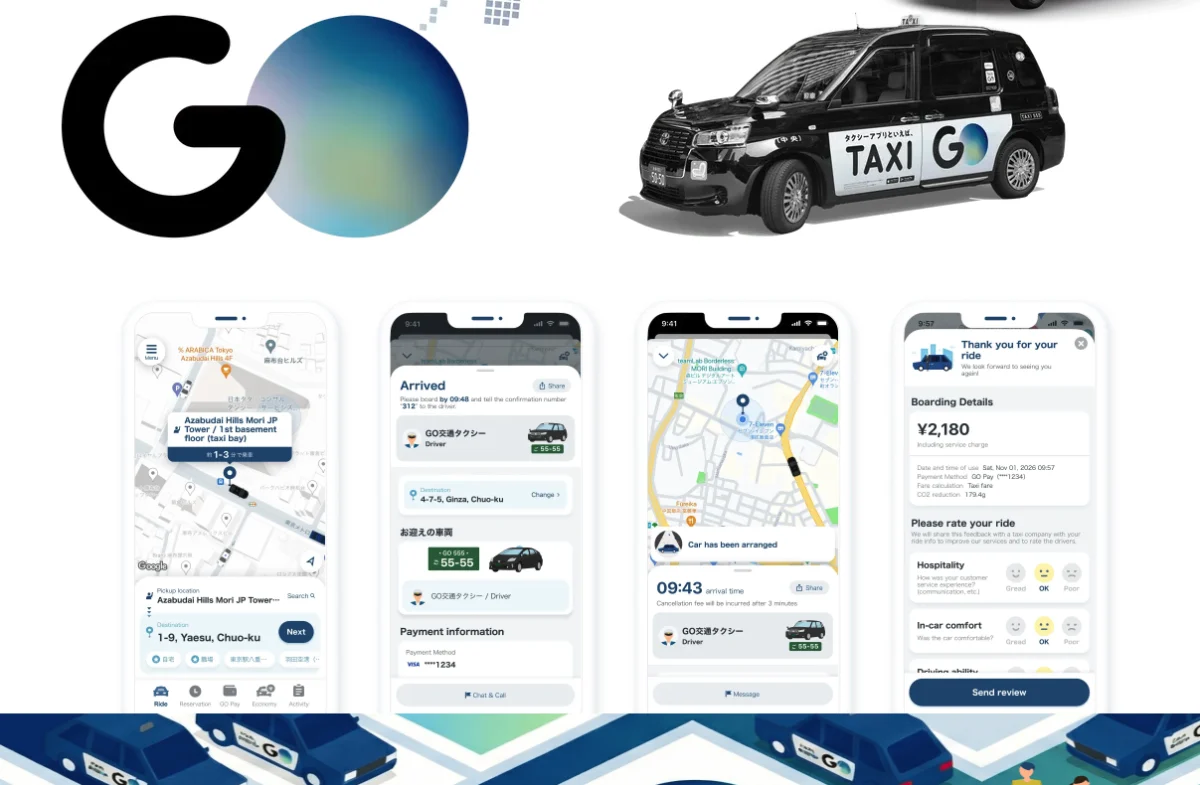
The recent initial public offering (IPO) of Go, Japan’s leading ride-hailing application, has injected a substantial ¥88.6 billion (approximately $553 million) into the company, providing crucial capital to address an escalating national crisis: a severe shortage of professional drivers. This landmark public debut, the largest in Japan this year, signifies a pivotal moment not only for Go but for the broader evolution of mobility solutions in a rapidly aging society. The capital infusion is strategically earmarked for an ambitious expansion into robotaxi services and a series of targeted acquisitions, signaling a transformative shift in the nation’s transportation landscape.
A New Chapter for Japanese Mobility
Go’s successful market entry on Tuesday came amidst a notably subdued listing season in Japan, where government initiatives have frequently encouraged startups towards mergers and acquisitions rather than public offerings. The substantial interest from global institutional investors such as BlackRock, Wellington Management, and M&G Investment Management underscores a selective but strong appetite for innovative Japanese ventures that promise to tackle fundamental societal challenges. Despite an initial enthusiasm, the stock experienced a modest pullback, closing at ¥2,314 on Friday, approximately 4% below its offering price of ¥2,400. This fluctuation highlights the nuanced market sentiment surrounding high-growth technology companies in a traditionally cautious investment environment, yet the long-term strategic implications of Go’s capital raise remain undiminished.
Navigating Japan’s Demographic Headwinds
The imperative behind Go’s pivot towards autonomous vehicles is deeply rooted in Japan’s unique demographic predicament. The nation faces an accelerating decline in its working-age population, a direct consequence of one of the world’s lowest birth rates and highest life expectancies. This demographic shift has created acute labor shortages across numerous sectors, with the transportation industry particularly hard hit. Data from Japan’s Ministry of Land, Infrastructure, Transport and Tourism reveals a concerning trend: the number of taxi drivers has plummeted by roughly 20% in recent years. This decline is not merely a statistical anomaly; it translates into tangible impacts on daily life, affecting the availability of essential services for commuters, tourists, and, critically, the elderly population, particularly in less urbanized regions.
Efforts to mitigate this shortage, such as the limited introduction of ride-share services in 2024, have proven largely insufficient. These services, while a step forward, are constrained by regulations that mandate drivers be employed by existing taxi companies and operate only in specific zones. Such restrictions severely limit their capacity to alleviate the pervasive labor deficit, leaving significant gaps in mobility provisions. The aging demographic ensures that the pool of human drivers is unlikely to recover organically, making technological solutions not just advantageous, but absolutely essential for maintaining and improving Japan’s public and private transportation infrastructure.
Go’s Strategic Evolution and Market Dominance
Go’s journey to becoming Japan’s dominant ride-hailing platform is a testament to its adaptive strategy and deep understanding of the local market. Founded in 1977 as a traditional taxi operator, the company possesses decades of experience in the nuances of Japanese transportation. This historical foundation provided a unique advantage when digital ride-hailing began to emerge. Over time, Go successfully transitioned its operations to embrace technological innovation, culminating in the launch of its widely adopted application. Today, Go boasts an impressive 35 million downloads, integrates with 85,000 partner vehicles, and commands an estimated 80% share of Japan’s taxi app market by usage time, covering 46 of the nation’s 47 prefectures.
This extensive reach and market penetration were not achieved overnight. Go meticulously built trust within the existing taxi industry, often seen as a guardian of stringent service standards and a vital component of Japanese urban life. Unlike the disruptive entry of international ride-sharing giants in other markets, Go’s approach focused on collaboration and integration with established taxi companies, effectively modernizing a traditional service rather than entirely supplanting it. This strategy proved critical in navigating Japan’s complex regulatory landscape and fostering widespread adoption among both drivers and passengers. The company’s deep operational expertise, combined with its technological prowess, positions it uniquely to lead the transition into autonomous mobility, leveraging its existing network and user base.
The Autonomous Future: A Collaborative Approach
While Go firmly believes that robotaxis represent an indispensable part of its future, the path to fully autonomous operations is complex and multi-faceted. Recognizing the immense technological and financial investment required for developing proprietary autonomous driving systems, Go has adopted a strategic partnership model. The company has forged a significant alliance with Waymo, the autonomous driving subsidiary of Alphabet, in collaboration with Nihon Kotsu, one of Japan’s largest taxi operators. Under this arrangement, Go is tasked with the crucial role of strategic coordination, leveraging its market insights and operational expertise, while Waymo brings its advanced autonomous driving technology to the forefront. This division of labor allows Go to accelerate its robotaxi ambitions without diverting substantial resources into the intricate and costly development of core self-driving software and hardware, a strategy confirmed by CEO Hiroshi Nakajima who has stated that Go will not invest in autonomous driving systems itself.
The transition to fully driverless operations is not expected immediately. A company spokesperson emphasized that deployment will only occur "when we validate our technology and receive approval to do so," underscoring a commitment to safety and regulatory compliance. This cautious approach is characteristic of Japan’s high standards for technological deployment, especially in public-facing services. The regulatory framework for autonomous vehicles in Japan, while evolving, has traditionally been conservative, prioritizing safety above rapid commercialization. As such, the timeline for widespread fully driverless robotaxi services remains subject to rigorous testing, validation, and a gradual legislative adaptation process.
Regulatory Landscape and Public Perception
Japan’s journey towards embracing autonomous vehicles has been characterized by careful deliberation and a phased regulatory approach. The government has incrementally introduced legislation allowing for testing and limited deployment of self-driving technology, often starting in controlled environments or specific geographic zones. This cautious evolution reflects not only technical safety concerns but also a broader cultural emphasis on precision, reliability, and public trust. The introduction of robotaxis will undoubtedly spark public discussions about safety, liability, and the ethical implications of AI-driven transportation. Public acceptance will be paramount, and Go’s existing reputation for reliable service within the traditional taxi sector could play a significant role in building confidence in its autonomous offerings.
Beyond the technological hurdles, the social and cultural integration of robotaxis presents its own set of challenges. Japan’s "omotenashi" culture, emphasizing meticulous hospitality and service, is deeply ingrained in its service industries, including taxis. The absence of a human driver could potentially alter the customer experience, requiring careful design of the in-cabin environment and digital interfaces to maintain a high standard of service and comfort. This necessitates a thoughtful approach to user experience design, ensuring that robotaxis not only provide efficient transport but also resonate with Japanese expectations for quality and convenience.
The Broader Race for Driverless Mobility
Go is not alone in recognizing Tokyo’s potential as a proving ground for robotaxi technology. The global race for autonomous mobility solutions has seen various international players eyeing the Japanese market. In a significant development earlier this year, Uber, in collaboration with autonomous driving firm Wayve and Japanese automaker Nissan, announced plans to pilot robotaxi services in Tokyo by late 2026. This initiative marks Uber’s inaugural autonomous vehicle partnership in Japan and will utilize Nissan Leaf electric vehicles powered by Wayve’s AI Driver technology, with bookings facilitated through the Uber app.
This competitive landscape also includes other strategic alliances designed to cater to both domestic users and the growing inbound tourism market. Uber has also partnered with S.Ride, another Japanese ride-hailing app, to enable international visitors to book rides via the Uber app. Similarly, Didi Mobility Japan, a joint venture between SoftBank and Chinese ride-hailing giant Didi Chuxing, has established analogous arrangements to serve foreign tourists. These collaborations underscore the multi-faceted approach necessary to penetrate the Japanese market, often involving partnerships with local entities to navigate regulatory complexities and cultural nuances.
Beyond the IPO: An Industry Transformed
In the interim, while the robotaxi vision gradually materializes, Go is also fortifying its traditional business model by enhancing its competitive edge through strategic partnerships. The company has integrated with major international payment and hailing platforms such as Kakao T from South Korea, and Alipay and WeChat Pay from China and Taiwan. These integrations allow inbound travelers from these key markets to seamlessly hail Go-affiliated taxis directly from their familiar local applications, streamlining the travel experience and capitalizing on Japan’s robust tourism sector.
Go’s IPO and its subsequent strategic direction mark a critical juncture for Japan’s transportation industry. The infusion of capital, coupled with a clear focus on autonomous solutions, positions Go at the forefront of addressing the nation’s profound demographic challenges. As the company navigates the complexities of technological development, regulatory approval, and public acceptance, its trajectory will undoubtedly offer valuable insights into the future of urban mobility, not just in Japan, but globally. The transition from a human-driven fleet to an autonomous one represents more than just a technological upgrade; it is a fundamental redefinition of how people move, work, and interact with their cities, promising a new era of efficiency, accessibility, and resilience in the face of an evolving societal landscape.










 Azin Asro
