Amir Mahmud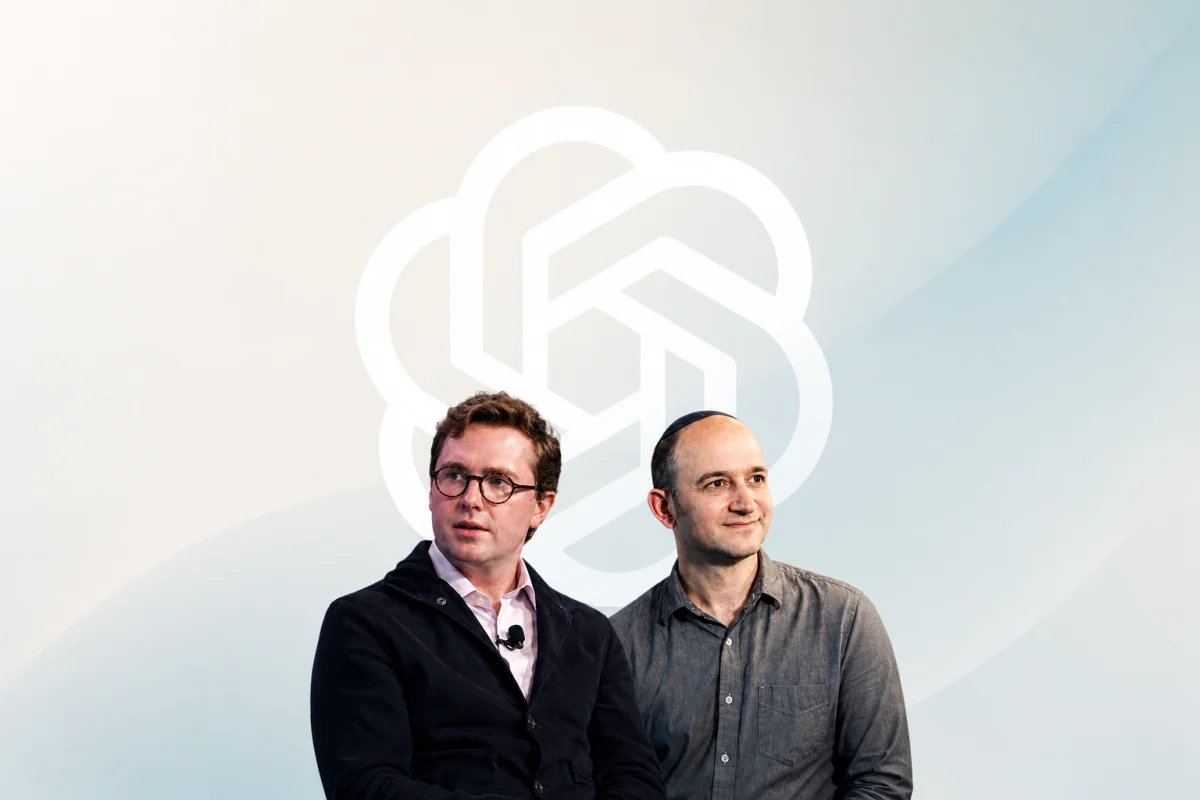
In a significant strategic maneuver, OpenAI, the pioneering force behind ChatGPT, has announced the recruitment of two high-profile figures: Noam Shazeer, a distinguished artificial intelligence researcher celebrated for his foundational contributions to generative AI, and Dean Ball, a former White House AI policy official. These critical appointments arrive as the company reportedly prepares for a potential initial public offering (IPO), signaling a dual focus on advancing its technological frontier while simultaneously navigating the complex landscape of regulatory and ethical considerations.
The Technical Luminary: Noam Shazeer’s Journey to OpenAI
The artificial intelligence community buzzed with news of Noam Shazeer’s departure from Google, a company where he spent the better part of two decades shaping the trajectory of modern AI. Shazeer, known for his instrumental role as a co-lead on Google’s Gemini project and as the visionary founder of the AI role-playing startup Character AI, confirmed his exit, paving the way for his transition to OpenAI. His arrival is not merely a high-profile hire; it represents a significant talent acquisition in the intensely competitive race for AI supremacy.
Shazeer’s professional journey at Google began in 2000, marking a long and impactful tenure. His only break was a three-year hiatus during which he co-founded Character AI, a venture that quickly gained traction for its innovative approach to AI-driven conversational experiences. In a notable turn of events, Google reportedly rehired Shazeer two years prior in a deal estimated at $2.7 billion, a move designed to integrate Character AI’s sophisticated technology into Google’s ecosystem. This episode underscored the immense value placed on pioneering AI talent and intellectual property within the tech industry, illustrating how leading firms are willing to invest colossal sums to reclaim or secure cutting-edge expertise. His latest move to OpenAI further exemplifies the dynamic and often migratory nature of top-tier AI researchers, moving between the industry’s most influential labs, including Google, OpenAI, Anthropic, and Meta, in a continuous quest for innovation and impact.
At the core of Shazeer’s legacy is his co-authorship of the seminal 2017 paper, "Attention Is All You Need." This groundbreaking research introduced the Transformer architecture, a revolutionary neural network design that has since become the bedrock of nearly all modern generative AI models, including large language models (LLMs) like those powering ChatGPT. The Transformer architecture’s innovation lay in its ability to process sequences of data, such as words in a sentence, by weighing the importance of different parts of the input relative to each other—a mechanism dubbed "attention." Before this, recurrent neural networks (RNNs) were dominant, but Transformers offered significant advantages in parallel processing and handling long-range dependencies, dramatically accelerating the training of complex models and enabling unprecedented scale in AI capabilities. Its profound impact cannot be overstated; it catalyzed the rapid advancements witnessed in natural language processing, computer vision, and countless other AI applications, fundamentally reshaping the landscape of machine learning and ushering in the era of sophisticated generative AI. Shazeer’s direct involvement in this foundational work positions him as one of the architects of the current AI revolution.
The market implications of Shazeer’s move are substantial. It highlights the fierce battle for elite AI talent, where individuals with a proven track record of innovation are considered invaluable assets. For OpenAI, securing Shazeer signifies a renewed commitment to pushing the boundaries of AI research and development, potentially influencing the design and capabilities of its next generation of models. From a broader perspective, such high-profile transitions reflect the strategic positioning of AI companies as they vie for market dominance and technological leadership.
However, Shazeer’s return to the public eye with OpenAI is not without its preceding narrative. Reports from The Information indicated that during his tenure at Google, Shazeer engaged in internal discussions on messaging boards regarding sensitive political and social issues, specifically concerning transgender identity and the Israel-Gaza conflict. These discussions reportedly led to management intervening and deleting his posts, highlighting the delicate balance technology companies navigate between fostering open internal dialogue and maintaining corporate standards for workplace conduct. Whether these past controversies will impact his new role at OpenAI remains a subject of speculation. This incident also points to a broader industry challenge where the personal views of influential figures can intersect with corporate policy and public perception, especially in an era of heightened social and political awareness.
Navigating the Regulatory Labyrinth: Dean Ball and Strategic Futures
Complementing its technical bolstering, OpenAI is also significantly enhancing its policy and governance capabilities with the recruitment of Dean Ball. Ball brings a wealth of experience from the intersection of technology and government, having served a brief but impactful stint last year in the White House. During his time in public service, he played a crucial role in the development and publication of "America’s AI Action Plan," a comprehensive framework outlining national priorities and strategies for AI development and deployment. Following his government service, Ball returned to the techno-libertarian think tank, the Foundation for American Innovation, as a senior fellow, continuing his work on shaping policy at the vanguard of technological advancement.
Ball’s announcement of his new role at OpenAI came via a post on X, where he expressed his pleasure and honor in joining the company on July 6. He revealed he would be leading a newly formed team titled "Strategic Futures." This team’s mandate is explicitly defined: to assist OpenAI’s leadership in shaping frontier AI policy. Ball elaborated on the scope of this new initiative in a blog post, stating that the "small, high-agency team" would focus on critical areas such as catastrophic risk, the implications of recursive self-improvement in AI systems, the labor market impact of advanced AI, and the complex relationship between frontier AI labs, governments (particularly the U.S. Federal Government), and society at large. The team’s responsibilities will span both public-facing policy engagement and, crucially, internal governance.
The emphasis on internal governance, as highlighted by Ball, is particularly significant. He posited that "almost by necessity," AI labs themselves would need to take a leading role in making fundamental AI governance decisions. He further stressed, "In other words, internal governance will be more central to the future of AI than most people realize." This perspective underscores a growing recognition within the AI community that the rapid pace of technological innovation often outstrips the traditional legislative and regulatory cycles of governments. Consequently, the onus falls on the developers of advanced AI to proactively establish ethical guidelines, safety protocols, and responsible development frameworks from within. This approach aims to preemptively address potential societal harms and build public trust, rather than waiting for external regulation to catch up.
The historical context for such corporate engagement with government policy is rich. Throughout history, major technological shifts, from the advent of the internet to the rise of biotechnology, have necessitated a dynamic interplay between industry innovation and governmental oversight. However, AI presents unique challenges, given its potential for transformative societal impact, ranging from economic disruption to, as some hypothesize, existential risks. The creation of a dedicated "Strategic Futures" team reflects OpenAI’s understanding that merely building powerful AI is insufficient; responsibly integrating it into society requires deep engagement with policy, ethics, and long-term societal planning.
This strategic move also occurs within a highly competitive and increasingly regulated global AI landscape. The contrasting experiences of OpenAI and its competitor, Anthropic, serve as a stark illustration. Recently, Anthropic faced significant challenges when President Donald Trump reportedly ordered an export control ban on its latest models, Fable 5 and Mythos 5, compelling the AI firm to temporarily withdraw them from public access to ensure compliance. This incident highlights the volatile nature of government intervention in the AI sector. By bringing Dean Ball on board, OpenAI appears to be strategically consolidating its "insider status" within U.S. government circles, aiming to foster a more collaborative and less confrontational relationship with policymakers. This proactive engagement can be critical for securing regulatory approval, influencing policy formation, and ensuring operational stability in a rapidly evolving geopolitical environment where AI leadership is becoming a central tenet of national power.
OpenAI’s Strategic Calculus Ahead of a Potential IPO
While OpenAI has not formally announced an IPO, the widespread speculation surrounding a public offering provides crucial context for these high-caliber hires. For a company contemplating such a monumental step, demonstrating robust leadership in both technical innovation and responsible governance is paramount to attracting and reassuring investors. The appointments of Shazeer and Ball can be seen as integral components of OpenAI’s pre-IPO strategy, designed to project an image of stability, foresight, and a comprehensive approach to managing the multifaceted risks associated with frontier AI.
From a market perspective, the AI sector is experiencing an unprecedented boom, fueled by immense investor appetite for transformative technologies. Companies like OpenAI, which have spearheaded this revolution, are under pressure to showcase not only their current capabilities but also their long-term vision for sustainable growth and ethical deployment. Shazeer’s arrival reinforces OpenAI’s commitment to pushing the technological envelope, promising continued breakthroughs that can drive market value. Concurrently, Ball’s mandate to address catastrophic risk, labor market impact, and government relations speaks directly to the concerns of institutional investors who increasingly prioritize environmental, social, and governance (ESG) factors. Mitigating regulatory risks and demonstrating a proactive stance on AI safety can significantly enhance investor confidence and potentially command a higher valuation in a public offering.
The social and cultural impact of AI is also a significant consideration. Public perception of AI is a complex mix of excitement for its potential and apprehension regarding its risks—from job displacement to ethical dilemmas and even existential threats. By bringing on a figure like Dean Ball to lead "Strategic Futures," OpenAI is signaling its intent to engage deeply with these societal concerns, demonstrating a commitment to developing AI responsibly and transparently. This proactive approach can help shape a more positive public narrative, fostering trust and mitigating potential backlashes that could affect both the company’s reputation and its market trajectory.
Looking ahead, these appointments signify OpenAI’s evolving role beyond a mere technology developer to a pivotal global actor. The combination of Shazeer’s unparalleled expertise in foundational AI architecture and Ball’s strategic acumen in policy and governance positions OpenAI to not only innovate at the bleeding edge but also to actively shape the global dialogue around AI’s future. The company is clearly preparing for a new phase of growth and influence, one where technical brilliance must be seamlessly integrated with a deep understanding of societal implications and governmental relations. The coming months will likely reveal how these strategic hires translate into tangible advancements and a more structured approach to navigating the promises and perils of artificial intelligence.