Amir Mahmud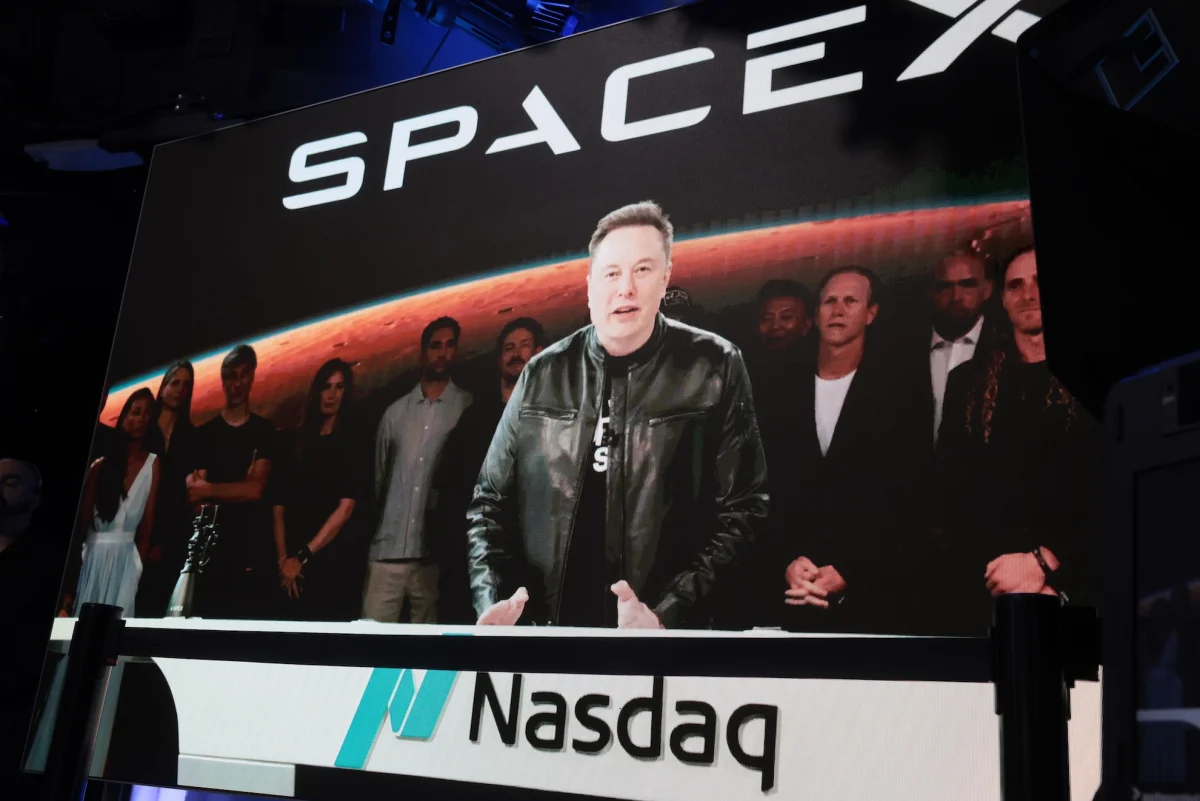
The financial markets witnessed a monumental shift this past week as SpaceX, the privately held aerospace manufacturer and space transportation services company, made its highly anticipated public debut. This event has sent ripples through the technology and investment communities, not least because the company immediately achieved an astounding market capitalization of $2.1 trillion by Friday’s close, dramatically outperforming its automotive counterpart, Tesla, which ended the week with a market cap of $1.52 trillion. This valuation instantly positions SpaceX as the sixth most valuable U.S.-listed entity, trailing only tech titans like Nvidia, Apple, Alphabet, Microsoft, and Amazon.
SpaceX’s Market Debut Reshapes Tech Landscape
SpaceX’s journey to public trading has been one of the most closely watched narratives in modern finance. Founded in 2002 by Elon Musk, the company’s initial mission was to revolutionize space technology, with the ultimate goal of enabling human life on other planets. For over two decades, it remained a private enterprise, fueling its ambitious projects through venture capital, government contracts, and substantial internal reinvestment. This prolonged private status allowed SpaceX to pursue long-term, high-risk ventures—such as the development of reusable rocket technology (Falcon 9), the Starlink satellite internet constellation, and the colossal Starship interplanetary transport system—without the quarterly pressures of public markets.
The decision to finally go public, while expected by many, marks a pivotal moment. An initial public offering (IPO) is typically a fundraising mechanism, allowing companies to raise capital from public investors to fuel growth, pay down debt, or provide liquidity for early investors and employees. For a company like SpaceX, already flush with significant government contracts from NASA and the Department of Defense, and revenue streams from Starlink, the IPO’s primary objective might extend beyond mere capital acquisition. It could be seen as a move to solidify its position as an industry leader, provide a clear valuation benchmark, and potentially pave the way for future strategic maneuvers. The sheer scale of its $2.1 trillion valuation upon entry not only reflects investor confidence in its current ventures but also in its long-term vision, particularly its ambitious plans for lunar and Martian colonization.
The Billion-Dollar Question: A Tesla-SpaceX Union?
Amidst the euphoria surrounding SpaceX’s market entry, a pervasive undercurrent of speculation regarding a potential merger with Tesla has intensified. The prospect of combining these two formidable companies, both helmed by Elon Musk, has been a topic of discussion for years, but recent developments have lent it new credibility.
A significant data point emerged from SpaceX’s S-1 filing, a comprehensive document submitted to the Securities and Exchange Commission prior to its public offering. Senior reporters noted new language in the filing warning investors of potential future dilution, specifically stating, "We may issue a significant amount of equity in connection with future transactions." This phrasing is not merely a standard disclosure; its pointed inclusion and the magnitude implied by "significant amount" suggest an impending, substantial corporate action, with many analysts pointing directly to Tesla as the likely counterparty.
Further fanning the flames of this speculation was a recent interview given by SpaceX President and COO Gwynne Shotwell on CNBC. When asked about the possibility of a merger, Shotwell’s response was notably open-ended and intriguing. She remarked that such a consolidation "might make Elon’s life a little easier," a comment that suggests a practical, operational rationale behind such a move. For Musk, who juggles leadership roles across multiple high-profile ventures, streamlining his empire could offer advantages in resource allocation, strategic oversight, and the synergy of technological advancements.
From an analytical perspective, a merger between SpaceX and Tesla could unlock significant cross-sector synergies. Tesla, a pioneer in electric vehicles, battery technology, and artificial intelligence for autonomous driving, could find common ground with SpaceX’s expertise in advanced manufacturing, materials science, and complex systems engineering. Shared AI capabilities, particularly in areas like autonomous navigation or advanced robotics, could benefit both enterprises. Furthermore, Tesla’s extensive battery research and production capabilities could be vital for SpaceX’s energy-intensive operations, from rocket launches to powering remote Starlink ground stations. Conversely, SpaceX’s robust engineering culture and relentless pursuit of innovation could infuse Tesla with new perspectives. However, such a merger would also present immense integration challenges, cultural clashes, and regulatory hurdles, making it a complex undertaking with both high potential rewards and significant risks. The market would undoubtedly scrutinize how such a colossal entity would be governed and managed, and how it would maintain focus across such diverse, capital-intensive sectors.
Automotive Giants Navigate Battery Technology Choices
Beyond the headline-grabbing SpaceX IPO, the mobility sector continues to evolve rapidly, particularly concerning electric vehicle (EV) battery technology. General Motors (GM), a stalwart of the automotive industry, finds itself at a strategic crossroads regarding lithium-iron-phosphate (LFP) batteries. Reports indicate that GM is sourcing LFP cells for its 2027 Chevrolet Bolt from a "foreign supplier," widely identified as the Chinese battery manufacturing behemoth CATL.
LFP batteries represent a distinct class of lithium-ion technology known for their cost-effectiveness, longer cycle life, and enhanced safety compared to nickel-manganese-cobalt (NMC) or nickel-cobalt-aluminum (NCA) chemistries. While they typically offer lower energy density, making them less ideal for vehicles requiring maximum range, their economic advantages are compelling for more affordable EV models. GM’s reliance on an external, foreign supplier, even if initially seen as a temporary measure, highlights the current global landscape of battery production, where Asian manufacturers, particularly from China, hold a dominant position in LFP technology and supply chains.
The revelation that GM currently has no firm plans to integrate LFP cells into its broader EV lineup beyond the Bolt, despite commencing LFP production at an Ultium plant, underscores a cautious, diversified strategy. The LFP cells produced at the Ultium facility are reportedly destined for energy-storage systems developed by LG Energy Solution, rather than directly for GM’s own electric vehicles. This strategic allocation indicates a recognition of LFP’s suitability for stationary energy storage, where volume and cost are paramount, while possibly reserving higher energy density chemistries for its premium EV offerings. The industry’s navigation of battery chemistries reflects a complex balancing act between cost efficiency, performance, supply chain resilience, and geopolitical considerations.
Leadership Shifts in the Luxury EV Segment
The competitive landscape of the electric vehicle market also saw significant internal developments, particularly within the luxury segment. Lucid Motors, an aspiring challenger known for its high-performance luxury EVs, experienced an executive-level disruption with the departure of Emad Dlala, a key executive who had recently been promoted to a leading role. This exit marks the first major executive change under the tenure of Silvio Napoli, who assumed the CEO position in April. Such leadership changes often signal strategic realignments or internal restructuring efforts, especially when a new CEO takes the helm. The industry will be watching closely to see if this is an isolated incident or the beginning of a broader shakeup within Lucid’s leadership, potentially influencing the company’s future product development and market positioning in a fiercely competitive sector.
The Shifting Sands of Autonomous Vehicle Development
The realm of autonomous vehicles (AVs) also provided fresh insights this week, most notably the official demise of Apple’s long-rumored "Project Titan" and a significant acquisition by Waymo. After years of secretive development, consistent rumors, and substantial investment, Apple definitively canceled its electric car project in 2024. The scale and complexity of bringing an autonomous electric vehicle to market proved to be an immense challenge, even for a company with Apple’s resources.
Further cementing this shift, Waymo, a leader in autonomous driving technology and a subsidiary of Alphabet, acquired Apple’s vast 5,500-acre proving ground in Arizona. The transaction, valued at $220 million and facilitated through a Delaware shell company associated with Apple, underscores Waymo’s commitment to scaling its operations. Dedicated testing facilities are crucial for the rigorous development and validation of autonomous driving systems, allowing companies to simulate rare and complex scenarios in a controlled environment. Waymo’s acquisition signifies a strategic move to accelerate its testing protocols and expand its operational footprint, highlighting the ongoing race to achieve widespread robotaxi deployment.
Investment Flows Across the Mobility Spectrum
Beyond the major headlines, a flurry of investment and corporate activities showcased the diverse and dynamic nature of the mobility sector:
- AI in Mobility: Irish firm CameraMatics secured €49 million from a consortium led by Blume Equity, the Ireland Strategic Investment Fund, and Goodbody Capital Partners. The company leverages AI-powered video telematics to enhance fleet safety and efficiency, reflecting a growing trend of integrating artificial intelligence into operational logistics.
- Autonomous Marine Technology: Clear Robotics, an Indian technology company focused on autonomous ships, raised $1.75 million in a pre-Series A funding round. Led by Shipsfocus Ventures, with participation from Katapult Ocean and others, this investment signals increasing interest in automating maritime transport, aiming for zero-emission fleets.
- Hybrid RV Innovation: Evotrex, a startup developing hybrid RV travel trailers, successfully closed a $30 million Series A funding round. The investment, backed by Chinese and Hong Kong-based firms including GSR United Capital and Forebright Concerto Capital, highlights a niche but growing market for off-grid, sustainable recreational vehicles.
- Fleet Management Software: Volteum, a startup specializing in fleet management software for electric and mixed fleets, raised €2.5 million. Led by Movens Capital, the funding will support its efforts to optimize the operational complexities of diverse vehicle fleets.
- E-commerce and Logistics IPOs: Indian quick-commerce delivery startup Zepto announced plans for an initial public offering potentially valued at $1 billion, indicating investor appetite for rapid delivery services in emerging markets. Similarly, Zūm, a startup providing electric bus transportation services for school-aged children, is reportedly exploring an IPO, underscoring the potential for innovation in established transport sectors.
Emerging Trends in Autonomous Technologies and Urban Logistics
The broader technological landscape continues to push the boundaries of automation and logistics:
- Advanced Simulation: AI startup Decart unveiled Oasis 3, an interactive world model capable of generating photorealistic driving environments in real time. This technology is initially targeting autonomous vehicle companies that require advanced simulation for testing rare driving scenarios at scale, with future plans to expand into robotics and other physical AI applications.
- Drone Delivery Expansion: Wing, Alphabet’s autonomous drone delivery company, announced an expansion into seven additional U.S. cities through its partnership with Walmart. While not yet mainstream, drone delivery is increasingly moving beyond novelty, demonstrating practical applications in specific markets for last-mile logistics.
- Robotaxi Competition: A significant "robotaxi showdown" is brewing in London, involving Uber, the U.K. startup Wayve, and Waymo. This global race for urban autonomous mobility highlights the intense competition and diverse approaches to deploying self-driving vehicles in complex city environments. Waymo further introduced "Waymo Premier," a loyalty program offering perks for frequent riders, signaling a move towards customer retention and service differentiation as robotaxi adoption grows. The company also detailed a new computer model designed to more accurately benchmark its autonomous driving software against human performance, a crucial step in building public trust and regulatory approval.
The Broadening Horizon of Battery Innovation
Beyond EVs, the demand for battery technology is surging across various sectors. General Motors is making a significant push into commercial energy storage systems, targeting AI data centers and the broader electrical grid. This initiative involves a partnership with energy-storage startup Peak Energy and the development of entirely new sodium-ion battery chemistry, specifically tailored for grid-scale deployments. Sodium-ion batteries offer a promising alternative to lithium-ion, leveraging more abundant and less costly materials, making them attractive for large-scale, stationary applications.
This strategic move by GM, alongside similar ventures by Ford and a host of startups like Redwood Energy, signifies a broader industry trend. As the world transitions towards renewable energy sources and the digital infrastructure expands with AI data centers, the need for robust, reliable, and scalable energy storage solutions has become paramount. This burgeoning market positions energy storage as a critical domain, attracting significant investment and innovation, echoing the early days of the electric vehicle boom and drawing comparisons to the competitive landscape surrounding Tesla’s pioneering efforts in battery technology.