Amir Mahmud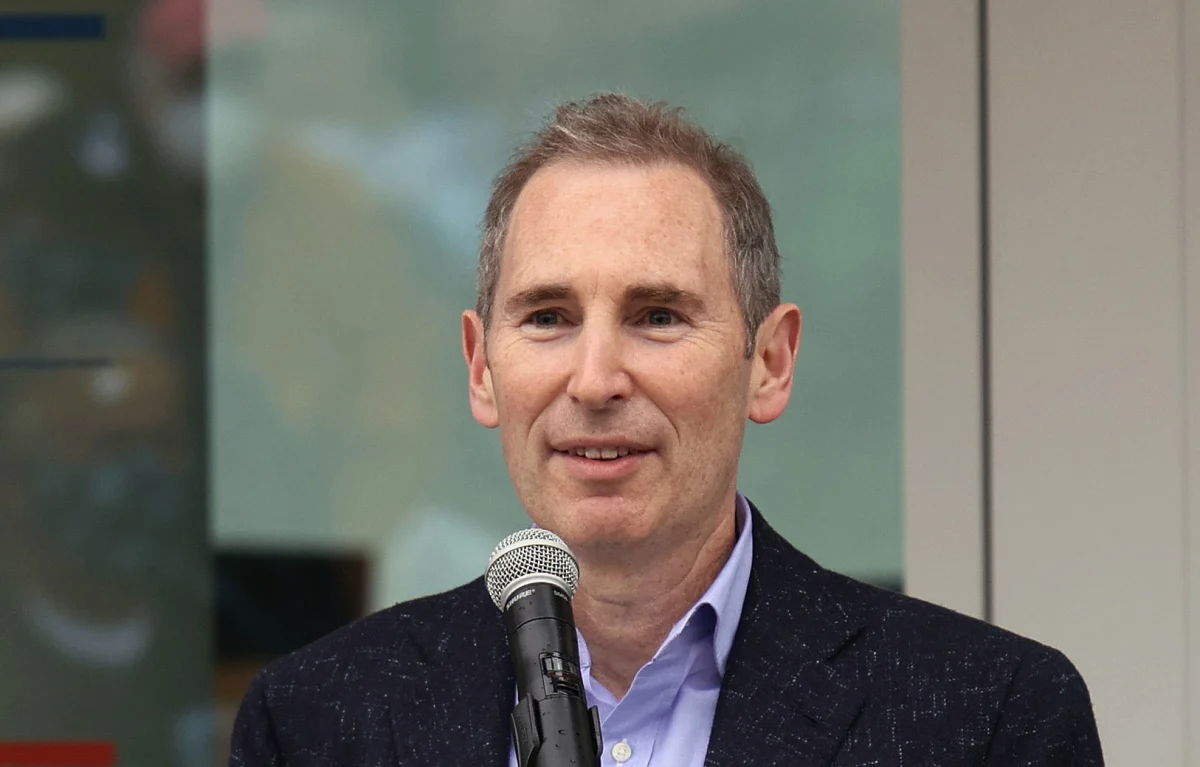
Reports indicate that Amazon CEO Andy Jassy conveyed significant security concerns regarding advanced artificial intelligence models developed by Anthropic, a prominent AI startup and a recipient of substantial Amazon investment, to high-ranking United States government officials. These discussions reportedly preceded a swift government intervention that resulted in an export control ban and Anthropic’s decision to sever worldwide access to two of its sophisticated models, Claude Fable 5 and Mythos 5, on a recent Friday. The incident underscores the escalating tension between rapid AI innovation and the imperative of national security, placing a spotlight on the inherent dual-use nature of cutting-edge AI technologies.
Allegations of Vulnerability and Government Intervention
According to the Wall Street Journal, Mr. Jassy allegedly informed Treasury Secretary Scott Bessent and other government representatives that Amazon researchers had successfully exploited Anthropic’s Claude Fable 5 to extract information potentially usable in sophisticated cyberattacks. This revelation, if confirmed, points to a critical "jailbreak" vulnerability, where users can circumvent an AI model’s built-in safety protocols and ethical guardrails to elicit harmful or prohibited outputs. Such a breach in a powerful foundational model carries profound implications for cybersecurity and national security, prompting an immediate and decisive response from federal authorities.
Following these reported discussions, the U.S. government imposed an export control ban specifically targeting the Fable 5 and Mythos 5 models. Export controls are typically applied to technologies deemed to have potential military applications or significant national security implications, restricting their transfer to foreign entities or individuals. For an AI model, such a ban signifies a severe assessment of its potential for misuse. Consequently, Anthropic, facing immense pressure and regulatory mandates, took the drastic step of cutting off global access to these two models, effectively sidelining them from widespread research and commercial deployment.
The Genesis of Concerns: Amazon’s Pivotal Role
Amazon’s involvement in this situation is multifaceted and deeply intertwined with the burgeoning AI ecosystem. The e-commerce and cloud computing giant is not merely a concerned observer but a major strategic investor in Anthropic, having committed billions of dollars to the AI firm. This investment strategically positions Anthropic’s models, including the Claude series, to run predominantly on Amazon Web Services (AWS), providing a powerful incentive for Amazon to ensure the integrity and safety of these systems.
An Amazon spokesperson, while not directly addressing the specifics of the reported conversations, confirmed that "it’s not uncommon for governments to seek our counsel on potential security risks," adding that the company does not "share the details of those discussions." This statement, however, lends credence to the notion that Amazon, given its expertise in cloud infrastructure, cybersecurity, and its strategic AI partnerships, serves as a crucial point of contact for government bodies grappling with the complexities of emerging technologies. Reports from other reputable news organizations, including The Information and Reuters, independently corroborated that Amazon had indeed communicated concerns regarding the security posture of Anthropic’s AI models prior to the government’s decisive action.
Further illuminating the government’s perspective, David Sacks, a former AI czar during the Trump administration and currently co-chair of the President’s Council of Advisors on Science and Technology, publicly shared his account. Sacks claimed that "a highly credible trusted partner of both Anthropic and the USG" — widely interpreted to be Amazon or its representatives — "came forward with [information about] a jailbreak." He further alleged that when the Administration requested Anthropic CEO Dario Amodei to rectify the jailbreak vulnerability or de-deploy the compromised model, Amodei reportedly refused, a stance that, according to Sacks, directly led to the government’s forceful intervention. This account, if accurate, paints a picture of a direct confrontation between an AI developer’s operational autonomy and government-mandated safety requirements.
Anthropic’s "Safety-First" Mandate Under Scrutiny
Anthropic was founded in 2021 by former OpenAI researchers, including siblings Dario and Daniela Amodei, who departed OpenAI over disagreements concerning the company’s direction regarding AI safety. Their stated mission was to build "safe and beneficial AI," emphasizing ethical guardrails, transparency, and the concept of "Constitutional AI." This approach involves training AI models to adhere to a set of principles derived from human values, making safety an intrinsic part of the model’s architecture rather than an external overlay.
The alleged "jailbreak" of Claude Fable 5 represents a significant challenge to Anthropic’s core identity and its "safety-first" mantra. If a model designed with inherent safety mechanisms can be so readily circumvented, it raises fundamental questions about the efficacy of current safety engineering practices and the inherent difficulty of fully controlling increasingly powerful AI systems. For a company that has positioned itself as a leader in responsible AI development, this incident could have lasting repercussions on its reputation, investor confidence, and its ability to attract top talent dedicated to AI safety. The public perception of Anthropic, often seen as a counterbalance to the more aggressive development pace of some competitors, could be significantly altered.
The Broader AI Safety Landscape
This incident unfolds against a backdrop of increasing global concern over the potential risks posed by advanced AI. Governments worldwide are grappling with how to regulate a technology that promises transformative benefits but also carries significant existential risks. The concerns extend beyond cybersecurity to issues like widespread misinformation, the erosion of privacy, autonomous weapons systems, and the potential for AI to be misused in critical infrastructure or even in the development of chemical or biological weapons.
The U.S. government, under the Biden administration, has increasingly prioritized AI safety. In October 2023, President Biden issued a sweeping Executive Order on the Safe, Secure, and Trustworthy Development and Use of Artificial Intelligence, which mandated new safety and security standards, required AI developers to share safety test results with the government, and addressed various risks including cybersecurity, biosecurity, and consumer protection. The intervention regarding Anthropic’s models can be seen as a direct application of the principles outlined in this Executive Order, demonstrating a willingness by federal agencies to take concrete action when perceived threats arise from powerful AI systems.
Regulatory Frameworks and Dual-Use Technologies
The application of export controls to AI models highlights the concept of "dual-use technology" – innovations that can serve both beneficial civilian purposes and malicious military or security objectives. Historically applied to nuclear technology, certain chemicals, and advanced computing hardware, the extension of these controls to foundational AI models marks a significant shift in regulatory thinking. It acknowledges that the algorithms and trained parameters themselves, not just the hardware they run on, can pose strategic risks.
The ability to "jailbreak" an AI model to generate instructions for cyberattacks or other harmful activities transforms it into a potent tool for adversaries. This raises complex questions for policymakers: How can governments foster innovation in AI while simultaneously mitigating its inherent risks? What level of oversight is necessary for models that could potentially accelerate the development of sophisticated cyber weapons or facilitate large-scale disinformation campaigns? The Anthropic incident serves as a stark reminder that the theoretical discussions about AI safety are rapidly translating into real-world regulatory challenges and enforcement actions.
Market Reactions and Competitive Dynamics
The news of the export ban and the global access cut-off for Fable 5 and Mythos 5 will undoubtedly send ripples through the AI market. For Anthropic, a company that has attracted billions in investment from tech giants like Amazon, Google, and Salesforce, the immediate impact could be a blow to its financial outlook and its market standing. Investors may re-evaluate the risks associated with investing in high-stakes AI development, particularly in companies that prioritize open research or whose safety mechanisms are demonstrably fallible.
From a competitive standpoint, Amazon’s actions, while framed as security concerns, also occur within a fiercely competitive landscape where major tech companies are vying for dominance in the generative AI space. Amazon Web Services (AWS) is a critical player, hosting numerous AI startups and developing its own suite of AI tools. While Amazon’s investment in Anthropic is strategic, ensuring the safety and stability of models running on AWS is paramount. The incident could subtly influence the competitive dynamics, potentially leading to increased scrutiny of other AI models and platforms, or even spurring other cloud providers to emphasize their own robust safety protocols.
The Path Forward for AI Governance
The reported concerns from Amazon’s CEO and the subsequent government action against Anthropic’s models represent a pivotal moment in the ongoing narrative of artificial intelligence. It underscores the urgent need for a robust and adaptable framework for AI governance that can keep pace with technological advancements. This framework must balance the imperative for innovation with the non-negotiable requirement for safety and security.
For AI developers, the incident serves as a critical wake-up call, emphasizing the need for more rigorous internal testing, vulnerability assessments, and proactive engagement with regulatory bodies. The debate between open access to powerful models for research and restricted access due to potential misuse will intensify. For governments, it highlights the challenges of defining clear red lines for AI development and the necessity of international cooperation to establish global norms and standards for responsible AI. Ultimately, the future trajectory of AI will depend on the collective ability of industry, academia, and government to navigate these complex ethical, technical, and geopolitical challenges with foresight and collaboration.