Amir Mahmud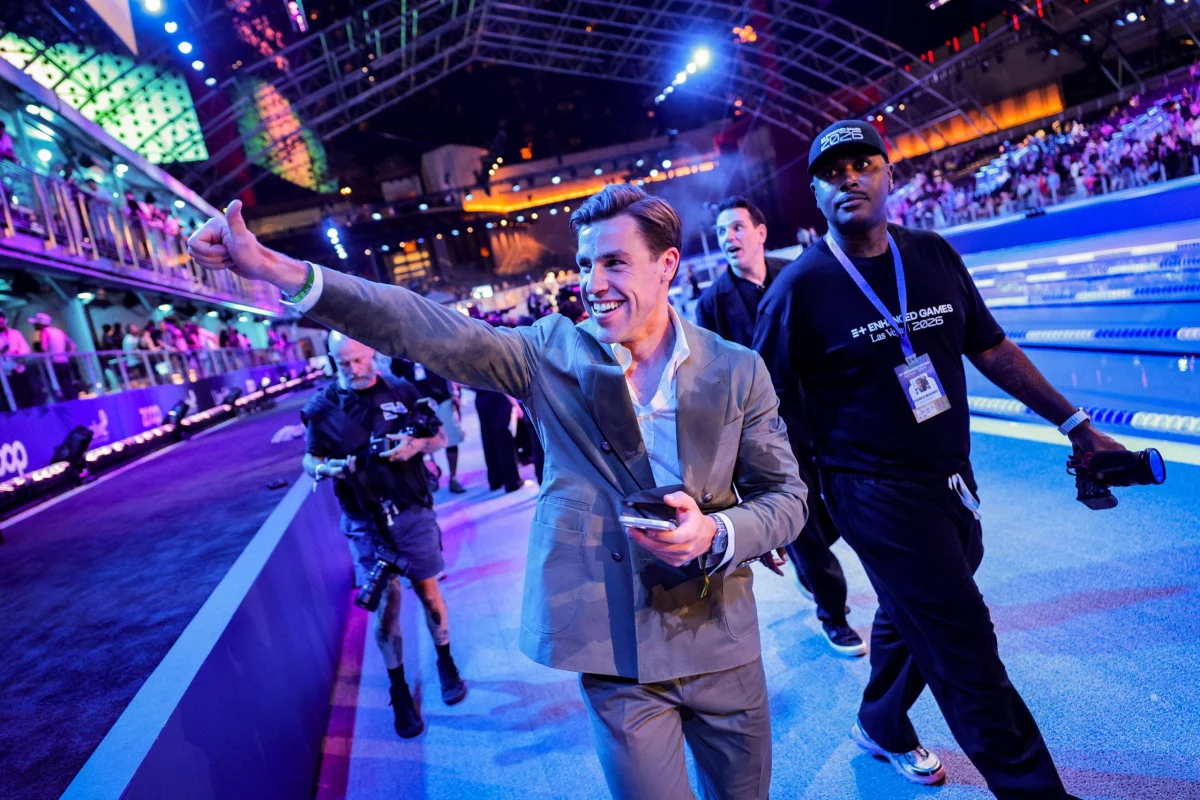
In the scorching Nevada desert, a profound shift in the landscape of elite athletics began to unfold over Memorial Day weekend. Under the intense Las Vegas sun, Canadian Olympian Boady Santavy, a weightlifter whose physique could easily grace the pages of a comic book, strained against a barbell laden with 183 kilograms, or roughly 403 pounds. This monumental effort was an attempt to surpass the global benchmark in the men’s snatch, a feat that would secure a $250,000 prize. After a torturous sequence of seconds, the weight fell, deemed an official "no lift," and Santavy, his expression a mix of anguish and frustration, limped away, his visible curses echoing the crushing disappointment of the moment.
Santavy’s intense pursuit of a world record was not merely another isolated sporting event; it was a pivotal moment within the inaugural Enhanced Games, a competition that has ignited a firestorm of controversy and debate across the global athletic community. Forty-two athletes — a diverse group comprising weightlifters, swimmers, and track runners — converged in Las Vegas for this unprecedented gathering. What distinguishes the Enhanced Games from virtually every other professional sports league or competition worldwide is its explicit endorsement of performance-enhancing drugs (PEDs). Here, the use of substances like anabolic steroids, testosterone, peptides, and human growth hormones is not just permitted, but actively facilitated under rigorous medical supervision.
A New Paradigm for Athletic Competition
The concept behind the Enhanced Games fundamentally challenges the long-standing ethical and regulatory frameworks of traditional sports. While critics have swiftly branded the event as the "Steroid Olympics," its organizers present a contrasting vision: an environment where athletes can push the boundaries of human performance without the veil of secrecy and the associated health risks prevalent in the clandestine world of doping. For twelve weeks leading up to the Las Vegas event, competitors underwent intensive training at an exclusive compound in the United Arab Emirates. During this period, a dedicated team of medical professionals meticulously crafted and monitored individualized "protocols" — bespoke drug regimens — for each athlete, aiming to optimize their performance while theoretically mitigating health dangers.
Beyond the radical approach to substance use, the Enhanced Games also introduced a compelling financial incentive structure. Participants received "appearance fees" simply for competing, a stark contrast to many amateur or even semi-professional events. More significantly, any athlete who managed to break a world record or secure a first-place finish stood to earn substantial cash rewards, with top prizes reaching an astounding $1 million for events such as the 100-meter sprint and 50-meter freestyle. This combination of open PED use, medical oversight, and lucrative prizes represents a deliberate and aggressive departure from established norms, effectively tearing up the conventional rulebook of professional sports.
The Shadow of Doping: A Historical Perspective
The controversy surrounding the Enhanced Games is deeply rooted in the contentious history of performance-enhancing drugs in competitive sports. For decades, the pursuit of victory has been marred by scandals involving illicit substances. From the systemic doping programs of East Germany in the 1970s and 80s, which saw female swimmers achieve unparalleled success at the cost of their long-term health, to high-profile individual cases like Canadian sprinter Ben Johnson at the 1988 Seoul Olympics, and the intricate web of deceit surrounding cyclist Lance Armstrong and the BALCO scandal, the narrative of doping is replete with tales of ambition, deception, and shattered reputations.
These revelations led to the formation of powerful anti-doping bodies like the World Anti-Doping Agency (WADA) in 1999 and the U.S. Anti-Doping Agency (USADA). Their mission has been to safeguard the integrity of sport by establishing strict testing protocols, maintaining a prohibited substances list, and imposing severe penalties on athletes found to be in violation. The ongoing "cat and mouse" game between athletes seeking an edge and agencies striving for a level playing field has defined modern elite sports. Consequently, WADA has unequivocally condemned the Enhanced Games as "dangerous and irresponsible," while USADA CEO Travis Tygart labeled it a "clown show that puts profit over people." These reactions underscore a fundamental philosophical divide: whether the essence of sport lies in celebrating natural human limits and fair competition, or in pushing the absolute boundaries of human potential, irrespective of the means.
Silicon Valley’s Vision: The Human Enhancement Movement
The origins of the Enhanced Games are inextricably linked to the burgeoning "human enhancement" industry, a sector enthusiastically embraced by Silicon Valley’s tech and venture capital elite. This bizarre spectacle is the brainchild of a startup founded by individuals with backgrounds in cryptocurrency, artificial intelligence, and biotechnology. It has garnered significant backing from influential figures such as mega-investor Peter Thiel, known for his contrarian views and interest in longevity, and former Coinbase executive Balaji Srinivasan.
This movement, often referred to as "biohacking," advocates for using technology, science, and medical interventions to optimize human performance, extend lifespan, and improve overall well-being. For many within this sphere, the traditional constraints of biology are seen not as immutable facts, but as problems to be solved through innovation. The Enhanced Games, in this context, becomes a highly visible, almost theatrical, manifestation of this philosophy, showcasing the potential (and risks) of such enhancement on a grand stage. The underlying business, Enhanced Group, Inc., recently completed an initial public offering with a $1.2 billion valuation, positioning itself at the forefront of this industry. The company actively markets personalized health treatments, including FDA-approved peptides, GLP-1s for weight management, and testosterone injections, through its "Live Enhanced" consumer platform, which recently announced a multi-million-dollar partnership with AI company Rezolve Ai to build a digital telehealth solution.
The Peptide Gold Rush: A Cultural Phenomenon
The Enhanced Games serves not only as a sporting event but also as a powerful marketing platform for the broader human enhancement industry, particularly the burgeoning peptide market. Peptides, chains of amino acids that act as signaling molecules in the body, have gained considerable attention for their purported benefits in muscle growth, fat loss, anti-aging, and recovery. The industry is on the cusp of a potential "gold rush," awaiting significant regulatory changes.
A key moment in this unfolding narrative occurred when U.S. Health Secretary Robert F. Kennedy Jr. publicly endorsed peptides on "The Joe Rogan Experience" podcast, suggesting he would advocate for their increased accessibility. This endorsement, coupled with Kennedy’s own visibly enhanced physique, has injected significant momentum into the conversation. The Food and Drug Administration (FDA) is scheduled to convene a pharmaceutical advisory committee in July 2026 to deliberate on loosening restrictions on certain previously banned peptides. This regulatory uncertainty has created a speculative environment, with some startups developing products in a "legal gray zone," hoping to capture market share if regulations ease, while others adhere strictly to FDA-approved compounds.
Silicon Valley has emerged as a major hub for this peptide frenzy. Companies like Superpower, an AI longevity startup, and Noho Labs, backed by prominent investor Elad Gil, are gaining traction. Elite tech clubs, such as the AGI House, have reportedly hosted "peptide injecting parties," signaling a growing acceptance and integration of these substances into the lifestyle of the valley’s influential figures.
Beyond the tech elite, the peptide trend is seeping into mainstream culture, fueled by a national upswing in fitness culture and the pervasive influence of social media. The "looksmaxxing" phenomenon, a trendy term for extreme self-beautification efforts, particularly among young men, often involves the pursuit of an idealized physique through intense workouts and, increasingly, performance-enhancing substances. Online influencers like "Clavicular" and popular podcasters such as Joe Rogan and Andrew Huberman have played a significant role in popularizing and normalizing discussions around peptides and other forms of self-optimization. This widespread cultural embrace, however, raises serious concerns among health professionals about the potential for consumers, especially younger individuals, to turn to unregulated and potentially dangerous compounds with disastrous long-term health consequences. The Enhanced Games, in this view, is a grand advertisement, subtly encouraging this cultural shift.
The Spectacle Unfolds in Sin City
On May 24th, the day of the competitions, Las Vegas fully embraced its role as the host of this peculiar spectacle. A marvel of rapid construction, a $50 million open-air stadium, complete with a track, swimming pools, and a dedicated weightlifting pavilion, materialized in a matter of weeks. Risers filled with an enthusiastic, predominantly youthful audience, many of whom appeared to be social media influencers, cheering under the blazing sun.
The atmosphere of the games was a curious blend, less a traditional, solemn athletic event and more a flamboyant fusion of "America’s Got Talent," professional wrestling, and the gladiatorial contests of ancient Rome. A booming announcer narrated the day’s proceedings with a dramatic flourish, lending an air of theatricality reminiscent of WrestleMania. The evening culminated with a brief concert by The Killers, a quintessential Vegas act, further blurring the lines between sport and entertainment. Athletes, with their unnaturally developed musculature, moved about the grounds like mythical figures, their glistening bodies a testament to their "enhanced" regimens.
Throughout the day, Maximilian Martin, the 29-year-old CEO and co-founder of Enhanced, moved through the venue, impeccably dressed in a suit that became increasingly damp as he repeatedly rushed to the poolside to embrace victorious swimmers. Christian Angermayer, the billionaire co-founder, maintained a serene demeanor, occasionally greeting members of the press. Even notable tech personalities, such as biohacker Bryan Johnson, famous for his extreme longevity pursuits, were present, with Johnson offering commentary on the spectacle despite lacking any known professional athletic background. His distinctive attire, evoking a whimsical "Sleepytime Bear," added another layer of eccentricity to the event.
Profiles in Performance: Athletes and Their Motivations
The competitive events themselves provided moments of genuine athletic intensity. The athletes represented a spectrum of motivations and backgrounds. James Magnussen, a former Australian Olympic medalist in swimming, saw the Enhanced Games as an opportunity for a high-profile comeback. He had previously spoken positively about the rejuvenating effects of peptides and testosterone, claiming they made him feel "18 again." However, his return proved challenging, as he failed to break any records and ultimately finished last in two races.
Then there was Hafthor "Thor" Bjornsson, the colossal Icelandic strongman and actor, widely recognized for his role as Ser Gregor Clegane in "Game of Thrones." Bjornsson, who has openly admitted to past steroid use, viewed the competition as a chance to pursue records under safer, medically supervised conditions. His thrilling attempt to deadlift a staggering 1,135.4 pounds, while ultimately unsuccessful, captivated the audience, demonstrating the raw power unleashed by enhancement.
In contrast, American swimmer Hunter Armstrong presented a different narrative. Despite the permissive environment, Armstrong chose to abstain from all supplemental intake, driven by his Olympic aspirations and a personal aversion to doping. His primary motivation, he candidly admitted to journalists, was the prize money. Remarkably, Armstrong triumphed in his event, the 50-meter backstroke, proving that even in an "enhanced" field, unaugmented talent and training could still lead to victory.
The day reached its dramatic zenith with the final event: the men’s 50-meter freestyle. Kristian Gkolomeev, a towering Greek swimmer, surged through the water at an astonishing 20.81 seconds, shattering the existing world record by a mere 0.07 seconds. The crowd erupted, venue lights flashed red in a game-show-like celebration, and Martin, his suit once again soaked, rushed to embrace the triumphant Gkolomeev. It was the games’ first and only world record, a moment of undeniable athletic achievement that provided a powerful, albeit controversial, capstone to the event.
Beyond the Finish Line: Implications for Sport and Society
The Enhanced Games unequivocally sparked a global conversation, extending far beyond the realm of sports. While organizers steadfastly championed "health" and "safety" as their core concerns, the undeniable financial incentives and the commercial nature of the Enhanced Group’s wider business raise critical questions about the true motivations. Maximilian Martin, with his calm demeanor, openly discussed monetizing "chemically-altered mutants," drawing parallels to the "enhanced" physiques seen in Hollywood’s superhero blockbusters. Christian Angermayer, his co-founder, succinctly articulated his capitalist philosophy, asserting that "there is no reason why something that is good should not also be a business."
Yet, the event’s broader implications for culture and society demand deeper scrutiny. The choice of Las Vegas, a city synonymous with spectacle, consumption, and fleeting gratification, speaks volumes. It reinforces the notion that the games, much like the general embrace of "human enhancement," may be less about long-term wellness and more about immediate gratification and the pursuit of an idealized, often superficial, aesthetic. The "vanity" inherent in America’s fitness culture, which often transcends genuine health for self-aggrandizement, finds a new, technologically advanced expression here.
The long-term trickle-down effect of normalizing PED use, particularly on younger generations susceptible to social media pressures and body image concerns, remains a significant public health worry. Will the promise of medically supervised enhancement lead to a safer environment for those already doping in secret, or will it inadvertently encourage a wider demographic to seek out less regulated, more dangerous compounds?
As the extravagant, three-day event concluded, and the last cheers faded into the desert night, the questions lingered. The encounter with CEO Maximilian Martin in a hotel bathroom, primly adjusting his suit after the games, underscored the pervasive business ambition. His quiet "Thank you" in response to a simple "Congratulations" felt like an acknowledgement not just of the event’s culmination, but of a calculated gamble, a bold experiment whose ultimate success and societal impact remain profoundly uncertain. The Enhanced Games is not merely a sporting competition; it is a declaration, a vision of a future where human limits are fluid, and the boundaries of performance are perpetually pushed, for better or for worse, in the dazzling, controversial arena of human optimization.







 Azin Asro