Amir Mahmud
In an era when Silicon Valley was largely captivated by the ephemeral world of software-as-a-service (SaaS) and enterprise applications, Eclipse Ventures embarked on a decidedly contrarian path. Founded in 2015 by Lior Susan, the venture capital firm staked its future on a bold premise: the digitization of the physical world. This thesis, initially met with skepticism and a sense of isolation within the tech investment community, has now culminated in a monumental financial validation, highlighted by a staggering $2.5 billion return from its early investment in semiconductor innovator Cerebras Systems. This windfall is not merely a singular success but, according to Susan, marks the beginning of a broader validation for an investment strategy deeply rooted in tangible innovation.
A Vision Against the Tide: The Genesis of Eclipse Ventures
The mid-2010s represented a distinct period in the technology investment landscape. Venture capital poured overwhelmingly into software companies, particularly those offering cloud-based solutions, subscription models, and platforms that promised rapid scalability with minimal physical infrastructure. The prevailing wisdom championed asset-light business models, prioritizing intellectual property in code over capital-intensive hardware, manufacturing, or deep engineering. Startups could launch with relatively small teams, iterate quickly, and scale globally through the internet, making software an attractive, seemingly low-risk, high-reward proposition for investors.
It was within this context that Lior Susan and his co-founders at Eclipse Ventures charted a different course. Their "physical-world" thesis posited that while software was undoubtedly transformative, the vast majority of global economic activity — an estimated 85% of global GDP — remained intrinsically tied to the physical realm. This included everything from manufacturing, logistics, and energy production to infrastructure, agriculture, and defense. Susan believed that significant, foundational value could be created by applying advanced technologies, including artificial intelligence, robotics, and sophisticated materials science, to these traditionally analog or less-digitized sectors. This involved investing in companies that built not just code, but also machines, components, and entire systems designed to interact with and transform the real world. This approach, which demanded substantial capital, long development cycles, and a tolerance for complex engineering challenges, felt "lonely" in a market enamored with the speed and agility of software startups. The firm’s commitment to this long-term vision, even when unpopular, underscored a deep conviction in the enduring value of physical infrastructure and tangible innovation.
The Cerebras Catalyst: A Billion-Dollar Validation
The true testament to Eclipse’s prescient vision arrived with the public market debut of Cerebras Systems. In 2016, Eclipse Ventures made its initial Series A investment of $6.5 million in Cerebras, a company focused on developing specialized semiconductors for artificial intelligence workloads. This early bet was a significant commitment to a hardware-intensive venture in an AI landscape still in its nascent stages. Over the years, Eclipse continued to back Cerebras, ultimately investing a total of $147 million. This sustained support culminated in an extraordinary return: when Cerebras went public, the investment generated a staggering $2.5 billion, representing a 17-fold return on capital based on the IPO price of $185 per share.
Cerebras Systems stands at the forefront of the AI hardware revolution, designing and manufacturing the world’s largest AI chips, the Wafer-Scale Engine (WSE). Unlike traditional multi-chip GPU architectures, Cerebras integrates an entire wafer of silicon into a single, massive chip, enabling unprecedented computational power and memory bandwidth for deep learning. This innovation directly addresses the escalating demands of training increasingly complex AI models, which require immense processing capabilities and energy efficiency. The company’s success underscores the critical role of specialized hardware infrastructure in advancing AI, a domain where the U.S. and other nations are vying for technological supremacy. The Cerebras IPO not only provided a monumental financial return for Eclipse but also served as a powerful proof point for the firm’s physical-world thesis, demonstrating that substantial value can indeed be unlocked by investing in the foundational hardware that underpins the next generation of technological advancement. It validated the belief that the "picks and shovels" of the AI gold rush, particularly in advanced silicon manufacturing, represent a strategic and lucrative frontier.
Beyond Software: The Shifting Sands of Innovation
The profound success of Cerebras and the broader momentum in physical-world tech are indicative of a significant paradigm shift within the technology ecosystem. For years, the conventional wisdom held that software provided an impenetrable "moat" — a sustainable competitive advantage derived from network effects, proprietary algorithms, and the inherent difficulty of replicating complex codebases. However, Lior Susan argues that this perception is rapidly eroding. The advent of highly sophisticated generative AI models, such as Anthropic’s Claude Code and OpenAI’s advanced iterations, is fundamentally altering the economics and accessibility of software development. These powerful tools can "vibe code," or generate functional software applications and code snippets with unprecedented speed and efficiency, potentially commoditizing certain aspects of bespoke software creation.
This development poses a challenge to the traditional software business model, where the unique value often resided in the proprietary code itself. If enterprises can leverage AI to rapidly develop tailored software solutions internally or with minimal external dependency, the perceived competitive advantage of many SaaS companies could diminish. In contrast, the "moat" around physical-world technologies remains robust. As Susan eloquently puts it, "What you cannot do with ‘vibe code’ is manufacture wafers, because you need machines and silicon, and they need clean rooms, and a bunch of other things." The barriers to entry in physical tech are inherently higher, involving massive capital expenditure, specialized equipment, complex supply chains, deep material science expertise, and often, years of research and development. This distinction highlights a fundamental re-evaluation of where sustainable competitive advantage truly lies in the evolving tech landscape. It suggests a cultural shift as well, with a renewed appreciation for the intricate, often messy, but ultimately indispensable process of building tangible infrastructure and products that interact with the real world.
Broadening Horizons: Eclipse’s Diverse Physical-World Portfolio
The success of Cerebras is just one prominent example within Eclipse’s increasingly diverse and thriving portfolio. The firm’s commitment to the physical world extends across a wide spectrum of industries, encompassing robotics, sustainable energy solutions, advanced manufacturing, defense technologies, space exploration, and even mining. This breadth of investment demonstrates the expansive applicability of the "physical-world" thesis beyond just semiconductors.
The trajectory of Eclipse’s portfolio companies underscores a dramatic shift in investor sentiment. In its initial eight years, from 2015 to 2023, the cumulative fundraising for all Eclipse portfolio companies amounted to less than $4 billion. This figure reflects the early skepticism and the nascent stage of the market for physical-world tech. However, the tide has turned emphatically. Last year alone, Eclipse-backed companies collectively raised nearly $15 billion from external investors. The momentum continued into the first quarter of 2026, with an additional $4.5 billion secured in follow-on rounds.
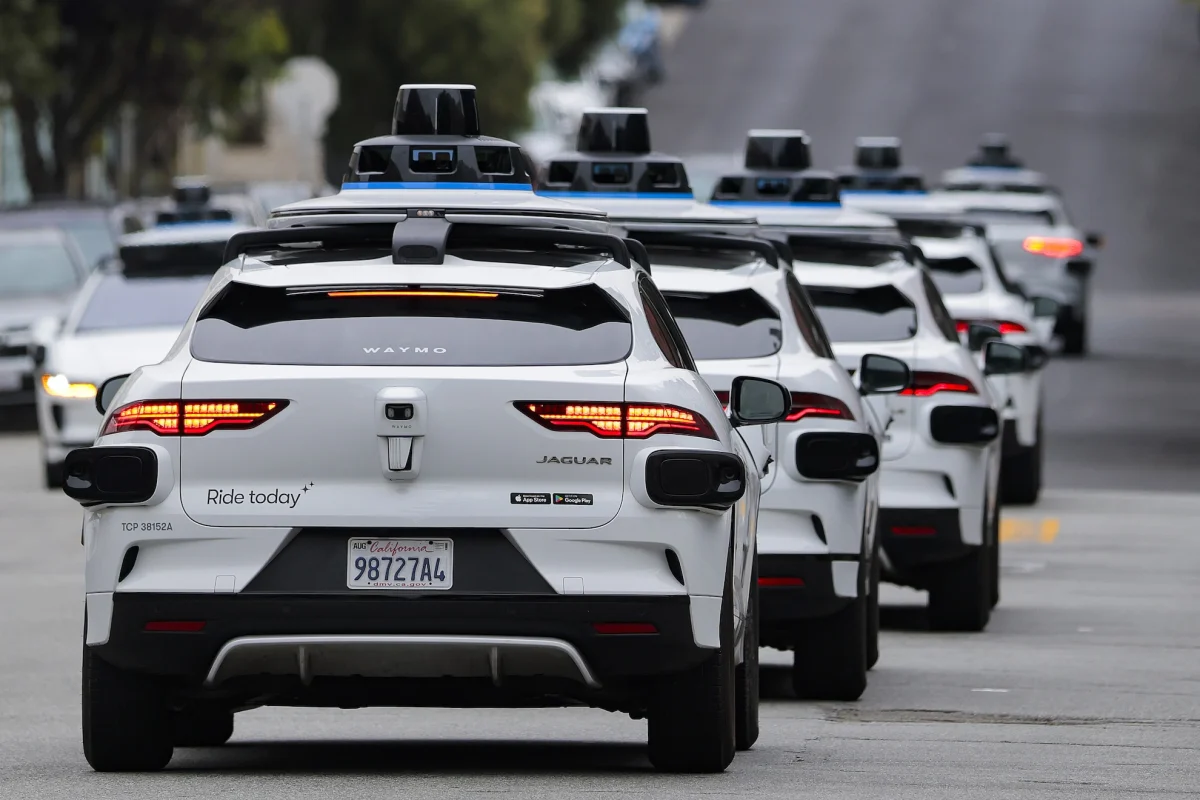
These recent funding rounds include some remarkable figures, highlighting the increasing appetite for deep tech and physical innovation. Wayve, a leader in self-driving technology, secured an impressive $1.2 billion. True Anomaly, focused on space domain awareness and security, raised $650 million. Bedrock Robotics, developing advanced robotic systems for complex environments, attracted $270 million, and Oxide Computer, specializing in rack-scale computing infrastructure, closed a $200 million round. Significantly, Eclipse Ventures was the Series A investor for all four of these companies, demonstrating their early conviction and ability to identify foundational innovators. This pattern of early, impactful investment followed by massive later-stage growth illustrates how Eclipse has successfully cultivated a portfolio designed to capitalize on the increasing demand for tangible, high-impact technologies.
A Confluence of Forces: The Macro Environment for Physical Tech
The resurgence of interest and investment in physical-world technologies is not merely a cyclical trend but, according to Lior Susan, a convergence of powerful, reinforcing forces. He identifies five critical factors—capital, customer demand, talent, technology, and policy—that are now uniquely aligned to foster an unprecedented era of physical innovation in America, a phenomenon he likens to the industrial revolutions spearheaded by figures like Henry Ford and Andrew Carnegie.
Firstly, capital is flowing into these sectors at an accelerating rate. The success of companies like Cerebras and the impressive late-stage funding rounds for other Eclipse portfolio companies signal a growing confidence among investors that physical tech can deliver substantial returns. This capital is crucial for ventures that often require significant upfront investment in research, development, and infrastructure.
Secondly, customer demand is robust and diversified. Industries worldwide are seeking innovative solutions to enhance efficiency, resilience, and sustainability. From manufacturers requiring advanced automation and robotics to energy companies needing next-generation solutions for renewable power and grid modernization, the market pull for physical technologies is immense. National security concerns also drive demand for advanced defense and space capabilities.
Thirdly, a crucial talent shift is underway. A new generation of engineers, scientists, and entrepreneurs, perhaps disillusioned by the perceived saturation or commoditization of pure software, are increasingly drawn to the tangible challenges and profound impact offered by building in the physical world. This includes experts in fields like robotics, materials science, advanced manufacturing, and deep learning for physical systems.
Fourthly, technology, particularly artificial intelligence, acts as a powerful accelerant. AI is no longer confined to digital interfaces; it is increasingly embedded into physical systems, enabling advanced robotics to perform complex tasks, optimizing manufacturing processes, enhancing energy efficiency, and powering autonomous vehicles. This integration of AI with hardware is unlocking capabilities that were once purely theoretical, making previously intractable physical-world problems solvable.
Finally, policy plays an indispensable role. Governments, particularly in the United States, are actively encouraging these industries through a range of incentives. This includes significant subsidies, such as those provided by the CHIPS and Science Act aimed at boosting domestic semiconductor manufacturing, as well as favorable regulatory environments, defense spending initiatives, and investments in critical infrastructure and clean energy. These policies create a supportive ecosystem, mitigating risks and accelerating the growth of strategic physical industries. This confluence of capital, demand, talent, technology, and policy creates a uniquely fertile ground for innovators. "For builders like us," Susan asserts, "this is the best time to build those companies."
The Future Is Tangible: Implications for the Tech Ecosystem
The validation of Eclipse Ventures’ "physical-world" thesis, spearheaded by the Cerebras success and amplified by broad portfolio growth, signals more than just a shift in venture capital trends; it portends a fundamental reorientation of the broader technology ecosystem. This reorientation has profound implications for how innovation is perceived, funded, and ultimately integrated into society.
For venture capital, it suggests a maturation beyond purely digital plays, encouraging deeper engagement with capital-intensive, long-horizon investments that address foundational societal and industrial challenges. This could lead to a more diversified VC landscape, with firms specializing in the intricate interplay of hardware, software, and real-world deployment. Public markets are also recognizing the strategic value of these tangible assets, as evidenced by the record highs for semiconductor giants like TSMC and Micron, reflecting the critical importance of physical infrastructure in the digital age.
Socially and culturally, this shift signifies a renewed appreciation for "builders" — those who craft the tangible tools and systems that power our economies and improve our lives. It moves beyond the often abstract nature of pure software to highlight the essential work of engineers, manufacturers, and material scientists. This industrial renaissance could foster greater economic resilience by strengthening domestic manufacturing capabilities, addressing critical supply chain vulnerabilities, and creating high-skill jobs in sectors vital for national security and economic growth. The focus on areas like sustainable energy, advanced robotics, and resilient infrastructure also holds immense potential for addressing pressing global challenges, from climate change and resource scarcity to enhancing productivity and quality of life. The era of purely digital disruption may be giving way to a period where innovation is increasingly defined by its tangible impact, proving that the most profound technological advancements often arise from the intricate dance between bits and atoms.