Amir Mahmud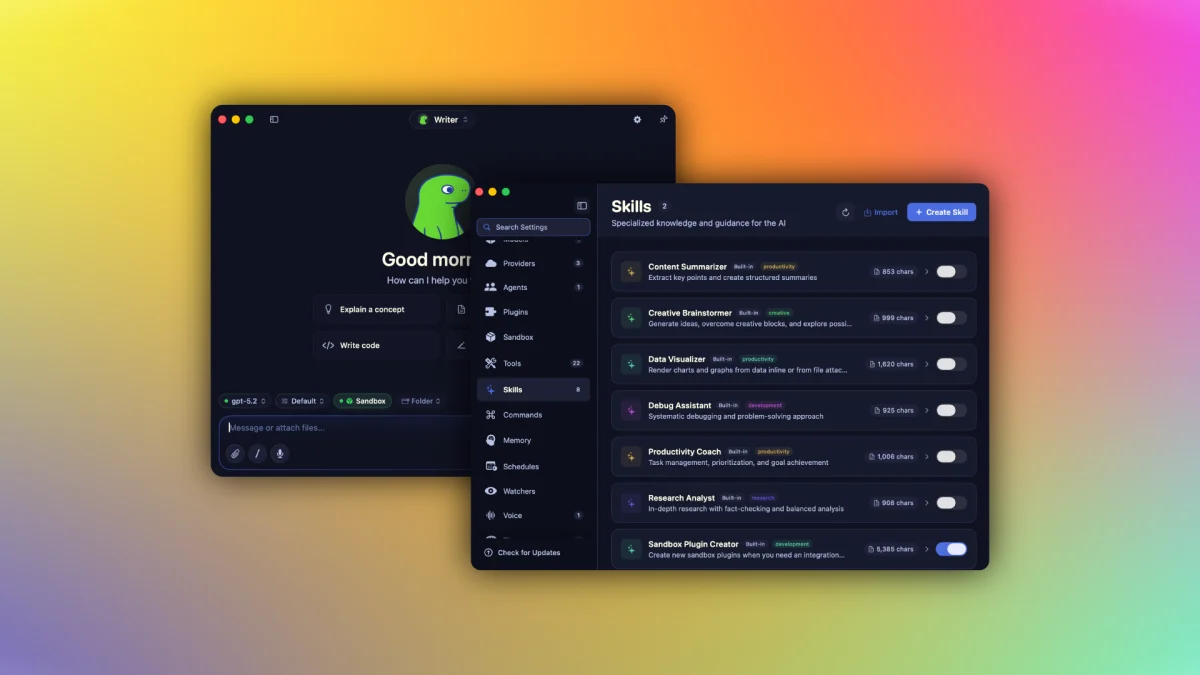
The burgeoning field of artificial intelligence, particularly large language models (LLMs), has rapidly evolved from a niche research area into a pervasive technological force. As these sophisticated AI capabilities become increasingly integrated into daily life and professional workflows, a critical shift is underway from exclusive reliance on massive cloud-based infrastructures to a more distributed, personalized approach. At the forefront of this movement is Osaurus, an innovative open-source LLM server designed exclusively for Apple’s macOS ecosystem, offering users unprecedented control over their AI interactions by seamlessly blending local and cloud processing while keeping their data securely on their own hardware.
The Genesis of Osaurus: A Shift from Cloud Dependence
The narrative of Osaurus begins with a keen observation of the evolving AI market: while large language models offered transformative power, their primary mode of operation — through cloud-based Application Programming Interfaces (APIs) — presented inherent challenges. These included concerns over data privacy, the recurring costs associated with "tokens" (the units of usage for AI processing), and potential latency issues dependent on internet connectivity.
Osaurus co-founder Terence Pae initially explored the AI space with Dinoki, a desktop AI companion envisioned as a modern-day, AI-powered equivalent to Microsoft’s Clippy. Dinoki aimed to assist users directly on their desktops, but a recurring question from potential customers highlighted a fundamental friction point: why invest in an application if they still had to incur ongoing token costs for every interaction with a cloud-based AI? This feedback was pivotal, prompting Pae, a former software engineer at Tesla and Netflix, to delve deeper into the feasibility and benefits of running AI models directly on a user’s machine.
"That’s how Osaurus started," Pae explained, articulating the vision to develop a personal AI assistant that could operate locally. His insight was that a Mac-based AI could deeply integrate with a user’s digital environment, accessing files, browser history, and system configurations without ever needing to send sensitive data off-device. This vision laid the groundwork for Osaurus, which he began building as an open-source project, iterating and refining features in public, harnessing community feedback to shape its development.
Architecting a Personal AI Ecosystem
The core innovation of Osaurus lies in its ability to act as a versatile "harness" or control layer, providing a unified interface for interacting with a diverse array of AI models, whether they reside locally on the user’s Mac or are accessed via various cloud providers. This flexible architecture empowers users to choose the optimal AI model for a given task, leveraging different models’ unique strengths and specializations without being locked into a single ecosystem. For instance, one model might excel at creative writing, while another is superior for code generation or data analysis. Osaurus facilitates this seamless switching, ensuring that the user’s files, tools, and even the AI model’s internal memory remain securely within their local hardware environment.
This approach addresses a significant limitation of many contemporary AI tools, which often require users to manually switch between different platforms or APIs to access varied AI capabilities. By centralizing control, Osaurus streamlines the user experience, making advanced AI more accessible and manageable.
Navigating the Hybrid AI Landscape
The AI landscape today is characterized by a rapid proliferation of models, both proprietary and open-source. Cloud-based giants like OpenAI (with its GPT series), Anthropic (Claude), Google (Gemini), and xAI (Grok) dominate the high-performance, large-scale AI market. Concurrently, the open-source community has seen an explosion of innovation with models like Llama, DeepSeek, Qwen, and Gemma, which are increasingly optimized for local deployment.
Osaurus deftly bridges this divide. For users requiring the immense processing power and vast knowledge bases of cloud models, Osaurus provides connectivity to services from OpenAI, Anthropic, Gemini, xAI/Grok, Venice AI, OpenRouter, and Ollama. This ensures access to cutting-edge capabilities. Crucially, for tasks demanding privacy or independence from internet connectivity, Osaurus supports a wide range of locally executable models, including MiniMax M2.5, Gemma 4, Qwen3.6, GPT-OSS, Llama, and DeepSeek V4. It also integrates with Apple’s own on-device foundation models and Liquid AI’s LFM family, capitalizing on the advanced neural engines and unified memory architecture of Apple’s M-series chips, which are increasingly optimized for on-device machine learning tasks.
Beyond merely connecting models, Osaurus functions as a full Model Context Protocol (MCP) server. This means it can grant any MCP-compatible client access to a rich suite of tools and plugins. The application ships with over 20 native plugins, extending its capabilities to interact directly with macOS features and popular applications. These include plugins for Mail, Calendar, Vision (for image analysis), macOS system usage, XLSX and PPTX document manipulation, web browsing, music control, Git version control, filesystem navigation, general search, and data fetching. The recent addition of voice capabilities further enhances the interactive experience, moving towards a truly conversational and hands-free AI assistant.
Addressing Performance and Security
Running sophisticated AI models locally is a resource-intensive endeavor, a primary reason why cloud computing has historically been the dominant paradigm. Local AI demands substantial system resources, particularly Random Access Memory (RAM). To run most local models, Osaurus currently recommends systems with at least 64GB of RAM, with larger, more powerful models like DeepSeek v4 benefiting significantly from 128GB of RAM. This hardware dependency means that while the dream of truly personal AI is closer than ever, it still requires a robust machine, typically a high-end Mac Studio or MacBook Pro.
However, this barrier is progressively lowering. Pae remains optimistic about the trajectory of local AI performance. He highlights the "intelligence per wattage" metric, which has been advancing dramatically. "Last year, local AI could barely finish sentences, but today it can actually run tools, write code, access your browser, and order stuff from Amazon… It’s just getting better and better," he observes. This rapid improvement is fueled by advancements in model quantization, efficient inference engines, and specialized hardware accelerators.
Security is another paramount concern, especially when AI models interact with personal data and system functions. Osaurus tackles this by running AI processes within a hardware-isolated, virtual sandbox. This containment mechanism limits the AI’s access and scope, preventing unauthorized data exfiltration or malicious system modifications, thereby safeguarding the user’s computer and sensitive information. This proactive security posture differentiates Osaurus from some developer-centric "harness" tools, like OpenClaw or Hermes, which, while powerful, might require a higher degree of technical expertise to configure securely and could inadvertently introduce vulnerabilities.
The Broader Implications: Privacy, Cost, and Sustainability
Osaurus’s approach to hybrid local and cloud AI carries significant implications across several dimensions:
Privacy: For individuals and organizations dealing with highly sensitive information—such as legal documents, healthcare records, or proprietary business data—the ability to process AI queries entirely on-device is a game-changer. It eliminates the need to transmit confidential data to third-party cloud servers, mitigating risks of data breaches, surveillance, or compliance violations. This aspect makes local LLMs particularly attractive for enterprise applications in regulated industries.
Cost Efficiency: The "token economy" of cloud AI models can become prohibitively expensive for heavy users or applications requiring frequent interactions. By offloading processing to local hardware, users can dramatically reduce or eliminate these recurring costs, making AI usage more predictable and economically viable in the long run. While there’s an upfront hardware investment, the long-term operational savings can be substantial.
Accessibility and Independence: Local AI empowers users with greater autonomy. It reduces reliance on constant internet connectivity, making AI accessible in environments with limited or no network access. Furthermore, it democratizes access to powerful AI capabilities, freeing users from dependence on specific cloud providers and their fluctuating service terms or potential downtimes.
Environmental Sustainability: Pae emphasizes the potential for local AI to lessen the ecological footprint of the digital world. "We’re seeing this explosive growth in the AI space where [cloud AI providers] have to scale up using data centers and infrastructure, but we feel like people haven’t really seen the value of the local AI yet," he notes. Large AI data centers consume enormous amounts of energy and water. By leveraging the efficiency of modern personal computing hardware, particularly Apple’s M-series chips, Osaurus proposes a model where distributed local processing can substantially lower the aggregate power consumption compared to centralized cloud infrastructure. Deploying a Mac Studio on-premise, for example, could offer cloud-like capabilities with significantly reduced energy demand.
Competitive Edge and Future Trajectory
With over 112,000 downloads since its public launch nearly a year ago, Osaurus has demonstrated significant traction within the rapidly evolving AI landscape. It competes with other tools that enable local model execution, such as Ollama, Msty, and LM Studio. However, Osaurus differentiates itself through its dedicated Apple-only focus, its extensive suite of native macOS plugins, its robust security model, and perhaps most notably, its user-friendly interface designed to appeal to consumers and non-developers, not just command-line experts.
The founders, Terence Pae and Sam Yoo, are currently refining their strategic vision while participating in the New York-based startup accelerator Alliance. Their immediate focus includes enhancing the platform’s capabilities and expanding its reach. Looking ahead, Osaurus aims to explore enterprise applications, particularly in sectors like legal and healthcare, where the privacy and data residency benefits of local LLMs are paramount.
As AI models continue their trajectory of miniaturization and efficiency, the vision of a powerful, private, and personalized AI assistant running entirely on one’s own device is becoming an increasingly tangible reality. Osaurus stands as a testament to this shift, offering a compelling glimpse into a future where individuals and businesses can harness the full potential of artificial intelligence with unparalleled control, security, and autonomy.