 Amir Mahmud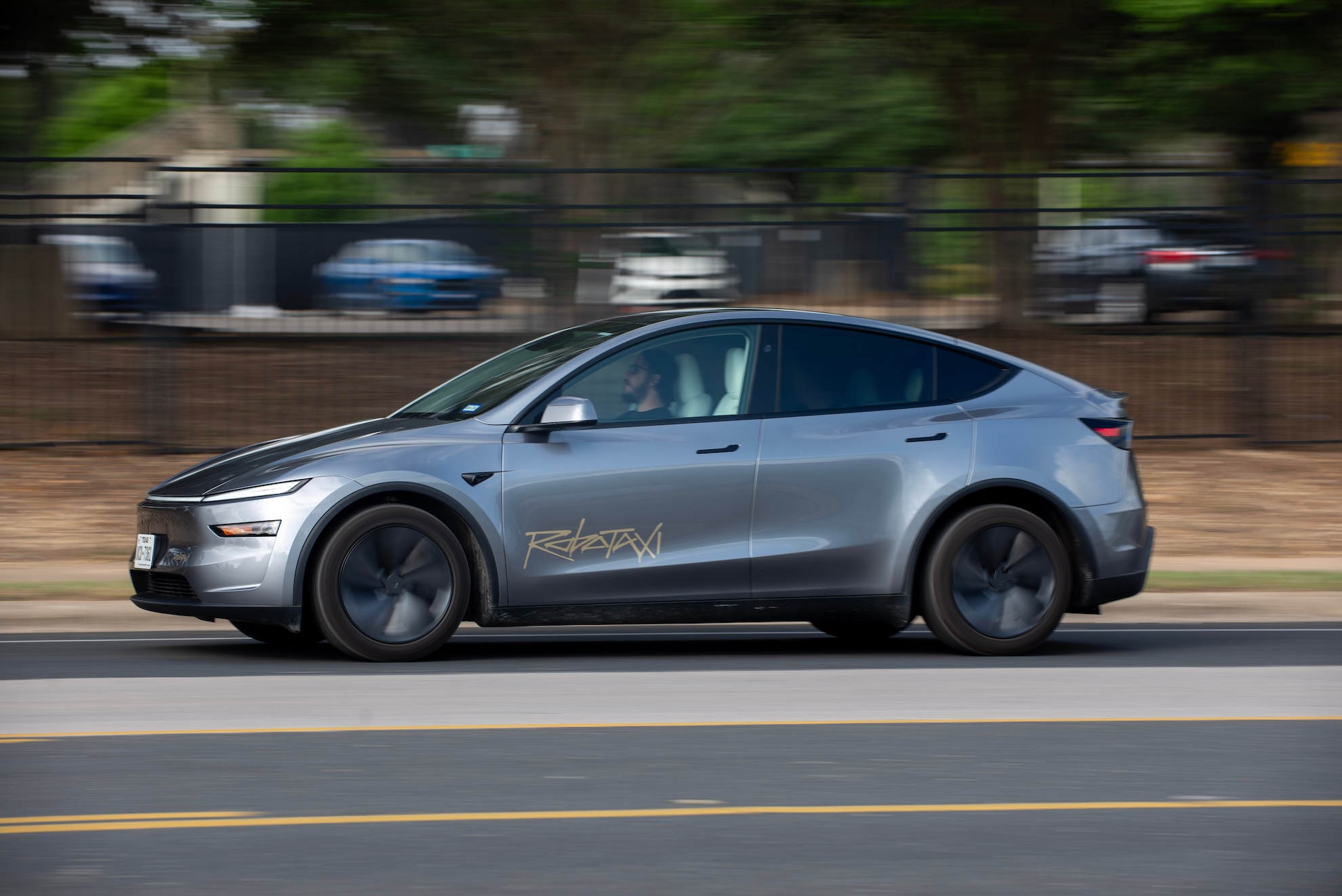
Tesla, the electric vehicle and clean energy giant, has officially broadened the operational scope of its autonomous ride-hailing service, known as Robotaxi, by introducing it to the major metropolitan areas of Dallas and Houston, Texas. This strategic expansion, confirmed through a concise social media announcement from the company, signals a significant step in Tesla’s long-held ambition to revolutionize personal transportation through fully autonomous technology. The announcement included a brief 14-second video, visually demonstrating Tesla vehicles navigating urban environments without any human intervention in the driver’s seat, underscoring the driverless nature of these new operations.
A Deep Dive into Tesla’s Autonomous Strategy
The deployment in Dallas and Houston represents a critical phase in Tesla’s journey toward a widespread autonomous network. The company has been a prominent, and often controversial, player in the autonomous vehicle (AV) space, championing a vision-only approach to self-driving technology, in contrast to many competitors who rely on a suite of sensors including lidar and radar. For years, Tesla CEO Elon Musk has consistently articulated a future where autonomous robotaxis would not only generate substantial revenue for the company but also fundamentally alter urban mobility. This vision underpins the development of Tesla’s Full Self-Driving (FSD) software, which, despite its name, has until recently operated as a Level 2 driver-assistance system requiring constant human supervision. The transition to fully driverless (Level 4 or 5) operations for its robotaxi service marks a crucial pivot, moving from assisted driving features to truly autonomous functionality where the vehicle handles all aspects of driving under specific conditions.
Tesla’s FSD software has evolved through numerous iterations, starting with basic Autopilot features and progressing to more sophisticated capabilities like navigate on Autopilot, automatic lane changes, and traffic light and stop sign control. The FSD Beta program, launched to a select group of customers, allowed early adopters to test advanced features on public roads, providing invaluable real-world data for the company’s AI models. This crowdsourced data collection has been a cornerstone of Tesla’s development methodology, differentiating it from competitors who often conduct more controlled, smaller-scale testing. The company’s belief is that a vast dataset of real-world driving scenarios, processed by powerful neural networks, is the key to achieving robust and reliable autonomy.
The Road to Robotaxi: A Brief History
The concept of robotaxis has been integral to Tesla’s long-term master plan, first outlined by Musk in 2016. He famously predicted a million robotaxis on the road by 2020, a target that, like many of his timelines, proved highly ambitious and was not met. Nevertheless, the pursuit of this goal has driven significant investment and engineering effort within the company.
The journey to driverless operation for Tesla’s ride-hailing service officially commenced in Austin, Texas, last year, marking the company’s initial foray into commercial robotaxi services. This launch was closely watched by industry observers and regulators alike. Following an initial period of operation with human safety drivers, Tesla took the significant step in January 2026 to remove these monitors from its Austin robotaxis, allowing the vehicles to operate completely autonomously within defined operational design domains (ODDs). This move positioned Tesla alongside a select few companies, such as Waymo and Cruise, that have achieved driverless commercial deployments in the United States.
Texas has emerged as a particularly amenable state for autonomous vehicle development and deployment, largely due to its relatively permissive regulatory environment compared to states like California, which has historically imposed stricter testing and deployment requirements. The state’s large, sprawling urban centers, coupled with its forward-looking stance on AV legislation, provide an attractive testing ground for companies looking to scale their operations. Tesla’s decision to concentrate its early robotaxi deployments exclusively within Texas underscores this strategic advantage, leveraging a consistent regulatory framework across its operational zones.
Operational Footprint and Safety Scrutiny
With the addition of Dallas and Houston, Tesla’s robotaxi service now extends across three major Texas cities. While the expansion is officially underway, crowdsourced data from platforms like Robotaxi Tracker suggests that the initial deployment in the new markets might be quite limited. As of recent reports, only a single Tesla robotaxi vehicle was registered in each of Dallas and Houston, starkly contrasting with the 46 active vehicles logged in Austin. This suggests a cautious, phased rollout, potentially allowing Tesla to gather localized data and fine-tune its FSD software for the unique driving conditions of these new cities before scaling up its fleet. Such an approach is common in the AV industry, where initial deployments often involve a small number of vehicles to test the waters and ensure operational stability.
The expansion comes amidst ongoing scrutiny regarding the safety and reliability of autonomous driving systems. A February filing by Tesla revealed that its Austin robotaxis had been involved in 14 crashes since their launch. The nature and severity of these incidents, as well as the question of fault, are critical details that remain under review by regulatory bodies such as the National Highway Traffic Safety Administration (NHTSA). It is important to contextualize such figures; while any incident involving an autonomous vehicle draws significant attention, a comprehensive understanding requires comparing these rates to human-driven accident rates in similar operational environments and considering factors such as vehicle miles traveled and incident severity. The AV industry as a whole is under intense pressure to demonstrate superior safety performance compared to human drivers to gain widespread public acceptance and regulatory approval.
Beyond its fully driverless robotaxi service, Tesla also operates a more limited ride-hailing service in the San Francisco Bay Area. This particular service, however, still relies on human drivers, indicating a tiered approach to its transportation offerings, where fully autonomous capabilities are rolled out incrementally and in specific geographies. This hybrid model allows Tesla to gain experience in the ride-hailing market while continuing to refine its driverless technology.
The Broader Autonomous Landscape
Tesla’s push into driverless robotaxi services places it in direct competition with established players and innovative startups in the autonomous vehicle sector. Companies like Waymo (an Alphabet subsidiary) and Cruise (majority-owned by General Motors) have been at the forefront of commercial driverless operations for several years, primarily in specific geofenced areas in cities like Phoenix, San Francisco, and Austin. These companies typically employ a more sensor-rich approach, integrating lidar, radar, and high-definition maps alongside cameras to create a robust perception system.
The AV industry has experienced both rapid advancements and significant setbacks. While the technological progress has been impressive, particularly in perception and prediction, the path to widespread commercialization has proven more challenging than initially anticipated. High-profile incidents involving autonomous vehicles, even those not resulting in severe injury, have often led to public distrust and increased regulatory oversight. For example, Cruise recently faced severe restrictions on its operations after a series of incidents in San Francisco, highlighting the delicate balance between innovation and public safety. These events underscore the immense responsibility inherent in deploying self-driving technology on public roads.
Market Implications and Societal Considerations
The successful deployment and scaling of robotaxi services could have profound market and societal impacts. From a market perspective, robotaxis have the potential to disrupt the traditional ride-hailing industry, offering lower costs due to the elimination of driver wages. This could lead to a significant shift in how people access transportation, potentially reducing individual car ownership, particularly in dense urban areas. For Tesla, a successful robotaxi network represents a massive potential revenue stream, transforming the company from primarily an automotive manufacturer into a mobility service provider.
However, the societal implications are complex. The potential for job displacement among professional drivers (taxi, ride-hail, long-haul trucking) is a significant concern that policymakers and labor organizations are grappling with. Conversely, robotaxis could offer enhanced mobility options for elderly, disabled, or non-driving populations, thereby increasing independence and access to services. They also hold the promise of reducing traffic congestion, optimizing route efficiency, and potentially lowering emissions if the fleets are predominantly electric.
Public acceptance remains a crucial hurdle. Building trust in autonomous technology requires a flawless safety record and transparent communication from companies. Incidents, even minor ones, can erode public confidence, making it difficult to achieve widespread adoption. Cultural perceptions also play a role; the idea of relinquishing control to a machine is still a novelty for many and evokes both excitement and apprehension. Ethical considerations, such as how autonomous vehicles should be programmed to make decisions in unavoidable accident scenarios (the "trolley problem"), continue to be debated among ethicists, engineers, and policymakers.
Challenges and the Path Forward
Despite the ambitious expansion, significant challenges persist for Tesla and the broader autonomous vehicle industry. Regulatory fragmentation across different states and countries complicates scaling efforts. Technological hurdles, particularly in handling unpredictable human behavior, adverse weather conditions, and complex urban environments, still require ongoing refinement. The ability of vision-only systems, like Tesla’s, to consistently outperform human drivers in all conditions remains a subject of intense debate among experts.
Furthermore, the economic viability of large-scale robotaxi operations is still being proven. The high cost of development, deployment, and ongoing maintenance of autonomous fleets necessitates a clear path to profitability. Insurance models for autonomous vehicles are also evolving, adding another layer of complexity.
Tesla’s expansion into Dallas and Houston represents a bold step forward in its quest to realize a fully autonomous future. It underscores the company’s commitment to its vision and its willingness to deploy and iterate its technology in real-world conditions. As these driverless vehicles begin to navigate the streets of two more major American cities, the world will be watching closely to see how Tesla’s unique approach to autonomy performs, how the public responds, and what new insights emerge from this latest chapter in the evolution of self-driving technology. The road to widespread autonomous mobility is long and complex, but each new deployment brings the industry closer to understanding its full potential and its inherent challenges.







 Azin Asro
