 Amir Mahmud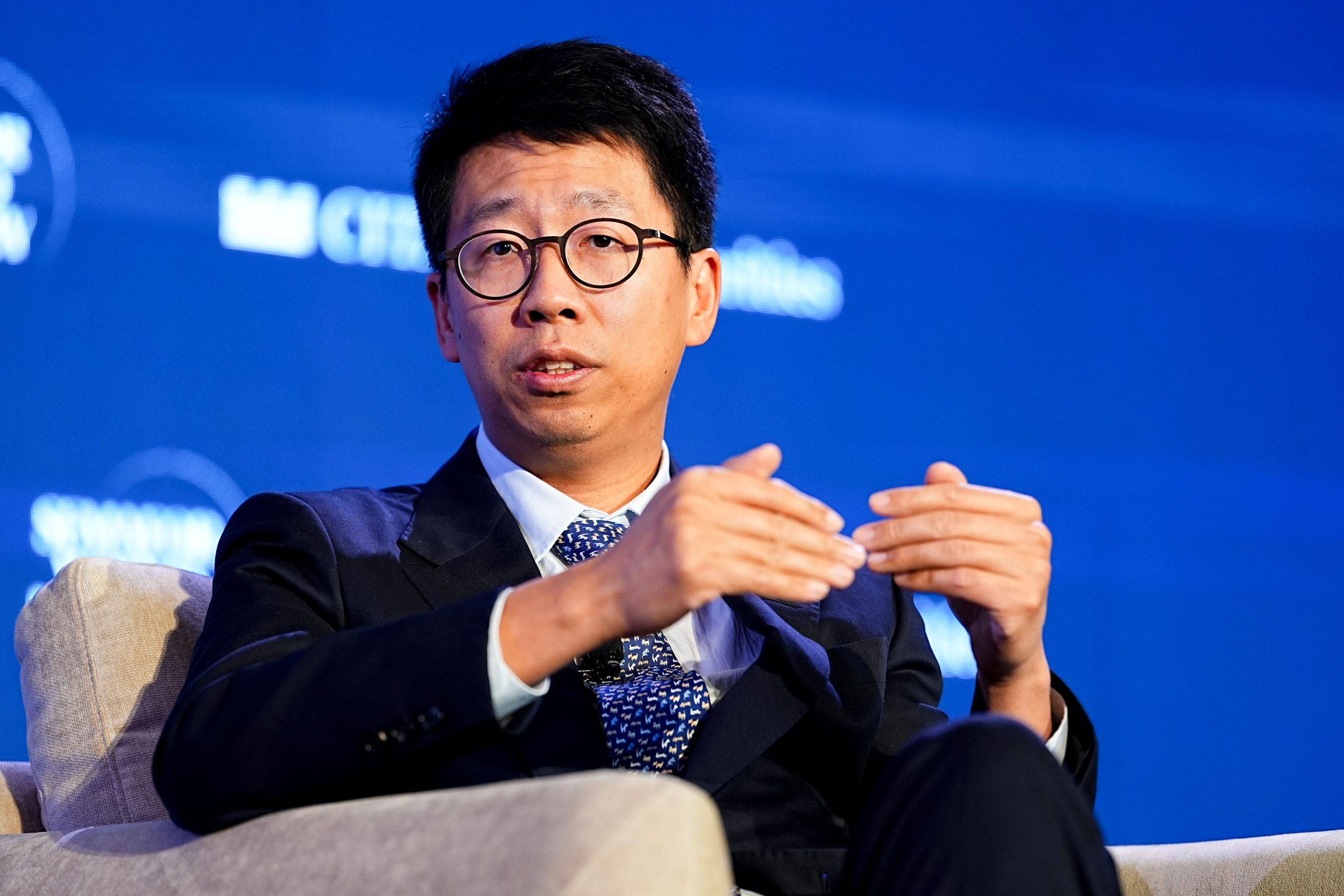
The competitive landscape of global financial technology is intensifying, exemplified by a pivotal moment in 2018 when Airwallex, a then-nascent cross-border payments startup, nearly succumbed to an acquisition offer from industry titan Stripe. Jack Zhang, Airwallex’s co-founder and CEO, found himself at the nexus of this decision, facing a compelling proposal that could have dramatically altered the trajectory of his entrepreneurial venture. The offer, a staggering $1.2 billion for a company with approximately $2 million in annualized revenue, represented a multiple of around 600 times, a figure almost irresistible by conventional startup metrics.
A Fork in the Road: The 2018 Acquisition Bid
The proposition unfolded at the home of Michael Moritz, a venerated investor from Sequoia Capital, one of Silicon Valley’s most influential venture capital firms. Moritz, known for his keen eye in spotting generational talent, ardently championed the acquisition, portraying Stripe co-founder Patrick Collison as a visionary leader whose company offered an unparalleled opportunity for Airwallex to "compound" its potential into something extraordinary. Zhang, then 34, spent two weeks in San Francisco wrestling with the decision, grappling with the magnitude of the offer and the future of his company. He initially assented, but the journey back to Melbourne, spanning nearly 8,000 miles, provided the solitude needed for profound introspection.
Upon reflection, Zhang delved into the core motivations that propelled him to build Airwallex. At just three and a half years into its operations, the company was experiencing explosive growth, expanding its revenue by a factor of 100 in 2018 alone. He realized he had only just begun to experience the fulfillment of entrepreneurship, a dream he had long harbored. This internal conviction was bolstered by the dissent of two of his three co-founders, who also opposed the acquisition. Crucially, the unfinished vision articulated on his office whiteboard—to construct a global financial infrastructure empowering any business to operate anywhere as if it were a local entity—remained a powerful, guiding force. This commitment to an independent path, despite the allure of a lucrative exit, now appears remarkably prescient. Airwallex currently boasts over $1.3 billion in annualized revenue, growing at an impressive 85% year-over-year, and processes nearly $300 billion in annualized transaction volume.
The Entrepreneurial Genesis and "Path of Maximum Resistance"
Zhang’s unwavering resolve is deeply rooted in his personal history. Born in Qingdao, a port city in northeastern China, he immigrated to Melbourne at 15 without his parents, navigating a new country with limited English proficiency while living with a host family. When his family faced financial hardship, Zhang undertook multiple jobs—bartending, washing dishes, working graveyard shifts at a petrol station, and even picking lemons on a farm—to finance his computer science degree at the University of Melbourne. This formative period instilled in him a profound work ethic and resilience. After years of writing trading code for an Australian investment bank, a role that offered financial stability but lacked deep personal fulfillment, Zhang embarked on a prolific entrepreneurial journey. Before Airwallex, he launched approximately ten businesses, ranging from a magazine at 14 to real estate development, import-export operations, and even a burger chain.
The genesis of Airwallex itself stemmed from a frustrating real-world problem. While running a coffee shop in Melbourne, Zhang and his co-founder Max Li encountered significant hurdles paying coffee bean suppliers in countries like Brazil, Indonesia, and Guatemala. Payments frequently disappeared into the opaque correspondent banking system, often flagged and frozen by American intermediary banks enforcing OFAC sanctions, sometimes bouncing back weeks later. This inefficiency and lack of transparency prompted Zhang to meticulously examine the inner workings of correspondent banking and the SWIFT network, ultimately inspiring him to build a proprietary global money movement network.
This vision has scaled dramatically. Airwallex has painstakingly acquired close to 90 financial licenses across 50 markets, a stark contrast to Stripe’s estimated half that number. The process of securing these licenses is notoriously arduous and time-consuming; in Japan, for instance, it took seven years. In some emerging markets, the company resorted to acquiring dormant shell companies whose licenses were no longer being issued by central banks, then completely rebuilding the underlying technology. Zhang highlights the rigorous nature of these integrations, noting, "You can’t really vibe-code an integration with Mexico’s central bank. We have to have a secure room – you have to do a biometric scan just to walk in to access the central bank integration."
This extensive licensing isn’t merely a regulatory formality; it’s a fundamental differentiator. Unlike some competitors, including Stripe and Square, which may process payments in markets like Japan but are legally obligated to immediately transfer funds to a merchant’s bank account, Airwallex’s fund transfer operator license allows it to hold funds within its ecosystem. This capability empowers customers to issue bank accounts, cards, and manage spending directly on the platform, without funds ever leaving the Airwallex environment. The financial implications are substantial: a U.S. merchant settling transactions in Australian dollars avoids the typical 2% to 3% conversion fees charged by processors like Stripe to repatriate funds to USD. Instead, they can utilize those local balances to pay local vendors, run payroll, and cover digital marketing expenses at favorable interbank rates, essentially operating as a truly local entity without needing physical subsidiaries.
Zhang refers to this arduous process as the "path of maximum resistance." Every license, every bank integration, and every local payment rail meticulously assembled by Airwallex contributes to a robust, difficult-to-replicate infrastructure. This foundational effort, though time-consuming in its early stages—six and a half years to reach $100 million in annual recurring revenue—has created a powerful flywheel effect, accelerating growth exponentially thereafter, reaching a billion dollars in just over three additional years. This strategy underscores a core belief: owning the underlying infrastructure provides unparalleled control, data access, and the ability to innovate and extend new products seamlessly, a stark contrast to building atop a third-party stack, which Zhang contends is "simply not scalable."
Evolving Battlegrounds: Stripe’s Global Reach Meets Airwallex’s U.S. Ambitions
For much of their existence, Airwallex and Stripe have largely operated in distinct geographical regions, targeting different customer segments. Stripe, with its origins in simplifying online payments for developers, gained immense traction in North America and Europe, becoming the default choice for a generation of internet businesses. Its API-first approach and ease of integration resonated deeply with tech-savvy founders and engineers. Airwallex, conversely, established strong roots in Australia and Southeast Asia, primarily serving the CFO’s office – finance directors and treasury teams – with its comprehensive cross-border finance solutions. Its customer acquisition model sees over 90% of new clients initially adopting a business account product, with payments and spend management following as integrated services, leading to over half of its customers utilizing multiple products.
However, this comfortable delineation is rapidly eroding. As Stripe aggressively expands its international footprint, venturing deeper into global markets, and Airwallex makes its strategic entry into the United States, the competitive overlap is growing significantly. This convergence sets the stage for a direct confrontation between two fintech powerhouses with distinct philosophies and market entry strategies.
Challenges and the Valuation Gap
Despite its impressive growth and unique infrastructure, Airwallex faces considerable challenges in this intensifying rivalry. Perhaps the most significant is Stripe’s entrenched status as Silicon Valley’s "golden child," a company whose privately held shares have created wealth across the tech ecosystem and whose brand is synonymous with modern online payments. This translates into a substantial brand recognition gap for Airwallex. Zhang acknowledges this candidly, stating, "Our brand is just not there yet. That’s a harder competition to win." Airwallex must now focus on embedding itself in the minds of engineers and developers, not just finance teams, to become an instinctive choice for new ventures.
The competitive landscape is further complicated by overlapping investor interests. Sequoia Capital, through its now-rebranded China arm (Hongshan), was an early backer and remains a significant shareholder in Airwallex. Additionally, investment firm Greenoaks Capital holds stakes in both Stripe and Airwallex. Zhang downplays any potential awkwardness, emphasizing that investors are ultimately betting on the vast potential of the global payments market.
However, the valuation disparity remains a prominent talking point. Stripe, valued at an astounding $159 billion in a February tender offer (a 74% increase year-over-year) after processing $1.9 trillion in total payment volume in 2025, towers over Airwallex, which secured an $8 billion valuation in December. This places Airwallex at roughly a twentieth of Stripe’s valuation. Yet, Zhang points out a crucial nuance: Stripe’s payment volume is only about six times that of Airwallex, not twenty. With its 85% annual growth rate and projections of reaching $2 billion in revenue within the next year, Airwallex is narrowing the revenue gap at a pace that the current valuation differential doesn’t fully reflect. Whether the broader market will recognize this closing gap before a public offering remains to be seen. Zhang estimates an IPO is still three to five years away, an event that would undoubtedly force a more transparent market assessment.
Future Horizons: AI, Autonomous Finance, and Global Dominance
In the interim, Zhang’s focus remains squarely on ambitious long-term targets: achieving one million customers by 2030, reaching $20 billion in annual revenue, and boosting average revenue per customer from the current $12,000-$13,000 to approximately $20,000. A significant part of this future strategy involves the rollout of AI-powered autonomous finance products. These intelligent agents are designed not merely to surface data but to proactively execute transactions, streamline treasury management, and automate vendor payments and expense management. Zhang posits that Airwallex’s decade-long accumulation of financial data across the entire corporate finance stack provides a proprietary training dataset that competitors cannot easily replicate, creating a significant competitive advantage in the burgeoning field of embedded finance.
The ultimate test for Airwallex will be whether its "path of maximum resistance" strategy, characterized by deep infrastructure ownership and extensive regulatory compliance, can effectively challenge Stripe’s market dominance and developer-centric approach. While the competition has largely unfolded at a distance, the expanding global ambitions of both companies guarantee an increasingly direct clash. The one-time friendly interactions between Zhang and Collison, evident during the merger talks years ago, have cooled; a recent encounter at Greenoaks Capital’s annual gathering saw the two leaders forgo interaction, a symbolic reflection of the intensifying rivalry between these fintech heavyweights vying for the future of global commerce.










 Azin Asro
