Amir Mahmud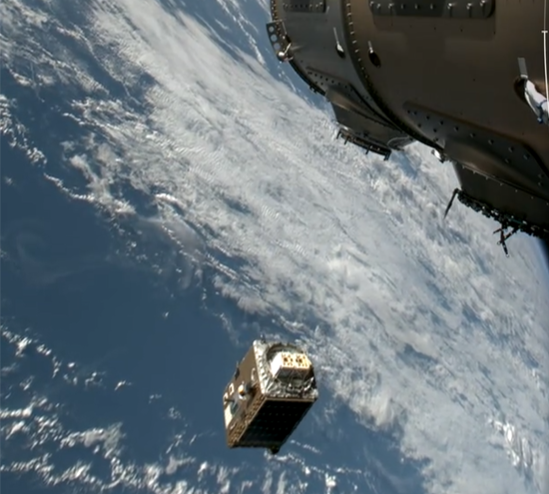
In a significant leap for the burgeoning field of orbital computing, Starcloud, a pioneering space technology firm, has successfully closed a Series A funding round totaling $170 million. This substantial investment elevates the company’s valuation to $1.1 billion, swiftly granting it coveted "unicorn" status within just 17 months of its demo day presentation as a graduate of the renowned Y Combinator accelerator program. The funding round, co-led by prominent venture capital firms Benchmark and EQT Ventures, underscores a growing investor appetite for the ambitious vision of offloading data processing infrastructure into Earth’s orbit, a concept gaining traction amidst terrestrial resource constraints and geopolitical complexities.
The journey to establish data centers beyond Earth’s atmosphere is fraught with immense technical and financial hurdles, yet Starcloud’s rapid ascent reflects a potent belief in its potential. With this latest injection of capital, the company’s total funding now stands at $200 million, earmarked for accelerating the development and deployment of its advanced space-based computing infrastructure. The pursuit of orbital data centers represents a paradigm shift, promising new frontiers for data processing, analytics, and artificial intelligence, far from the physical limitations and energy demands of traditional ground-based facilities.
The Genesis of Orbital Computing
The idea of placing computing resources in space isn’t entirely new, but its practical realization has historically been constrained by launch costs, technological limitations, and the harsh realities of the space environment. For decades, satellites primarily performed data collection and rudimentary processing before transmitting raw or semi-processed data back to Earth. However, the exponential growth of data generated in space – from Earth observation satellites, scientific probes, and ever-expanding communication networks – coupled with the insatiable demand for high-performance computing, has necessitated a re-evaluation of this model.
The ability to process data closer to its source, whether for real-time analytics for defense, rapid environmental monitoring, or advanced scientific research, offers compelling advantages. It reduces latency, minimizes the bandwidth required for downlink transmissions, and could potentially offer a more secure and resilient computing platform less vulnerable to terrestrial disruptions. Furthermore, the vacuum of space presents inherent advantages for cooling, while solar power offers a readily available, renewable energy source, albeit with its own challenges related to storage and radiation hardening.
Starcloud’s Ambitious Hardware Roadmap
Starcloud has already demonstrated significant progress in its hardware development. In November 2025, the company successfully launched its inaugural satellite, equipped with an Nvidia H100 GPU. This deployment marked a crucial milestone, proving the feasibility of operating cutting-edge terrestrial processing units in the demanding orbital environment. The H100, a flagship accelerator known for its prowess in AI and high-performance computing, allowed Starcloud to perform the first in-orbit training of an AI model, specifically a version of Google’s Gemini. This achievement not only showcased the functional capability but also provided invaluable telemetry and operational data on how such powerful chips perform under radiation, thermal extremes, and vacuum conditions.
Building on this success, Starcloud is preparing for the launch of Starcloud 2 later this year. This next-generation satellite is designed to be significantly more powerful, integrating multiple GPUs, including an advanced Nvidia Blackwell chip and an AWS server blade. The inclusion of a Bitcoin mining computer further highlights the company’s intent to explore diverse revenue streams and prove the economic viability of space-based compute for various applications, including those traditionally seen as highly energy-intensive. The Blackwell platform, unveiled by Nvidia as its most powerful chip to date, promises unprecedented performance for AI workloads, signaling Starcloud’s commitment to staying at the forefront of processing technology.
The company’s long-term vision culminates in the development of Starcloud 3, an ambitious data center spacecraft engineered for deployment from SpaceX’s Starship. This formidable spacecraft is projected to be a 200-kilowatt, three-ton system, specifically designed to fit within the "pez dispenser" deployment mechanism utilized by Starship for its Starlink satellites. Such a design signifies a significant scaling-up of orbital compute capabilities, aiming to deliver processing power comparable to small terrestrial data centers.
The Starship Imperative and Cost Parity
The economic viability of Starcloud’s most ambitious projects, particularly Starcloud 3, hinges critically on the commercial availability and operational cadence of SpaceX’s Starship. Philip Johnston, CEO and founder of Starcloud, has expressed confidence that Starship will enable the first orbital data center to achieve cost-competitiveness with terrestrial counterparts. He projects power costs on the order of $0.05 per kilowatt-hour, contingent upon commercial launch costs stabilizing around $500 per kilogram.
However, the reality of Starship’s development presents a significant variable. While progress has been rapid, the fully reusable heavy-lift rocket is still undergoing extensive testing and has yet to achieve regular commercial flight operations. Johnston anticipates commercial access to open up between 2028 and 2029. This timeline underscores a broader industry challenge: truly powerful and economically feasible space computing projects are largely dependent on a new generation of rockets that can launch payloads at unprecedented scales and frequencies, a scenario that might not fully materialize until the 2030s.
Acknowledging this dependency, Johnston has outlined contingency plans. Should Starship’s operational timeline extend beyond current expectations, Starcloud intends to continue launching smaller versions of its compute satellites aboard SpaceX’s Falcon 9 rockets. While this approach allows for continued development and deployment, Johnston candidly admits that achieving energy cost parity with terrestrial solutions will remain elusive until Starship becomes a frequently flying, cost-effective launch platform. This strategic flexibility is vital in a sector characterized by high technical risk and evolving infrastructure.
Pioneering Dual Revenue Streams
Starcloud’s business model is strategically diversified, aiming to capture value from both in-orbit and terrestrial applications. One immediate revenue stream involves providing processing power to other spacecraft already in orbit. For instance, Starcloud’s initial satellite is actively analyzing data collected by Capella Space’s radar spacecraft. This "edge computing" in space allows for rapid analysis of vast datasets, enabling quicker insights and reducing the need to downlink massive raw files, which can be bandwidth-intensive and time-consuming. This model addresses a critical need for satellites that collect immense amounts of data but have limited onboard processing capabilities.
The second, more ambitious business model targets a future where declining launch costs make powerful, distributed orbital data centers economically competitive with terrestrial facilities. In this scenario, Starcloud envisions pulling significant workloads from ground-based data centers, offering a scalable and potentially more sustainable alternative for certain types of computing tasks. This long-term vision relies heavily on the aforementioned advancements in launch technology and the ability to seamlessly integrate space-based compute into existing cloud architectures.
The Vast Disparity Between Terrestrial and Orbital Scale
Despite the excitement surrounding orbital computing, the industry remains in its infancy, operating at a scale vastly different from its terrestrial counterpart. The number of advanced GPUs currently in orbit is estimated to be in the dozens, a stark contrast to the nearly 4 million Nvidia H100 units estimated to have been sold to terrestrial hyperscalers in 2025 alone. This comparison highlights the monumental gap that needs to be bridged in terms of raw processing capacity.
Further illustrating this disparity, SpaceX’s Starlink communications network, currently the largest satellite constellation with approximately 10,000 spacecraft, collectively produces around 200 megawatts of energy. By comparison, terrestrial data centers with more than 25 gigawatts of power capacity are presently under construction across the U.S., according to Cushman and Wakefield. This massive difference in power generation capability directly correlates to the scale of computing possible, underscoring the formidable challenge of scaling orbital infrastructure to rival ground-based facilities. Even specialized space hardware like Nvidia’s Vera Rubin Space-1 chip modules, while announced, have not yet been widely produced or shared with development partners, indicating the very early stage of specialized, mass-produced space computing components.
Overcoming the Extreme Engineering Challenges
Starcloud’s early deployments have provided critical "hard-won knowledge" regarding the complexities of operating high-performance chips in space. Johnston openly admits that while the H100 proved the concept, it "is probably not the best chip for space," due to its design for terrestrial environments. An earlier attempt to deploy an Nvidia A6000 GPU resulted in failure during launch, highlighting the extreme stresses and unique requirements of space-hardened electronics. This iterative learning process is vital for informing future designs, leading to more resilient and efficient systems.
The technical challenges facing orbital data centers are numerous and profound. Efficient power generation in orbit, which relies heavily on solar panels and robust battery storage, is paramount. Even more critical is thermal management; powerful chips generate immense heat, and dissipating this heat in the vacuum of space, without the benefit of atmospheric convection, requires sophisticated cooling systems. Starcloud 2, for example, will feature the largest deployable radiator ever flown on a private satellite, a testament to the scale of this engineering challenge. Johnston anticipates at least two more iterations of this spacecraft will be launched, refining these critical systems.
Beyond individual satellite performance, the vision of true orbital data centers necessitates addressing the challenge of synchronization. The most demanding datacenter workloads, particularly for large-scale AI model training, require hundreds or even thousands of GPUs to operate in parallel. Achieving this in space will either demand fantastically large, single spacecraft or, more realistically, powerful and reliable laser communication links between multiple spacecraft flying in precise formation. While simpler inference tasks are expected to be the initial focus, the capability for synchronized, distributed computing remains a long-term goal for the industry.
A Crowded Cosmos: The Emerging Competitive Arena
Starcloud is not alone in its pursuit of orbital computing. Several other formidable players are actively developing space data center businesses. These include Aetherflux, reportedly raising a Series B at a $2 billion valuation, Google’s enigmatic Project Suncatcher, and Aethero, which made headlines by launching Nvidia’s first space-based Jetson GPU in 2025. This emerging competitive landscape underscores the growing recognition of space as the next frontier for computing infrastructure.
However, the "elephant in the room" for many in this sector is SpaceX itself. The company has formally requested permission from the U.S. government to build and operate a network of a million satellites dedicated to distributed computing in space. Going head-to-head with a titan like SpaceX, with its vertically integrated launch capabilities and ambitious vision, is a daunting prospect for any startup.
The SpaceX Shadow and Strategic Niche
Despite SpaceX’s immense capabilities, Philip Johnston sees room for coexistence and even strategic differentiation. He believes that SpaceX is primarily building for a "slightly different use case," focusing on internal workloads such as those required by its own AI models like Grok and its automotive division, Tesla. While SpaceX might eventually offer third-party cloud services, Johnston contends that Starcloud’s focus as an "energy and infrastructure player" positions it uniquely.
Starcloud aims to be a foundational provider of space-based compute infrastructure, offering a platform and services that other entities, including potentially other space companies or even terrestrial enterprises, can leverage. This differentiates it from a company primarily focused on consuming its own compute for proprietary applications. This strategic niche, if successfully carved out, could allow Starcloud to thrive even alongside larger, more integrated players.
The Broader Implications of Orbital Computing
The vision of data centers in space carries profound implications beyond mere technological advancement. From a geopolitical standpoint, establishing computing infrastructure in neutral orbit could offer advantages in data sovereignty and resilience against terrestrial conflicts or natural disasters. For scientific research, it could enable unprecedented real-time processing of astronomical or Earth science data, accelerating discovery. For commercial applications, it opens doors for new services, from ultra-low latency financial trading to global AI-powered monitoring systems.
However, this future also presents new challenges. The potential for increased space debris from a denser orbital environment, the regulatory complexities of governing extraterrestrial data, and the cybersecurity risks associated with such critical infrastructure all require careful consideration. The substantial capital expenditure, long development cycles, and inherent risks associated with space ventures mean that only well-funded and strategically agile companies like Starcloud are poised to lead this charge. The rapid unicorn valuation, while indicative of investor confidence in the potential, also reflects the high-stakes, high-reward nature of pioneering humanity’s next digital frontier. The journey to a truly robust orbital computing ecosystem is long, but Starcloud’s recent achievements signal a significant step towards that audacious future.