Amir Mahmud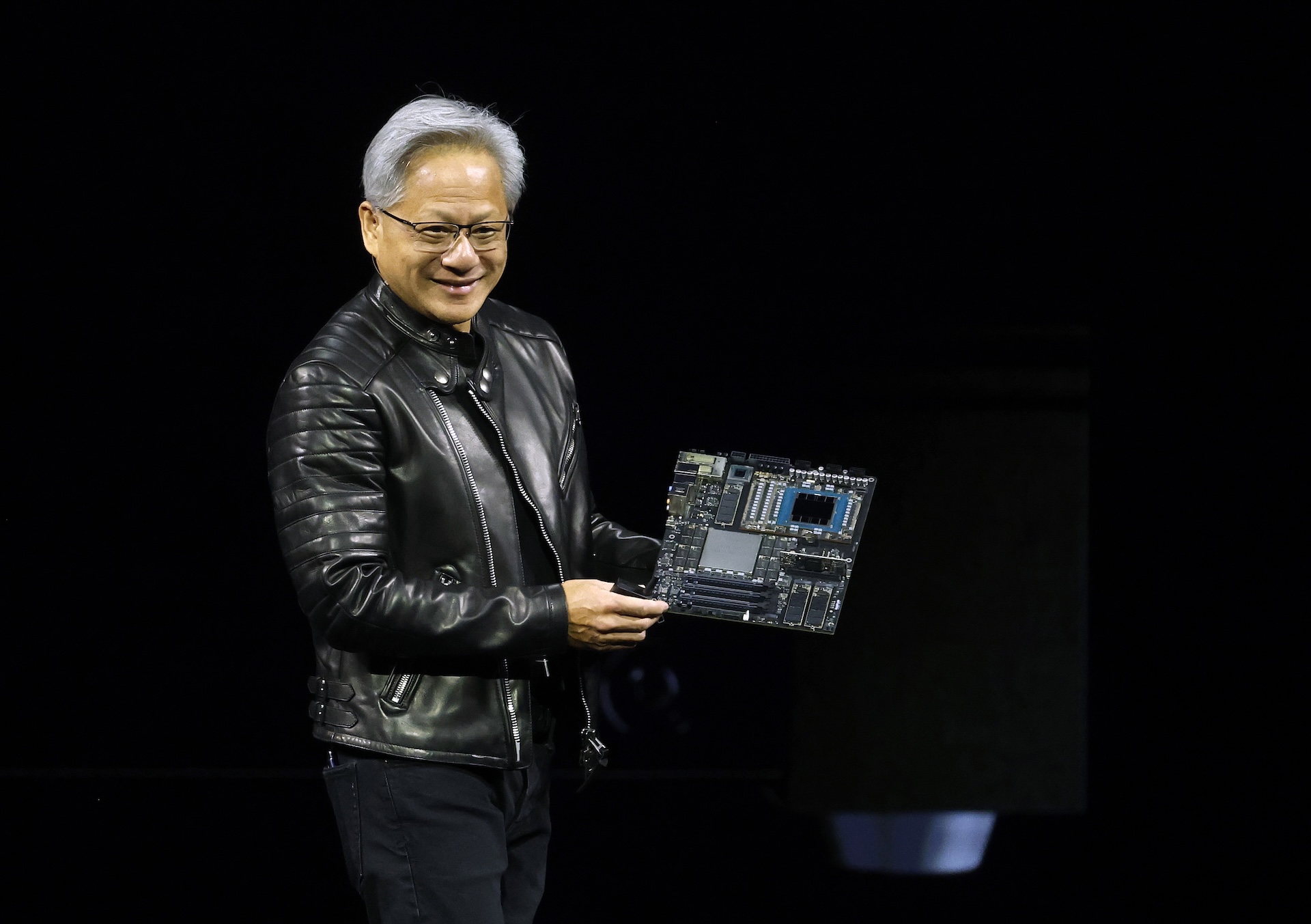
The global technology community is poised to turn its attention to San Jose, California, as Nvidia prepares to host its highly anticipated annual GPU Technology Conference (GTC) next week. The flagship event for the semiconductor titan will commence with a pivotal keynote address from CEO Jensen Huang, scheduled for Monday at 11 a.m. Pacific Time (2 p.m. Eastern Time). This two-hour presentation is widely expected to serve as a comprehensive blueprint for the future of computing and artificial intelligence, cementing Nvidia’s influential position at the forefront of technological innovation.
Attendees have the option to experience Huang’s address live from the SAP Center, a venue that has increasingly become synonymous with major tech revelations, or to participate virtually through a livestream accessible via the official event website. Beyond the keynote, the three-day conference is a deep dive into the evolving landscape of AI, featuring discussions and demonstrations spanning critical sectors such as healthcare, robotics, and autonomous systems. GTC has transformed from a niche gathering focused on graphics processing into an essential forum for developers, researchers, and industry leaders to explore the cutting edge of AI, underscoring its pivotal role in shaping the digital future.
Nvidia’s Ascendancy: From Gaming Graphics to AI Dominance
Nvidia’s journey to its current stature as an AI powerhouse is a testament to strategic foresight and relentless innovation. Founded in 1993, the company initially made its mark by developing Graphics Processing Units (GPUs) that revolutionized the gaming industry, enabling increasingly complex and immersive visual experiences. However, the true inflection point arrived in the mid-2000s when researchers began to recognize the parallel processing capabilities of GPUs, originally designed for rendering millions of pixels simultaneously, as ideal for accelerating scientific computations.
This realization coincided with the emergence of deep learning, a subfield of artificial intelligence that relies heavily on neural networks and massive datasets. Training these networks demanded extraordinary computational power, a demand that traditional Central Processing Units (CPUs) struggled to meet efficiently. Nvidia’s CUDA platform, introduced in 2006, provided a software layer that allowed developers to program GPUs for general-purpose computing, effectively unlocking their potential for AI. This strategic pivot positioned Nvidia perfectly to capitalize on the burgeoning AI revolution. Over the past decade, as AI has moved from academic research to mainstream applications, Nvidia’s GPUs have become the de facto standard for AI training, propelling the company into an unprecedented market valuation and making GTC a bellwether event for the entire tech industry. The conference itself, originally named for its focus on GPU technology, has evolved alongside the company, now primarily serving as a global platform for discussing and demonstrating breakthroughs in artificial intelligence.
Software Frontier: The Promise of Enterprise AI Agents
A significant area of speculation surrounding GTC 2026 centers on Nvidia’s potential foray into the burgeoning market for enterprise AI agents. Industry whispers, initially reported by Wired, suggest the company might unveil an open-source platform, tentatively named "NemoClaw," designed to empower businesses in constructing and deploying sophisticated AI agents. These agents are advanced software entities capable of executing multi-step tasks autonomously, moving beyond simple queries to perform complex operations like data analysis, automated customer service workflows, or even sophisticated code generation.
The introduction of such a platform would address a critical need in the enterprise sector, where companies are increasingly seeking structured, scalable, and secure methods to integrate AI into their core operations. While large language models have demonstrated impressive capabilities, orchestrating them into reliable, autonomous agents that can navigate real-world business processes presents considerable challenges. An open-source framework like NemoClaw could provide the foundational tools, libraries, and best practices necessary to overcome these hurdles, fostering a vibrant ecosystem of developers and solutions. This strategic move would also position Nvidia in direct competition with, or as a complementary offering to, existing platforms from AI leaders like OpenAI, which have already begun to roll out similar capabilities for enterprise clients. By offering an open-source alternative, Nvidia could appeal to businesses prioritizing flexibility, customizability, and control over their AI infrastructure, further extending its influence beyond hardware into the critical software layer of the AI stack.
Hardware Innovation: Accelerating AI Inference
While Nvidia has long dominated the market for AI model training, the upcoming GTC is also rumored to feature a major hardware announcement targeting the equally crucial, yet distinct, domain of AI inference. Inference refers to the process where a trained AI model applies its learned knowledge to new data, generating predictions, responses, or decisions in real-time. This is distinct from the training phase, which demands vast computational resources to teach the model from scratch. The industry widely views faster, more efficient, and more cost-effective inference as one of the final significant bottlenecks preventing the widespread scaling and deployment of AI applications across various industries.
A new chip specifically engineered to accelerate AI inference would represent Nvidia’s concerted effort to secure its dominance across the entire AI lifecycle, not just in the computationally intensive training phase where it already commands an estimated 80% market share. The inference market is rapidly intensifying, with major cloud providers and tech giants like Google, Amazon, and Microsoft developing their own custom silicon (such as Google’s TPUs and Amazon’s Inferentia chips) optimized for their specific AI workloads. These internal efforts aim to reduce costs, enhance performance, and gain greater control over their AI infrastructure. Nvidia’s potential new chip would directly counter this trend, offering a compelling alternative that promises to make AI applications more responsive, energy-efficient, and economically viable for a broader range of deployments, from edge devices to large-scale data centers. This innovation could unlock new possibilities for real-time AI in areas like autonomous vehicles, medical diagnostics, and personalized consumer experiences, solidifying Nvidia’s end-to-end leadership in the AI hardware landscape.
Strategic Alliances: The Groq Partnership and Its Implications
A fascinating subplot to GTC 2026 involves Nvidia’s recently disclosed, substantial licensing agreement with Groq, an emerging player known for its innovative Language Model Engine (LME) and its focus on ultra-fast AI inference. Kevin Cook, a senior equity strategist at Zacks Investment Research, highlighted the widespread industry curiosity surrounding this tie-up, particularly given the reported $20 billion value of the licensing deal and the subsequent integration of key Groq personnel—including founder Jonathan Ross and president Sunny Madra—into Nvidia’s ranks.
Groq has garnered attention for its unique architecture designed for low-latency, high-throughput inference, offering a compelling alternative to traditional GPU-based systems for specific AI workloads. For Nvidia, a company renowned for its in-house chip design prowess, licensing technology from another hardware innovator, especially one focused on inference, is a notable strategic move. This partnership could be interpreted in several ways: it might be a proactive measure to integrate specialized intellectual property and talent to accelerate Nvidia’s own inference capabilities; a defensive strategy to neutralize a potential competitor by acquiring its core technology; or an expansion strategy to offer a more diverse portfolio of inference solutions tailored for different customer needs. The integration of Groq’s team suggests a deep collaboration aimed at not just licensing the technology, but actively advancing and scaling it within Nvidia’s extensive ecosystem. The implications for the inference market are significant, potentially consolidating cutting-edge inference capabilities under Nvidia’s umbrella and further challenging competitors who are developing their own custom solutions. This alliance underscores the intense competition and rapid pace of innovation within the AI hardware sector, where strategic partnerships and talent acquisition are becoming as crucial as individual technological breakthroughs.
Broader Industry Impact and Future Vision
Beyond the specific product and partnership announcements, GTC 2026 is expected to illuminate Nvidia’s broader vision for how AI will continue to permeate and revolutionize diverse industries. In healthcare, Nvidia’s platforms are already accelerating drug discovery, enhancing medical imaging analysis, and powering personalized treatment plans. The keynote and subsequent sessions will likely showcase advancements in these areas, perhaps even detailing new AI models for diagnostics or therapeutic development. In robotics, Nvidia’s Jetson platform and Isaac SDK are enabling more intelligent and autonomous machines, from industrial automation robots to sophisticated service bots. Expect demonstrations of robots with enhanced perception, navigation, and human-robot interaction capabilities, reflecting the ongoing convergence of AI and physical systems.
The autonomous vehicles sector remains a critical focus, with Nvidia’s Drive platform being a foundational technology for many self-driving car developers. Updates on simulation tools, sensor fusion algorithms, and AI models for perception and decision-making are highly anticipated, as the industry navigates the complex path towards fully autonomous transportation. Fundamentally, Nvidia’s strategy revolves around building a comprehensive AI ecosystem—encompassing hardware, software, developer tools, and cloud services—that empowers innovators across every domain. This holistic approach ensures that as AI becomes more sophisticated and pervasive, Nvidia remains the indispensable engine driving its progress. The cultural and social impacts of these advancements are profound, influencing everything from the future of work to ethical considerations in AI deployment. GTC 2026, therefore, is not merely a conference for technologists; it’s a window into the technological forces that are actively reshaping human society and economy.
As the world increasingly embraces artificial intelligence as a transformative force, Nvidia’s GTC 2026 stands as a crucial waypoint, offering clarity on the trajectory of this evolution. Jensen Huang’s keynote and the subsequent conference sessions promise to unveil not just new products, but a strategic roadmap that will influence the global AI landscape for years to come. The emphasis on both software and hardware innovation, coupled with strategic collaborations, underscores Nvidia’s ambition to remain the pivotal infrastructure provider for the unfolding era of artificial intelligence.